Last updated 10.29.2026
Why can an adult canine tooth become impacted?
Explore why adult canine teeth remain impacted, how dentists assess them and which treatments may be considered.

Maybe you still have a baby canine, or you’ve always had a gap near the corner of your smile. Then an X-ray shows the permanent tooth is there but never came through.
That tooth may be impacted, meaning it’s stuck beneath the gum or in the jawbone. Limited space, an unusual angle or something blocking its path can keep it from coming in.¹ Finding it in adulthood doesn’t automatically mean it needs to be removed, and your dentist can explain which options make sense for you.
What you'll learn in this article:
What an impacted canine is and how it differs from a missing tooth
Why a permanent canine may not come through normally
How an exam and imaging help guide the next steps
Which treatment options may be considered, and why age matters
Schedule an appointment with an Aspen Dental provider to have a missing or unerupted canine assessed.
What is an impacted canine tooth?
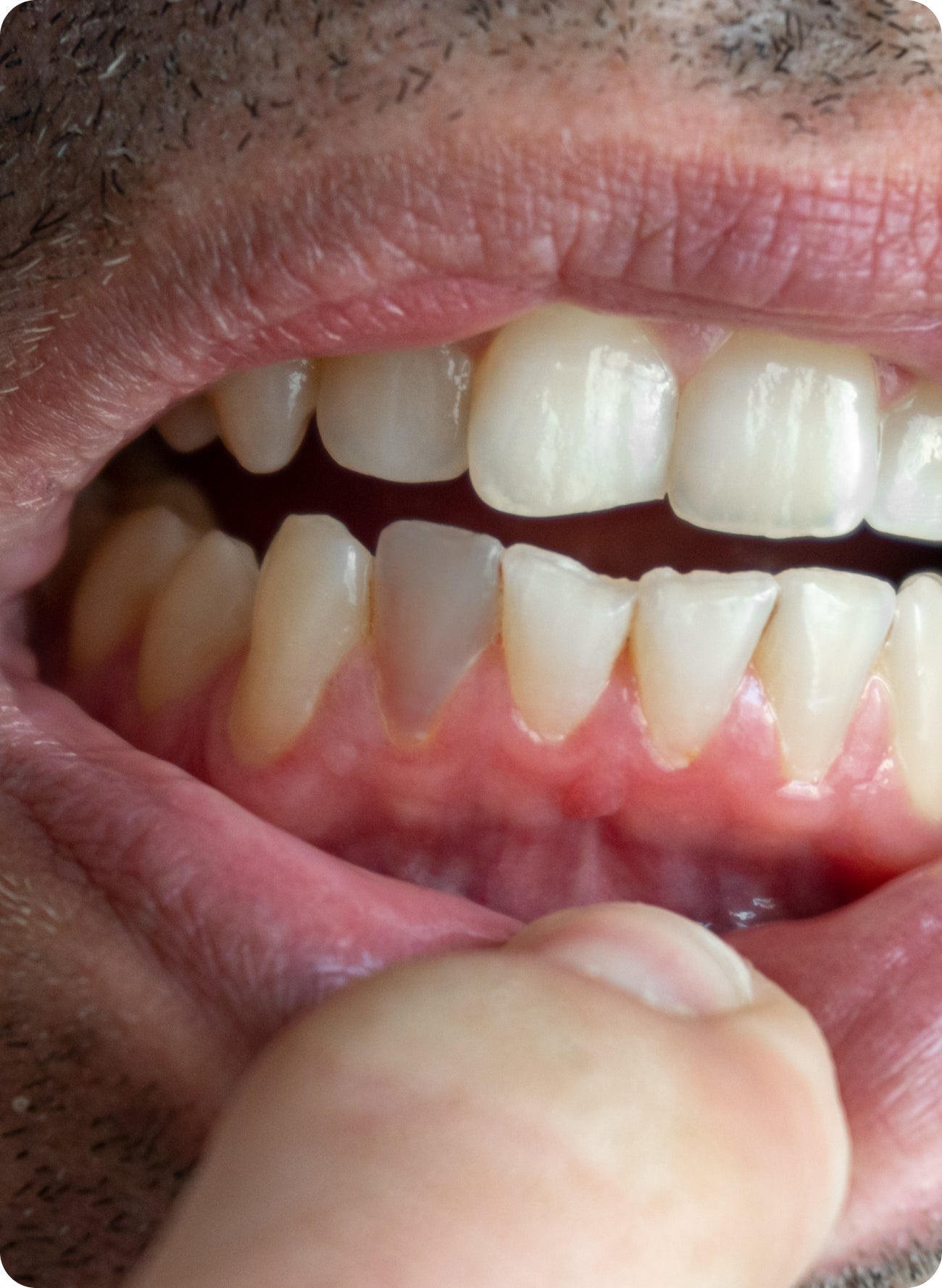
Your canines are the slightly pointed teeth at the corners of your smile. An impacted tooth hasn't come through as expected and remains partly or completely trapped beneath gum tissue or in the jawbone. Canines are among the teeth commonly affected.¹
This is different from a tooth that was removed or never formed. An impacted canine is still there, even if you can't see or feel it. Finding out which situation applies matters before making plans to close or replace a gap.
Why might a permanent canine stay impacted?
Several things can keep a tooth from reaching its intended position:
Limited space: Crowding can leave too little room for the canine to come through.¹
An unusual eruption path: The tooth may develop at an angle that takes it away from its expected position.²
An obstruction: Something in the eruption path, such as an extra tooth, may block its progress.¹
A baby canine that hasn’t fallen out is another reason to investigate, since a baby tooth can sometimes fuse to the bone and block the adult tooth from coming in.² It doesn’t prove that the baby tooth caused the problem, or even that a permanent replacement is present. Your dentist needs to check what lies beneath it.
By adulthood, it’s worth getting an unerupted canine assessed rather than assuming it will eventually appear, since impacted teeth aren’t something to ignore.² Age is one consideration, but it doesn’t tell the whole story.¹
How is an impacted canine found and assessed?
You may not feel it at all. Some impacted teeth bring symptoms, while others only turn up when a dentist examines your mouth or reviews an X-ray.²
A gap or a retained baby tooth may be the reason your dentist takes a closer look. An examination and dental imaging help show where the tooth sits and whether neighboring teeth are affected. Additional views or three-dimensional imaging may be useful in some cases, but not everyone needs a 3D scan.²
Your dentist uses the findings to discuss questions such as:
Position: Where is the canine in relation to nearby roots?
Space: Is there room for it in the row of teeth?
Surrounding health: Are there concerns involving nearby teeth, gums or bone?
Treatment goals: Is bringing the tooth into position a realistic option?
If you've had earlier X-rays or orthodontic treatment, let the team know. Bring up any discomfort, swelling or changes you've noticed, even if they come and go.
Why does an impacted canine need attention?
An impacted canine isn't necessarily causing damage right now. But an unerupted tooth's position can affect neighboring roots, and cysts can develop around some unerupted teeth. These are reasons to assess it, not a prediction that every impacted canine will cause problems.³
Your dentist can explain whether imaging shows existing damage, a concern that needs treatment or a reason to monitor the area.
Impacted canine treatment options in adults
Treatment depends on where the tooth sits, how it affects nearby teeth and your overall situation.² Your dental team may discuss more than one path.
Orthodontic treatment with surgical exposure
When moving the canine into place is appropriate, treatment may combine orthodontics with an expose-and-bond procedure. Space is created for the tooth, and a surgeon uncovers it. A small attachment and chain may connect it to the orthodontic appliance. The orthodontist then applies controlled force to guide the tooth into position.³
Treatments that help an impacted canine come in are most common in children and teens, so whether this approach fits an adult depends on the tooth’s position and your overall situation.¹ Uncovering the tooth isn’t the same as completing treatment. Movement happens over time, and success isn’t guaranteed for every impacted canine. Ask about the expected stages, follow-up appointments and what would happen if the tooth doesn’t move as planned.
Removal and a plan for the space
Removal may be considered if the impacted tooth is causing oral health problems and keeping it isn't the recommended approach.¹ A tooth beneath gum or bone may require a surgical rather than simple extraction.
Before deciding, discuss what happens to the space afterward. The extraction and any orthodontic or tooth-replacement plan should be considered together.
Monitoring in selected situations
If the tooth isn't causing symptoms or damage, monitoring may be an option. That involves periodic examinations and imaging based on your provider's recommendation.² It doesn't mean forgetting about the tooth until it hurts.
Ask what changes the team will watch for and when you should return. Get in touch with your dental team if you notice swelling, pain that keeps getting worse, any drainage or a fever.²
To talk through your findings and options, schedule an examination with your local dental provider.
Why can an adult canine tooth become impacted? FAQs
Can a retained baby canine stay where it is?
Sometimes, depending on the baby tooth’s condition and what the X-ray shows beneath it. Ask whether it’s healthy enough to keep and how keeping or removing it would affect the plan for the permanent canine, since a baby tooth can also be what’s blocking the adult tooth.²
Can an impacted canine affect plans for braces or aligners?
Yes. It can change the order of treatment, since your orthodontist may need to make room for the tooth first and then bring it into place.² Mention the impacted canine during your orthodontic consultation so it's included in the plan from the start.
Which specialists might be involved?
An orthodontist and an oral and maxillofacial surgeon may work together when exposure and tooth movement are planned.³ Your general dentist can help coordinate the evaluation.
Sources
¹ Cleveland Clinic, Health Library: “Impacted Tooth.” https://my.clevelandclinic.org/health/diseases/impacted-tooth
² American Association of Orthodontists: “What is an Impacted Tooth?” https://aaoinfo.org/whats-trending/what-is-an-impacted-tooth/
³ American Association of Oral and Maxillofacial Surgeons: “Expose and Bond for Impacted Teeth.” https://myoms.org/what-we-do/surgery-to-assist-orthodontics/expose-and-bond/