Last updated 07.09.2026
Why is there a blue or purple bubble on my gum?
A blue or purple gum bubble is often caused by a cyst, blood blister or tooth infection. Learn how to tell the difference and when to seek care.
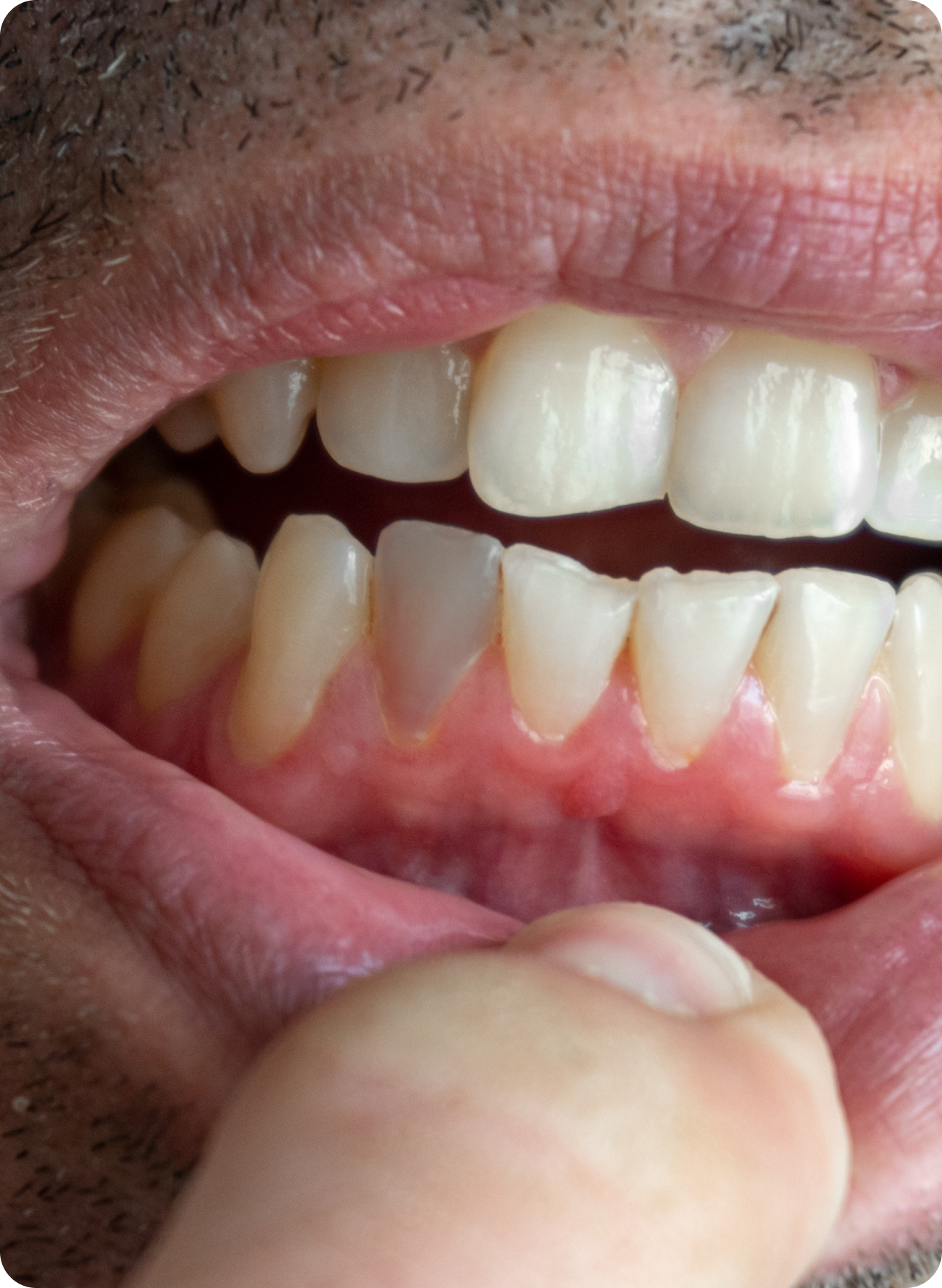
A blue or purple bubble on your gum is often caused by fluid, blood or mucus collecting beneath the surface of the tissue. In many cases, the cause is harmless. However, some gum bubbles can be a sign of an infection or another dental problem that may need treatment. The color, location and how long the bubble has been there can provide important clues about what's causing it.
What you'll learn in this article:
Most blue or purple gum bubbles are caused by an eruption cyst, a mucous cyst or a draining infection
Color can provide clues about the cause and what may be inside the bubble
A bubble that drains or leaves a bad taste is often a sign of a tooth infection that needs treatment
Many gum bubbles are painless, making the color change the first sign something is wrong
A bubble that drains, grows or lasts longer than two weeks should be evaluated
While many gum bubbles are harmless, some can signal a problem that will continue to worsen without treatment. Your dental provider can determine what's causing the change and whether any care is needed.
What causes a blue or purple bubble on your gum?
The color of the bubble can provide clues about the cause, but it cannot tell the whole story. Several conditions can cause a blue or purple bump on the gums, and each one may look and behave a little differently.
Is it an eruption cyst?
An eruption cyst — sometimes called an eruption hematoma — is the most common reason children develop a colored bubble on the gum. It forms when a new tooth is getting ready to come through the gums. Fluid, and sometimes a small amount of blood, can collect over the tooth as it moves into place. This can create a bubble that looks blue, purple or dark red.
Most eruption cysts do not hurt and go away on their own once the tooth comes through the gum. They usually appear directly over the tooth that is about to erupt.
Could it be a mucous cyst?
A mucous cyst, also called a mucocele, forms when a small salivary gland becomes blocked or injured. Saliva gets trapped under the tissue and creates a soft, round bubble. These cysts are often clear or bluish and usually do not cause pain.
Mucous cysts are most common on the inside of the lips, but they can also appear on the gums. Many go away on their own. If a cyst becomes large or keeps coming back, your dental provider may recommend treatment.
What if it occasionally drains or has a tiny opening?
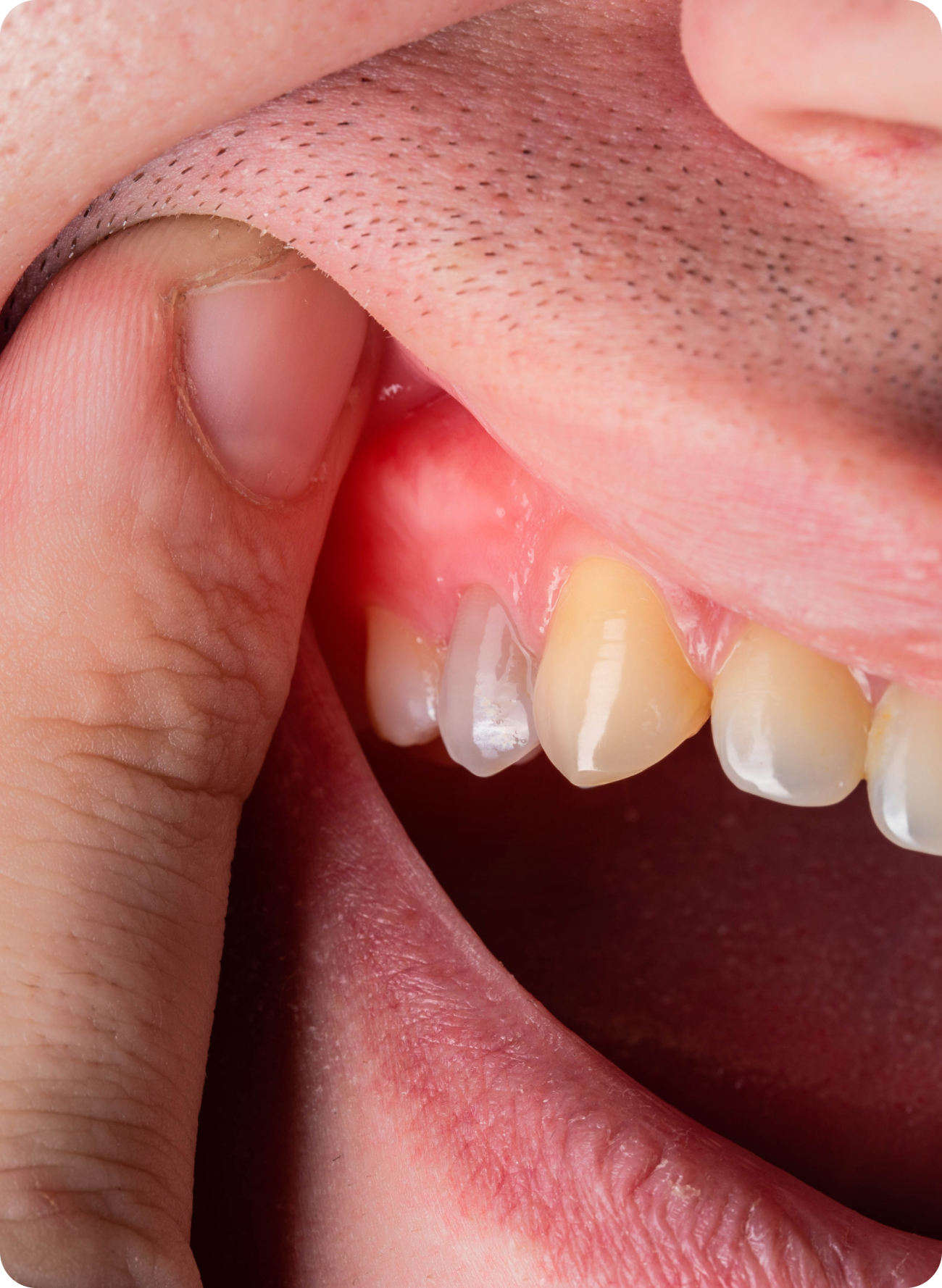
A parulis — sometimes called a gum boil or sinus tract — is a small bubble on the gum that forms when a tooth infection drains through the gum tissue. The infection starts below the gumline and creates a path for fluid to drain. While the bubble may come and go, the infection remains.
A parulis will not go away on its own. Unlike a cyst, a parulis has a tiny opening and may occasionally release fluid, leave a bad taste or produce an unpleasant odor. It is always a sign of an underlying infection that needs treatment. If you notice any of these symptoms, contact your dental provider as soon as possible to have the underlying tooth evaluated and treated.
Could it be a blood blister from an injury?
If you recently bit your gum, cheek or lip — or had any minor trauma to the area — a blood blister is a common result. When a small blood vessel beneath the gum tissue breaks, blood pools under the surface and creates a dark blue or purple bubble that can appear quite suddenly. Blood blisters are generally painless, tend to be soft and movable, and often resolve on their own within one to two weeks. If the bubble is large, is not improving or appeared without any obvious cause, have it evaluated to rule out other conditions.
How can you tell which type it is?
You can narrow it down by asking yourself a few questions before your appointment.
Is a new tooth expected nearby? If a child is teething or a wisdom tooth is coming in, an eruption cyst is the most likely cause. Most resolve on their own.
Is the bubble smooth, painless and unconnected to any tooth discomfort? A mucous cyst is more likely. These are harmless but can recur.
Does it occasionally drain or taste bad? This is the most important warning sign. A draining bubble means a tooth infection is present and needs treatment — it will not resolve on its own.
Are you experiencing jaw swelling, throbbing or fever? These signs point to a spreading infection. Contact your dental provider immediately rather than waiting for a scheduled appointment.
One thing to avoid regardless of which type you suspect: do not try to pop or drain the bubble yourself. Breaking the tissue can introduce bacteria and significantly worsen the situation.
When should you see your dental provider?
Most painless, stable gum bubbles are not emergencies — but all of them benefit from a professional evaluation, because the right next step depends entirely on the cause.
Schedule an appointment with an Aspen Dental provider if:
The bubble has been present for more than two weeks
It's growing in size
You notice a bad taste or odor from the area
There's throbbing, swelling in your jaw or cheek, or a fever
The bubble has a small opening or drains periodically
You're not sure which tooth it might be connected to
Your dental provider can determine whether the bubble is a harmless cyst that will resolve on its own, a mucous cyst that may need removal, or a sign of an underlying tooth infection that requires treatment.1 Getting a clear answer early keeps your options simpler and the repair more straightforward.
Why is there a blue or purple bubble on my gum? FAQs
Can a blue bubble on my gum be cancer?
Oral cancer rarely presents as a smooth, soft, fluid-filled bubble. Cancerous lesions tend to be firm, non-healing sores or raised patches — not soft, movable cysts. That said, any growth in the mouth that doesn't resolve within two to three weeks should be evaluated by a provider to rule out anything serious.2
My child has a purple bubble on their gum — should I be worried?
In most cases, no. A purple bubble on a child's gum is very likely an eruption cyst forming over a tooth that's preparing to break through. These are common during both baby-teeth and adult-teeth eruption stages and typically resolve on their own as the tooth comes in. If your child shows signs of soreness, the bubble is large or doesn't improve within a week or two, a provider check is a good idea.
How long does a gum bubble usually last?
It depends on the cause. Eruption cysts typically resolve within days to a few weeks once the tooth comes in. Mucous cysts can persist several weeks and may recur — larger ones may need treatment. A parulis will not resolve on its own and will continue until the underlying tooth infection is addressed.
Can stress or a weakened immune system make a gum bubble more likely?
Yes. Stress and a weakened immune system can make it harder for your body to fight off the bacteria that lead to gum infections, which can increase the likelihood of a parulis or abscess forming. People who are immunocompromised, managing a chronic illness, or going through a period of high stress may notice oral changes like gum bubbles more frequently. This makes routine dental care especially important for those groups.
Sources
1Cleveland Clinic. Eruption cyst: Symptoms, causes & treatment. https://my.clevelandclinic.org/health/diseases/eruption-cyst
2Mayo Clinic. Mouth cancer: Symptoms and causes. https://www.mayoclinic.org/diseases-conditions/mouth-cancer/symptoms-causes/syc-20350997