Last updated 06.24.2026
Why is there a pink spot inside my tooth?
Learn what a pink spot inside a tooth may mean, why tooth resorption causes it and how early treatment can help save the tooth.

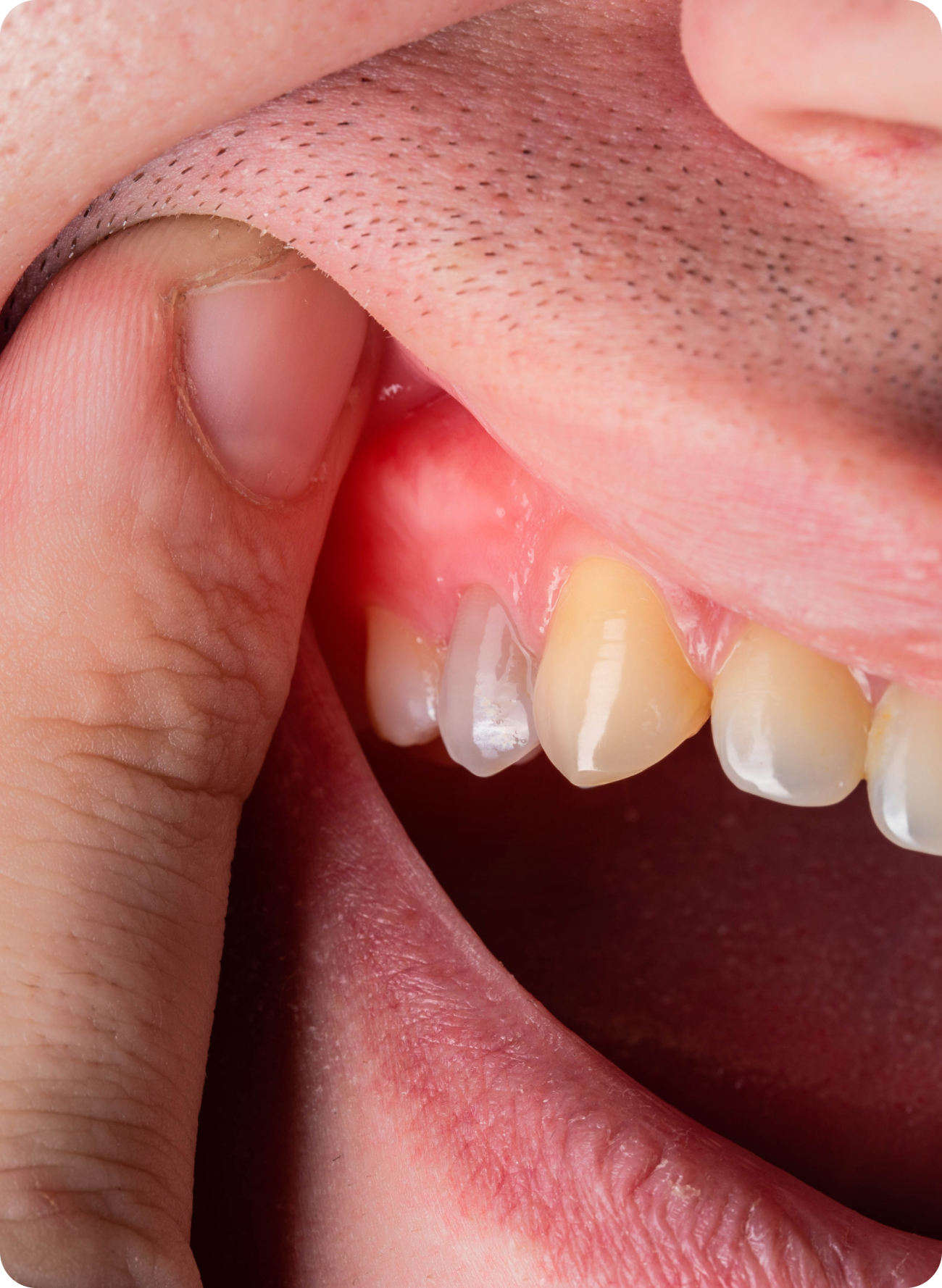
A pink spot inside a tooth can be an early sign of tooth resorption, a condition that causes the tooth structure to break down. Unlike a stain, it will not go away on its own and should be evaluated promptly.
What you'll learn in this article:
What a pink spot inside a tooth means.
The pink color appears as the tooth structure thins.
Tooth resorption may progress without noticeable symptoms.
Early treatment improves the chances of saving the tooth.
Treatment depends on how advanced the condition is.
Dental trauma, braces, and teeth whitening may increase risk.
If you've noticed a pink or reddish spot inside a tooth, schedule an appointment with a dental provider. Early evaluation can help determine the cause and preserve as much of the tooth as possible.
What causes a pink spot inside a tooth?
A pink spot inside a tooth is usually caused by tooth resorption, a condition in which the body begins breaking down the tooth's structure. In permanent teeth, this is not normal and often signals damage to the tooth.
As the tooth structure wears away, the tissue inside the tooth can become visible through the thinning enamel. Because this tissue contains many blood vessels, it appears pink or reddish.
The color is not a stain on the tooth's surface. It's a sign that changes are happening inside the tooth and should be evaluated by your dental provider.
Internal resorption — the most common cause of a pink spot
Internal resorption begins inside the tooth, in the soft tissue that contains the nerve and blood vessels. When this tissue is damaged—often by trauma or infection—the body may start breaking down the tooth from the inside.
As the inner tooth structure thins, the tissue inside becomes visible through the enamel, creating a pink or reddish appearance. The color is not on the surface of the tooth. It's showing through from within.
Internal resorption can affect any tooth but is most common in the front teeth. Because it often develops slowly and causes few symptoms at first, many people do not notice it until the pink spot becomes visible.
External cervical resorption — when it starts on the outside
External cervical resorption (ECR) begins on the outer surface of the tooth near the gumline. Like internal resorption, it can sometimes create a pink appearance as the affected tissue becomes visible through the tooth.
ECR is often difficult to detect early because it usually starts below the gumline and may not cause noticeable symptoms. The tooth can look and feel normal while the outer structure is gradually being damaged.
Because of this, ECR is often discovered during a routine dental exam or on an X-ray, making regular checkups important for early detection.
What puts a tooth at risk for resorption?
Tooth resorption does not happen randomly. In most cases, there is an identifiable trigger. The most common include:
Dental trauma
A knock, fall, or impact to the mouth, even one that happened years ago, can trigger resorption long after the injury appears to have healed.
Internal tooth bleaching
Bleaching procedures performed inside a tooth (often after a root canal) can irritate the surrounding tissue and trigger external resorption.
Orthodontic treatment
Prolonged pressure from braces or aligners can occasionally stimulate resorption, particularly at the root tips.
Chronic inflammation or infection
Ongoing infection near the root can activate the cells responsible for breaking down tooth structure.
Bruxism
Chronic grinding places sustained pressure on teeth that can contribute to resorption over time.
In some cases, no clear cause is identified. If you have experienced any of these, mention it to your dental provider — it helps guide the diagnostic process.
What symptoms should I watch for?
One of the most frustrating things about tooth resorption is that it often causes no symptoms at all — at least not at first.
When the tooth looks different but doesn't feel different
In the early stages, the only sign may be the pink or reddish discoloration you've already noticed. The tooth may feel completely normal. There may be no sensitivity, no soreness, and no swelling. This is actually common with internal resorption — the condition can progress for months or even years before causing any discomfort.
This is also why it is so important to act quickly when you notice a visual change. By the time symptoms appear, the damage is often more advanced.
Signs that the condition has progressed
As resorption advances, you may begin to notice:
Sensitivity to hot or cold temperatures
A dull aching or throbbing sensation in the tooth
Tenderness when biting or pressing on the tooth
Swelling or tenderness in the gum near the affected tooth
The tooth feeling loose
If you are experiencing any of these alongside the pink discoloration, the condition has likely progressed beyond the early stage. This does not mean the tooth cannot be saved — but it does mean you should not wait to be seen.
How is a pink spot on a tooth diagnosed?
Your dental provider will examine the tooth and take X-rays to determine the extent of the resorption. X-rays can reveal changes inside the tooth and around the root that are not visible during a routine exam.
In some cases, a cone-beam CT (CBCT) scan may be recommended. This 3D imaging technology provides a more detailed view of the tooth and surrounding bone, helping identify exactly where the resorption is occurring and how far it has progressed.
Your dental provider will also check for signs such as bleeding near the gumline, which can be associated with external cervical resorption.
Can a tooth with a pink spot be saved?
In many cases, yes — but the outcome depends heavily on how early the condition is caught and how much tooth structure remains.
Internal resorption is rare, accounting for fewer than 1% of dental pathologies in permanent teeth.1 When it does occur, early intervention is the single most important factor in preserving the tooth. Research on root resorption confirms that cases detected before significant structural loss occurs respond best to endodontic treatment — while advanced cases may ultimately require extraction.2 The sooner a dental provider identifies the cause of the pink spot, the more treatment options remain on the table.
What happens if tooth resorption is left untreated?
Without treatment, resorption continues to progress. The tooth structure becomes weaker over time. Eventually, the resorption can reach the outer surface of the root, creating a perforation — a hole through the tooth — that makes saving the tooth much more difficult.
In advanced cases, the tooth may need to be extracted. Leaving a severely resorbed tooth in place can also affect the surrounding bone and neighboring teeth.
The earlier you act, the more options you have.
What are the treatment options?
Treatment depends on the type of resorption, its location, and how far it has progressed.
Root canal therapy
For internal resorption, a root canal is the most common treatment. The procedure removes the damaged tissue inside the tooth, cleans the canal and seals it to prevent further breakdown. If the tooth structure is still largely intact, a crown may be placed afterward to protect and restore it.3
Surgical treatment
For external cervical resorption or cases where the resorption has reached the root surface, a surgical approach may be needed. This involves accessing the affected area directly, removing the resorptive tissueand repairing the tooth with a dental material. In some cases, this is combined with root canal therapy.
Extraction and replacement
When resorption has caused too much structural damage to save the tooth, extraction may be the most appropriate option. A dental implant or bridge can then restore the space and protect your bite and surrounding teeth. Your dental provider will walk you through every option and help you understand what makes the most sense for your situation.
When to see your dental provider
If you have noticed a pink or reddish spot inside a tooth, do not wait to have it evaluated. Tooth resorption does not resolve on its own, and it does not slow down without treatment.
You should schedule an appointment promptly if:
You can see a pink or reddish tint showing through a tooth
The tooth has become sensitive to temperature or pressure
You feel a dull ache or throbbing in the area
The gum near the tooth looks swollen or bleeds easily
You have a history of dental trauma, orthodontic treatment, or teeth bleaching — all of which can increase your risk
If you've noticed a pink or reddish spot in a tooth, visit an Aspen Dental office near you for a full evaluation. Your provider will take the imaging needed to understand exactly what is happening and discuss your treatment options clearly and without pressure.
Why is there a pink spot inside my tooth FAQs
Can tooth resorption spread to other teeth?
Tooth resorption does not spread from one tooth to another the way an infection might. However, if the underlying cause — such as chronic inflammation or pressure from orthodontic treatment — is not addressed, other teeth can develop resorption independently. Treating the affected tooth and identifying the root cause helps protect the rest of your smile.
Is tooth resorption dangerous?
Tooth resorption in a permanent tooth is a serious condition that requires professional treatment. It is not life-threatening, but if left untreated it can lead to tooth loss and damage to the surrounding bone. The good news is that when caught early, many cases can be treated successfully.
Can tooth resorption be reversed?
Tooth resorption cannot be reversed — the tooth structure that has already been broken down cannot be regenerated. However, treatment can stop the process from continuing and preserve as much of the tooth as possible. This is why early detection matters so much.
How common is tooth resorption?
External resorption is more common than internal resorption. Internal resorption in permanent teeth is relatively rare, though it can occur at any age. It is most often discovered during a routine dental exam or X-ray, which is one of the strongest reasons to keep up with regular checkups.
Will I need a root canal if I have a pink spot on my tooth?
Not necessarily — it depends on the type and extent of the resorption. Internal resorption is typically treated with a root canal. External resorption may require a different surgical approach. Some very early cases may be monitored closely before any procedure is needed. Your dental provider will recommend the most appropriate course of action based on your specific situation.
¹American Association of Endodontists — Tooth Resorption: https://www.aae.org/patients/dental-symptoms/tooth-resorption/
2Patel S, et al. "Present status and future directions: Root resorption." International Endodontic Journal. PMC, 2022. https://pmc.ncbi.nlm.nih.gov/articles/PMC9790676/
2Cleveland Clinic — Root Canal: Procedure & Recovery: https://my.clevelandclinic.org/health/treatments/21759-root-canal