Last updated 08.03.2026
Why won't my tongue stop hurting after I bit it?
Learn why a bitten tongue can stay sore, how to relieve discomfort at home and when lingering symptoms should be evaluated.

A bitten tongue keeps hurting because the tongue is one of the most nerve-sensitive parts of your mouth — and it never fully rests. Every time you swallow, talk or eat, the injured area gets disturbed before it has a chance to settle. In most cases, lingering soreness is completely normal and will resolve on its own within one to two weeks.
What you'll learn in this article:
Persistent soreness after a tongue bite is usually normal, but there are specific signs that something more is going on
Biting your tongue can trigger a canker sore at the injury site, extending discomfort by several additional days
Warm saltwater rinses and cold compresses are your two most effective at-home remedies
A bite that shows signs of infection, or hasn't improved after two weeks, deserves a professional evaluation
If you're dealing with soreness that isn't improving, schedule an appointment with your Aspen Dental provider for a personalized evaluation.
Why bitten tongue discomfort can last longer than expected
The tongue has more nerve endings than most other parts of the body, so even a small bite can be surprisingly uncomfortable.¹
Healing also takes longer because your tongue is almost always moving. Most people swallow about 600 times a day, and every swallow, conversation and meal rubs the injured area.² That constant movement can slow healing, even when everything is progressing normally.
Shallow tongue bites usually heal quickly. Deeper injuries may take longer, but they generally heal within three weeks.¹
Did biting your tongue trigger a canker sore?
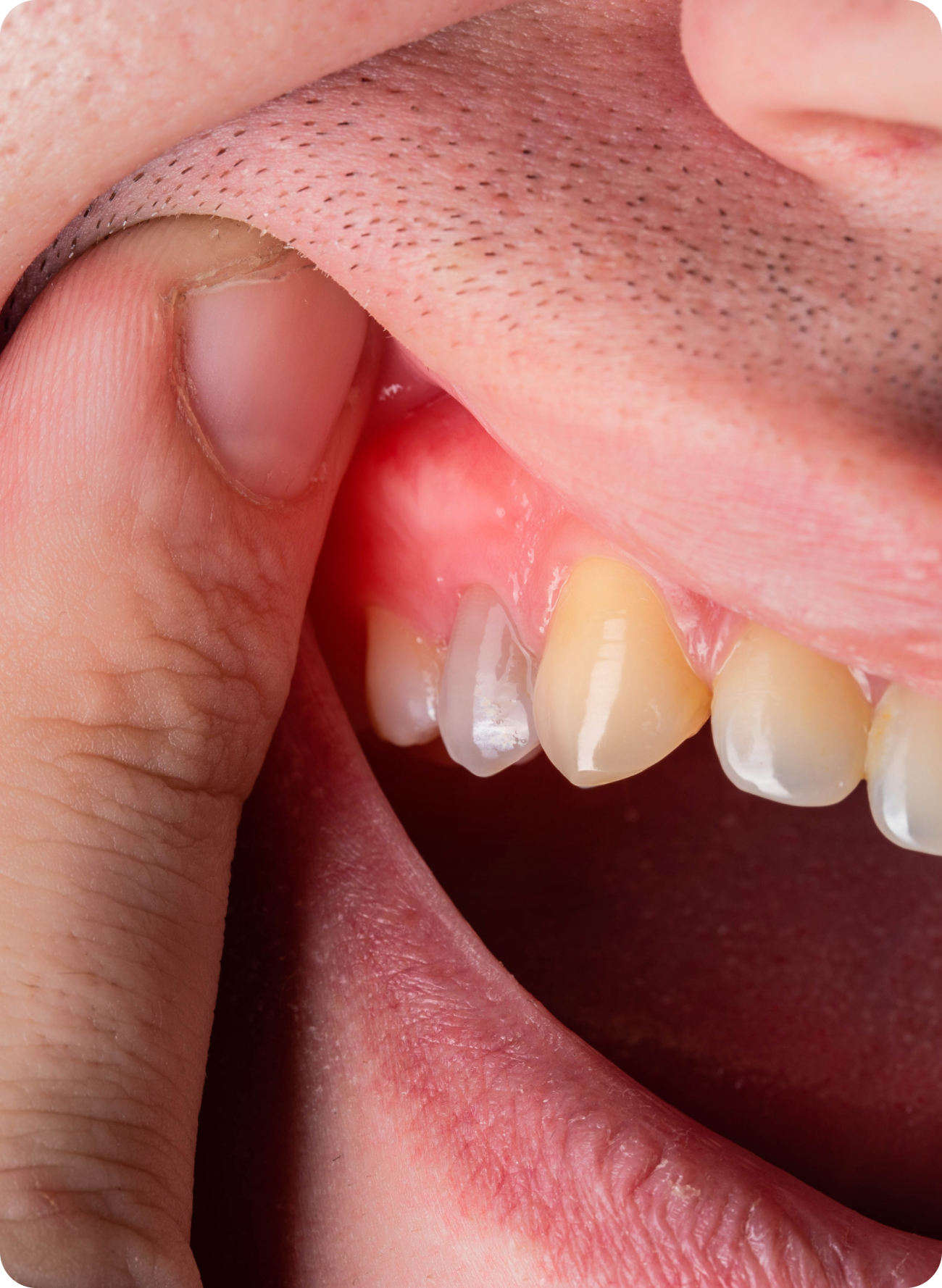
A canker sore is one of the most common reasons a bitten tongue seems to get better, then suddenly becomes more uncomfortable again. Biting your tongue can sometimes lead to a canker sore, also called an aphthous ulcer. It may appear as a small, shallow sore with a white or yellow center and a red border.³
If you notice a sore where you bit your tongue — or the discomfort returns after starting to improve—a canker sore is the likely cause. Although they usually heal on their own within one to two weeks, they can be especially tender when you eat hot, spicy or acidic foods.
How to relieve discomfort at home
These steps won't speed up healing dramatically, but they can keep soreness manageable and reduce the chance of complications.
Rinse with warm salt water. Mix about half a teaspoon of salt into a cup of warm water and swirl gently after meals. Saltwater rinses help reduce swelling and keep the area clean without irritating the tissue.⁴
Apply cold in the first 48 hours. Sucking on ice chips or pressing a cold, damp cloth to the outside of your cheek can reduce swelling shortly after the bite occurs.
Choose soft, mild foods. Spicy, acidic and crunchy foods will irritate the injury every time they make contact. Soft foods — yogurt, eggs, soup, mashed potatoes — give the area a better chance to settle.
Resist probing the sore spot. It sounds simple, but most people unconsciously press a sore tongue against their teeth to check if it still hurts. This slows healing and can reopen the injury.
When should you see your dental provider?
Most tongue bites heal without any professional care. But certain situations call for a closer look — or immediate care:
The bite is deep or gaping, or bleeding doesn't stop after 15 minutes of firm, steady pressure.
Swelling or redness increases after the first 48 hours rather than improving.
You notice pus, spreading redness or develop a fever — these can point to infection.
The soreness or visible wound hasn't improved at all after two weeks.
You keep biting the same spot repeatedly without a clear cause; this can sometimes signal a bite alignment issue worth addressing.
If bleeding is severe and a dental office isn't immediately available, an urgent care center or emergency room can help manage the wound.
Most tongue bites heal on their own. When they don't, it's worth finding out why. Your dental provider can evaluate the injury and check for problems such as a sharp tooth or bite issue that's preventing it from healing.
Why won't my tongue stop hurting after I bit it? FAQs
Most tongue bites heal on their own, but it's normal to have questions when the soreness lingers. Here are answers to some of the most common ones.
Is it okay to use over-the-counter gels or rinses to help with the soreness?
Yes, several over-the-counter options can make the soreness more manageable while your tongue heals. Topical gels containing benzocaine (such as Orajel) temporarily numb the area and can be helpful before meals. If a canker sore developed at the bite site, over-the-counter canker sore gels and patches create a protective barrier over the sore and can reduce tenderness noticeably. Alcohol-based mouthwashes are best avoided while healing since they can irritate sensitive tissue. Stick with a plain warm saltwater rinse instead.
Why does my tongue look white where I bit it — is that normal?
A white or whitish-yellow spot at the bite site is usually a canker sore, not a sign of infection. When tissue is injured, the body forms a protective layer over the wound that gives it a pale, whitish appearance. This is part of normal healing. A canker sore looks similar: a small oval sore with a white or yellowish center and a slightly red border. Both are expected after a tongue bite and should improve on their own within one to two weeks. What you don't want to see is spreading redness around the spot, pus, increasing swelling after the first 48 hours or fever — those warrant a closer look from your dental provider.
Is it normal to keep biting the same spot on my tongue?
Biting the same area more than once is common after an initial injury. Swelling from the first bite can make the spot more raised and easier to catch between your teeth. Once swelling goes down, repeat biting usually stops. If it keeps happening without a prior injury causing swelling, it may be worth mentioning to your dental provider, as recurring biting in one area can occasionally signal a bite alignment issue.
Sources
¹Merck Manuals: “Tongue Injury.” https://www.merckmanuals.com/home/mouth-and-dental-disorders/lip-and-tongue-disorders/tongue-injury
²Bulmer JM, et al. Gerontology & Geriatric Medicine, 2021: "Evaluation of Spontaneous Swallow Frequency in Healthy People." https://pmc.ncbi.nlm.nih.gov/articles/PMC8481724/
³Cleveland Clinic: “Tongue Problems: Types, Symptoms & Treatment.” https://my.clevelandclinic.org/health/diseases/24735-tongue-problems
⁴Medical News Today: “Bit tongue: Healing time, treatment, and prevention.” https://www.medicalnewstoday.com/articles/bit-tongue