Last updated 07.21.2026
What causes black triangles between your teeth?
Learn what causes black triangles between your teeth, when they're a sign of gum disease and what treatments may help close or reduce them.

Black triangles between your teeth form when the small triangle of gum tissue that fills the space at your gumline shrinks, recedes or fails to fill that space completely. These gaps typically appear at the base of your front teeth where two teeth meet. Most have a clear cause and a treatable solution.
What you'll learn in this article:
Black triangles form when gum tissue between teeth shrinks or was never tall enough to fill the space
Gum disease is one cause, but tooth shape, gum recession, aggressive brushing and orthodontic treatment can all produce the same result
New or widening black triangles deserve a professional evaluation, since some causes involve ongoing tissue loss that worsens without treatment
Several treatments can close or significantly reduce black triangles, depending on what's causing them
If you've noticed new or changing gaps at your gumline, schedule an appointment with an Aspen Dental provider for a personalized evaluation.
What is a black triangle?
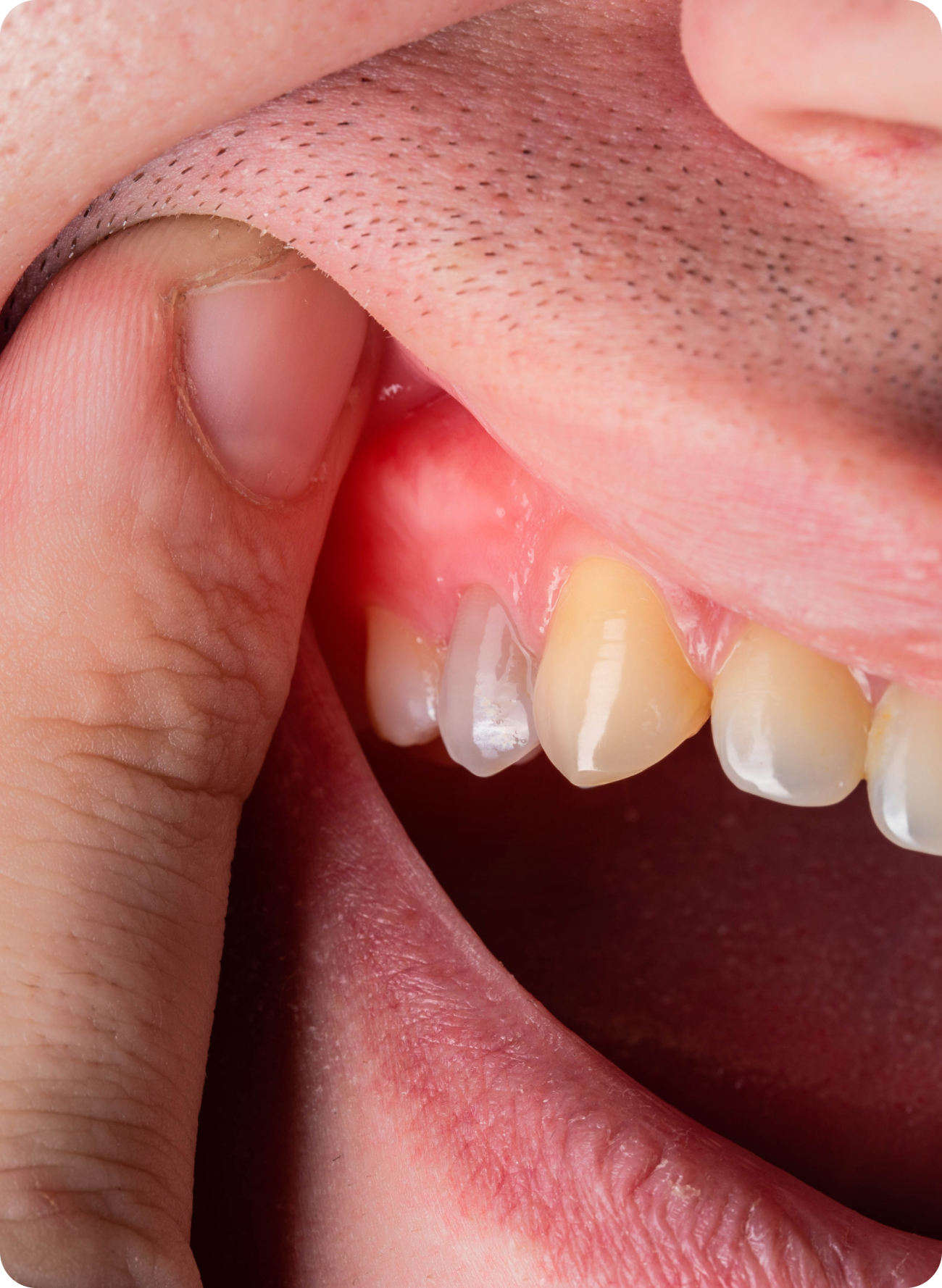
Between each pair of teeth, healthy gum tissue forms a small, pointed tip that fills the triangular space at the gumline. When that tip (called the interdental papilla) shrinks or disappears, a visible gap opens up. The gap looks dark because you're looking through an empty space toward the inside of your mouth. Nothing is discolored; it's simply the absence of tissue. Clinically, this is called an open gingival embrasure.
What causes black triangles between teeth?
Several different things can lead to black triangles, and not all of them involve gum disease. The cause matters because treatment depends entirely on understanding why the gap formed.
Is gum recession causing my black triangles?
Gum recession is one of the most common causes. When gum tissue pulls away from the tooth surface, the interdental papilla loses height along with it. Recession can develop from gum disease, aggressive brushing or the gradual thinning that comes with age. Once the papilla shrinks, it rarely grows back without treatment.
Can gum disease cause black triangles?
It can. Gum disease (periodontitis) breaks down the bone and soft tissue that support your teeth. As bone levels drop, the gum tissue between your teeth loses its foundation and collapses downward, leaving a triangular gap. Black triangles caused by gum disease are often accompanied by bleeding gums, tenderness or teeth that feel slightly loose. If you're noticing a new gap between your teeth alongside any of those signs, see your dental provider soon. The earlier gum disease is treated, the more bone can be preserved.1
Why did I get black triangles after braces?
When crowded teeth are straightened, the roots may end up slightly farther apart. That leaves a small space near the gumline that the gum tissue can't completely fill.
Does the shape of my teeth matter?
Yes, it does. Rectangular teeth — roughly equal in width from gumline to biting edge — fill the space between them more completely. More triangular teeth leave wider gaps near the gum regardless of how healthy that tissue is. This is partly genetic and not something better brushing habits can change.
Can brushing too hard cause black triangles?
Over time, yes. Aggressive brushing gradually wears away the gum tissue at the gumline, lowering the height of the interdental papilla. Snapping floss into the gum rather than guiding it gently around each tooth causes a similar type of irritation. A soft-bristled toothbrush and gentle technique go a long way toward protecting the tissue you still have.
Are black triangles a sign of something serious?
Not always. Some black triangles happen because of tooth shape or genetics and aren't a sign of a health problem. Others can be a sign of gum disease or bone loss that needs treatment. One of the most important things to watch is whether the gaps are new or getting bigger. Black triangles that stay the same and occur with healthy gums are usually a cosmetic concern. But if the gaps are growing or come with bleeding, tenderness or sensitivity, have them checked by your dental provider.
Can black triangles be fixed?
Many can. Treatment depends on what's causing the gap, how large it is and the condition of the surrounding tissue.
Composite bonding reshapes the tooth using a tooth-colored material to close or visually reduce the gap. It's minimally invasive and typically completed in a single visit. Dental bonding is one of the most common cosmetic options for black triangles.
Gum disease therapy addresses active infection and helps protect the bone and tissue that remain. It won't restore tissue that's already gone, but it prevents further loss, which means preventing the gap from growing.
Orthodontic treatment repositions roots so teeth sit closer together at the base, reducing the space the gum needs to fill.
Specialized microsurgical procedures may help reconstruct lost interdental papilla tissue in carefully selected patients, although these treatments are not suitable for every type of black triangle.2 Your dental provider can identify the underlying cause and explain which option — or combination of options — fits your specific situation.
How to prevent black triangles
Not all black triangles can be prevented. Tooth shape and genetics play a real role. But these habits help protect the gum tissue you have:
Use a soft-bristled toothbrush with gentle pressure and small circular motions
Floss daily by curving the floss gently around each tooth rather than snapping it into the gum
Keep your regular cleaning and exam appointments so gum disease is identified before it causes bone loss
Tell your dental provider if you notice changes at your gumline between visits
If you're concerned about changes in your gums, your dental provider can evaluate the cause and recommend the right treatment, if needed.
What causes black triangles between your teeth? FAQs
If you're still wondering whether black triangles are normal, permanent or something to worry about, it may be helpful to review the following commonly asked questions.
Do black triangles go away on their own?
No. Once gum tissue is lost, it does not regenerate without treatment. Black triangles that develop gradually may continue to worsen if the cause isn't addressed. The earlier the underlying problem is treated, the easier it is to prevent further loss.
Are black triangles common?
More common than most people expect. Research published in the NIH's National Library of Medicine indicates that black triangles affect a significant portion of adults and become more prevalent with age as gum tissue naturally thins over time.1
Will black triangles affect my oral health or just my appearance?
It depends on what's causing them. Black triangles caused by tooth shape or genetics are usually a cosmetic concern and don't signal a health problem. Black triangles caused by gum disease or bone loss are different. They can be a sign of tissue damage that may worsen without treatment.
Even stable black triangles can make those spaces harder to clean. Food and bacteria collect more easily in the gaps, increasing the risk of cavities and gum irritation over time. Whether your concern is cosmetic or related to your oral health, your dental provider can identify the cause and explain whether treatment is recommended.
Why do my black triangles look more noticeable after a dental cleaning?
Professional cleaning removes plaque and tartar, including buildup that may have partly filled or hidden the space between your teeth. Once it's removed, the gap can become more noticeable.
Before a cleaning, inflamed gums may also look slightly fuller because they're swollen. As the inflammation goes down after treatment, the spaces between your teeth may appear larger. This is a normal part of healing, not a sign that the cleaning caused new damage. If you're concerned about changes you notice after your visit, mention them to your dental provider at your next appointment.
Sources
1National Institutes of Health — The Forgotten Triangular Space: Anatomy, Disease Mechanisms and Treatment of the Interdental Papilla https://pmc.ncbi.nlm.nih.gov/articles/PMC12926675/
2American Academy of Periodontology — Vertex Technique: A Novel Microsurgical Technique for Papilla Reconstruction https://aap.onlinelibrary.wiley.com/doi/10.1002/cap.70028