Last updated 08.19.2026
What's the connection between thyroid problems and teeth?
Learn how thyroid problems can affect your teeth, gums and saliva, plus why dry mouth and regular dental care matter for protecting your oral health.

Thyroid problems can affect your oral health in several specific ways. When your thyroid is overactive or underactive, the hormonal imbalance reaches every cell in your body, including the tissue supporting your teeth and gums. The good news is that understanding the connection puts you in a much better position to protect your smile.
What you'll learn in this article:
Hypothyroidism and hyperthyroidism create different dental risks, and knowing which type you have helps you stay ahead of problems.
Dry mouth is one of the most common thyroid-related dental concerns, and it raises your cavity risk even when your brushing and flossing habits are solid.
Your dental provider may notice early signs of thyroid-related oral changes before you do, which is one more reason regular visits matter.
Keeping healthy smiles with a thyroid condition comes down to the right care and open communication with your dental team.
If you have a thyroid condition and haven't mentioned it to your dental care team, schedule an appointment with an Aspen Dental provider, so they can start watching for the changes that matter most and catch small issues early.
How thyroid problems affect your mouth
Thyroid hormones help control many processes in your body. When those levels are too low or too high, your mouth can be affected too. The effects can differ depending on whether you have hypothyroidism or hyperthyroidism.
Does hypothyroidism affect your teeth?
It can, because with hypothyroidism, your thyroid produces too little hormone, which slows down many body processes. In your mouth, this can mean poorer gum health and slower healing after dental work.¹
Some people with hypothyroidism also notice a change in taste or an enlarged tongue. In children, untreated hypothyroidism can delay when adult teeth come in.
Does hyperthyroidism affect your teeth?
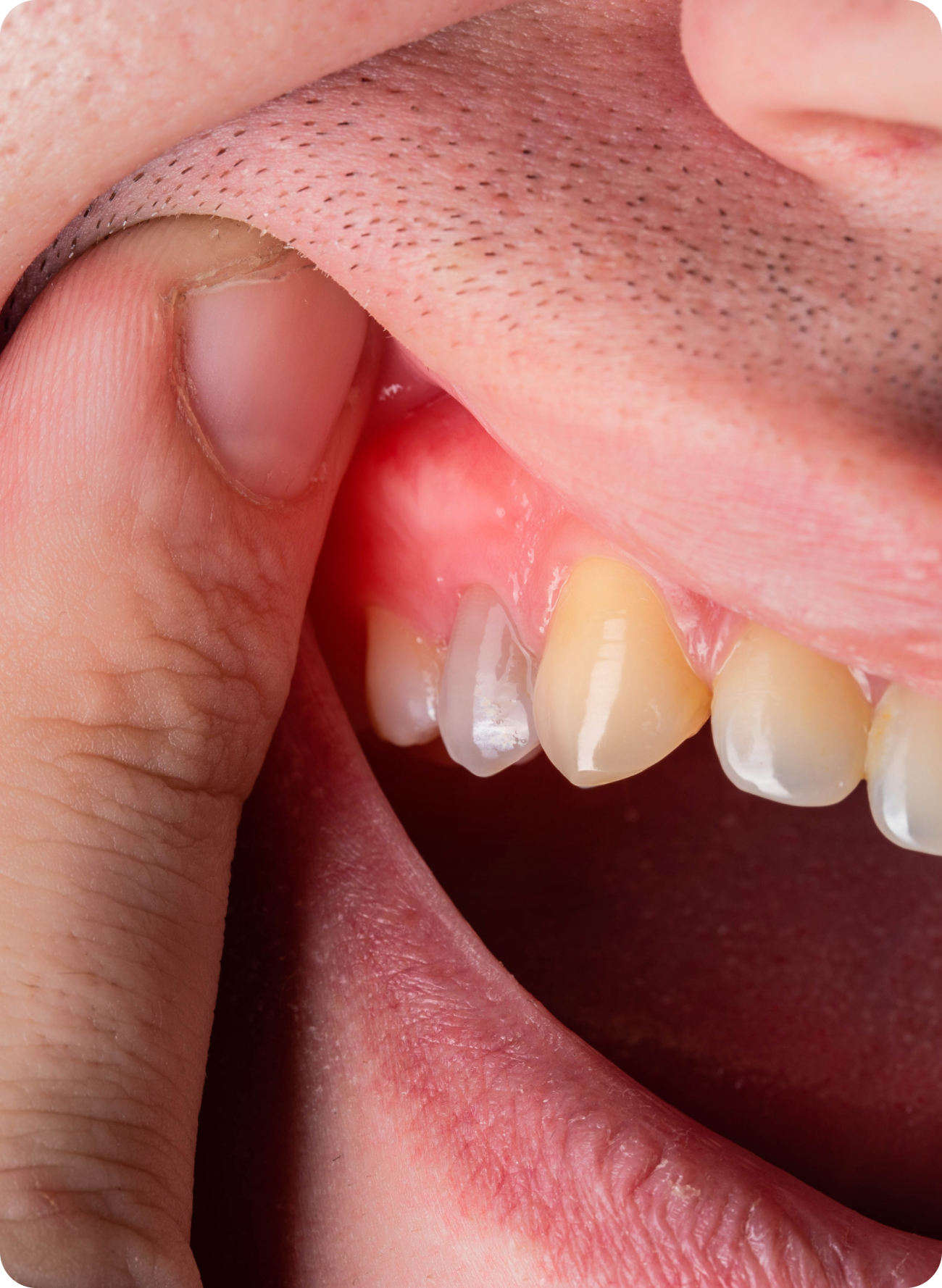
Yes, it can affect your oral health in several ways. Hyperthyroidism means your thyroid produces too much hormone, so people with hyperthyroidism may be more prone to cavities, gum disease and bone loss in the jaw. Burning mouth syndrome can also occur.¹
Why is dry mouth such a big deal for your teeth?
Saliva does far more work than just keeping your mouth wet. It washes away food from your teeth and gums and contains minerals that help keep teeth strong. When you do not have enough saliva, your risk of tooth decay goes up.²
Dry mouth can have many causes, including side effects from some medicines. If your mouth often feels parched, sticky or dry, tell both your doctor and your dental provider. Drinking water, chewing sugar-free gum or using a saliva substitute may help. Your care team can also check for signs of decay and talk with you about ways to protect your teeth.
What your dental provider needs to know
Thyroid conditions have been linked with changes in gum health.³ Tell your dental provider about your thyroid diagnosis and any medicines you take. This information can help your care team understand your health history and watch for changes in your teeth and gums.
This doesn't have to be complicated. A few lines on your health history form and a quick mention at your next visit are all it takes to help your dental care team understand your full health picture.
If you have a thyroid condition, keep your dental provider updated about your diagnosis, medicines and any changes you notice in your mouth. Regular dental visits can help catch problems early and protect your teeth and gums over time.
What's the connection between thyroid problems and teeth? FAQs
A few follow-up questions come up often when people start exploring how thyroid health and oral health connect.
Can thyroid medication affect my teeth?
It depends on the medicine. Many medicines can cause dry mouth as a side effect. If you notice a dry or sticky feeling after starting a medicine, tell your doctor and your dental provider. Drinking water and keeping up with daily oral care can help protect your teeth.
Will treating my thyroid condition improve my dental health?
In many cases, yes. When thyroid hormone levels return to a healthy range, the underlying causes of some oral symptoms (including gum inflammation and bone changes) tend to stabilize. Dry mouth caused by thyroid dysfunction may also improve as the condition is better controlled. That said, any gum disease or decay that developed while levels were off won't reverse on its own and needs to be treated directly. Getting your thyroid condition managed and your dental health evaluated at the same time gives you the best outcome on both fronts.
Is there a link between thyroid problems and tooth loss?
Thyroid disease does not usually cause tooth loss by itself. But thyroid problems can be linked with changes in gum and bone health. Keeping up with daily oral care and regular dental visits can help protect the tissues that support your teeth.
Sources
¹National Institutes of Health: PubMed Central. Indian Journal of Endocrinology and Metabolism. "Oral manifestations of thyroid disorders and its management." https://pmc.ncbi.nlm.nih.gov/articles/PMC3169868/
²National Institute of Dental and Craniofacial Research: “Dry Mouth.” https://www.nidcr.nih.gov/health-info/dry-mouth
³National Institutes of Health: PubMed Central. BMC Oral Health. "The effects of thyroid function on periodontal status: a systematic review and meta-analysis." https://pmc.ncbi.nlm.nih.gov/articles/PMC11847378/