Last updated 11.02.2026
Why might a dentist use an intraoral camera?
Learn how intraoral cameras help dentists explain findings and how their images differ from dental X-rays.

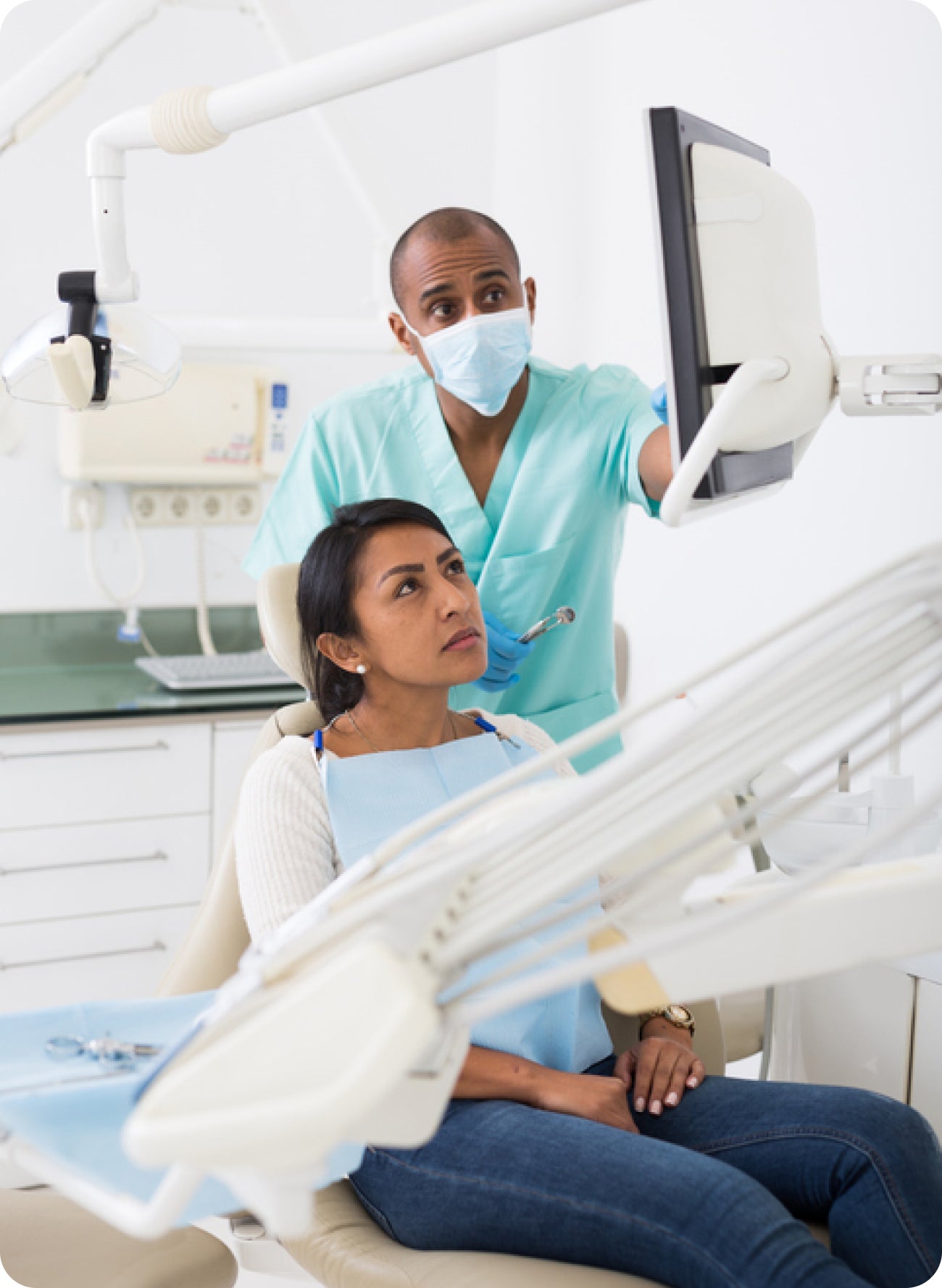
Has your dentist ever described a spot in your mouth that you couldn’t picture? It’s easy to feel lost when you can’t see what they see. An intraoral camera can help. It’s a small handheld camera that goes inside your mouth, so you can look at a close-up on a screen together. Your dentist may use it to get a closer view of visible surfaces, save images and explain findings during your exam.¹,²
What you'll learn in this article:
What an intraoral camera does during a dental visit
Which visible changes your dentist may show you
How camera images differ from X-rays and digital scans
What to ask when you review images with your dentist
If you have questions about your next exam, schedule an appointment with an Aspen Dental provider to discuss your care.
What is an intraoral camera?
An intraoral camera is a small camera designed to take pictures inside your mouth. A light illuminates the area, and the images appear on a connected screen. Your dental team can use the view to show you details that are difficult to see in a bathroom mirror.¹
A camera image is a close-up view of the surface. Think of it as a photograph your dentist can point to while explaining what they see.
Why use an intraoral camera during a dental examination?
Your dentist may use the camera to make a finding easier to see and discuss.² For example, if a tooth edge feels rough to your tongue, a close-up can help you understand which area your dentist is examining.
Images can also provide a visual record for later comparison.¹ The camera doesn't decide whether you need treatment. Your dentist considers the image alongside the examination, your symptoms and any other necessary tests. Ask how those findings fit together, especially if the recommendation is different from what you expected.
What can intraoral camera images show?
Depending on the view and image quality, your dentist may be able to point out visible details such as:
Tooth surfaces: a chipped or broken edge, a worn area or another surface change
Existing dental work: a filling or crown with a damaged edge or a visible crack
Gums and buildup: redness or swelling along the gum line, or plaque and tartar on exposed tooth surfaces
These are things to discuss with your dentist, not a checklist for diagnosing yourself. A noticeable mark doesn’t, by itself, explain its cause or tell you which treatment is appropriate.
Ask to see the whole tooth before looking at the close-up so you can understand where the area is.
What can't an intraoral camera show?
A surface photograph cannot provide a complete view inside a tooth or of the bone supporting it. Some areas between teeth are also hidden from the camera's view. A clear-looking picture therefore doesn't rule out every dental problem.
Dental X-rays can reveal problems that aren’t visible during an examination. Your dentist decides whether they are needed based on your history, current oral health and signs or symptoms.³ A camera image can’t replace an X-ray when your dentist needs that information.
If a tooth hurts but looks normal in the photo, tell your dentist about the pain. Describe when it happens, what brings it on and whether it has changed. That information is useful even when there isn't an obvious surface change to point to.
What happens when the camera is used?
Your dentist or hygienist positions the camera near the teeth or gums they want to photograph. They may reposition it to get a useful view, then save an image or show it to you on the screen.¹
Let the team know if holding your mouth open is uncomfortable or if you have a sensitive gag reflex. You can ask for a pause or an explanation before they move to another area. There is no need to wait until the images are finished to mention discomfort.
When you review the pictures, these questions can help:
What exactly are you showing me?
Does this need treatment, more testing or monitoring?
What other findings support that recommendation?
What are my options, and how soon should I act?
Is an intraoral camera the same as an intraoral scanner?
The names sound similar, and both devices may look like a small wand. Their main jobs are different. A camera shows you photographs or video views of what’s visible. An intraoral scanner creates digital dental impressions by capturing the shape of your teeth and gums and building a digital model.
If you're unsure which device your dental team is using, ask what information it collects and how that information will help with your care.
To talk through a concern about your teeth or gums, schedule an examination with your local dental provider.
Why might a dentist use an intraoral camera? FAQs
Can I ask for a copy of my images?
You can ask. Offices may save camera images in your dental record.¹ Ask whether yours did and how to request copies. If you’re seeking another opinion or changing providers, tell the office where you want the records sent and ask what they need from you to arrange it.
Does the camera need to be used at every visit?
Not necessarily. The tools used depend on your visit and the information your dentist needs. Equipment also varies by office, so call ahead if you want to know whether a camera is available.²
Will I be charged separately for camera images?
Ask the office before images are taken whether there is a separate charge and whether it is included in your estimate. If you have dental insurance, the team can explain what information to check with your plan. Ask about camera images and X-rays separately.
Sources
¹ National Institutes of Health, Clinical, Cosmetic and Investigational Dentistry: “Clinical applications of intraoral camera to increase patient compliance - current perspectives.” https://pmc.ncbi.nlm.nih.gov/articles/PMC6712211/
² American Dental Association: “Meeting the Doctor.” https://www.ada.org/resources/practice/practice-management/meeting-the-doctor
³ American Dental Association, MouthHealthy: “X-rays.” https://www.mouthhealthy.org/all-topics-a-z/x-rays