Last updated 07.16.2026
I can see a dark shadow inside my tooth — is it dying?
Learn what a dark shadow inside a tooth may mean, how to tell if the nerve is damaged and when treatment may help save the tooth.

Yes — a dark shadow inside a tooth is often a sign that the nerve or inner tissue has been damaged, is dying, or has already died. In many cases, it means the blood supply to the pulp has been cut off by injury or infection. While this can sound alarming, treatment is often successful when the problem is identified early.
What you'll learn in this article:
A dark shadow inside a tooth can be a sign that the nerve is damaged or dying, but old fillings and worn enamel can cause a similar appearance.
A tooth can be dying even if it doesn't hurt, and pain may stop after the nerve dies while the infection continues to spread.
Root canal treatment can save most dying teeth, especially when the problem is found early.
If you notice a new dark shadow, swelling, a bad taste or a bump on your gum, see your dental provider promptly.
If you've noticed a dark shadow that wasn't there before, don't wait for discomfort to develop. Schedule an appointment with your Aspen Dental provider so the tooth can be evaluated before the damage becomes more extensive.
What that dark shadow actually means
Inside every tooth is a soft tissue called the pulp, which contains the nerve and blood vessels. When the pulp is healthy, the tooth maintains its normal color.
When the pulp becomes damaged or dies, it can darken the tooth from the inside. Because enamel is slightly translucent, this discoloration may appear as a gray, brown, or dark shadow beneath the surface.
Unlike a surface stain, this type of discoloration cannot be brushed away, polished off or whitened. It is a sign that something inside the tooth has changed and should be evaluated by your dental provider. Learn more about what a grey tooth means.
Why the shadow shows more clearly on some teeth
Front teeth tend to reveal internal discoloration more easily because they're thinner and more translucent. A back molar with thicker enamel may show less visible shadowing even if the pulp is equally damaged. This means a shadow on a front tooth is often easier to spot early — which is actually an advantage.
The difference between a dying tooth and a dead tooth
A dying tooth is one where the pulp is still in the process of breaking down. A dead tooth — sometimes called a non-vital tooth — is one where the pulp has already stopped functioning entirely. Both can produce the same dark shadow. The distinction matters for diagnosis: a dying tooth may still respond to certain tests, while a dead tooth will not. Either way, the treatment path is similar, and neither condition resolves on its own.
What causes a tooth to start dying?
Two things account for the vast majority of cases.
A hit or injury to the tooth
A blow to the mouth — from a fall, a sports injury, or an accident — can damage the blood vessels inside the tooth even when the tooth looks completely intact on the outside. The trauma cuts off blood supply to the pulp. Without blood flow, the tissue begins to die. This can happen immediately after an injury or slowly over months or even years. Many people don't connect a darkening tooth to an old injury because so much time has passed.
Deep decay that reaches the nerve
When a cavity is left untreated, it works its way deeper into the tooth. Once it reaches the pulp, bacteria enter the inner chamber and cause infection. The infection damages and eventually kills the nerve. This is why a small cavity that seems minor can become a much bigger problem if it's ignored.
Other reasons a tooth may look dark — that aren't about dying
Not every dark shadow means the tooth is dying. Two other common causes are worth knowing:
Old metal fillings
Amalgam fillings — the silver-colored type used for decades — can cast a gray or dark shadow through the surrounding tooth structure over time. The tooth itself may be completely healthy. This type of shadowing is visible from the outside but is not a sign of pulp damage.
Thinning enamel
As enamel wears down with age, the tooth becomes more translucent. This can allow the naturally darker dentin underneath — or shadows from the back of the mouth — to show through. Again, this is not a sign of a dying tooth.
If you're unsure whether the shadow you're seeing is related to a filling, enamel wear, or something happening inside the tooth, your dental provider can determine the cause with a simple examination.
What other symptoms should I watch for?
Whether the cause is an old injury, untreated decay, or something less serious like an old filling, the symptoms that follow tend to look similar. A dark shadow is often the first visible sign — but it's rarely the only one.
When the tooth hurts — and when it doesn't
A dying tooth can cause throbbing or aching, especially in the early stages when the nerve is inflamed. But once the nerve dies, the discomfort often fades or disappears completely. This can make it seem like the problem has resolved on its own, but it hasn't. The infection may still be present and can continue to spread even without noticeable symptoms.¹ If a tooth recently stopped hurting after a period of throbbing or soreness, schedule an appointment with your dental provider. A sudden lack of symptoms is not always a sign that the tooth is healthy. Read more about why a tooth may need treatment even when it doesn't hurt.
Signs the infection has spread beyond the tooth
If the infection moves past the root tip into the surrounding bone and gum tissue, you may notice:
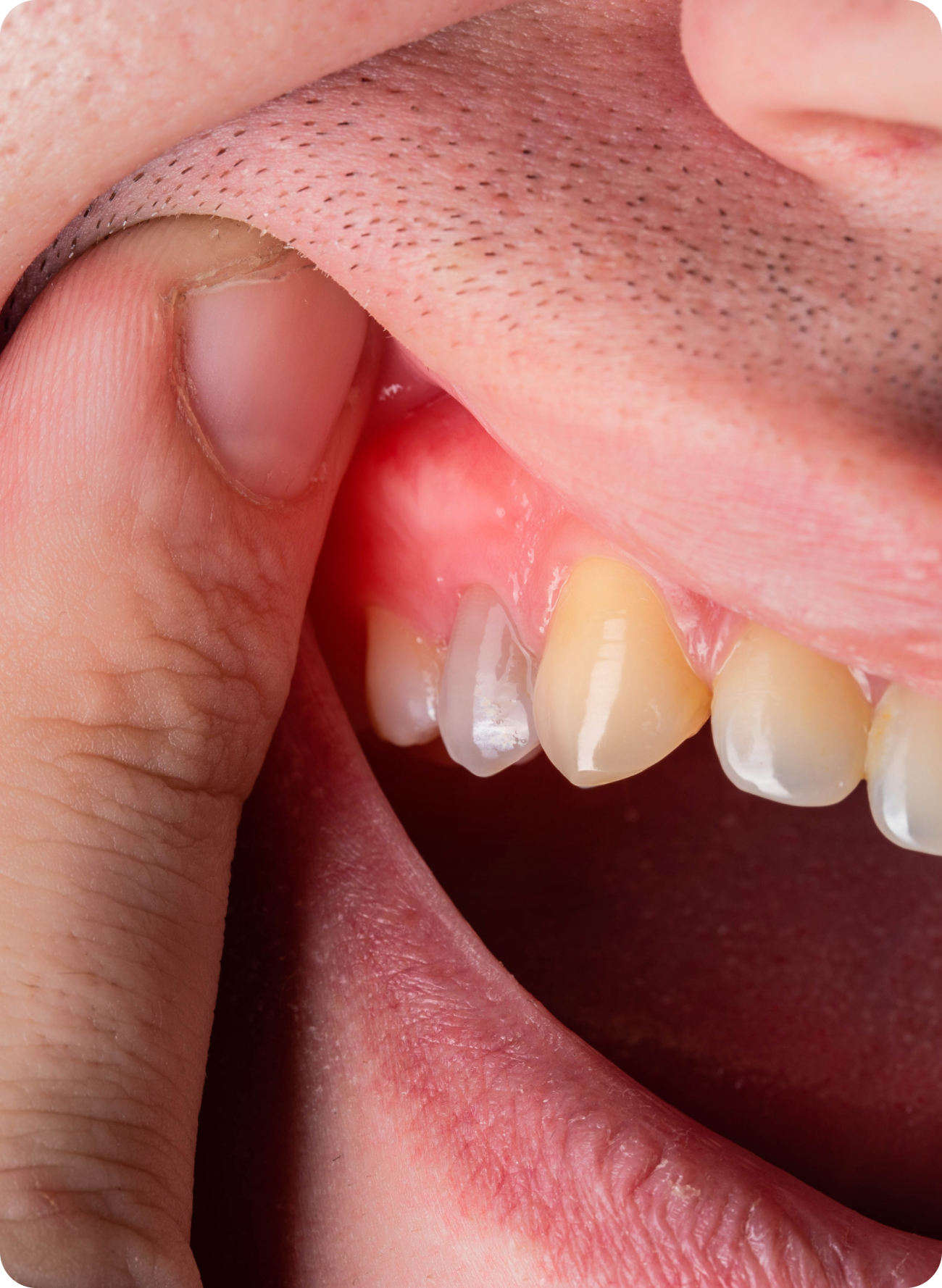
Swelling in the gum near the tooth, or in the jaw or face
A small pimple-like bump on the gum (called a dental abscess or fistula)
A persistent bad taste or odor that doesn't go away with brushing
Tenderness when biting down or pressing on the area
A feeling of pressure or fullness in the jaw
In rare but serious cases, a dental infection that spreads beyond the jaw can become a medical emergency. If you develop difficulty swallowing, difficulty breathing, or swelling that extends to your neck, call 911 or go to an emergency room immediately — do not wait for a dental appointment.2
How does a provider know for sure?
A visual exam alone isn't always enough to confirm what's happening inside the tooth. Your dental provider will typically use a combination of:
X-rays
An X-ray can reveal a dark shadow at the tip of the root, called a periapical lesion. This is different from the shadow you see through the enamel — it indicates bone loss caused by infection spreading from the tooth into the surrounding tissue, and it shows how far the problem has progressed.
Pulp vitality testing
A small cold stimulus or gentle test is applied to the tooth. A healthy tooth responds to the sensation. A dying or dead tooth does not. This confirms whether the pulp is still functioning.
Percussion testing
Tapping gently on the tooth can reveal tenderness that points to infection in the surrounding tissue. Together, these tests give your dental provider a clear picture of what's happening and what treatment is needed.
Can a dying tooth be saved?
In most cases, yes — if it's treated before the infection spreads too far.
Root canal treatment
A root canal removes the damaged or dead pulp from inside the tooth, cleans and disinfects the inner chamber and seals it to prevent further infection. The tooth is then typically restored with a crown to protect it. Despite its reputation, root canal treatment is one of the most common procedures in dentistry. According to the American Association of Endodontists, root canal treatment has a clinical success rate of over 95% and can allow a tooth to last a lifetime with proper care3 Learn what to expect with a root canal on a front tooth.
The dark shadow inside the tooth may fade somewhat after treatment, but it may not disappear entirely. If the discoloration is a concern, your dental provider can discuss options such as internal bleaching or a crown to restore the tooth's appearance.
When extraction is the better option
If the infection has caused significant bone loss, or if the tooth is too damaged to restore, extraction may be the more appropriate choice. Your provider will walk you through what comes next — including options to replace the tooth and protect the surrounding teeth.
When to see your dental provider
If you've noticed a dark shadow inside a tooth, schedule an appointment soon — even if you have no discomfort. A tooth can be dying silently for months, and the earlier it's evaluated, the more options you have.
See your dental provider the same day if you notice:
Swelling in the gum, jaw, or face
A pimple-like bump on the gum near the tooth
Severe throbbing that doesn't ease
Fever alongside dental symptoms
The sooner a darkened tooth is evaluated, the more options there may be to save it. Your dental provider can identify the cause and recommend the most appropriate treatment before the problem progresses.
I can see a dark shadow inside my tooth — is it dying? FAQs
Can a tooth die without any symptoms?
Yes. Once the nerve has fully died, the discomfort often stops completely. The tooth may feel entirely normal while the infection continues to develop inside. This is one of the most important reasons a visible shadow or color change should never be ignored, even when the tooth feels fine.
How long can a dead tooth stay in my mouth without treatment?
There's no safe timeline. A dead tooth doesn't heal on its own, and the infection inside can spread to surrounding teeth and the jawbone. Some people go months without symptoms, but the risk of complications increases the longer treatment is delayed. The sooner it's evaluated, the more options remain available.
How long does it take for a tooth to die?
The timeline depends on the cause. After a dental injury, the nerve may die within days or decline gradually over months or even years. When decay is the cause, the process is usually slower as bacteria spread deeper into the tooth over time. Because there is no reliable timeline, any new darkening, shadow, or color change should be evaluated promptly rather than monitored at home.
Is the shadow I see through the tooth the same as the shadow on an X-ray?
No — these are two different findings. The shadow visible through the enamel is caused by internal discoloration of the pulp tissue. The shadow on an X-ray near the root tip is caused by bone loss from infection spreading outside the tooth. Both are important, but they indicate different stages of the problem.
Can I treat a dying tooth at home?
No. There is no home remedy that can reverse pulp damage or clear an internal infection. Over-the-counter products may temporarily ease discomfort, but they do not treat the underlying problem. A dying tooth requires professional evaluation and treatment to prevent the infection from spreading.
Can a tooth infection become dangerous?
Yes, if it goes untreated. Most tooth infections are treated before they become serious, but an abscess can sometimes spread beyond the tooth to the jaw, neck, or other areas of the body.
Warning signs include swelling in the face or neck, fever, difficulty swallowing, or trouble breathing. These symptoms require emergency medical care.
This is one of the main reasons a dark shadow inside a tooth—or other signs of infection—should be evaluated promptly rather than ignored.
Sources
1American Association of Endodontists — https://www.aae.org/patients/root-canals/what-is-a-root-canal/
2Cleveland Clinic — https://my.clevelandclinic.org/health/articles/11368--dental-emergencies-what-to-do
3American Association of Endodontists — https://www.aae.org/patients/root-canals/what-is-a-root-canal/