Last updated 05.19.2026
Why is my tooth grey?
A grey tooth may be caused by trauma, decay, old fillings or a dead nerve. Learn what the color change means.
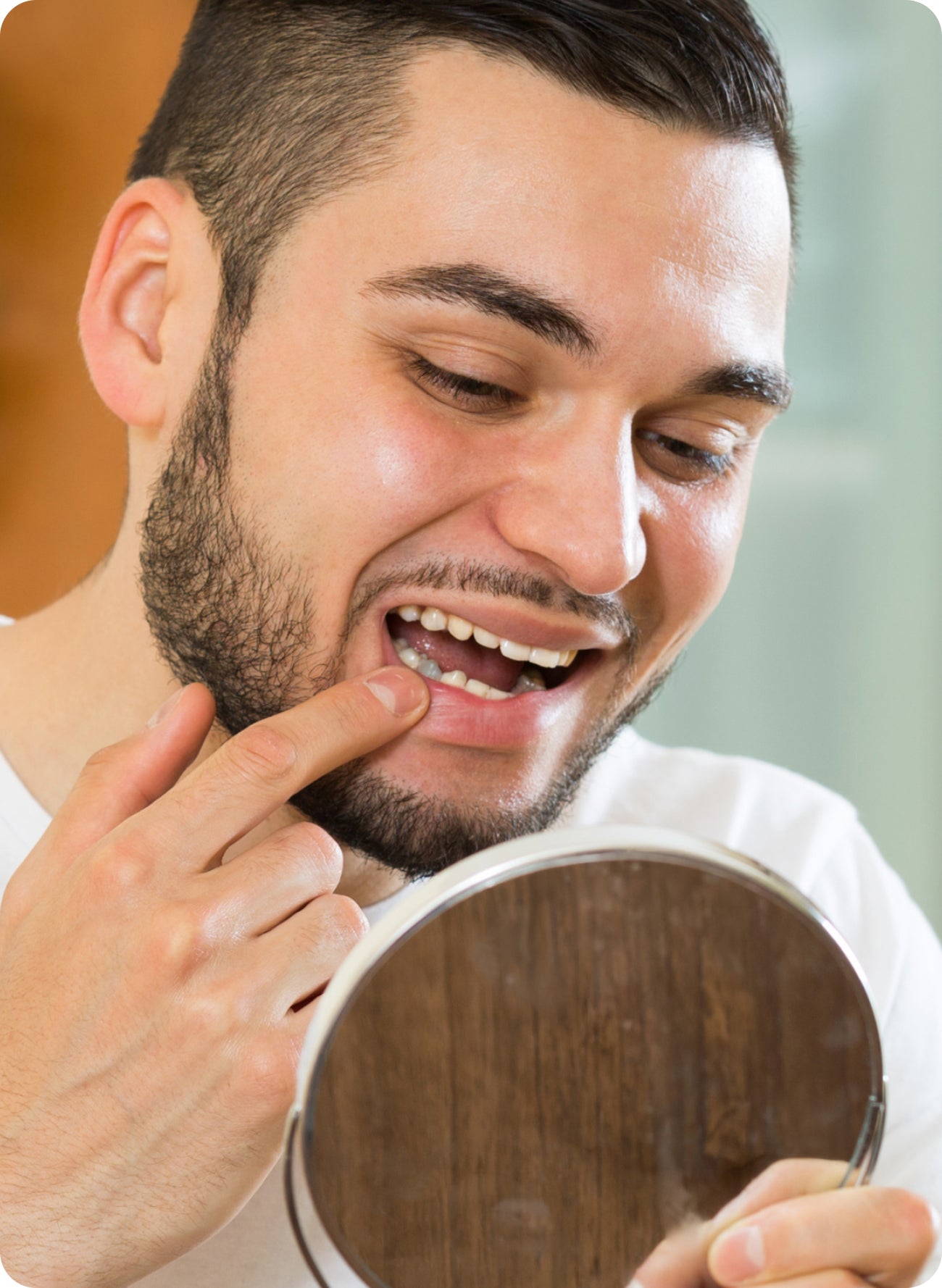
A grey tooth usually means the nerve inside the tooth has been damaged or has died, often after trauma, decay, or previous dental treatment. In some cases, the color change is harmless staining or the result of an old filling — but a tooth that suddenly turns grey should be evaluated, even if it does not hurt.
What you'll learn in this article:
The most common reasons a tooth turns grey
Why a grey tooth that does not hurt can still need treatment
The difference between a grey spot and a fully grey tooth
Whether a grey tooth can be whitened or repaired
What it means when a child’s tooth turns grey after an injury
When to schedule an appointment with your Aspen Dental provider
What causes a tooth to turn grey?
A tooth turns grey when the internal nerve and blood vessels (pulp) have been damaged, infected, or have died — most often due to trauma or advanced decay. Blood breakdown products seep into the surrounding tooth structure and stain it from within, producing a grey, blue-grey, or darkened appearance. The most common causes are trauma, decay or infection, previous dental work, certain antibiotics and natural aging.
When a tooth turns grey, dentists often refer to it as a "dead tooth" — meaning the internal pulp has died and can no longer supply blood or sensation to the tooth. A dead tooth is not always painful, but it does require evaluation and usually treatment to prevent infection from spreading.
A single grey tooth is often a sign that something has changed inside the tooth — not just on its surface. The causes range from a long-forgotten knock to the mouth to a filling placed years ago. Understanding which category applies to you is the first step toward the right treatment. The most common causes fall into six categories.
Trauma to the tooth
A blow to the mouth — from a fall, sports injury, or accident — can sever or damage the blood vessels supplying the tooth. Even if the tooth doesn't crack or chip, the internal tissue can die over time. The discoloration may not appear immediately; it can develop weeks or months after the original injury. Traumatic dental injuries are among the most common dental emergencies, affecting roughly 1 in 4 school-age children. ¹ This is one of the most common reasons a single front tooth turns grey.
Advanced decay or infection
When a cavity is left untreated, bacteria can reach the pulp and cause infection. As the pulp tissue breaks down, the tooth can darken from the inside. This type of grey discoloration is sometimes accompanied by aching, sensitivity to temperature or swelling — but not always.
Old amalgam (silver) fillings
Metal amalgam fillings can leach silver compounds into the surrounding tooth structure over time, creating a grey shadow visible through the enamel. This is a cosmetic issue rather than a sign of internal damage, and the tooth itself is typically healthy.
Previous dental work
A tooth that has had a root canal can sometimes darken over time, particularly if it was not restored with a crown. Without a crown to seal and protect the tooth, internal materials can oxidize and cause discoloration. Similarly, metal posts used in older restorations can contribute to a grey shadow visible through the enamel.
Tetracycline antibiotics
Certain antibiotics — particularly tetracycline — can cause permanent grey or blue-grey staining when taken during tooth development, typically in childhood or during pregnancy. According to the American Dental Association, tetracycline staining affects the dentin layer and cannot be removed with standard whitening treatments.2
Natural aging
As enamel thins with age, the darker dentin layer beneath becomes more visible. This can give teeth a grey or translucent appearance, particularly at the edges. Unlike trauma-related discoloration, this process is gradual and typically affects multiple teeth rather than a single tooth.
My tooth is grey but doesn't hurt — should I be worried?
Yes. A grey tooth that causes no discomfort can still indicate a serious problem. A tooth with a dead or dying nerve may lose its ability to signal distress, which means the absence of aching doesn't mean the tooth is healthy. Internal damage and infection can progress silently.
This is one of the most common concerns patients have: the tooth looks wrong, but nothing hurts. The reality is that a tooth with a compromised or dead nerve has lost its ability to transmit sensation. That means internal damage can continue progressing silently to surrounding bone and tissue without producing obvious symptoms. If your tooth is grey and you have no other symptoms, it still warrants an evaluation. An X-ray can reveal whether the pulp is damaged, whether infection is present and what treatment — if any — is needed.
What does a grey spot on a tooth mean?
A grey spot on one area of a tooth is different from a tooth that is changing color overall. The distinction matters because the causes — and treatments — are different.
Grey or dark spot on the surface: Often an early or advanced cavity. Tooth decay may appear grey, brown, or black depending on how long it has been present.
Translucent grey spot near the gum line: May indicate enamel erosion or early demineralization.
Grey shadow visible through the enamel: If located near an old filling, this is commonly caused by amalgam showing through the tooth structure. It is usually cosmetic but worth monitoring.
Grey line along the gum line: May be the metal edge of an older crown becoming visible as the gums recede slightly.
If the grey color appears in the gum tissue itself rather than the tooth, that's a separate concern — it may indicate an amalgam tattoo, gum disease or tissue changes that warrant their own evaluation.
Can a grey tooth turn white again?
Whether a grey tooth can be lightened depends entirely on the cause.
Dead or damaged pulp
Standard whitening treatments won't work because the discoloration is internal. A procedure called internal bleaching — performed after a root canal — can lighten the tooth from the inside. Results vary, and the tooth may need a dental crown afterward for full restoration.
Amalgam shadowing
The grey appearance can be addressed cosmetically with a tooth-colored composite filling, a porcelain veneer or a crown, depending on the extent of the discoloration.
Tetracycline staining
This type of staining is resistant to whitening. Veneers or crowns are typically the most effective option for improving appearance.
Aging or enamel thinning
Professional whitening can help to a degree, though results are limited when dentin is the primary source of the color change. Your Aspen Dental provider can identify the cause and walk you through which options are realistic for your specific situation.
What about a baby or toddler's tooth turning grey?
A grey baby tooth is common and usually less alarming than it looks. The most frequent cause is minor trauma — a fall or bump that damages the blood supply to the tooth. Because baby teeth have larger pulp chambers relative to their size, they are more susceptible to discoloration after injury.
In most cases, a grey baby tooth doesn't require immediate treatment unless there are signs of infection — swelling, a bump on the gum or the child showing signs of discomfort. Your Aspen Dental provider can evaluate the tooth and monitor it over time. Some injured baby teeth lighten on their own as the child grows.
If the grey tooth is loose and close to falling out naturally, it typically doesn't need intervention. If it's a permanent tooth that's turning grey, that warrants a prompt evaluation.
When to see your Aspen Dental provider
A grey tooth isn't always an emergency — but it's never something to ignore. Here's a simple guide:
Schedule an appointment soon if:
A tooth has turned grey or is visibly darkening
You notice a grey spot that is new or growing
A child's tooth turned grey after a fall or injury
Seek care promptly if:
The grey tooth is accompanied by aching, throbbing, or sensitivity to temperature
You have swelling in the gum or jaw near the affected tooth
You notice a bad taste or smell near the tooth — this can indicate active infection
A grey tooth with no other symptoms can be evaluated at your next routine visit. A grey tooth with swelling, throbbing or a bad taste should be seen sooner.
Your Aspen Dental provider can take X-rays, assess the health of the pulp and recommend the right next step — whether that's monitoring, a root canal, a crown or a cosmetic solution. Many grey teeth can be saved and restored to full function.
Schedule an appointment with your Aspen Dental provider to find out what's causing your tooth to change color and what your options are.
Grey tooth FAQs
Is a grey tooth always a dead tooth?
Not always. A tooth can appear grey due to old amalgam fillings, tetracycline staining or enamel thinning — none of which involve a dead pulp. However, a single tooth that has recently turned grey is often a sign of internal damage and should be evaluated by your Aspen Dental provider.
Can a grey tooth cause an infection?
Yes. If the pulp has died due to trauma or decay, bacteria can colonize the empty pulp chamber and cause an abscess. This can spread to surrounding bone and tissue if left untreated. Learn more about root canal infection symptoms and what to watch for.
How is a grey tooth treated?
Treatment depends on the cause. Options include root canal therapy to remove damaged pulp, internal bleaching to lighten the tooth from within, a dental crown to restore and cover the tooth, or a veneer for cosmetic improvement. Your Aspen Dental provider will recommend the right approach based on the cause and severity.
Does a grey tooth need to be removed?
Not necessarily. Many grey teeth can be saved with root canal therapy and a crown. Extraction is typically a last resort when the tooth cannot be restored. Your Aspen Dental provider will explore every option to preserve the tooth before recommending removal.
Can I whiten a grey tooth at home?
Over-the-counter whitening products work on surface stains and are not effective for internal discoloration. If your tooth is grey due to internal damage or tetracycline staining, professional treatment is needed. Home whitening kits will not address the underlying cause.
What does it mean if my grey tooth suddenly starts aching?
Aching or throbbing in a grey tooth can indicate that an infection is developing or spreading. This warrants prompt evaluation — don't wait for a routine appointment. Contact your Aspen Dental provider to be seen sooner.
Sources
1American Association of Endodontists. Traumatic Dental Injuries. https://www.aae.org/specialty/clinical-resources/treatment-planning/traumatic-dental-injuries/
2American Dental Association. Tooth Discoloration. https://www.ada.org/resources/research/science-and-research-institute/oral-health-topics/tooth-discoloration