Last updated 07.21.2026
Why do I keep biting the inside of my cheek?
Learn why you keep biting the inside of your cheek, what keeps the cycle going and when treatment can help stop it.

You keep biting the inside of your cheek because your teeth are repeatedly catching the same soft tissue — most often due to misaligned teeth, nighttime grinding or a stress-driven habit. Each bite causes the tissue to swell slightly, which raises it into the path of your teeth and makes the next bite easier to land. Understanding why the cycle starts and what keeps it going is the first step to stopping it.
What you'll learn in this article:
Once you bite your cheek, swelling makes the same spot easier to bite again — which is why one accident often becomes a repeating cycle.
Misaligned teeth, nighttime grinding and stress are the most common reasons cheek biting keeps happening.
A bite inside your cheek should heal within two weeks. If it doesn't — or if you notice a white or rough patch that lingers — get it evaluated.
Repeat cheek biting is treatable. A bite adjustment or a custom night guard is often all it takes to break the cycle.
If you're biting the same spot repeatedly, you can schedule an appointment with your Aspen Dental provider to identify the cause and find the right treatment.
Common reasons cheek biting keeps happening
Could my teeth be the problem?
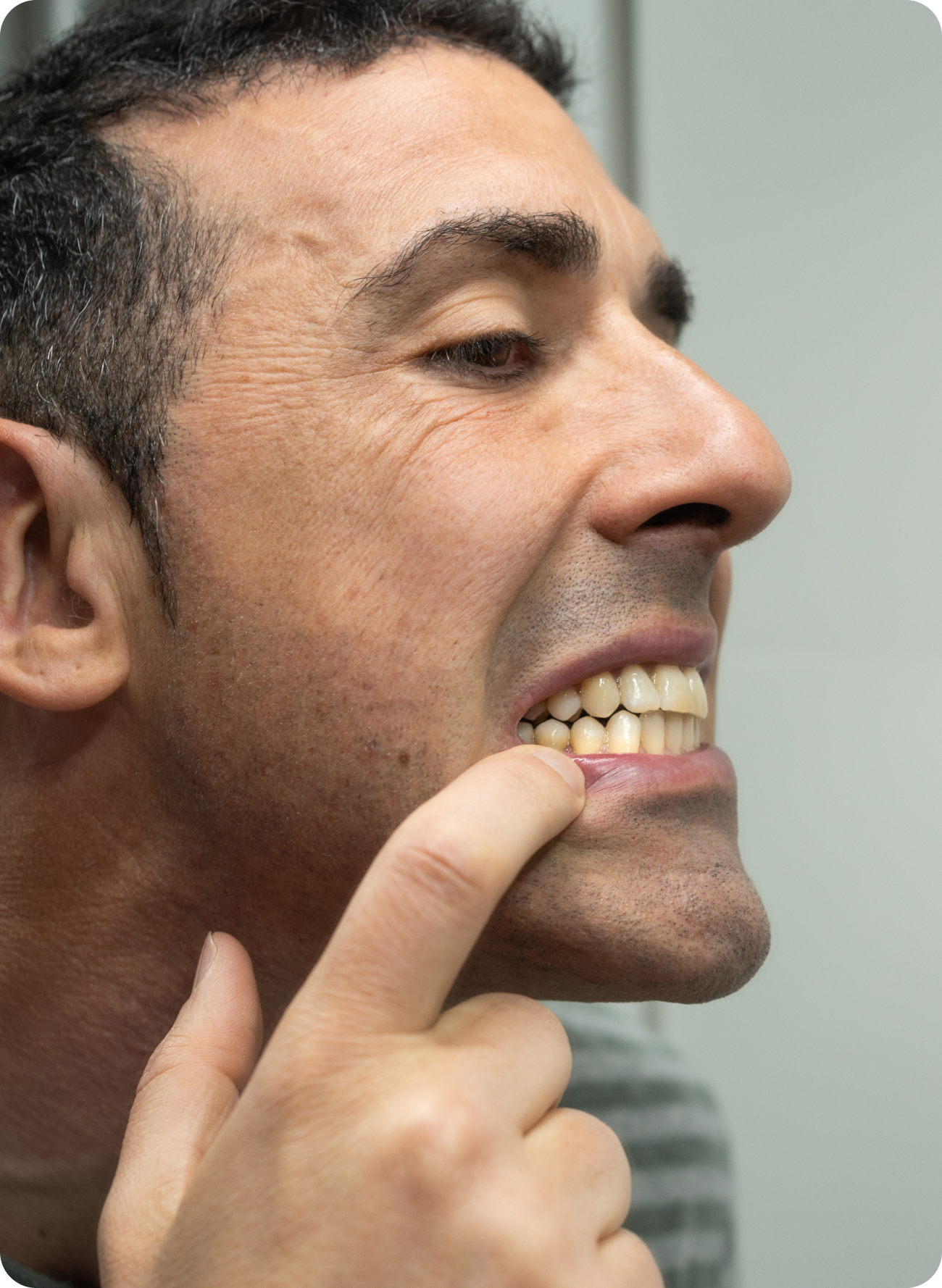
Misaligned teeth — where your upper and lower teeth don't come together evenly — are one of the most common causes of repeat cheek biting. When your bite is off, the inner cheek tissue can get caught between your teeth while you're chewing or talking. Because the alignment issue doesn't go away, neither does the biting.
Ill-fitting dental work, like a crown or denture that sits a bit too high, can produce the same result.
Could I be biting my cheek in my sleep?
If you wake up with a sore jaw, sensitive teeth or tenderness inside your cheeks, you may be grinding or clenching your teeth while you sleep. This condition, called bruxism, can happen without you realizing it.1
Many people don't know they grind their teeth until symptoms appear. A custom night guard from your dental provider creates a protective barrier between your teeth, helping prevent your cheeks from being bitten while you sleep.
Is stress or anxiety making me do this?
Stress and anxiety are common triggers for cheek biting. During stressful moments, many people bite or chew the inside of their cheek without realizing it, much like clenching their jaw or biting their nails. Over time, it can become a habit that happens without much thought.
Stress-related cheek biting often gets worse during high-pressure periods and improves as stress eases. If the urge feels hard to control or keeps happening, mention it to your dental provider.
Could it just be a habit at this point?
Sometimes cheek biting begins as an accidental bite and gradually becomes something you do without thinking, while reading, watching television or feeling bored. Many people don't notice they're doing it until they feel the resulting soreness. Habit-based biting often improves with increased awareness and, in some cases, simple behavioral strategies.
What repeated cheek biting does to your mouth
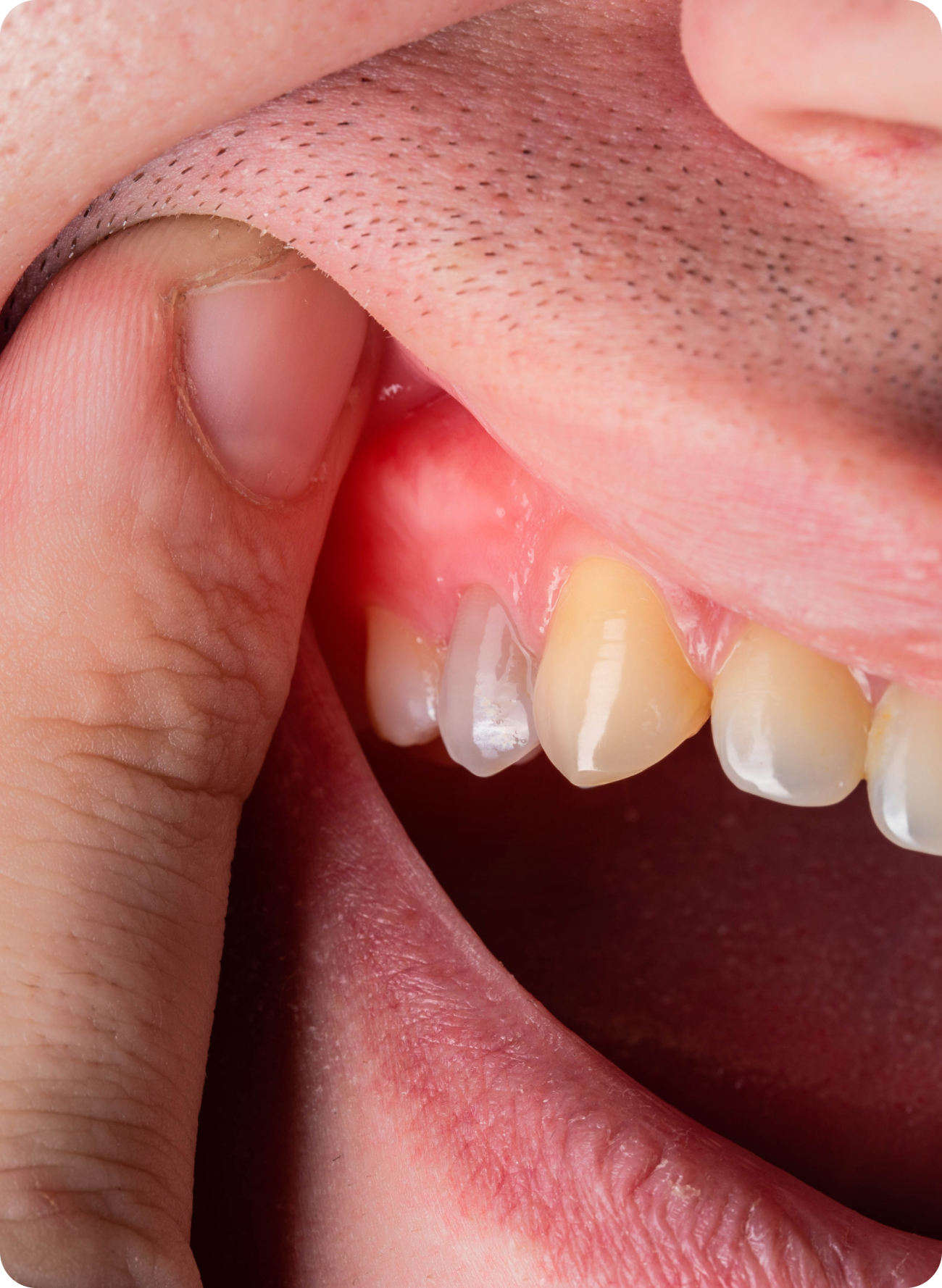
Each bite creates a small wound in the soft lining of your cheek. With repetition, the tissue becomes chronically irritated. Common signs include:
Persistent soreness or rawness on the inner cheek
Small ulcers or canker sores at the site
A rough or bumpy texture you can feel with your tongue
White or thickened patches from repeated trauma2
A minor bite heals within one to two weeks with no lasting effects. When the same spot is repeatedly injured, the tissue doesn't get a chance to fully recover, and over time it can develop a toughened, scarred appearance.
How to stop biting the inside of your cheek
What can I try at home?
Slow down while eating and focus on deliberate chewing
Rinse with warm salt water to soothe the area and support healing
If stress is a trigger, try keeping gum on hand as a redirect during tense moments
Notice when the biting tends to happen — identifying the pattern is the first useful step
When should I see my dental provider?
Schedule an appointment if:
The biting keeps happening despite your efforts to stop
A sore inside your cheek hasn't healed within two weeks
You're waking up with jaw aching, facial tenderness or sensitive teeth
You notice a persistent white patch, rough area or lump that's new
The soreness is affecting how you eat or speak
A dental provider can evaluate your bite, check for misalignment, discuss a night guard if grinding is a factor and make sure nothing else is contributing to the problem.
Why do I keep biting the inside of my cheek? FAQs
If you're still wondering why you keep biting the inside of your cheek, these answers address some of the most common questions.
Can a cheek bite get infected?
It's possible. The inside of your mouth hosts a large number of bacteria, and a bite that doesn't heal properly can occasionally become infected. Signs to watch for include increasing soreness, swelling that gets worse instead of better, a bad taste in your mouth or a sore that begins to look white or yellow at the center. A bite that appears to be getting worse after a few days (rather than gradually improving) is worth having evaluated.
How do I know if my cheek bite is healing normally?
A healing bite typically becomes less sore within two to three days and closes over within one to two weeks. You may notice a small white or yellowish spot at the center — this is normal, not a sign of infection. What isn't normal: a sore that grows more tender after the first few days, increases in size or hasn't improved at all after two weeks. Those warrant an evaluation.
Will cheek biting stop on its own, or does it need treatment?
It depends on the cause. If the biting is tied to a temporary stressor or an accidental habit, it often improves on its own as awareness increases and the tissue heals. If there's an underlying cause — misaligned teeth, ill-fitting dental work or nighttime grinding — it's unlikely to stop without addressing that. When home strategies aren't working after a few weeks, something structural may need attention.
Could my jaw or bite be causing problems I'm not aware of?
Sometimes. Bite misalignment isn't always obvious — some people have no discomfort and no visible asymmetry, yet their teeth still make contact unevenly in ways that catch the inner cheek. The same is true of dental work sitting slightly too high. If you're biting the same spot repeatedly without an obvious explanation, a bite evaluation can identify whether alignment is a contributing factor.
Does biting your cheek cause jowls?
There's no established clinical evidence that cheek biting directly causes jowls. Jowls are primarily the result of aging, gravity and the natural loss of skin elasticity over time. If you've noticed changes to your facial appearance, a healthcare provider can give you a personalized assessment.
Sources
1Mayo Clinic — Bruxism (teeth grinding): Symptoms and causes https://www.mayoclinic.org/diseases-conditions/bruxism/symptoms-causes/syc-20356095
2National Institutes of Health, National Library of Medicine — Morsicatio Buccarum/Labiorum: Chronic Cheek Biting https://pmc.ncbi.nlm.nih.gov/articles/PMC6406147/