Last updated 07.15.2026
Why did my white filling turn brown around the edges?
Learn why white fillings can turn brown around the edges, when it's only staining and when it may be a sign your filling needs attention.

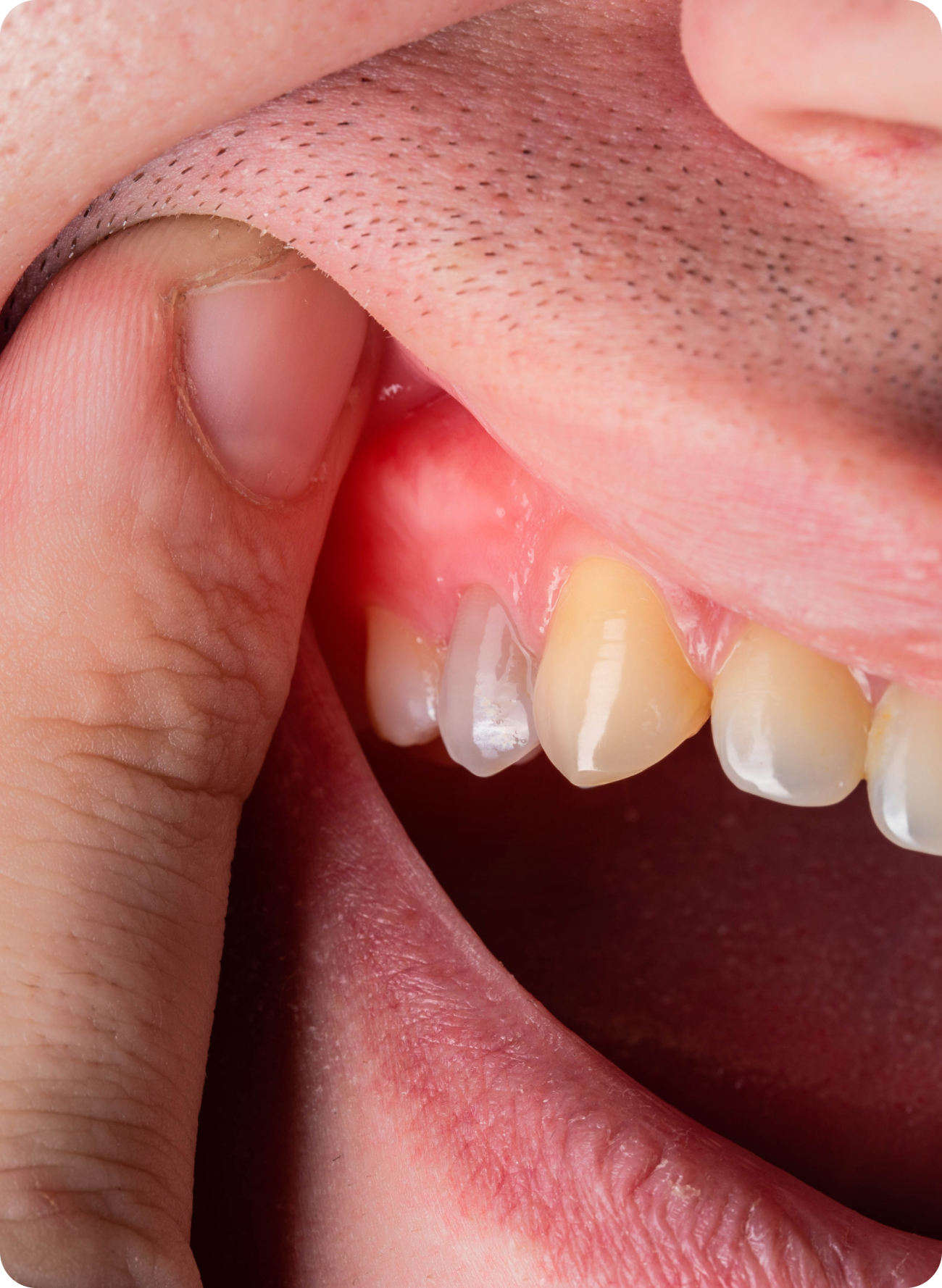
It's usually caused by surface stains, not a cavity. Composite fillings are slightly porous, especially where the filling meets the tooth. Over time, coffee, tea, red wine, tobacco and other stain-causing foods and drinks can discolor that edge, making it look yellow, brown or gray. In many cases, it's only a cosmetic issue. Sometimes, though, discoloration can be a sign that the filling is wearing out or that decay is starting underneath.
What you'll learn in this article:
The edge of your filling is structurally the most vulnerable spot, and that's exactly why it stains first
The most common causes are coffee, tea, wine, dark foods and tobacco, and these can often be managed
Brown edges aren't always harmless — a dark line or crevice at the tooth-filling border can signal a broken seal
Certain symptoms alongside browning mean it's time to schedule an evaluation
If you're unsure whether the discoloration on your filling is cosmetic or something more serious, schedule an appointment with your dental provider for a personalized evaluation.
Why the edges stain first
White fillings, also called composite fillings, are made from a mix of plastic resin and tiny glass-like particles. The resin helps the filling match the color of your natural tooth, but it's also slightly porous. Over time, it can absorb small amounts of pigment from foods, drinks and tobacco.¹
The edge of the filling, where it meets your natural tooth, is called the margin. This is the area most likely to stain. The bond between the filling and the tooth is more porous than the filling itself, so small amounts of pigment can collect there over time. That's why discoloration usually appears around the edges first.
Think of it like a sponge with a seam. The seam is where moisture and stains are most likely to collect.
What's most likely causing the browning
A few different factors can cause a composite filling to brown over time — often working together rather than alone. Here's what's likely behind it.
Food or drinks
Coffee, tea, red wine, dark berries, tomato-based sauces and dark soft drinks all carry deep pigments that composite resin absorbs over time. The longer your filling has been in place, the more exposure it has had — and the more visible the staining becomes, especially at the edges. It doesn't mean you've done anything wrong. This is a predictable part of how composite fillings behave.
Could tobacco use be making it worse?
Yes. Tobacco — whether smoked or chewed — contains compounds that stain porous materials quickly and deeply. If you use tobacco and have noticed brown edges on your filling, the two are likely connected. Tobacco-related staining tends to be darker and harder to remove than staining from food or drink alone.
Is my filling just getting old?
The resin portion of a composite filling gradually becomes more porous with age, which makes older fillings more susceptible to staining. A filling that looked perfectly white at placement may begin showing edge discoloration after five to seven years, even with excellent care. This is normal. It doesn't automatically mean the filling has failed — but older fillings with visible edge browning are worth monitoring at your regular visits.
When brown edges are more than a cosmetic issue
Not all edge discoloration is staining. Sometimes brown or dark edges mean the seal between your filling and your tooth has begun to break down. When a filling's margin develops a microscopic gap — a process called microleakage — bacteria and staining fluids can reach the space between the filling and your tooth. Left unaddressed, decay can form underneath the filling where you can't see or feel it.² That's why a dark line or crevice right at the border between your tooth and your filling deserves a closer look, especially when:
The discoloration appeared quickly or has darkened noticeably
The edge feels rough or you can feel a gap with your tongue
You have sensitivity to cold, heat or pressure near that tooth
The filling is more than 8–10 years old
Surface staining tends to look more uniform and sit on top of the filling material. Marginal breakdown tends to appear as a distinct dark line or shadow right at the tooth-filling border. The difference matters, but only a dental provider can assess it with confidence.
Can the staining be removed without replacing the filling?
Sometimes. If the discoloration is only on the surface, your dental provider may be able to polish the filling and remove the stain without replacing it. If the discoloration is caused by a broken seal or decay under the filling, polishing won't fix the problem. In that case, part or all of the filling may need to be replaced. This is a common procedure, and your dental provider can explain your options and what to expect.
Simple habits that slow edge staining
You can't prevent composite resin from staining entirely, but you can slow it down.
Rinse with water after coffee, tea or red wine
Use a straw for deeply pigmented drinks
Brush twice daily with a soft-bristled brush and a non-abrasive toothpaste
Keep up with regular cleanings — professional polishing removes surface buildup before it sets in
If you smoke, your dental provider can discuss options with you; quitting reduces staining on fillings, dental bonding and natural teeth
If the brown edge is getting darker, spreading or comes with sensitivity, it's a good idea to schedule an appointment with an Aspen Dental provider. A quick exam can tell you whether it's just a stain or a sign the filling needs attention.
Why did my white filling turn brown around the edges? FAQs
Will teeth whitening remove the brown around my filling?
No. Whitening products — including professional treatments and over-the-counter options — work by bleaching natural tooth enamel. Composite resin doesn't respond to bleaching the same way. Whitening will brighten your surrounding teeth but won't change the color of your filling. In some cases, whitening can actually make the contrast between a stained filling and newly brightened teeth more noticeable.
Is it normal for a brand-new filling to turn brown at the edges quickly?
No, this isn't typical. If you notice browning, a dark line or a visible gap at the edge of a recently placed filling, contact your dental provider. This can occur if the filling wasn't fully polished at the margins during placement, or if the bonding material didn't cure correctly — both are addressable.
Should I wait until my next regular cleaning, or do I need to schedule a separate appointment?
It depends on what you're noticing. If the browning is subtle and has been gradual, it can be evaluated at your next scheduled visit. If the edge has darkened noticeably, feels rough or you're experiencing sensitivity near that tooth, don't wait: Contact your dental provider to schedule a separate evaluation. Catching marginal breakdown early typically means a simpler, less involved procedure than waiting until decay has formed underneath.
Sources
¹Poggio C, Beltrami R, Scribante A, Colombo M, Chiesa M. "Surface discoloration of composite resins: Effects of staining and bleaching." Dental Research Journal. 2012 Sep-Oct;9(5):567–573. https://pmc.ncbi.nlm.nih.gov/articles/PMC3612193/
²American Dental Association. "Materials for Direct Restorations." ADA Oral Health Topics. https://www.ada.org/resources/ada-library/oral-health-topics/materials-for-direct-restorations