Last updated 04.15.2026
Tooth caps
Tooth caps can give your smile the appearance you want with the durability you need. Explore options at Aspen Dental.
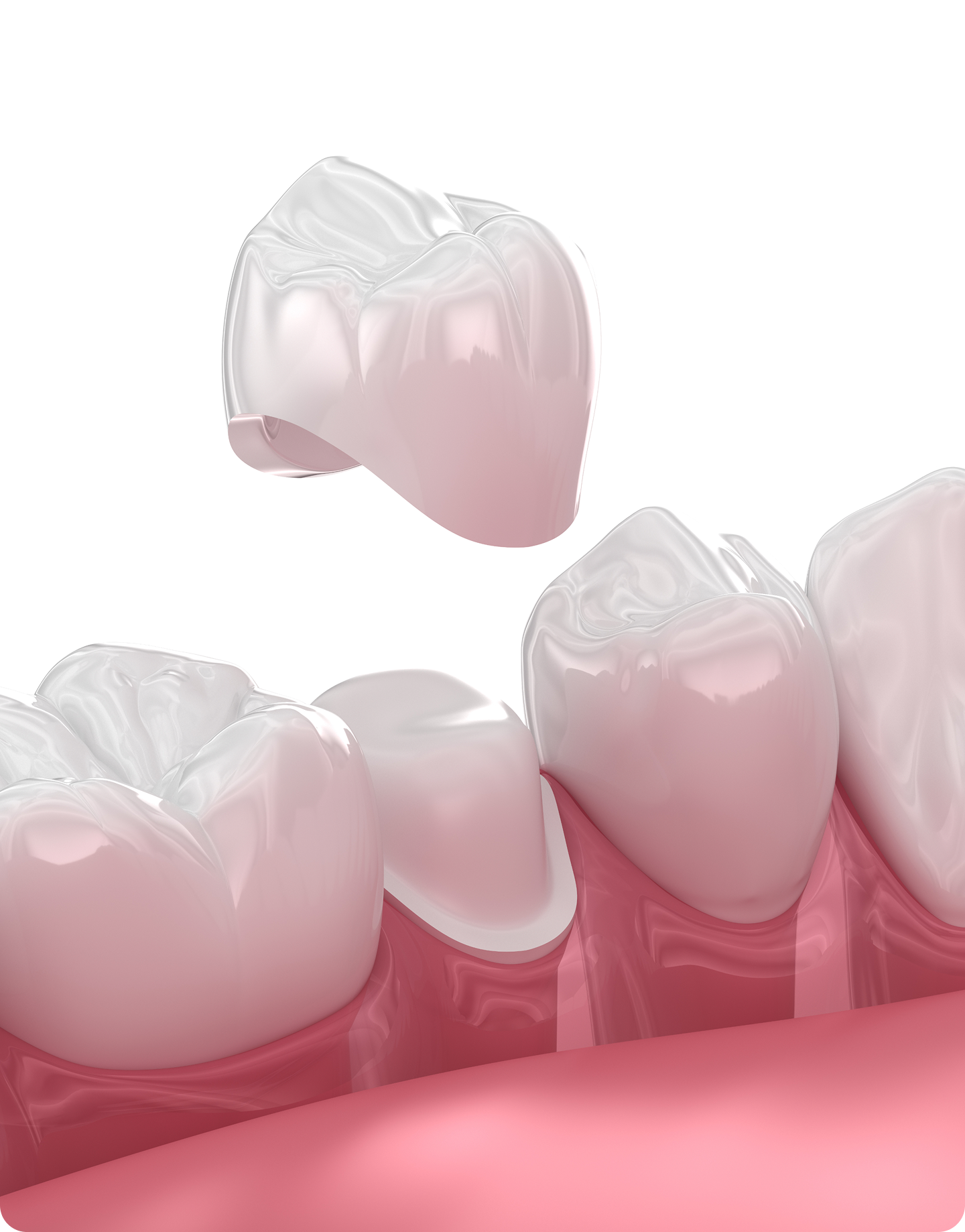
Tooth caps can give your smile the appearance you want with the durability you need. Schedule an appointment with your local Aspen Dental team today and explore your options.
What are tooth caps?
Tooth caps are dental prosthetic devices that can cover a tooth entirely or partially. Whether you are looking to improve the look of your smile or provide support for damaged teeth, tooth caps are a great solution.
Why do I need tooth caps?
There are many reasons why your Aspen Dental dentist may recommend you get a tooth cap. Here are some of the most common scenarios:
Severe decay
When a tooth has extensive decay that cannot be repaired with a regular filling.
Fractures or cracks
To provide support for tooth fractures that jeopardize the tooth’s structural integrity.
Root canal treatment
After a root canal procedure, a tooth may become brittle and require a crown for reinforcement.
Cosmetic enhancement
To improve the appearance of misshapen, discolored or poorly aligned teeth.
Types of caps for teeth
At Aspen Dental, 95% of dental crowns are made from zirconia—the strongest biocompatible material available. Other types of teeth caps include:
Metal tooth caps
A durable option for back teeth because of their metallic color. Aspen Dental also offers gold tooth caps.
Porcelain tooth caps
Porcelain tooth caps provide your tooth with strong, lasting protection.
Porcelain-fused-to-metal (PFM) tooth caps
These tooth caps are fused to metal and ceramic, so they blend in with your natural teeth.
Ceramic tooth caps
Ceramic tooth caps are the most natural looking option that can work well for front teeth.
Resin tooth caps
Resin tooth caps are temporary crowns you can wear until your permanent solution is ready.
Zirconia tooth caps
Zirconia offers superior aesthetics and durability.
How does a dentist fit a cap for a tooth?
Here is what you can expect when you go in for your tooth cap appointment at your local Aspen Dental office:
Preparation
Your dentist removes the outer portion of the tooth to prepare it for the tooth cap.
Impression
You’ll have an impression or digital scan made of your tooth.
Temporary tooth cap
You’ll have a temporary tooth cap placed on your tooth while you wait for your permanent tooth cap.
Final fitting
When it’s time for your final fitting, your dentist will adjust your permanent tooth cap and secure it in place.
Benefits of a tooth cap
Sometimes you’ll want a cap to protect your natural tooth, other times you may choose to have a tooth capped for cosmetic reasons. Here are some reasons why you may consider tooth caps.
Prevent tooth breakage
Restore worn-down tooth
Repair a broken or cracked tooth
Cover a dental implant
Protect a tooth post-root canal
Cosmetically enhance your smile
How much does a tooth cap cost?
Because every smile is unique, tooth cap costs can vary. At Aspen Dental, your tooth cap cost will depend on factors such as the material used, the amount of dental work needed and the location of your Aspen Dental office.
Aftercare for new teeth caps
At first you may experience some sensitivity to temperature changes right after you receive your dental tooth caps. However, this discomfort typically fades quickly. While in a temporary tooth cap, it's best to stick to soft foods and avoid anything crunchy or sticky. Remember to brush and floss around the capped area like you would around your other teeth, using extra care immediately following treatment. These simple guidelines can help you achieve the best results and enjoy the long-lasting benefits of your renewed smile.
How to care for tooth caps
It’s important to take good care of your new crowns. Here are some guidelines to help you achieve the best results:
Brush gently
Use a soft-bristle toothbrush and a non-abrasive toothpaste to clean your teeth and caps. Pay extra attention to the gumline around the caps to prevent plaque buildup.
Floss with care
Gently floss around the caps using a threader or interdental brush. This ensures thorough cleaning without placing undue stress on the caps.
Easy eats
Minimize crunchy, sticky and hard-to-chew foods. They can stress the caps and compromise their integrity.
Annual checkups
See your Aspen Dental care team at least once per year for professional cleanings and exams.
Tooth caps FAQs
How long does a tooth cap last?
A tooth cap or crown can typically last 5 to 15 years, depending on the material used and how well you care for your dental hygiene.
What is the difference between a dental crown and a tooth cap?
There is no difference between a tooth cap and a dental crown. These terms are both used to describe the same dental solution.
What happens if you don’t get a tooth cap?
The effects of not getting a tooth cap can depend on the reason you need one in the first place. If you don’t get a tooth cap when your damaged tooth needs support, the decay can progress. This can potentially lead to a root canal or tooth extraction in the future. Small cracks, compromised integrity, and defective existing restorations are also common.
Is teeth capping painful?
The process of getting a tooth cap is generally not painful, as anesthesia is used during the procedure. Some discomfort may occur afterward, but it is usually manageable with over-the-counter pain relief.
Getting tooth caps with your care team
Find out if dental crowns are the right choice for you. We think it might give you something to smile about. Schedule an appointment today.