Last updated 07.16.2026
Can sleeping with your mouth open damage your teeth?
Learn how sleeping with your mouth open can lead to dry mouth, cavities, gum disease and other dental problems, plus ways to help protect your teeth.

Yes, sleeping with your mouth open can damage your teeth. When you breathe through your mouth at night, it dries out. Without enough saliva to protect your teeth, bacteria and acids can build up more easily, raising your risk of cavities and other dental problems over time. The good news is that once you know what's causing it, there are steps you can take to help protect your teeth.
What you'll learn in this article:
Sleeping with your mouth open can dry out your mouth, reducing saliva and increasing your risk of cavities, gum disease and bad breath.
White spots on your teeth, morning dry mouth and ongoing bad breath can be early signs that mouth breathing is affecting your oral health.
Treating the cause of mouth breathing is the best way to protect your teeth and prevent long-term damage.
If you have chronic dry mouth, new tooth sensitivity or swollen gums, see your dental provider.
If any of these signs sound familiar, schedule an appointment with a dental provider for an evaluation.
Why saliva matters — and what mouth breathing does to it
While you sleep, saliva helps protect your teeth. It neutralizes the acids that bacteria produce, washes away food particles and delivers minerals that keep enamel strong.¹ Think of it as your mouth's natural defense system, working even while you sleep.
When you breathe through your mouth, the constant airflow dries out saliva faster than your body can replace it. By morning, your mouth may feel dry because your teeth and gums have spent hours with much less natural protection.
That's why mouth breathing matters. It's not the breathing itself that harms your teeth—it's the dry mouth that comes with it.
What can actually happen to your teeth
The effects of mouth breathing tend to develop over months or years. By the time many people notice something is wrong, the damage has already begun.
Does sleeping with your mouth open cause cavities?
Yes — but indirectly. Saliva helps neutralize the acids that cavity-causing bacteria produce. When your mouth stays dry during sleep, those acids remain on your teeth longer and can wear down enamel more quickly. Research has found that people who breathe through their mouths while sleeping have a higher risk of tooth decay than those who breathe through their noses.² Over time, the repeated loss of saliva's protection can increase your risk of cavities.
Can mouth breathing lead to gum disease?
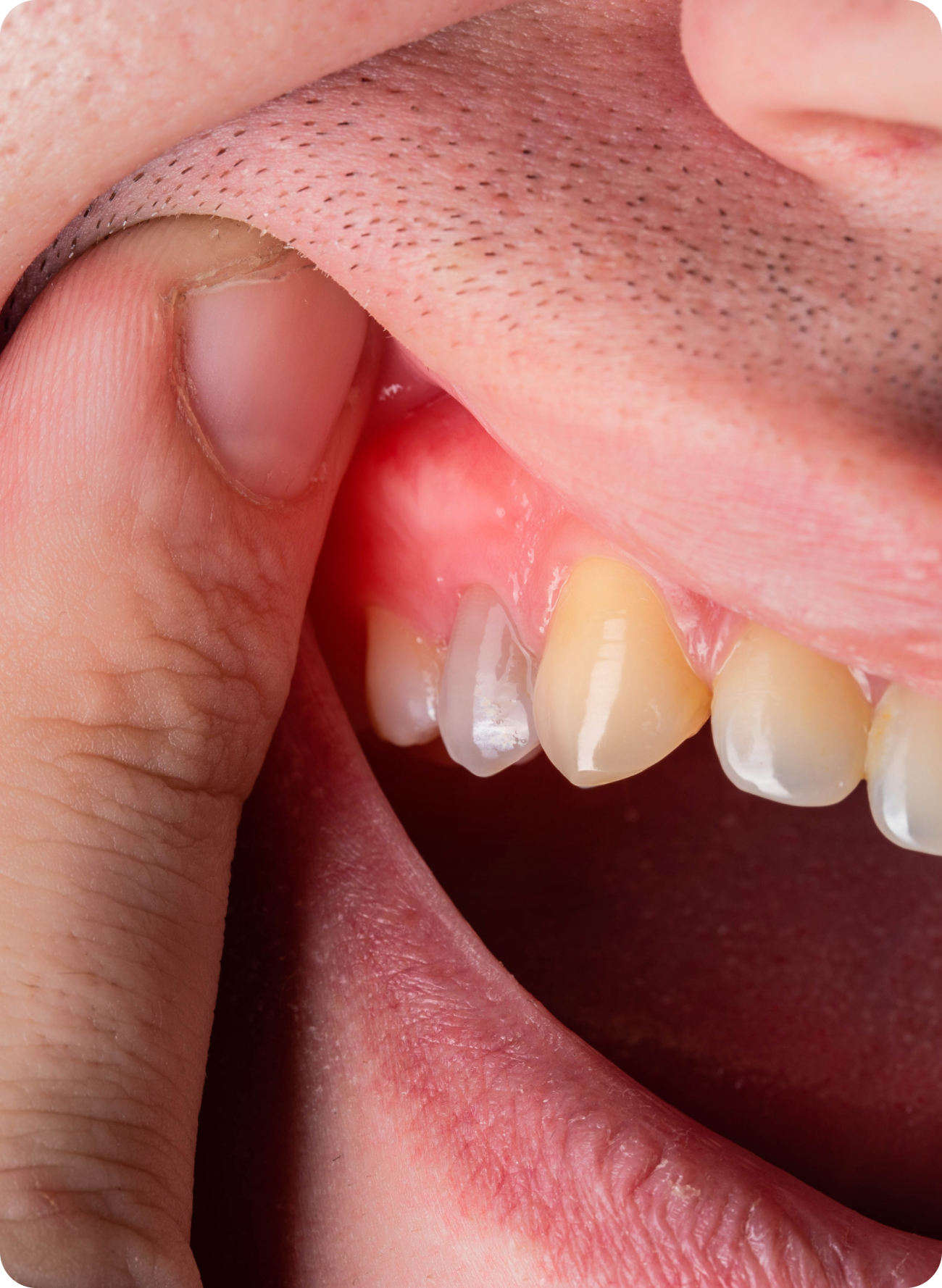
Mouth breathing dries out the gum tissue right along with the teeth. Dry, dehydrated gum tissue becomes irritated and inflamed — exactly the kind of environment where bacterial infection takes hold. Patients who breathe through their mouths often develop red, swollen or tender gums without connecting the habit to the problem. Left unaddressed, that inflammation can progress from early-stage gingivitis to more serious gum disease.
Does sleeping with your mouth open cause white spots on teeth?
It can. When your mouth stays dry overnight, your teeth lose some of the saliva and minerals that help protect enamel. Over time, chalky white spots can develop, often near the gumline. These are some of the earliest visible signs of enamel damage.
If you notice white or cloudy areas that weren't there before, mention them to your dental provider. When enamel damage is caught early, it can often be treated before it becomes a cavity.
Can mouth breathing make bad breath worse?
Yes, and it's one of the most noticeable everyday effects. Saliva keeps bacterial levels in check. When your mouth stays dry through the night, bacteria multiply in greater numbers — and that produces the sulfur compounds responsible for bad breath. Morning bad breath that persists even after brushing is a common complaint among people who breathe through their mouths at night.
How do you know if you're sleeping with your mouth open?
Since the habit happens while you sleep, most people find out indirectly. The most common signs are:
Waking up with a dry, sticky or cotton-like feeling in your mouth
A sore or dry throat in the morning
Bad breath that brushing doesn't fully clear
Snoring, noticed by a partner or family member
Feeling tired even after sleeping a full night
White spots or increased sensitivity in your teeth
You don't need to catch yourself in the act. If several of these sound familiar, it's worth discussing with your dental provider.
What causes mouth breathing during sleep?
Mouth breathing at night is almost always the result of something making nasal breathing difficult. The most common causes include:
Nasal congestion from seasonal allergies, chronic allergies or a recurring cold
A deviated septum, where the wall between the nostrils is off-center and partially blocks airflow through one or both nasal passages¹
Enlarged tonsils or adenoids, particularly in children
Nasal polyps, small noncancerous growths that can develop inside the nasal passages
Sleep apnea, a condition in which breathing repeatedly pauses during sleep, often triggering the mouth to open as the body gasps for air
In children, chronic mouth breathing during the years when the jaw is still developing can affect facial structure and tooth alignment over time — a concern that's much easier to address early than after growth is complete. Treating the cause of mouth breathing is more effective than trying to change the habit on its own. A dental provider can identify oral health changes connected to mouth breathing and help you determine the right next steps.
Can sleeping with your mouth open cause dry socket?
It can increase the risk. Dry socket happens when the blood clot that forms after a tooth extraction is lost before the area has healed. Because mouth breathing can dry out the tissues in your mouth, it may interfere with the normal healing process during the first few days after an extraction.
If you tend to sleep with your mouth open, let your dental provider know before your extraction. They can recommend ways to help protect the area and support proper healing.
Practical steps to protect your teeth
You may not be able to fix the underlying cause overnight, but several strategies can reduce the impact of mouth breathing on your oral health:
Stay hydrated before bed to support overnight saliva production
Use a bedroom humidifier to add moisture to the air and reduce dryness
Try over-the-counter nasal strips to gently open nasal passages and promote nasal breathing
Switch to an alcohol-free mouthwash — alcohol-based rinses dry out an already-compromised mouth
Use a saline nasal spray before bed to clear nasal passages and make nasal breathing easier
Keep up with regular cleanings so your dental provider can catch early signs of decay or gum disease before they progress
For chronic mouth breathing, these steps help — but they work best alongside treatment for the root cause.
When to see your dental provider
Schedule an appointment with an Aspen Dental provider if you notice white spots developing on your teeth, increased tooth sensitivity, tender or swollen gums, or a pattern of dry mouth every morning. These signs suggest that mouth breathing may already be affecting your oral health. The earlier your provider identifies the problem, the more straightforward the solution is likely to be.
Can sleeping with your mouth open damage your teeth? FAQs
A few more questions come up often about mouth breathing and its effects on your smile. Here's what patients most want to know.
Does sleeping with your mouth open cause yellow teeth?
It can contribute to staining over time. When tooth surfaces lose their moisture and mineral protection, the enamel becomes more porous — which means it picks up stains from coffee, tea and food more readily. Staying well hydrated and keeping up with professional cleanings can help minimize discoloration.
Is occasional mouth breathing as harmful as chronic mouth breathing?
Not usually. Breathing through your mouth during a cold or allergy flare is unlikely to cause lasting damage. The dental concern is chronic, nightly mouth breathing over months or years. A sustained loss of saliva protection is what creates real risk for cavities and gum disease.
If I fix my mouth breathing, will the dental damage reverse?
It depends on how far the damage has progressed. Early enamel changes and gum inflammation can often improve once saliva production is restored and normal moisture levels return — especially if treatment begins before significant erosion or infection has developed. Existing cavities, however, will not heal on their own regardless of what caused them. That's why catching the effects early matters.
Your dental provider can assess the current condition of your teeth and gums and recommend the right treatment to stop further damage and address anything that's already occurred.
Does mouth breathing get worse over time?
For some people, yes. Nasal passages can narrow with age, and conditions like sleep apnea become more common in adults. Regular dental checkups help track changes in your oral health so that any worsening patterns are caught early.
Sources
¹Cleveland Clinic. "Mouth Breathing: Symptoms, Complications & Treatment." https://my.clevelandclinic.org/health/diseases/22734-mouth-breathing
²Tamkin J. "Impact of airway dysfunction on dental health." Bioinformation, 2020. https://pmc.ncbi.nlm.nih.gov/articles/PMC6986941/