Last updated 08.11.2026
Silver diamine fluoride: Is the black stain worth it?
Learn why silver diamine fluoride turns cavities black, how it helps stop decay and when the cosmetic trade-off may be worth considering.

Silver diamine fluoride (SDF) can help stop a cavity from getting worse without drilling or an injection. The trade-off is that it permanently darkens the decayed part of the tooth. For many patients, that may be a reasonable trade-off, especially when the cavity is on a back tooth or when traditional treatment is not a good option right now.
What you'll learn in this article:
The black stain is an expected effect of SDF on treated decay; mature, healthy enamel usually does not stain
The color doesn't fade on its own, but it can be covered with a tooth-colored filling later if appearance is a concern
SDF stops cavity damage without drilling or anesthesia, making it especially well-suited for children, older adults and patients with dental anxiety
The silver in SDF does not contain mercury and is a separate element with no connection to amalgam fillings
Talk with an Aspen Dental provider about whether SDF makes sense for your tooth, especially if avoiding drilling or an injection is a priority. They can explain the staining, how long the treatment may last and whether another option may be a better fit.
What is silver diamine fluoride?
SDF is a clear liquid applied directly to a cavity with a small brush. It contains two active ingredients that work together: silver, which helps control the bacteria responsible for decay, and fluoride, which helps strengthen the weakened tooth structure.
The application takes just a few minutes and requires no drilling. The American Dental Association notes SDF's low cost, ease of application and ability to arrest or slow cavities without removing sound tooth structure. SDF is FDA-cleared for tooth sensitivity; using it to arrest cavities is an evidence-based, off-label application supported by the ADA.¹
Why does SDF stain teeth black?
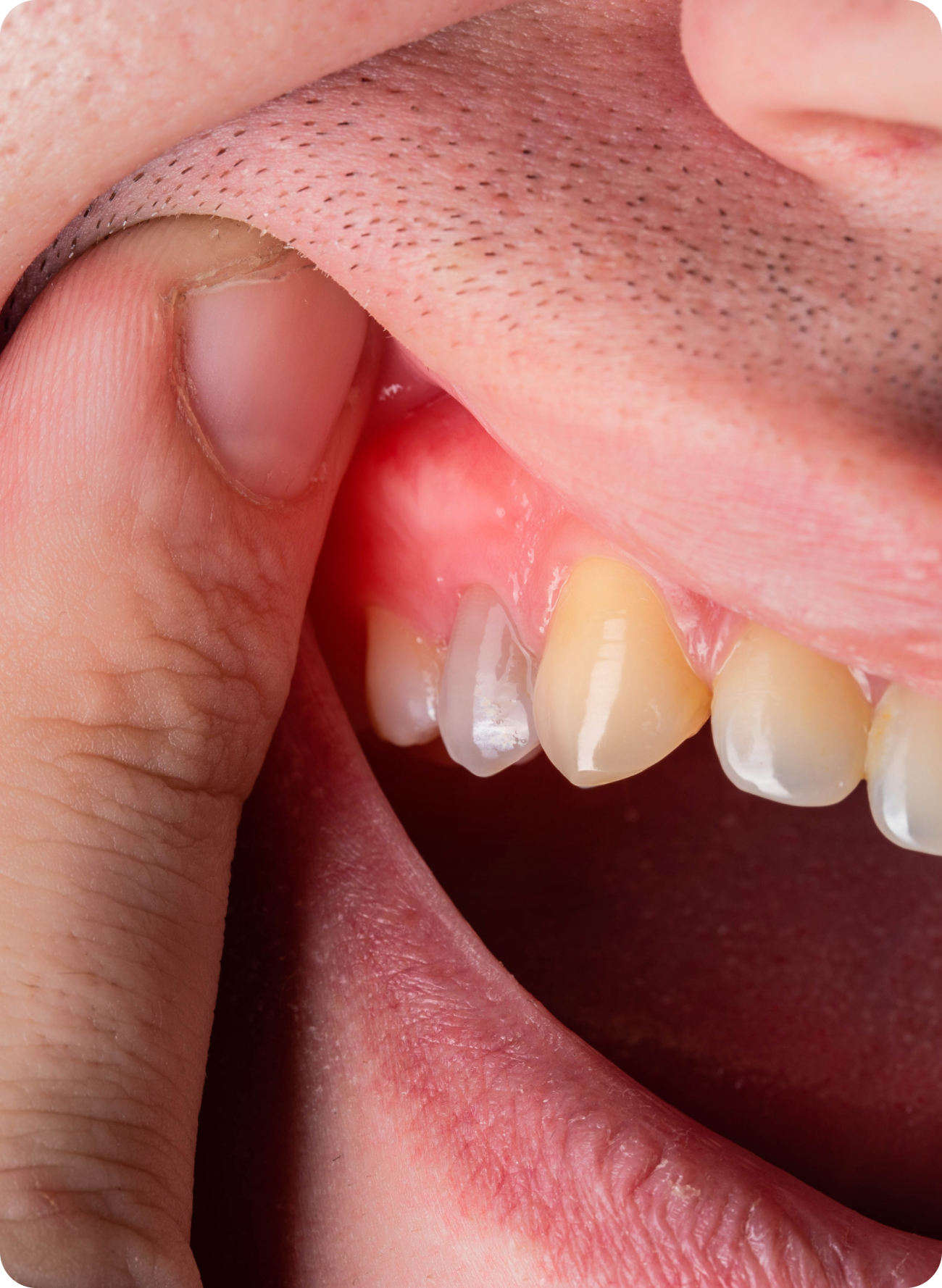
The dark color isn't a mistake. When SDF contacts tooth structure, it forms silver compounds that cause a dark color change. Mature, healthy enamel usually does not stain, while decayed or demineralized areas can darken.¹
Does the stain mean something went wrong?
No, the black color is actually confirmation that the decay has been arrested. An active cavity looks soft and tends to appear tan or yellowish. Once SDF works, that tissue hardens and darkens. Many providers use the color change as a clinical marker that the treatment was successful.
Will the stain fade on its own?
The stain does not fade on its own. Once the treated tissue turns dark, that color is stable. It won't lighten with brushing or whitening treatments. The only way to change the appearance is to have a dental restoration — such as a tooth-colored filling — placed over the treated area. That's a straightforward option for patients bothered by the look of it, and it's a common next step after SDF treatment.
Does it matter where the cavity is?
Yes. Where the cavity is can make a big difference in how noticeable the stain will be.
On back teeth, such as molars and premolars, the darkened area may be hard to see during normal conversation. For children, older adults or anyone who wants to avoid drilling when possible, the cosmetic trade-off may feel easier to accept.
On front teeth, the stain is more noticeable. SDF may still be an option in some cases, but your dental provider will explain how the tooth may look before treatment. In some situations, a tooth-colored restoration can later cover the darkened area.
If you're concerned about how SDF will look on a visible tooth, bring it up before treatment. Your dental provider can help you weigh the cosmetic trade-off against the benefit of stopping the cavity from getting worse.
Who is a good candidate for SDF?
SDF tends to work well in situations where conventional cavity treatment is difficult or needs to wait.
Patients who may benefit most include:
Children with multiple cavities who are too young or too anxious for drilling
Older adults, particularly those with cavities on root surfaces
Patients with medical conditions that make sedation or extended procedures risky
Anyone who needs to delay a filling and wants to slow cavity progression in the meantime
SDF is not the right choice for every situation. It's not recommended for patients with a silver allergy,² and it's not a substitute for treatment when decay has already reached the pulp of the tooth.³ Your dental provider will review your full oral health picture before recommending it.
Is SDF safe?
Yes. According to the American Academy of Pediatrics, SDF is safe for children and adults and can be applied without shots, sedation or general anesthesia.³
SDF does not contain mercury. This is a common concern because the treatment contains silver, but silver and mercury are entirely different elements. SDF has no connection to amalgam fillings or any mercury-based compound.
As with any dental treatment, your dental provider will evaluate whether SDF is appropriate for your specific oral health history and needs.
Silver diamine fluoride: Is the black stain worth it? FAQs
Still have questions about SDF treatment? These answers cover a few common things to know before deciding whether it’s right for you.
Is silver diamine fluoride covered by dental insurance?
Coverage varies by plan. Some insurance policies cover SDF (particularly for children) while others may not. Your dental provider's team can review your benefits before treatment and help you understand what, if any, out-of-pocket cost to expect.
Does the treated area still need a filling afterward?
Sometimes. SDF arrests an active cavity, meaning it stops the decay from getting worse. It doesn't restore the tooth structure that was already lost. If the cavity created a hole or compromised the tooth's shape, your dental provider will typically recommend a filling at a future appointment to repair the damage and protect the tooth long-term. SDF buys time and stops progression; a restoration completes the treatment.
How often does SDF need to be reapplied?
SDF works best with periodic reapplication. The American Dental Association recommends applying SDF every six months for sustained benefit.¹ Your dental provider will check the treated area at your regular visits and let you know when retreatment makes sense.
Sources
¹American Dental Association: “Silver Diamine Fluoride” https://www.ada.org/resources/ada-library/oral-health-topics/silver-diamine-fluoride
²American Academy of Pediatric Dentistry: “Silver Diamine Fluoride White Paper.” https://www.aapd.org/assets/1/7/SDF_White_Paper_Final.pdf
³American Academy of Pediatrics: “Silver Diamine Fluoride (SDF) FAQ for Families” https://www.aap.org/en/patient-care/silver-diamine-fluoride-application-in-the-pediatric-medical-setting/silver-diamine-fluoride-frequently-asked-questions-for-families/