Last updated 07.16.2026
What is a root cavity — and how do you know if you have one?
Learn what a root cavity is, why it develops, the early signs to watch for and how prompt treatment can help protect your tooth.

A root cavity is tooth decay that forms on the root surface of a tooth, at or just below the gumline, instead of on the visible crown. Root cavities are more common than most people realize, and they often spread faster than regular cavities because the root surface isn't protected by hard enamel. The good news is that when caught early, most root cavities can be treated with a simple filling.1
What you'll learn in this article:
Root cavities form on the softer root surface of the tooth, where there is no enamel, which means they spread faster than cavities on the visible crown
A root cavity is not the same as needing a root canal, but leaving one untreated can eventually lead to one
Sensitivity near the gumline and discoloration at the base of a tooth are usually the first warning signs
Gum recession is the most common cause, which means risk naturally increases with age — but root cavities can affect adults of any age
If you're noticing sensitivity close to the gumline or an unusual spot at the base of a tooth, schedule an appointment with an Aspen Dental provider.
What makes a root cavity different from a regular cavity
The main difference is where the cavity forms, and that affects how quickly it spreads.
Most cavities develop in enamel, the hard outer layer that covers the top and sides of your teeth. Root cavities form at or below the gumline, on the root surface, which is covered by a softer material called cementum. Because cementum is more porous than enamel, bacteria can get through it more easily, allowing decay to spread faster. The tight junction where tooth meets gum is also genuinely difficult to brush effectively, which compounds the risk.
Understanding the difference matters because fear of needing a root canal can cause people to put off treatment. In reality, delaying care makes a root canal more likely—not less.
Warning signs of a root cavity
Root cavities don't always make themselves obvious, but three signs are worth knowing.
Is sensitivity near the gumline a warning sign?
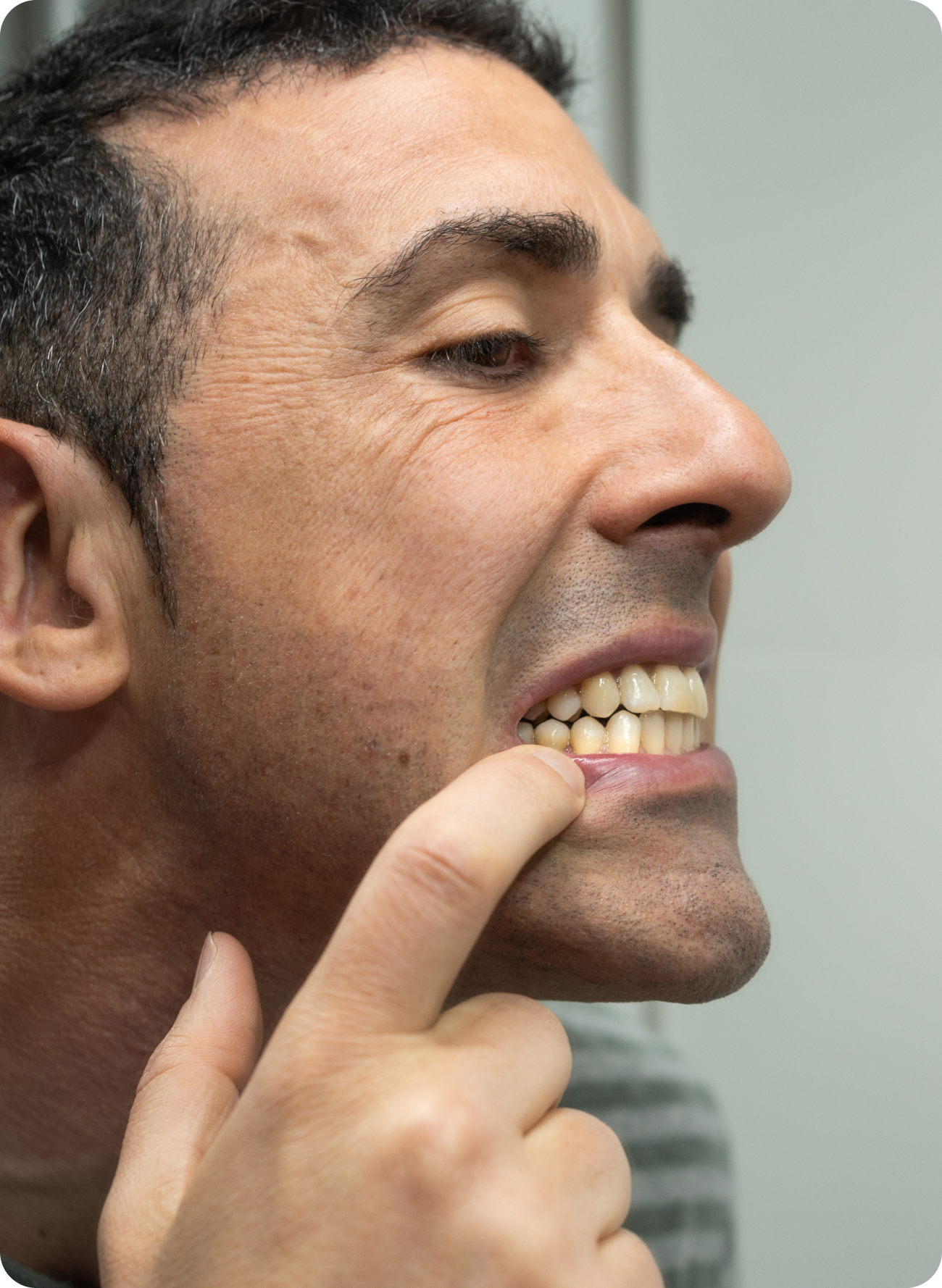
Yes, it's often the first. A brief, sharp discomfort when you eat or drink something cold, sweet or acidic on a specific tooth can be an early indicator of root decay. The sensation usually fades within a few seconds. If it lingers, intensifies or begins happening without any obvious trigger, let your dental provider know promptly; the pattern suggests decay may have reached a deeper layer.
What does a root cavity look like?
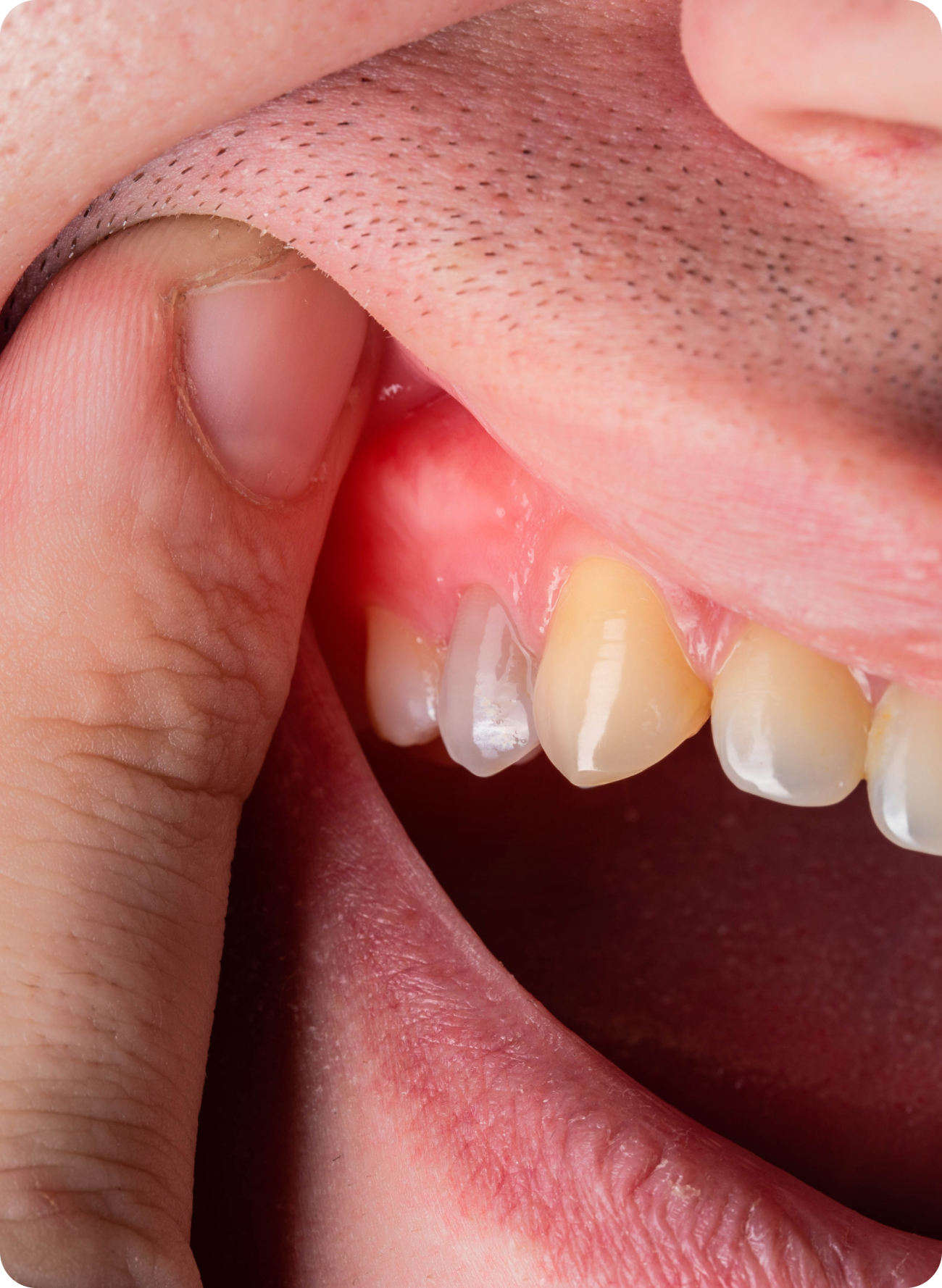
Root cavities often appear as a tan, brown or dark spot at or just below the gumline. As they grow, the area may feel rough or soft when you run your tongue over it. Some root cavities form completely below the gumline, so you can't see them at all. That's why dental X-rays are often the best way to find them before they become more serious.
Can you feel a root cavity yourself?
Sometimes. Healthy tooth surfaces feel smooth and firm. If you notice an area near the base of a tooth that feels uneven, pitted or softer than it should, that's worth mentioning at your next visit. Running your tongue along the gumline occasionally — especially in areas where you've had sensitivity — is a simple habit that can help you catch changes early.
Who is most at risk for root cavities?
Root cavities can affect adults of any age, but some people are more likely to get them.
The biggest risk factor is gum recession. Healthy gums cover and protect the root surface. When gums pull back because of gum disease, aggressive brushing, or natural aging, the root becomes exposed and easier for bacteria to attack. Research shows that adults over 50 develop root cavities more often, largely because gum recession becomes more common with age.2 Because recession usually happens gradually, many people don't notice it until a root cavity has already formed.
Dry mouth is another major risk factor. Saliva helps wash away bacteria and neutralize the acids that cause tooth decay. Many common medications (including antihistamines, antidepressants and blood pressure drugs) reduce saliva, leaving the root surface less protected throughout the day and night.
Additional risk factors include:
A history of previous cavities
Smoking or tobacco use
High-sugar or high-acid diets
Infrequent professional cleanings
How root cavities are treated
Treatment depends on how far the decay has progressed.
In the earliest stage, before a true cavity forms, fluoride treatments or other remineralization products can sometimes strengthen the softened root surface and slow or stop further decay. This works best when changes are found early during routine dental exams.
Once a root cavity has formed, your dental provider will remove the decayed tissue and place a tooth-colored composite filling to restore the root surface. Because root cavities are at or near the gumline, placing the filling takes extra care to create a good seal. For most patients, though, the procedure feels much like getting a regular filling.
If the decay reaches the pulp (the soft tissue inside the tooth), a root canal followed by a crown may be needed to save the tooth and prevent the infection from spreading.
How to lower your risk of root cavities
Protect your gumline
Brush at a slight angle toward the gumline with gentle strokes — many people focus only on the visible tooth surface and miss this area. Be careful not to brush too hard, since aggressive brushing can cause gums to recede over time. Treating gum disease early is one of the best ways to keep the root surface protected.
Use fluoride and keep up with checkups
Fluoride strengthens both the root surface and enamel; ask your dental provider about a prescription-strength option if you're at higher risk.³ Routine visits matter just as much — many root cavities are found on X-rays before they cause any symptoms, which usually means a simple filling instead of a root canal.
What is a root cavity and how do you know if you have one? FAQs
If you're still wondering about root cavities, these answers can help clear up a few common questions.
Can a root cavity heal on its own?
No. An established root cavity is permanent damage to the cementum — it won't repair itself the way other tissues in the body can. Very early mineral loss on the root surface can sometimes be slowed with fluoride, but only before a true cavity has formed. Once decay is present, it will continue to spread without professional treatment.
Do root cavities cause discomfort?
Not always, especially in early stages. Some cause noticeable sensitivity to cold, sweets or pressure. Others cause no discomfort at all until they've progressed significantly. This is precisely why regular dental exams matter: many root cavities are found on X-rays before a patient has ever felt anything unusual.
Can a root cavity come back after treatment?
The filled area itself won't re-decay, but the surrounding cementum remains vulnerable — particularly if the underlying risk factors haven't changed. Patients who've had one root cavity are at higher risk for additional ones over time. Consistent oral hygiene habits and staying current with dental visits help protect treated teeth in the long run.
Sources
1Mayo Clinic "Cavities and tooth decay — Symptoms and causes" https://www.mayoclinic.org/diseases-conditions/cavities/symptoms-causes/syc-20352892
2National Institutes of Health (PubMed Central) "Elderly at Greater Risk for Root Caries: A Look at the Multifactorial Nature of This Problem" https://pmc.ncbi.nlm.nih.gov/articles/PMC3133477/
3National Institutes of Health (PubMed Central) "Interventions for managing root caries" https://pmc.ncbi.nlm.nih.gov/articles/PMC6483547/