Last updated 08.03.2026
How does rheumatoid arthritis affect your teeth, gums and jaw?
Learn how rheumatoid arthritis can affect your gums, jaw, saliva and daily oral care, plus the warning signs to discuss with your provider.

Rheumatoid arthritis (RA) can affect your oral health in several ways, and the effects go further than most people expect. RA is a whole-body inflammatory condition, and inflammation doesn't stay confined to your joints. It can reach your gums, your jaw joint and the tissues that hold your teeth in place. Understanding what to watch for can help you protect your smile and catch problems before they become serious.
What you'll learn in this article:
The connection between RA and gum disease runs both ways — each condition can make the other worse
RA can directly inflame the joint that opens and closes your jaw, causing soreness and stiffness that is easy to overlook
Common RA medications can reduce saliva and raise your risk of cavities and oral infections
Adapted hygiene tools and a few simple habits can make a meaningful difference, even with limited hand mobility
If you have rheumatoid arthritis, schedule an appointment with your Aspen Dental provider to discuss your oral health and make sure your care plan accounts for your RA.
RA and gum disease: why the connection may run deeper than you think
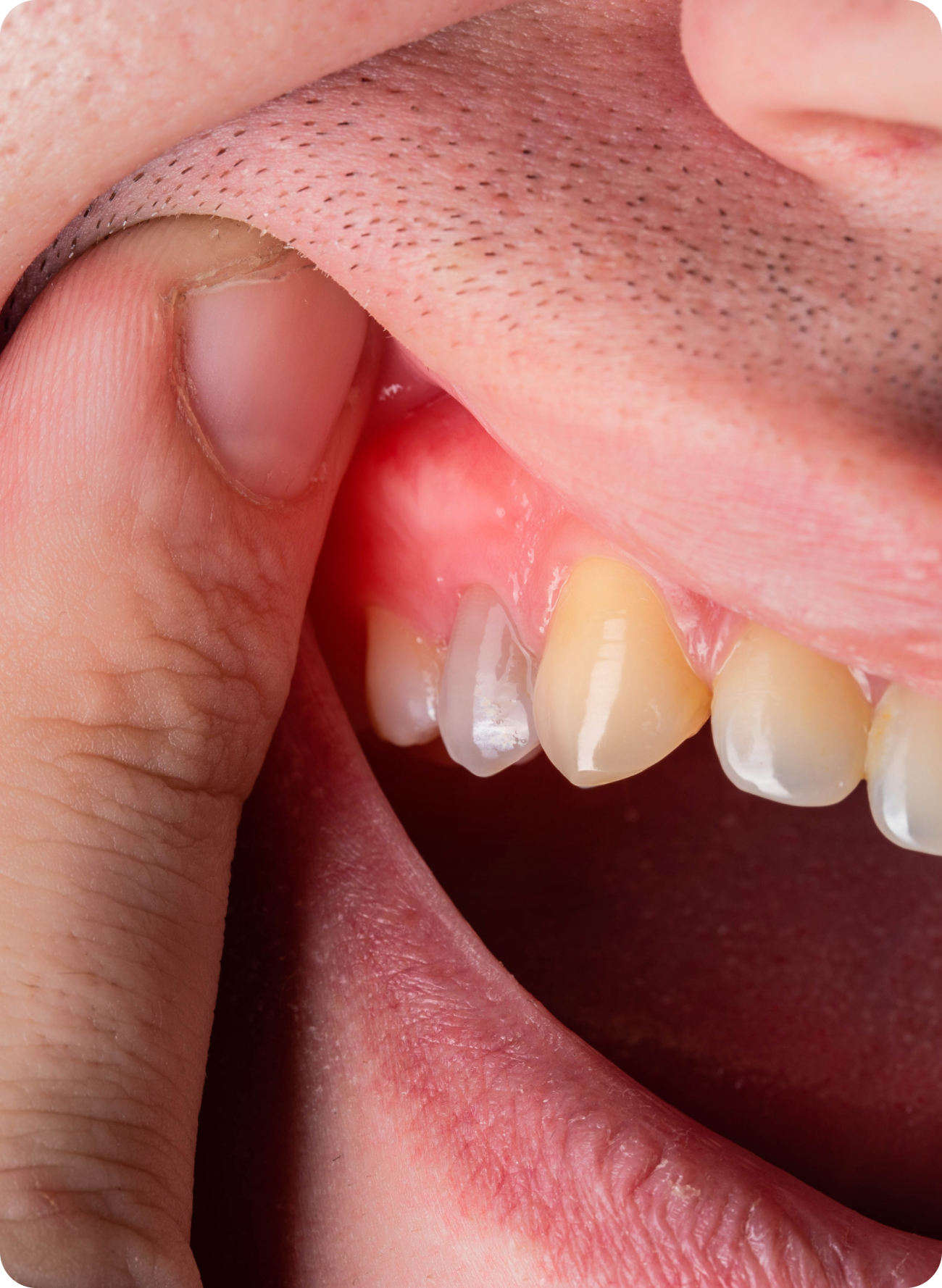
People with rheumatoid arthritis are more likely to develop gum disease, and the relationship appears to go both ways. Research from the Johns Hopkins Arthritis Center found that gum disease and tooth loss are more common in people with RA than in the general population.¹ Research also suggests that bacteria from serious gum infections may enter the bloodstream and contribute to inflammation that could trigger RA flare-ups, although more research is needed to fully understand the connection.²
Gum disease begins when bacteria build up along the gumline and trigger inflammation. Because RA already keeps the immune system in an inflamed state, gum disease may progress faster and cause more damage. Left untreated, it can destroy the bone and tissue that support your teeth. Treating gum disease early helps protect your oral health, and researchers are continuing to study whether controlling periodontal disease may also help reduce RA flare-ups.²
How RA can affect your jaw
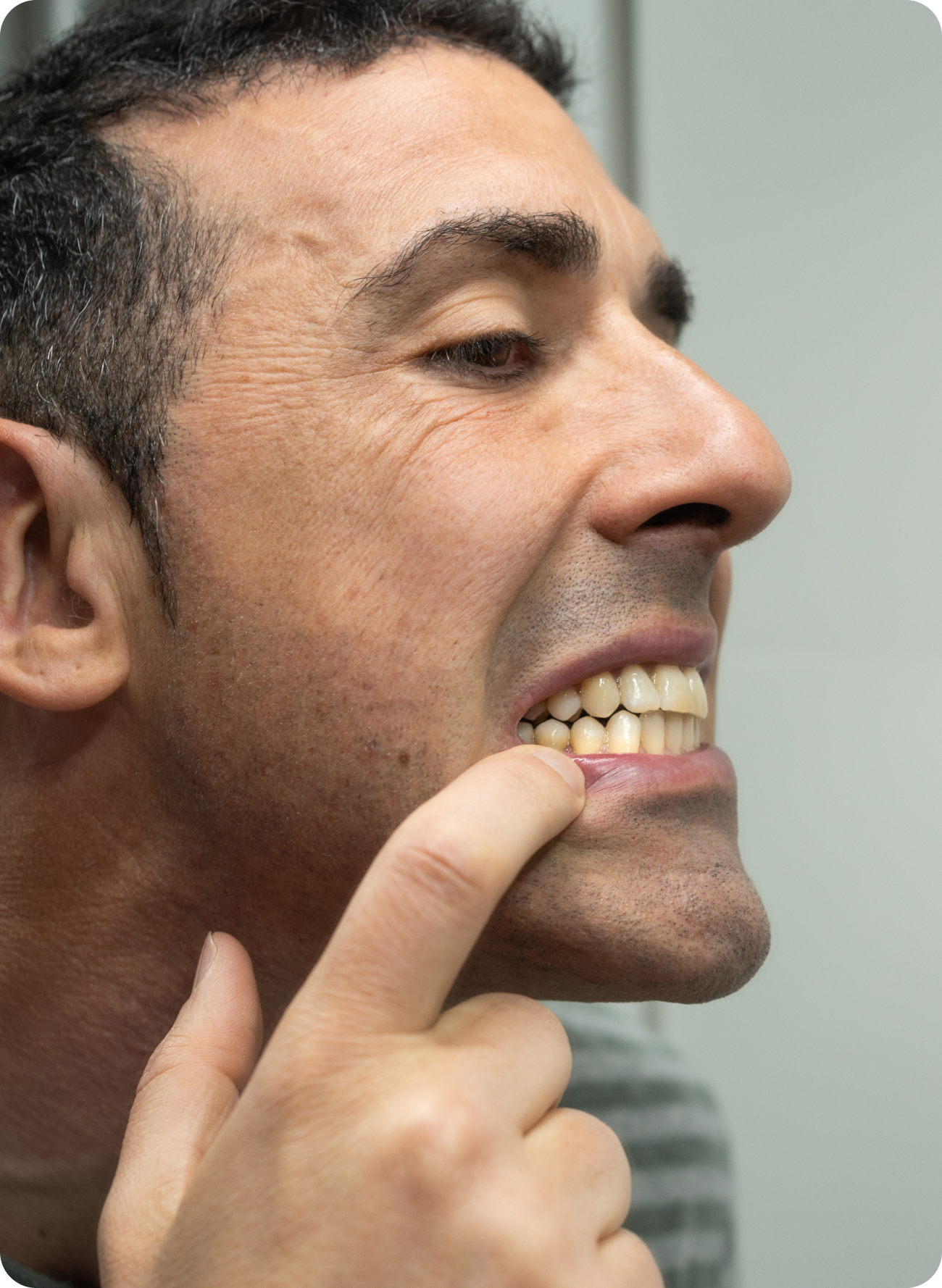
Rheumatoid arthritis can affect the temporomandibular joint—the hinge that connects your lower jaw to your skull. When this joint becomes inflamed, opening and closing your mouth may feel sore, stiff or difficult.¹
Jaw involvement is easy to overlook because RA usually affects the hands, knees and other larger joints first. But ongoing jaw symptoms shouldn't be ignored. Let your dental provider know if your jaw has become sore, stiff or harder to move. They can evaluate the joint, recommend ways to reduce strain—such as a custom nightguard if appropriate—and refer you to a specialist when needed.
Dry mouth, Sjögren's syndrome and your cavity risk
Sjögren’s syndrome is an autoimmune condition that can occur alongside RA and damage the glands that produce saliva.¹ Even without Sjögren's, some RA medications can reduce saliva as a side effect.
Saliva does much more than keep your mouth comfortable. It helps neutralize acids, wash away bacteria and protect tooth enamel. When saliva levels drop, your risk of cavities, gum disease and a fungal infection called oral thrush increases.
If your mouth often feels dry, sticky or uncomfortable, don't assume it's just part of living with RA. Let your dental provider know. They can recommend products and treatments to relieve dry mouth and help protect your teeth from damage.
How RA medications can affect your mouth
Several medications used to treat RA can affect your oral health, so it's important to keep your dental provider informed.
Methotrexate, one of the most common RA medications, can cause mouth sores in some people. Folic acid supplements may help reduce this side effect.¹ If the sores keep coming back, talk with your rheumatologist.
Immunosuppressants lower your body's immune response, which can increase your risk of oral infections, including bacterial and fungal infections.
Before any dental treatment, give your dental provider an up-to-date list of all your medications and supplements. Knowing what you take helps them plan safer, more personalized care.
When stiff joints make oral hygiene harder
RA can make brushing and flossing more difficult by causing stiffness in your hands, wrists and fingers. But that doesn't mean you have to settle for less effective oral care.
An electric toothbrush takes less grip strength and hand movement than a manual toothbrush. Floss picks or a water flosser can make cleaning between your teeth easier, and adding a foam grip or handle adapter can make a toothbrush more comfortable to hold.
If brushing or flossing has become a challenge, tell your dental provider. They can recommend tools and techniques that fit your needs, making it easier to keep your teeth and gums healthy.
What to do starting now
The most important step is keeping up with regular dental checkups, and if you have RA, your provider may recommend scheduling visits more frequently than the standard twice a year. Between appointments be sure to:
Brush twice daily using a soft-bristled or electric toothbrush
Clean between your teeth daily using floss, a floss pick or a water flosser
Stay well hydrated and ask about dry mouth products if you need them
Watch for early warning signs: bleeding gums, jaw soreness, mouth sores or new sensitivity
Keep your dental provider informed about your RA diagnosis and every medication you're currently taking
If you've noticed jaw stiffness, dry mouth, bleeding gums or other changes since your RA diagnosis, don't assume they're just part of the condition. Your dental provider can help identify the cause and recommend the right treatment.
How does rheumatoid arthritis affect your teeth, gums and jaw? FAQs
If you still have questions about how rheumatoid arthritis can affect your teeth, gums or jaw, these answers can help.
Can rheumatoid arthritis cause tooth loss?
Yes, RA is associated with higher rates of gum disease and tooth loss.1 Advanced gum disease can damage the bone and tissue that support your teeth. Regular dental care and early treatment can help lower that risk.
Is it safe to have dental procedures done while taking RA medications?
For most routine dental care, your provider will review your medications and health history before treatment. Some RA medications affect the immune system, so your dental provider may coordinate with your rheumatologist when planning more involved procedures. Never stop or change an RA medication without speaking with the prescribing physician.
The most important thing is transparency: bring your complete, current medication list to every appointment. Your provider can review it, flag anything that may affect your care and consult with your medical team if needed.
Should I mention my RA to my dental provider even if my mouth feels fine?
Yes, and every time you visit, not just once. Your RA diagnosis and your current medication list are both directly relevant to your dental care. Certain RA medications affect how your mouth heals, your susceptibility to infection and whether specific procedures may need to be modified. Being upfront helps your provider make the best decisions for your situation and avoids preventable complications.
Sources
¹Johns Hopkins Arthritis Center “Dental Tips for the Rheumatoid Arthritis Patient” https://www.hopkinsarthritis.org/arthritis-news/5-dental-tips-for-the-ra-patient/
²National Institute of Arthritis and Musculoskeletal and Skin Diseases (NIAMS) “Connecting the Dots: Oral Infection to Rheumatoid Arthritis” https://www.niams.nih.gov/connecting-dots-oral-infection-rheumatoid-arthritis