Last updated 08.03.2026
How does kidney disease affect your teeth and gums?
Learn how kidney disease can affect your teeth, gums and mouth, the symptoms to watch for and how to help protect your oral health.

Kidney disease can affect your mouth long before many people realize it. Common problems include dry mouth, gum disease, tooth decay and a metallic taste. As your kidneys become less able to filter waste from your blood, those changes can affect your oral health, too. The good news is that taking care of your teeth and gums can help protect both your smile and your overall health.
What you'll learn in this article:
Kidney disease and gum disease can make each other worse, increasing inflammation throughout the body.
Kidney disease and many kidney medications can cause dry mouth, raising your risk of cavities and gum disease.
A metallic or ammonia-like taste can be a sign that waste products are building up in your blood.
Tell your dental provider if you have kidney disease so they can choose the safest treatment and medications for you.
If you have kidney disease and haven't had a dental checkup recently, schedule an appointment with your Aspen Dental provider. Bring a complete list of your medications so your dental provider can plan your care safely.
How your kidneys and your mouth are connected
Your kidneys and your mouth are connected through your bloodstream and immune system. When bacteria in your mouth cause gum disease or another infection, your body responds with inflammation. That inflammation can spread through your bloodstream and put added stress on kidneys that are already damaged.¹
The connection works both ways. As kidney function declines, waste products build up in the blood and can affect your mouth, saliva and jawbone. That's why protecting your oral health is an important part of managing kidney disease.
Common ways kidney disease affects your mouth
Kidney disease can show up in your mouth in several ways, some more obvious than others.
Why does my mouth feel so dry?
Dry mouth is common in people with kidney disease, and some kidney medications can make it worse. Saliva helps wash away food, neutralize acids and protect your teeth. When saliva levels drop, your risk of cavities and gum problems increases.²
Why do I have a metallic taste in my mouth?
A metallic or ammonia-like taste can be a sign that waste products are building up in your blood because your kidneys aren't filtering them effectively. This condition, called uremia, changes the chemistry of your saliva and can affect the way food tastes. If the metallic taste doesn't go away, tell both your kidney specialist and your dental provider. It may be a sign that your kidney disease has progressed.
Does kidney disease cause gum disease?
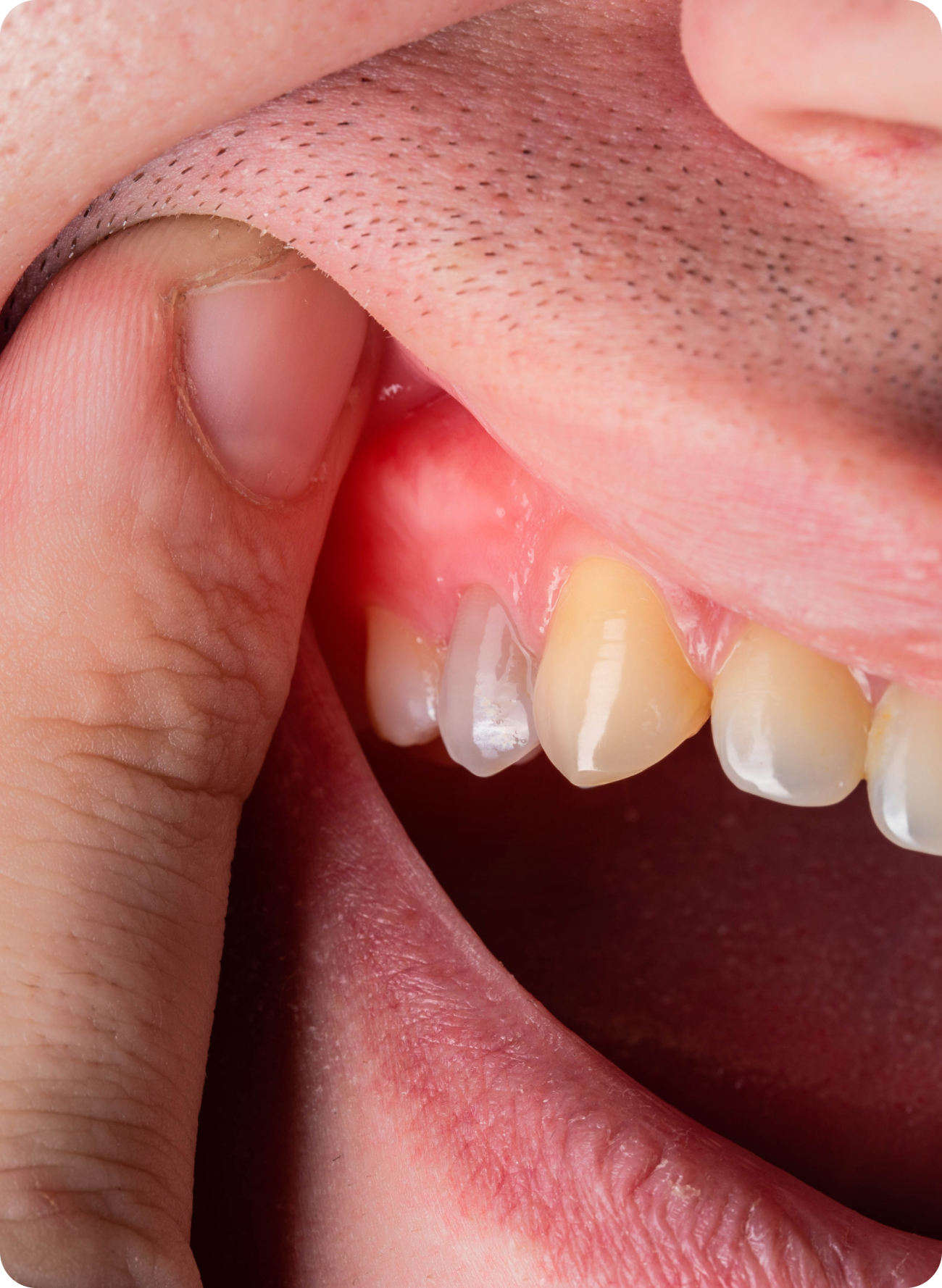
Yes, and the relationship goes both ways. Research shows that people with chronic kidney disease have higher rates of gum disease than the general population.² Changes in the immune system make it harder for your body to fight the bacteria that cause gum infections, and reduced saliva removes a key line of defense. Left untreated, gum disease can worsen the inflammation that damages kidneys.³
Can kidney disease affect my jawbone and teeth?
Yes. People with advanced kidney disease or those receiving dialysis may have a higher risk of bleeding, infection and delayed healing after dental treatment.¹ Tell your dental provider about your kidney disease before any procedure so they can coordinate with your kidney care team and plan treatment safely.
Protecting your mouth when you have kidney disease
The most important step you can take is making sure your dental and kidney care teams are working from the same information. Here's what that looks like in practice.
What should I tell my dental provider?
Tell your dental provider about your kidney disease, what stage it's in, whether you're on dialysis or have had a transplant, and every medication you take. Some antibiotics and common over-the-counter pain relievers are processed through the kidneys and may need to be adjusted or avoided depending on your kidney function.
If I'm on dialysis, when should I schedule a dental appointment?
Try to schedule dental care on a non-dialysis day when possible. Tell your dental provider about your dialysis schedule so your dental and kidney care teams can choose the safest timing.
What can I do at home to protect my teeth?
Daily habits matter more when kidney disease reduces your natural defenses:
Brush twice a day for two miunutes with fluoride toothpaste
Floss daily to clear bacteria from the gumline
Sip water throughout the day to relieve dry mouth
Limit sugary drinks, which cause faster decay when saliva is reduced
See your dental provider at least twice a year — more often if you have dry mouth or notice gum changes
How does kidney disease affect your teeth and gums? FAQs
If you still have questions about how kidney disease can affect your teeth, gums or dental care, these answers can help.
Is there a best day to schedule a dental appointment if I'm on dialysis?
For most people, the best time is the day after a dialysis session. Dialysis uses a blood thinner called heparin to keep the tubing from clotting, and it remains in your body for several hours after treatment. Waiting until the next day gives it time to wear off, which can lower your risk of bleeding during dental procedures. You'll also likely feel better, since many people are tired after dialysis and have more energy the following day.
Be sure to tell your dental provider which days you receive dialysis and provide your nephrologist's contact information. If you need more than a routine cleaning, your dental and kidney care teams may work together to help plan your treatment safely.
What stage of kidney disease causes a metallic taste?
A metallic or ammonia-like taste is more common in the later stages of chronic kidney disease, including stages 4 and 5, when waste products build up in the blood.2 It can also occur if kidney function suddenly worsens. If this is a new symptom for you, let your kidney specialist know as soon as possible.
Do I need antibiotics before a dental procedure if I have kidney disease?
It depends. Kidney transplant recipients and patients who are immunocompromised sometimes need antibiotics before certain procedures to reduce the risk of infection. Your dental provider and your kidney specialist should communicate before any procedure begins. Never stop or start antibiotics on your own without guidance from your care team.
Sources
¹National Kidney Foundation "Dental Health and Kidney Disease Connection" https://www.kidney.org/kidney-topics/dental-health-and-kidney-disease-connection
²American Kidney Fund "Oral health and kidney disease" https://www.kidneyfund.org/living-kidney-disease/oral-health-and-kidney-disease
³National Institutes of Health: "Chronic Kidney Disease and Periodontitis Interplay — A Narrative Review" https://pmc.ncbi.nlm.nih.gov/articles/PMC9859404/