Last updated 08.04.2026
Why are my gums bleeding without me touching them?
Learn the most common reasons gums bleed on their own, what it could mean and when it's time to see your dental provider.

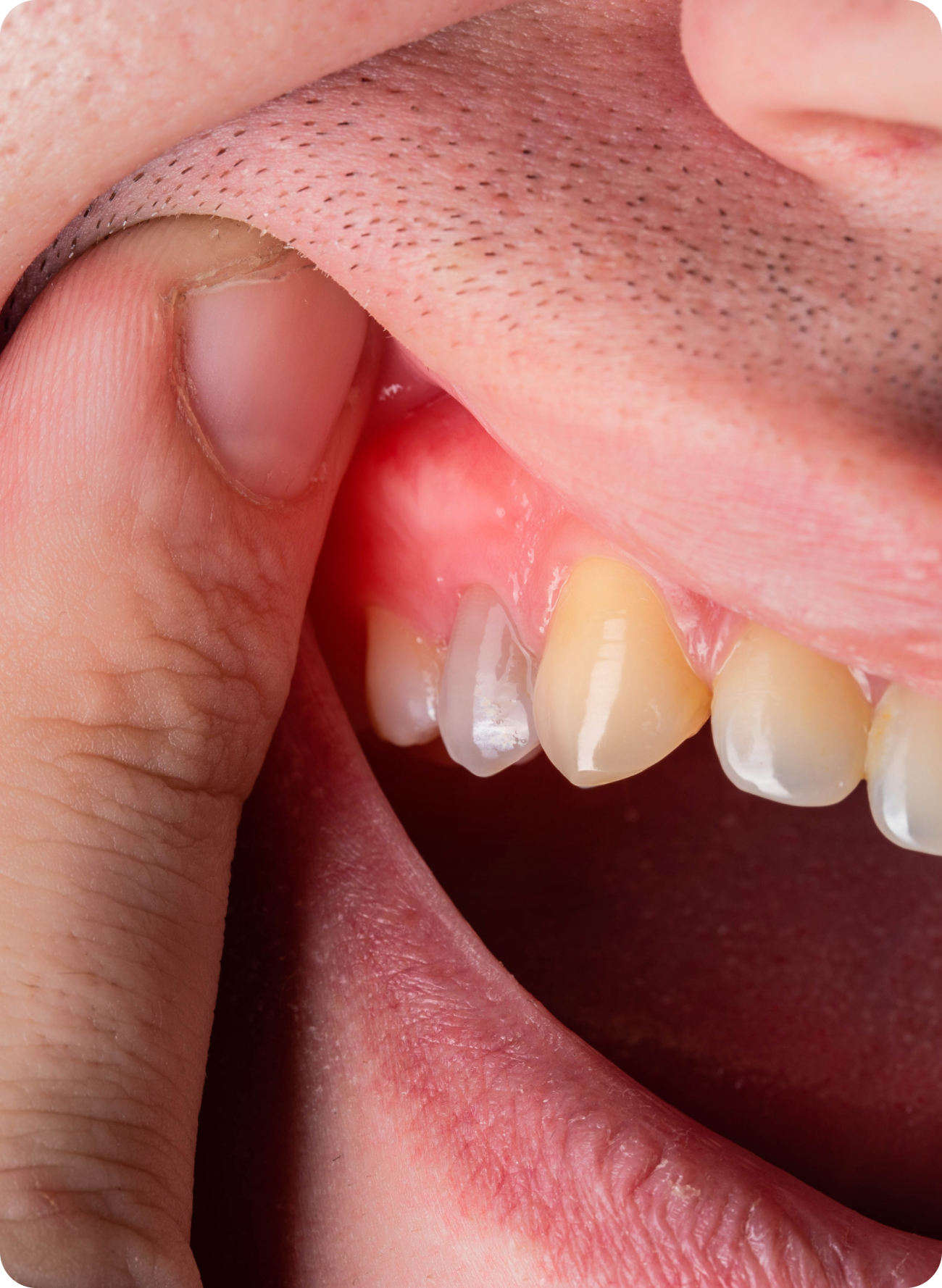
Gums that bleed on their own — with no brushing, flossing or contact at all — are often a sign of inflammation at the gumline, commonly caused by plaque buildup or hardened tartar.¹ This kind of spontaneous bleeding is different from the occasional spot of blood after flossing, and it deserves a closer look.
What you'll learn in this article:
Gums that bleed on their own are usually a sign of inflammation, and early gum disease (gingivitis) can often be reversed with the right care.
Medications, hormonal changes and low vitamin levels can all make your gums more likely to bleed.
A professional cleaning is often needed because brushing and flossing can't remove hardened tartar below the gumline.
Bleeding along with swollen or receding gums, loose teeth or ongoing soreness should be evaluated promptly by your dental provider.
If your gums are bleeding regularly without any contact, schedule an appointment with your Aspen Dental provider for a personalized evaluation.
What causes gums to bleed on their own?
Spontaneous gum bleeding is often linked to inflammation, but medications, vitamin deficiencies and certain health conditions can also contribute. When plaque (a soft, sticky film of bacteria) builds up along the gumline, the gums become swollen, tender and more likely to bleed. That bleeding can happen while eating, during sleep or even for no obvious reason.
The most common cause is gingivitis, the earliest stage of gum disease. It develops when plaque isn't completely removed from the gumline.¹ If plaque hardens into tartar, which can only be removed during a professional cleaning, the condition can progress to periodontitis. This more serious form of gum disease damages the bone and tissues that support your teeth and can cause bleeding, gum recession and loose teeth.²
Could my medications be causing this?
Yes, some medications can increase bleeding or cause gum overgrowth, which can make plaque harder to remove.³ If the bleeding began after you started a new medication, tell your dental provider. Your dental provider can determine whether the medication may be contributing and recommend the best way to protect your oral health. Never stop taking a prescribed medication without first speaking with the healthcare provider who prescribed it.
What about vitamin deficiencies?
Low vitamin C has been linked to an increased risk of gum bleeding, and increasing your intake may help resolve it.⁴ Low vitamin K, which plays a role in blood clotting, may make bleeding harder to stop once it starts, though true deficiency is uncommon in otherwise healthy adults.⁵ If your diet is limited in fruits and vegetables, a vitamin deficiency may be a contributing factor. A simple blood test from your primary care provider can confirm it.
Do hormones or health conditions play a role?
Yes. Hormonal changes during pregnancy and puberty can make your gums more sensitive to plaque, increasing the risk of bleeding. Diabetes can also make it harder for your body to fight infection and control inflammation, allowing gum disease to progress more quickly.¹
Certain blood disorders and some medications can also make gums more likely to bleed. If your gums are bleeding without an obvious cause, your dental provider may recommend working with your primary care provider to look for an underlying medical condition.
What you can do at home
Improving your home care won't remove tartar or reverse established gum disease, but it will reduce the bacterial load driving the inflammation.
Brush twice a day with a soft-bristled toothbrush. Firm bristles irritate the gumline and won't clean it more effectively.
Floss once a day. If your gums bleed during flossing, don't stop. Consistent, gentle flossing helps remove the plaque that's contributing to the inflammation.
Rinse with an antiseptic mouthwash to help control bacteria along the gumline between brushing.
Eat foods rich in vitamin C (citrus, bell peppers and broccoli) and vitamin K (leafy greens) to support healthy gum tissue.
When should you see your dental provider?
Gums that bleed without any contact should always be evaluated. At-home care can't remove the hardened tartar that's often causing the inflammation. If your gums bleed regularly on their own, look red or swollen, feel tender when you eat or drink, have started pulling away from your teeth or if any teeth feel loose, it's time to have them checked.
Treating gum disease early (while it's still gingivitis) is usually straightforward and often involves a professional cleaning and improved home care. Once it progresses to periodontitis, treatment becomes more involved and may include bone loss.²
If your gums are bleeding without an obvious cause, let your dental provider evaluate the problem. Finding the cause early often makes treatment simpler and helps protect your long-term gum health.
Why are my gums bleeding without me touching them? FAQs
If you're still wondering why your gums are bleeding or what it could mean for your health, these answers address some of the questions patients ask most often.
Can bleeding gums affect my overall health?
Untreated periodontitis has been associated with conditions such as cardiovascular disease, difficulty managing diabetes and certain pregnancy complications. These links do not prove that gum disease directly causes those conditions, and the strength of the evidence varies.² Taking care of your gums remains an important part of protecting your oral and overall health.
Can stress cause my gums to bleed?
Indirectly, yes. Chronic stress raises cortisol, which can weaken your immune response and make it harder for your body to control the bacterial infection driving gum inflammation. Stress also tends to disrupt habits like regular brushing and flossing and can lead to teeth grinding, which adds tension to an already irritated gumline.
How long does it take for bleeding gums to improve?
How quickly bleeding improves depends on what's causing it. If plaque-related gingivitis is the cause, professional treatment along with consistent brushing and flossing can help the gums become healthier. If medications, a vitamin deficiency or another medical condition is contributing, improvement depends on treating that underlying cause as well. Your dental provider can identify what's causing the bleeding and recommend the most appropriate treatment.
Sources
¹National Institute of Dental and Craniofacial Research: “Periodontal (Gum) Disease.” https://www.nidcr.nih.gov/health-info/gum-disease
²American Dental Association: “Periodontitis.” https://www.ada.org/resources/ada-library/oral-health-topics/periodontitis
³StatPearls [Internet]: “Drug-Induced Gingival Overgrowth.” https://www.ncbi.nlm.nih.gov/books/NBK538518/
⁴Harvard Health Publishing: "Bleeding gums? You may need more vitamin C." https://www.health.harvard.edu/diseases-and-conditions/bleeding-gums-you-may-need-more-vitamin-c
⁵Baylor Scott & White Health: "5 signs of a vitamin K deficiency (and what to do about it)." https://www.bswhealth.com/blog/5-signs-of-a-vitamin-k-deficiency-and-what-to-do-about-it