Last updated 04.14.2026
Dental bone graft
If your jawbone needs support for dental restoration treatment, your dentist may recommend a dental bone graft.
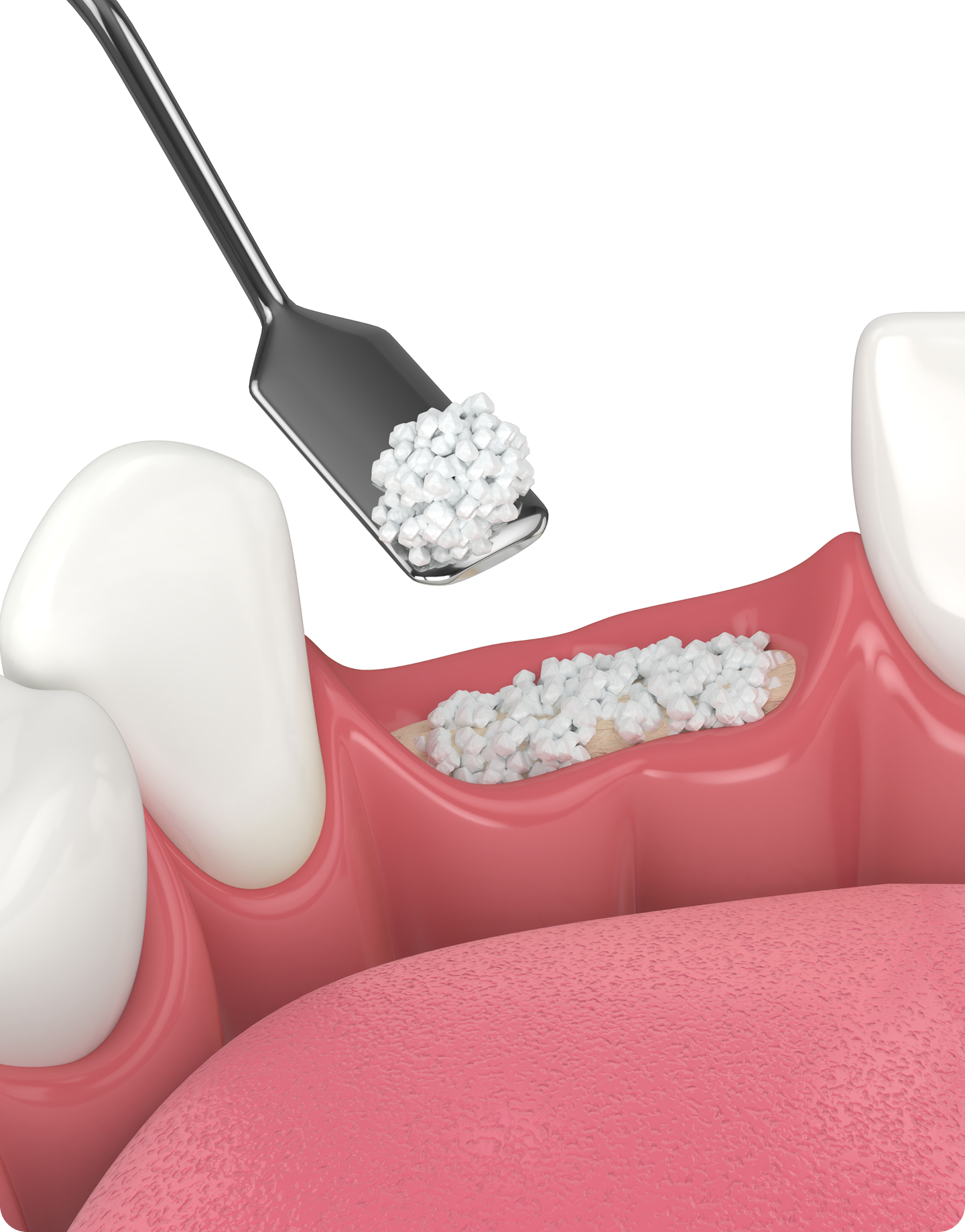
If your jawbone needs help supporting your smile for dental restoration treatment, your dentist may recommend a dental bone graft.
What is a dental bone graft?
A dental bone graft is a treatment that increases the volume of available bone in your jaw to strengthen your smile. This provides a solid foundation in case you need a dental prosthetic, like implants or dentures.
Who should consider a dental bone graft procedure?
Your dentist may recommend a dental bone graft if you’ve ever experienced jawbone loss. Here are a few examples of when this treatment can be beneficial:
Tooth loss
If you’ve lost one or more teeth due to injury, decay, or gum disease—a dental bone graft can support your smile. Also, if you’re considering dental implants as a tooth replacement option, a bone graft may be ideal to ensure the implant’s stability.
Jawbone atrophy
Jawbone atrophy can occur if teeth have been missing for an extended period of time.
Periodontal disease
Patients with advanced periodontal (gum) disease can experience bone loss around the teeth. In some cases, a dental bone graft may be the best option to rebuild the bone structure before you receive further dental care.
Dental implants or dentures
If you’re considering a dental implant bridge or dentures and your jawbone lacks the necessary available bone, a bone graft may be recommended to provide a stable foundation.
Bone graft for dental implants
If your jawbones could use a bit of structural support, or if you’re considering dental implants, getting a dental bone graft may be just what your smile needs. Whether you've experienced bone loss due to tooth extraction, gum disease or natural resorption—strong jaws mean you can enjoy healthy chewing, happy conversations and a stronger smile.
During the treatment, bone material is added to stimulate jawbone regeneration. This process helps to anchor the dental implant securely to your jaw.
Types of bone grafts
Depending on what your unique smile needs, your general dentist or oral surgeon will determine which type of bone graft would be best. Speak with your Aspen Dental care team to learn more.
Types of bone grafts:
Allografts
Autografts
Xenografts
Alloplastic grafts
Placement of dental bone grafts
Extraction sockets
After a tooth extraction, a bone graft may be placed in the socket to preserve the bone structure and provide a stable foundation for future dental implants or prosthetics.
Sinus area
In cases where the upper jaw lacks sufficient bone height for dental implant placement, a sinus lift procedure can be performed. This involves adding bone graft material to the sinus area, located above the upper jaw, to increase bone volume and create a sturdy foundation for implant placement.
Ridge augmentation
When the jawbone has experienced significant resorption, ridge augmentation treatment can be performed. Bone grafts are placed along the jaw ridge to rebuild its shape, height and width, allowing for successful implant placement.
Periodontal defects
In cases of advanced periodontal disease, bone loss around your teeth can occur. Bone grafts may be utilized to regenerate the lost bone and support affected teeth.
What happens during a dental bone graft?
Consultation and evaluation
Thorough evaluation by your dentist or oral surgeon
Assessment of your oral health, including teeth, gums and jawbone condition
Utilization of dental X-rays to gauge the extent of bone loss and determine the best grafting technique
Treatment planning
Crafting your personalized treatment plan based on the evaluation
Defining the graft type, source of graft material and grafting technique
Anesthesia and preparation
Administering local anesthesia to relax you before the surgery
Optional sedation methods are available upon request with oral surgeon
Performing any additional coping measures to make you as comfortable as possible
Incision and exposure
Creating a small gum tissue incision to reveal the targeted jawbone area for grafting
Membrane and closure
Installing a protective membrane over the graft material for added safeguarding and healing support
Repositioning gum tissue to conceal the graft site, and closing it carefully with stitches
Post-operative care
Your dentist or oral surgeon will share post-operative care instructions with you
Minimize side effects like discomfort, swelling, and bruising using prescribed pain relievers
Potential prescription of antibiotics to prevent infection
Dental bone graft healing stages
The healing stages of a dental bone graft typically follow a sequence:
Immediate post-op care
After dental bone graft surgery, it's best to adhere to your dentist or oral surgeon’s post-operative instructions. This can include taking prescribed medications, maintaining good oral hygiene and following any necessary dietary restrictions.
Early healing (1-2 weeks)
The initial healing stage involves the graft material integrating with your natural bone. You may experience some swelling or tenderness.
Intermediate healing (2-4 months)
Over the next few months, the graft will continue to strengthen and merge with the existing bone, laying the foundation for dental implants or other restorative work.
Advanced healing (4-6 months)
At this stage, the graft site is well-healed and strong enough to support dental implants or other prosthetics. After six months, the graft site will be fully healed and you should be able to enjoy life as normal.
Dental bone graft cost
At Aspen Dental, we make quality dental care affordable. This means we provide a more economical dental bone graft cost. To ensure you’re able to get the treatment you need, we offer our signature Aspen Dental Savings Plan and financing options. Speak with your dentist to learn more.
Dental bone graft FAQs
What are the signs of dental bone graft failure?
Signs of dental bone graft failure may include persistent pain, swelling, infection, or delayed healing at the graft site. In cases involving dental implants—mobility or exposure of the implants, as well as the absence of bone growth on X-rays, can also indicate graft complications. If you notice any of these signs, speak with your dental professional for an immediate evaluation.
How to speed up bone graft healing?
It's important to follow the care instructions after bone graft surgery to help it heal faster. To best steward your oral health, avoid smoking and consume soft food during the first few days. Getting enough rest, eating nourishing foods and avoiding physical strain can also help you recover faster. Speak with your dentist or oral surgeon to get personalized advice on speeding up your healing process.
Why might I need a bone graft after a tooth extraction?
A bone graft after a tooth extraction may be necessary to prevent bone loss and provide a stable foundation for future dental procedures, like dental implants. It ensures the preservation or restoration of the jawbone structure and can enhance your oral health and aesthetics.
What does a dental bone graft look like?
A dental bone graft typically looks like a granular or powdery material that is placed at the graft site. It is designed to promote new bone growth and may vary in color and texture depending on the type of graft material used.
Ask about dental bone grafts
If you’re considering getting implants, or if your jaws could benefit from additional bone support, ask your Aspen Dental dentist if they’d recommend a dental bone graft. They’ll create a customized treatment plan to strengthen your smile.