Last updated 06.03.2026
Why is my tongue scalloped?
Learn what causes a scalloped tongue, why ridges form along the edges and when the condition may be a sign of sleep apnea, teeth grinding or another underlying issue.
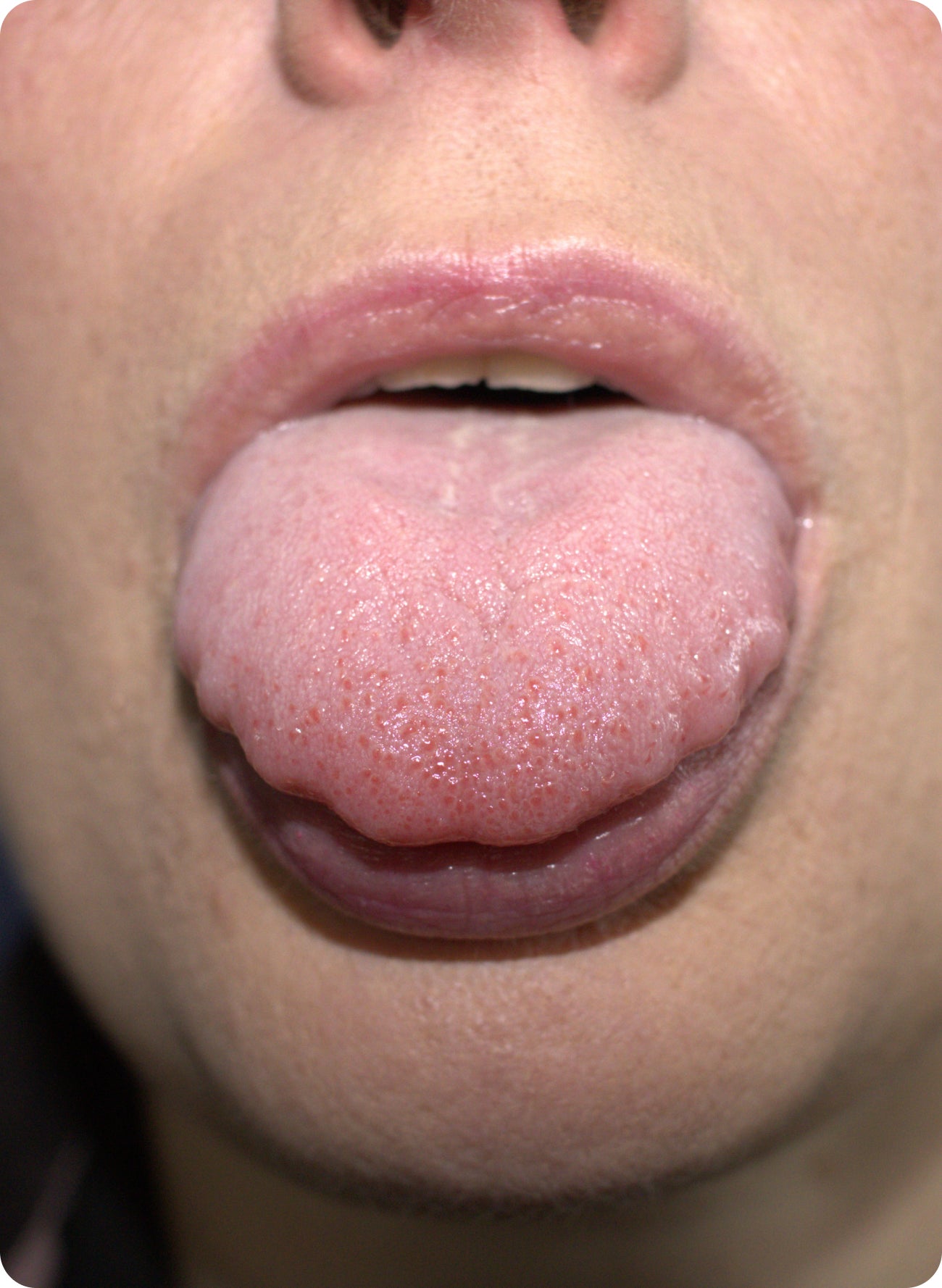
A scalloped tongue most commonly develops because the tongue is slightly enlarged or is being pushed against the teeth due to clenching, sleep-disordered breathing, or a nutritional deficiency — a pattern sometimes called a crenated tongue. The condition creates rippled indentations along the sides of the tongue.
While tongue scalloping is usually not dangerous on its own, it can be an important clue that something else is affecting your oral or overall health. If the ridges are persistent or accompanied by other symptoms, schedule an appointment with your Aspen Dental provider to identify the underlying cause and determine whether additional evaluation is needed.
What you'll learn in this guide:
The most common causes of tongue scalloping
How sleep apnea, clenching, dehydration, and nutritional deficiencies can contribute
Which symptoms may signal a more serious underlying issue
Whether a scalloped tongue can resolve on its own
When to see your dentist and what treatment may involve
What causes a scalloped tongue?
Tongue scalloping is a symptom rather than a diagnosis. The indentations form when the tongue presses repeatedly against the teeth, either because the tongue is enlarged or because increased pressure is forcing it outward. Several conditions can contribute.
Can sleep apnea cause tongue scalloping?
Yes. Obstructive sleep apnea (OSA) is one of the most common causes of tongue scalloping. During sleep, the tongue may shift forward to help keep the airway open, creating repeated pressure against the teeth over time.
According to the American Academy of Sleep Medicine, an estimated 30 million adults in the United States have obstructive sleep apnea, many of whom remain undiagnosed.1 If you snore, wake up tired, or experience daytime fatigue alongside tongue scalloping, it is worth discussing sleep apnea with your provider.
Can teeth grinding or clenching cause tongue ridges?
Yes. Bruxism — chronic grinding or clenching — commonly contributes to tongue scalloping. During clenching, the tongue often presses against the teeth as the jaw tightens, which can gradually leave indentations along the edges. Many people clench unconsciously during sleep or stressful situations. Morning jaw soreness, tooth sensitivity, headaches, and worn enamel often appear alongside tongue scalloping caused by bruxism.
Can vitamin deficiencies make the tongue swell?
Yes. Deficiencies in vitamin B12, folate and iron can cause inflammation and swelling of the tongue, a condition known as glossitis (inflammation and swelling of the tongue). Even mild swelling may cause the tongue to press more firmly against the teeth. The Mayo Clinic notes that B12 deficiency can cause a swollen, sore, or unusually smooth tongue. A blood test from your primary care provider can help determine whether a nutritional deficiency is contributing to your symptoms.2
Can dehydration cause a scalloped tongue?
Dehydration may contribute to tongue scalloping by causing mild swelling and changes in tissue balance within the mouth. A swollen tongue is more likely to press against the teeth and develop ridges. Increasing water intake may help if dehydration is the primary cause. However, persistent scalloping should still be evaluated to rule out other contributing factors.
What other conditions are linked to tongue scalloping?
Less commonly, tongue scalloping may be associated with:
Hypothyroidism, which can contribute to generalized tissue swelling
TMJ dysfunction, which may alter jaw alignment and tongue posture
Anxiety and stress, which are closely linked to clenching and tongue thrusting behaviors
Symptoms that can occur alongside a scalloped tongue
The scalloping itself is usually painless. When symptoms are present, they are often related to the underlying condition causing the tongue pressure or swelling. Common accompanying symptoms include:
Tenderness along the tongue edges
The feeling that the tongue is too large for the mouth
Redness or a smooth, glossy appearance
Jaw soreness or tooth sensitivity, especially in the morning
Snoring, fatigue, or bad sleep
When several of these symptoms occur together, a professional evaluation is recommended.
When should you see your dentist?
Tongue scalloping is rarely an emergency, but persistent ridges should still be evaluated — particularly when they occur alongside other symptoms. Schedule an appointment with your dentist’s office if you notice:
Scalloping that lasts several weeks without improvement
Tongue pain, tenderness or swelling
Difficulty chewing, speaking, or swallowing
Signs of nighttime clenching or worn teeth
Fatigue, snoring, or other possible sleep apnea symptoms
Your dentist will examine your tongue, bite, and jaw for signs of clenching, inflammation, and abnormal pressure patterns. If an underlying medical condition is suspected, they may recommend follow-up with your physician, a sleep study, or a custom night guard to reduce clenching pressure.
Why is my tongue scalloped? FAQs
Does a scalloped tongue go away on its own?
Sometimes. If the scalloping is caused by temporary dehydration or short-term stress, it may improve once those factors are resolved. However, scalloping caused by sleep apnea, chronic clenching or nutritional deficiencies usually improves only after the underlying issue is treated.
Is a scalloped tongue dangerous?
Not usually. A scalloped tongue itself is generally harmless, but it can be a sign of conditions that may require treatment, including sleep apnea, vitamin deficiencies, or chronic bruxism.
Is a scalloped tongue normal?
Mild ridges can occur naturally in some people, but a healthy tongue should not regularly press hard enough against the teeth to leave deep indentations. Persistent scalloping is worth evaluating, especially if other symptoms are present.
How long does a scalloped tongue last?
The timeline depends on the cause. Scalloping from dehydration may improve within days, while scalloping related to sleep apnea or chronic clenching may persist until the underlying condition is addressed.
Can a night guard help with tongue scalloping?
A custom night mouthguard may help when tongue scalloping is related to clenching or grinding. By reducing bite pressure and helping relax the jaw during sleep, a night guard can decrease the force pushing the tongue against the teeth.
Sources
1American Academy of Sleep Medicine — Adult OSA prevalence data: https://aasm.org/resources/pdf/pressroom/adult-prevalence-osa.pdf 2Mayo Clinic — Vitamin deficiency anemia: https://www.mayoclinic.org/diseases-conditions/vitamin-deficiency-anemia/symptoms-causes/syc-20355025