Last updated 08.10.2026
Mouth sores from chemo: Should you call your oncologist or your Dentist?
Learn when chemo mouth sores need your oncologist's attention, when your dental provider can help and how to care for your mouth during treatment.

If chemo causes mouth sores, you may not know who to call first. In many cases, the answer is both. Your oncology team and your dental provider play different roles in your care, and knowing who handles what can help you get the right support sooner.
What you'll learn in this article:
Chemotherapy can cause mouth sores called oral mucositis, which may make eating, drinking and swallowing uncomfortable.¹
Contact your cancer care team if mouth sores make it difficult to eat, drink or take your medicines, or if you develop a fever.²
Your dental provider can help monitor your oral health and support oral care before and during chemotherapy.³
Seeing a dental provider before treatment starts can help identify and treat oral problems that could cause complications during cancer treatment.³
If you're currently in treatment or getting ready to start, schedule an appointment with your Aspen Dental provider. A visit before chemotherapy begins can help identify dental problems and prepare your mouth for treatment.
What are chemo mouth sores?
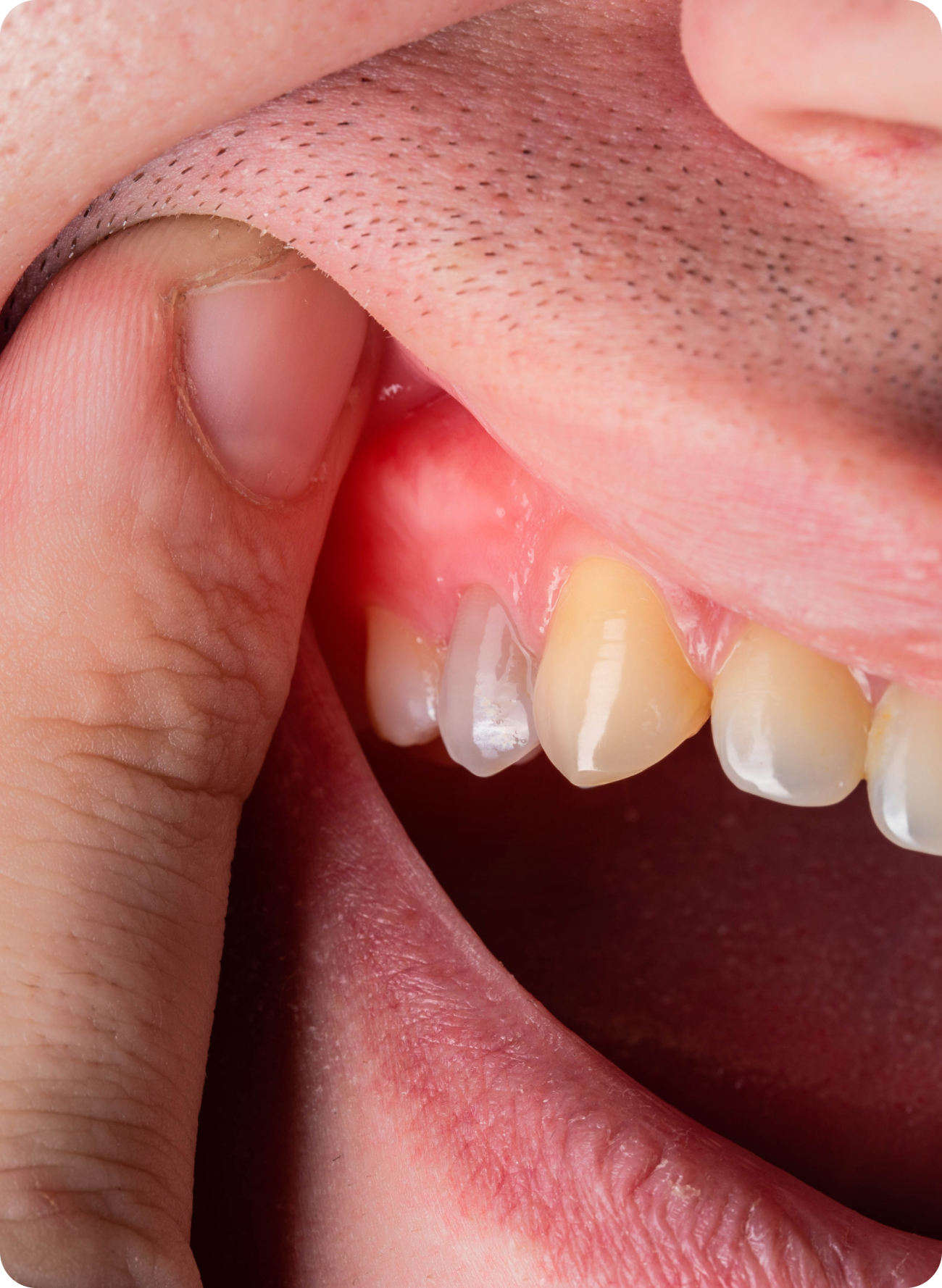
Certain cancer treatments, including chemotherapy, can cause mouth sores called oral mucositis. These sores can affect areas such as your tongue, inner cheeks, gums and roof or floor of your mouth.¹ Cancer-treatment mouth sores can appear one to two weeks after treatment starts and may take two to four weeks to fully heal after treatment ends.²
When to call your oncologist
Contact your cancer care team if your mouth sores are making it hard to eat, drink or take your medicines. You should also call if you develop new sores or white patches in your mouth or have a temperature of 100.5 °F (38°C) or higher.²
Cancer treatment can weaken your immune system, and mouth sores can increase the risk of infection. Your cancer care team can determine what treatment or follow-up you need.²
When to call your dental provider
Oral health is a core part of cancer care, not a separate concern. Your dental provider manages what's happening in your mouth, before, during and after treatment.
Should you see a dentist before starting chemotherapy?
Yes, if possible. The National Cancer Institute recommends having an oral health checkup at least a month before cancer treatment begins when possible. This gives your mouth time to heal if dental work is needed.³
Finding and treating teeth that are at risk of infection or decay before cancer treatment can help reduce the need for dental treatment during cancer care.³
What can your dental provider do during treatment?
During chemotherapy, your dental provider can help you maintain good oral hygiene, monitor your mouth for problems and recommend ways to care for sensitive teeth, gums and mouth tissue.³ Your dental and cancer care teams can work together if sores, infections or other oral complications develop.
What you can do at home
Gentle mouth care can help reduce discomfort and lower the risk of complications during treatment.³
Rinse your mouth regularly with a mild rinse. NCI suggests ¼ teaspoon of salt and ¼ teaspoon of baking soda mixed into 1 quart of water.³
Use a soft-bristled toothbrush and brush gently.³
Choose soft, mild foods and avoid spicy, acidic, hard or crunchy foods if they irritate your mouth.²
Avoid alcohol, tobacco and mouthwashes that contain alcohol.²
Keep your lips moisturized and drink enough fluids as recommended by your cancer care team.²
Talk with your cancer care team before using a new mouth rinse or home remedy because some products can irritate mouth sores.²
Mouth sores from chemo: Should you call your oncologist or your Dentist? FAQs
If you still have questions about chemo mouth sores, these answers can help you understand what to expect and when to contact your care team.
How long do chemo mouth sores last?
Mouth sores caused by cancer treatment may take two to four weeks to fully heal after treatment ends.² How long they last can vary depending on your treatment and individual situation.
What can I eat when I have chemo mouth sores?
Soft, mild foods are often easier to manage. Try foods that are easy to chew and swallow and avoid spicy, acidic, hard or crunchy foods that irritate your mouth.² Hot or very cold foods may also be uncomfortable for some people.¹ If eating becomes difficult, talk with your cancer care team about nutrition support.
Are chemo mouth sores contagious?
Oral mucositis is a side effect of cancer treatment rather than an infection you catch from someone else.³ However, mouth sores can become infected, especially when cancer treatment weakens your immune system ²˒³ Tell your cancer care team if your sores are new, worsening or show signs of infection.
Sources
¹Mayo Clinic: “Mouth sores caused by cancer treatment: How to cope.” https://www.mayoclinic.org/tests-procedures/cancer-treatment/in-depth/mouth-sores/art-20045486
²American Cancer Society: “Mouth Sores and Pain.” https://www.cancer.org/cancer/side-effects/eating-problems/mouth-sores.html
³National Cancer Institute: “Oral Complications of Cancer Therapies.” https://www.cancer.gov/about-cancer/treatment/side-effects/mouth-throat/oral-complications-pdq