Last updated 07.16.2026
What happens if a cavity is under an old filling?
Learn why cavities can form under old fillings, the signs to watch for and how early treatment can help save more of your natural tooth.

A cavity under an old filling — called recurrent or secondary decay — forms when the seal between the filling and tooth wears down, letting bacteria in. It's one of the most common reasons fillings get replaced, and it doesn't mean anything went wrong with your original treatment. Caught early, treatment is usually straightforward.
What you'll learn in this article:
Fillings aren't permanent — the seal between a filling and your tooth weakens over time, giving bacteria a way in
Recurrent decay is often silent early on and may only show up on an X-ray, which is why routine exams matter
Left untreated, decay under a filling spreads deeper — what's a simple fix today could require a crown or root canal later
New sensitivity, aching or visible changes around an old filling are early warning signs worth mentioning to your provider
If you've noticed new sensitivity around an old filling, or it's been a while since your last checkup, schedule an appointment with your aspen Dental provider for a personalized evaluation.
What is recurrent decay?
Recurrent decay is new tooth decay that forms around or beneath an existing filling. When a filling is first placed, it seals the tooth and helps keep bacteria out. Over time, that seal can wear down. Even a small gap at the edge of the filling can let bacteria in, where they begin breaking down the tooth underneath.¹
Think of a filling like the weatherstripping around a door. When it's new, it creates a tight seal. Over time, that seal can wear out and leave small gaps.
The same thing can happen with a filling. It doesn't mean the original filling was done poorly. It simply means that fillings, like all dental materials, wear down over time.
Why does the seal around a filling break down?
Several things can accelerate this process:
Normal wear
Years of biting and chewing put constant stress on a filling, gradually creating tiny gaps along its edges.
Teeth grinding (bruxism)
Grinding places extra pressure on fillings and can cause small cracks or weaken the seal around them.
Age of the filling
Fillings don't last forever. Composite fillings often last 5 to 10 years, while amalgam fillings can last 10 to 15 years or longer before the seal begins to wear down.
Frequent sugary or acidic foods and drinks
Sugary foods feed the bacteria that cause decay, while acidic foods and drinks can weaken tooth structure and contribute to breakdown around the filling.
Gum recession
As gums recede, more of the tooth and the edge of the filling become exposed, making it easier for bacteria to reach the tooth underneath.
Signs that you might have a cavity under a filling
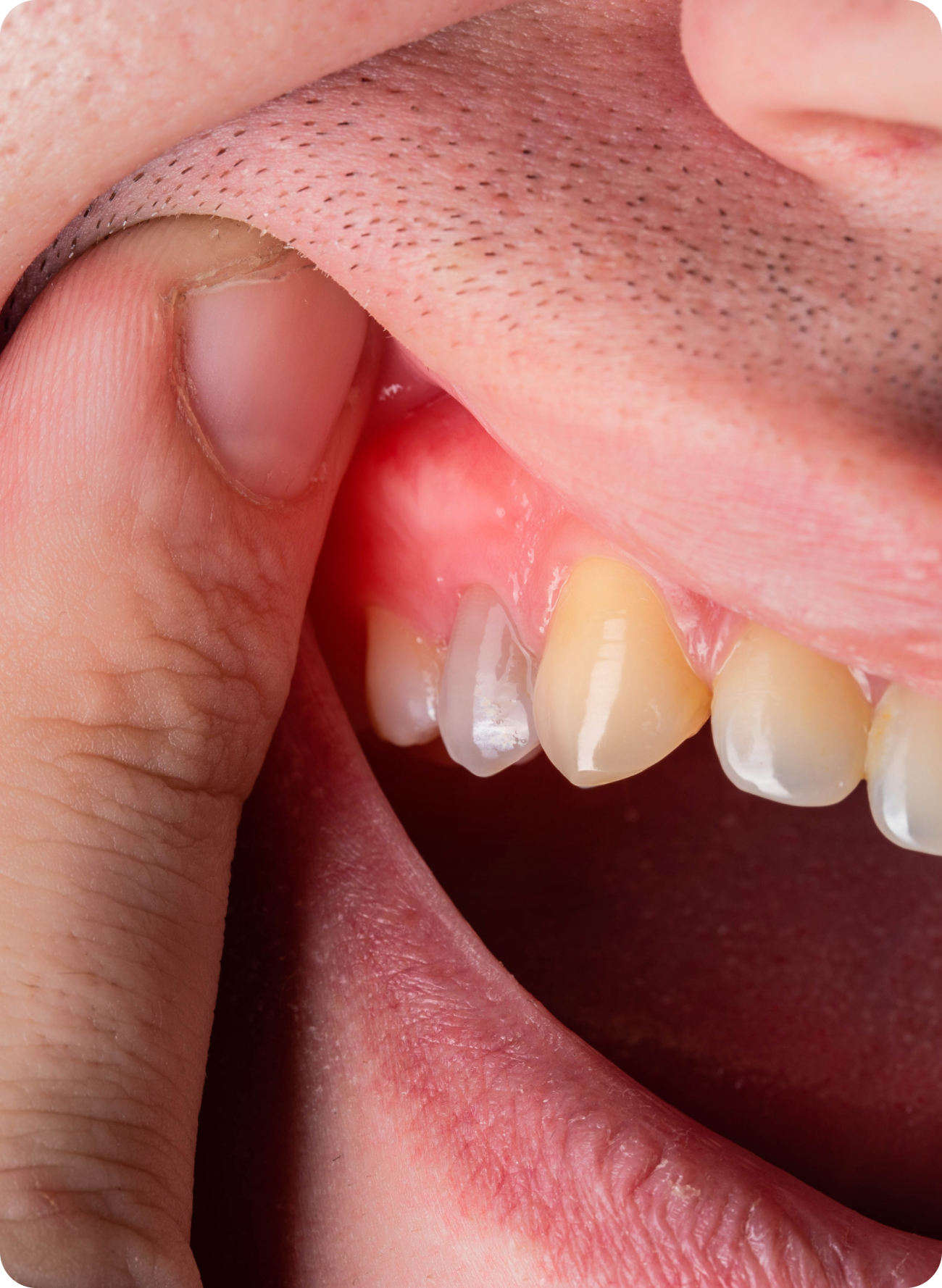
Recurrent decay is often completely painless early on. Many patients discover it only because an X-ray caught it during a routine checkup — which is exactly how the process is supposed to work.² As the decay progresses, you may notice:
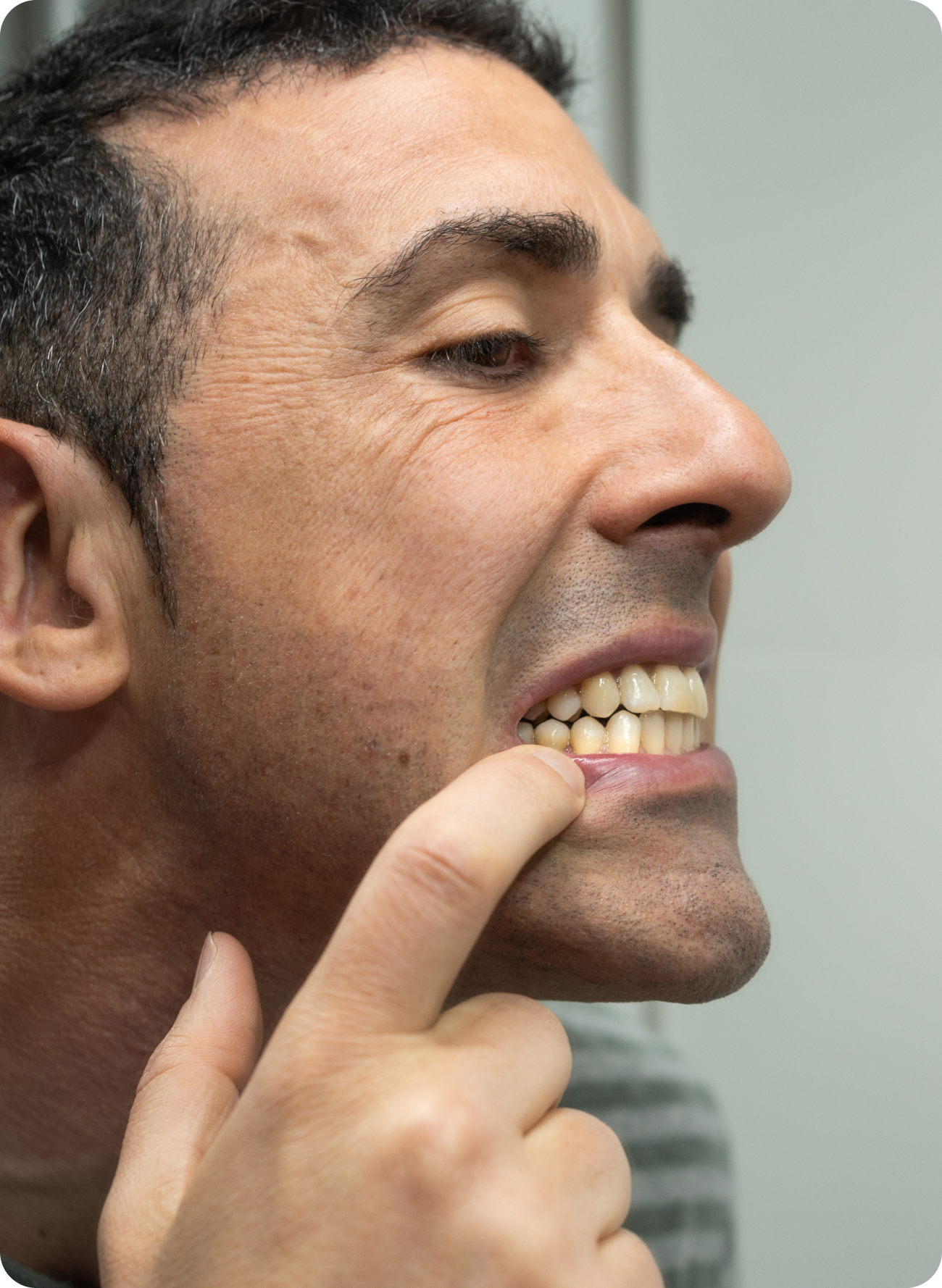
New sensitivity to hot, cold or sweet foods and drinks around a tooth that already has a filling, especially if the sensitivity is new or getting worse
Aching or throbbing when biting down on a specific tooth
Visible changes around the filling, such as darkening, a chipped edge or a rough texture that wasn't there before
A persistent bad taste in one area of your mouth
A subtle shift in your bite — a filling that has cracked or shifted slightly can change how your teeth meet together
None of these symptoms confirm a diagnosis on its own. But any of them, especially in a tooth that already has a filling, is worth mentioning at your next visit.
What happens if it goes untreated?
Decay beneath a filling won't stop on its own. Without treatment, it spreads deeper into the tooth, and the further it spreads, the more involved the treatment becomes.
Here's how the progression typically unfolds:
Early stage: When the decay is caught early, it's usually limited to the area around the filling margin. Your provider removes the old filling, clears the decay and places a new one. Most patients find this no more involved than getting a filling for the first time.
Moderate stage: Decay has moved into the dentin (the softer layer beneath the outer enamel). At this point, there may not be enough healthy tooth structure left to support just a filling, and a dental crown may be needed to protect the tooth.
Advanced stage: Decay reaches the pulp — the innermost part of the tooth where the nerve and blood vessels are. A root canal is typically required to remove the infected tissue and preserve the tooth.
Severe stage: If too much of the tooth has been lost to save, extraction may be the only remaining option.
Catching it early makes a real difference. A problem that can be resolved with a simple filling replacement today could require a crown or root canal if left untreated for another year or two.
How your dental provider detects it
Recurrent decay often isn't visible during a routine exam because it can develop beneath or around a filling. Digital X-rays are the most reliable way to detect this hidden decay before it causes more serious damage.
Your dental provider will also examine the edges of the filling for signs that the seal is breaking down, such as discoloration, soft spots, or small gaps.
Regular dental checkups help catch recurrent decay early, when treatment is often simpler and more of the natural tooth can be preserved.
Treatment options for a cavity under a filling
What treatment looks like depends on how much of the tooth has been affected by the time the decay is found.
When is a new filling enough?
When the decay is detected early and remains limited to the area around the old filling, your provider removes the existing filling along with the decay beneath it, then places a new restoration. Local anesthesia keeps you comfortable throughout. Some tenderness in the area afterward is normal and typically fades within a day or two.
When might you need a crown?
If the decay is more widespread, or if removing the old filling leaves too little healthy tooth structure to support a new filling, a dental crown is often the better option. A crown fits over the entire visible portion of the tooth, restoring its shape, strength and function. Learn more about dental fillings and restorative care at Aspen Dental.
When is a root canal necessary?
When decay has reached the pulp, a root canal removes the infected tissue inside the tooth, cleans the inner canal and seals it so the tooth can be preserved. Root canals have a reputation that doesn't match the reality of modern treatment. With effective anesthesia and current techniques, most patients find the experience far more manageable than they expected.
How long do fillings actually last?
Fillings are designed to be replaced over time — that's not a flaw, it's simply the nature of the materials. Understanding their typical lifespan helps set realistic expectations:
Composite resin (tooth-colored) fillings generally last 5–10 years, though many last longer with good oral hygiene and regular checkups
Amalgam (silver) fillings tend to be more durable, with many lasting 10–15 years or more
Where a filling is located matters too. Back teeth absorb far more chewing force than front teeth, so fillings in molars tend to wear faster. Large fillings also tend to have shorter lifespans than small ones. Regular exams allow your provider to assess existing restorations and recommend replacement when it makes sense: before symptoms appear, not after.
What happens if a cavity is under an old filling? FAQs
Can recurrent decay spread to nearby teeth?
No, recurrent decay doesn't spread from one tooth to another. It's confined to the tooth where the filling has broken down. That said, if your diet or oral hygiene habits contributed to the original cavity, those same factors could put other teeth at risk independently. Your dental provider can assess the health of surrounding teeth during the same exam.
How long does it take to replace a filling with recurrent decay?
For most patients, replacing a filling takes about 45 to 60 minutes in a single appointment. If a crown is needed, the process typically involves two visits: one to prepare the tooth and place a temporary crown, and a second to fit and place the permanent one. Your dental provider can give you a clearer timeline once they've assessed how much of the tooth the decay has affected.
Is recurrent decay usually covered by dental insurance?
Most dental insurance plans cover treatment for recurrent decay, though coverage levels vary depending on your plan and how long ago the original filling was placed. Some plans include a waiting period before covering replacement restorations. Your dental provider's office can help you understand your benefits and what out-of-pocket costs to expect before treatment begins.
Will replacing an old filling be uncomfortable?
Your provider will numb the area before removing the old filling and decay. Most patients find the experience comparable to getting a filling placed for the first time — manageable and much better than they anticipated. Some tenderness afterward is normal and usually resolves within a day or two.
Can composite (tooth-colored) fillings get recurrent decay, or only silver ones?
Both types can develop recurrent decay. Older amalgam fillings may show this more often because they've simply had more time to age. Composite fillings are equally susceptible to marginal breakdown over time and are not immune to this process.
Sources
¹American Dental Association — Caries Risk Assessment and Management https://www.ada.org/resources/ada-library/oral-health-topics/caries-risk-assessment-and-management
²Mayo Clinic — Cavities and tooth decay: Symptoms and causes https://www.mayoclinic.org/diseases-conditions/cavities/symptoms-causes/syc-20352892