Last updated 08.13.2026
What does alcohol do to your teeth and gums?
Learn how alcohol can affect teeth and gums through dry mouth, acid, sugar and gum disease risk, plus simple ways to help protect your oral health.

Alcohol affects your teeth and gums in several ways, most of which are connected to dryness, acid and sugar. Understanding what's happening inside your mouth makes it easier to protect your smile, whether you drink occasionally or more regularly.
What you'll learn in this article:
Alcohol dries out your mouth, removing its natural defense against cavities and gum problems.
Most alcoholic drinks are acidic, and that acid softens enamel before bacteria even begin their work.
Regular heavy drinking raises gum disease risk by weakening the body's ability to fight infection.
A few simple habits before and after drinking can meaningfully reduce the impact on your teeth.
If you've noticed sensitivity, staining or gum tenderness, schedule an appointment with an Aspen Dental provider for a personalized evaluation.
Why alcohol dries out your mouth and why that matters
Alcohol can dry out your mouth. When you have less saliva, your teeth lose some of their natural protection.¹ Saliva washes food from your teeth and gums and contains minerals that help keep teeth strong. Without enough saliva, your risk of tooth decay goes up. Drinking water can help keep your mouth moist.
Acid erosion and sugar: the two-part problem
Alcoholic drinks can affect your teeth in more than one way. Some contain sugar, which bacteria in your mouth can turn into acid. Over time, repeated acid exposure can weaken enamel and raise your risk of cavities.²
Acidic drinks can also wear away enamel directly, even when they do not contain much sugar. Sweet wines, flavored alcoholic drinks and cocktails with sugary mixers may expose your teeth to both sugar and acid.
One simple step can help protect your enamel: avoid brushing immediately after an acidic drink. Rinse your mouth with water instead, then give your enamel time to recover before brushing.³
What does alcohol do to your gums?
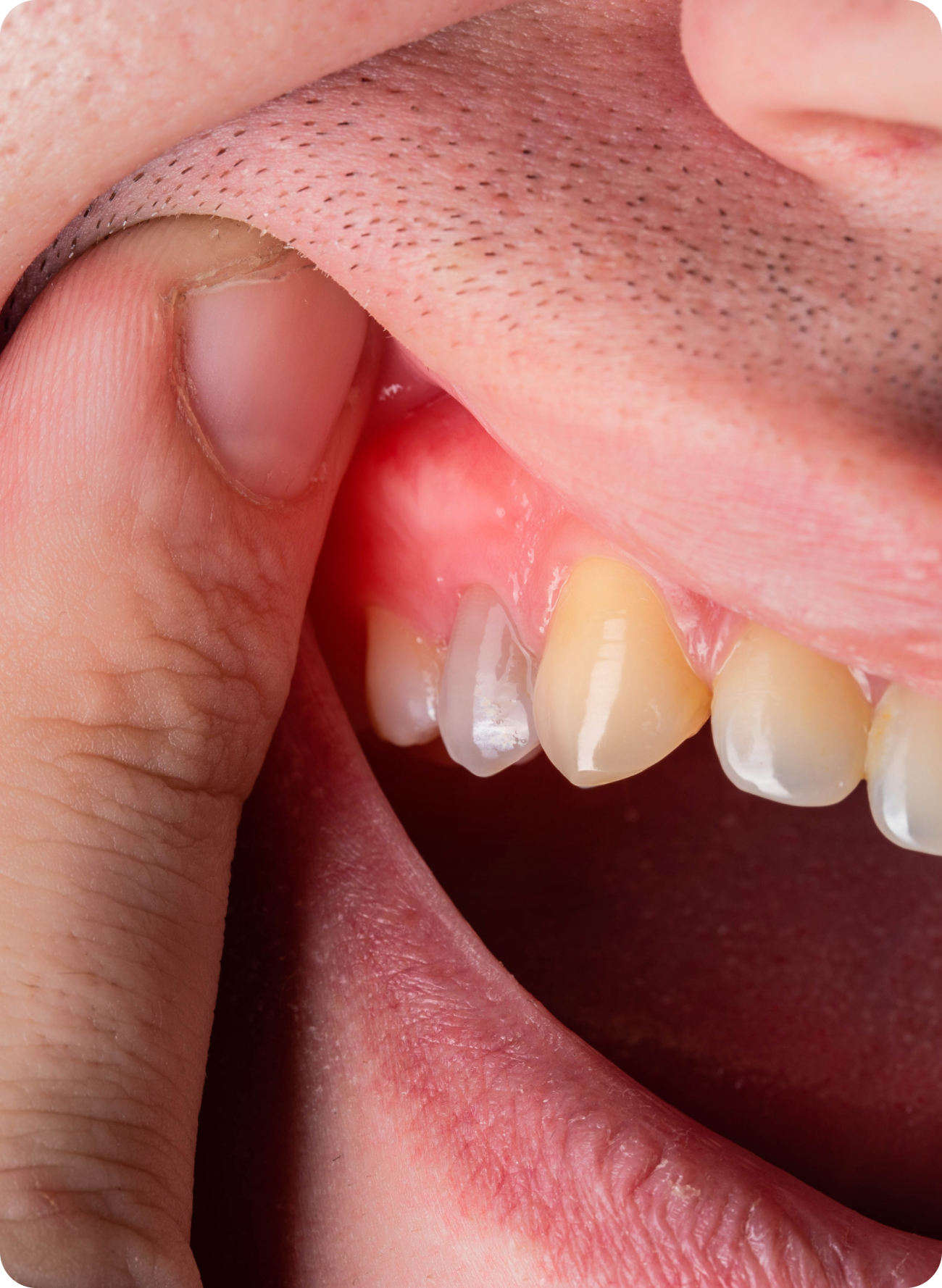
Research has linked heavy or long-term alcohol use with a higher risk of gum disease.² Heavy drinking may contribute to swollen or bleeding gums, bone loss and changes in the bacteria in your mouth. It can also weaken some of the body's defenses against harmful bacteria.
What are the oral cancer risks of drinking alcohol?
This is the most serious dental concern associated with alcohol, and one that most patient-focused articles overlook. Alcohol is a recognized risk factor for cancers of the mouth and throat.⁴ The risk increases with how much you drink, and combining alcohol with tobacco can raise the risk further.
Signs that warrant a prompt evaluation include a sore or patch in your mouth that hasn't healed after two weeks, unexplained tenderness or numbness in the mouth or lips or a persistent sensation that something is stuck in your throat.5 If any of these sound familiar, contact your dental provider. Oral cancers found early are far more treatable.
How can you protect your teeth if you drink?
You don't have to stop drinking to take better care of your teeth. A few adjustments help:
Drink water between alcoholic beverages. It dilutes acid, supports saliva production and keeps you more hydrated.
Wait before brushing. Give your enamel at least 30–60 minutes to re-harden after drinking before you brush.3
Use a straw for acidic drinks to reduce direct contact with your teeth.
Stay current on cleanings. Your dental provider can monitor early changes and recommend protective treatments (like fluoride applications) if needed.
Tell your dental provider about your drinking habits. Frequency and type of alcohol help your care team give you more targeted guidance.
If you drink alcohol and have questions about changes in your teeth or gums, schedule a visit with your dental provider. They can check for early signs of damage and help you protect your smile.
What does alcohol do to your teeth and gums? FAQs
Patients often have follow-up questions that go beyond the basics. Here are the ones that come up most often.
Is red wine worse for your teeth than white wine?
Each poses different risks. Red wine contains chromogens — the pigments that cause staining — along with tannins that help those pigments stick to enamel. White wine tends to be more acidic than red, so it softens enamel more aggressively. White wine won't stain as visibly, but the porosity it creates makes teeth more likely to absorb stains from other foods and drinks afterward.6 Both have a dental downside; the type of damage just differs.
Is the alcohol in mouthwash bad for my teeth?
For most people, occasional use isn't a problem. Some dental organizations recommend alcohol-free mouthwash as a precaution for people who already have dry mouth, though research on whether alcohol-containing mouthwash itself causes dryness is mixed.⁷ If you already experience dry mouth (from medication, a health condition or other factors), a non-alcoholic formula is a reasonable, low-risk choice. Your dental provider can recommend one suited to your situation.
Can alcohol-related tooth staining be reversed?
Often, yes. Surface staining typically responds well to professional cleaning and polishing. Deeper discoloration that has worked into porous enamel may need whitening treatment to fully address. Reducing ongoing exposure helps prevent new staining from returning at the same rate. Your dental provider can evaluate the type of staining you have and recommend the most effective approach.
Sources
¹National Institute of Dental and Craniofacial Research (NIDCR): “Dry Mouth.” https://www.nidcr.nih.gov/health-info/dry-mouth
²National Institutes of Health: PubMed Central: Cureus. “Alcohol and Periodontal Disease: A Narrative Review.” https://pmc.ncbi.nlm.nih.gov/articles/PMC11246185/
³American Dental Association (ADA): “Dental Erosion.” https://www.ada.org/resources/ada-library/oral-health-topics/dental-erosion
⁴Centers for Disease Control and Prevention (CDC): “Alcohol and Cancer.” https://www.cdc.gov/cancer/risk-factors/alcohol.html
⁵National Institute of Dental and Craniofacial Research (NIDCR): "Oral Cancer." https://www.nidcr.nih.gov/health-info/oral-cancer
⁶National Institutes of Health: PubMed Central. European Journal of Dentistry. "The Impact on Dental Staining Caused by Beverages in Combination with Chlorhexidine Digluconate." https://pmc.ncbi.nlm.nih.gov/articles/PMC9683888/