Last updated 08.13.2026
Can an AI aligner scan replace an in-person exam?
AI aligner scans show visible tooth surfaces, but an in-person dental exam checks gums, bone, bite and hidden issues before clear aligner treatment.

No, and the difference is more significant than you might expect. Artificial intelligence (AI) aligner scans produce an accurate 3D model of your visible teeth, which is genuinely useful for planning tooth movement. But they see only the surface. A clinical examination looks deeper: at your gum health, bone levels, tissue condition and bite. Before aligner treatment begins, that deeper look is what makes treatment safe.
What you'll learn in this article:
The American Association of Orthodontists says an in-person exam should happen before clear aligner treatment begins.¹
Applying aligner forces to teeth affected by untreated gum disease or bone loss can worsen those conditions, and in serious cases, contribute to tooth loss.
A scan can't show hidden problems like cavities, bone loss or changes to tooth roots that may affect treatment.
A clinical exam doesn't just screen for problems; it creates a treatment plan matched to your actual oral health, not just the shape of your teeth.
To find out whether you're a good candidate for clear aligners, schedule an appointment with an Aspen Dental provider for a personalized evaluation.
What does an AI aligner scan actually do?
An AI aligner scan creates a 3D digital model of the visible surfaces of your teeth. Using a smartphone camera or handheld scanner, the system captures images from several angles and combines them to show tooth shape, spacing and alignment. This digital model can be used to create treatment simulations and design custom aligner trays.
But the scan only shows what is visible. It cannot show what is happening below the gumline or fully assess the health of your gums.¹ That limitation matters because some oral health problems may not cause obvious symptoms at first. A scan may show how your teeth look and line up, but it cannot provide a complete picture of your oral health.
What does a clinical examination find that a scan can't?
An AI scan provides a picture of your teeth. A clinical examination provides a complete picture of your oral health. There's a meaningful difference between the two, and the sections below explain why each area matters before starting aligner treatment.
Is your gum health ready for aligner treatment?
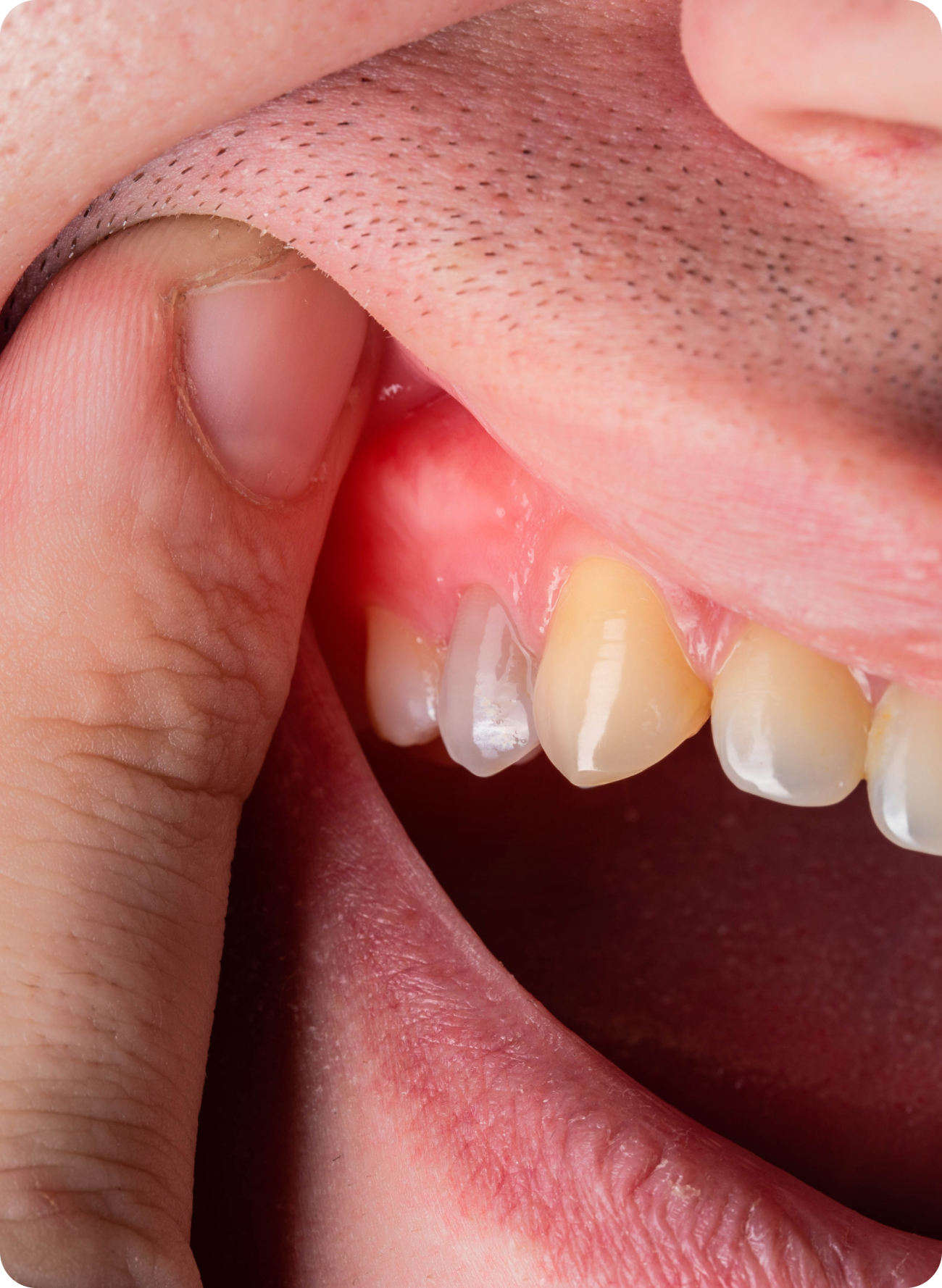
Gum disease is one reason aligner treatment may need to be delayed. In its early stages, it may cause little discomfort and may not show on the surface of your teeth. Your provider can check gum health during an in-person exam, including measuring the pockets around each tooth. A camera cannot do that.
Moving teeth without first checking gum and root health can raise the risk of serious problems, including loose or lost teeth. Treating oral health problems first helps protect your teeth before aligner treatment begins.¹
Are there hidden cavities or bone problems?
Dental X-rays can reveal hidden decay, bone loss and changes to tooth roots that can affect orthodontic treatment. These problems may not be visible during a surface scan and can change how your provider plans tooth movement.²
What else does a provider check during the exam?
An oral cancer screening includes a visual and hands-on exam of the mouth and nearby tissues.³ Your provider looks for changes that may need a closer look. This is another check that requires an in-person exam and cannot be replaced by a surface scan.
What about AI scanning used in dental offices?
Dental offices may also use AI-enhanced intraoral scanners to create detailed 3D images of your teeth. These scans can help your dental provider plan treatment, but they are only one part of the evaluation.
The scan shows the shape and position of your teeth. A clinical exam provides the added context needed to assess your oral health and decide whether treatment is appropriate.
In-office and at-home scans may serve a similar purpose by creating a digital model of your teeth. The key difference is that an in-office scan is used alongside a professional exam rather than on its own.
Before moving forward with clear aligners, talk with your dental provider about what your scan shows and what an in-person exam can uncover. Together, these tools can help create a treatment plan that supports both your smile goals and your oral health.
Can an AI aligner scan replace an in-person exam? FAQs
If you still have questions about AI aligner scans and in-person exams, these answers cover what to expect before starting treatment.
Are at-home AI aligner scans accurate?
Surface accuracy and clinical safety are two separate questions. A scan can produce a reasonable 3D model of your tooth surfaces while simultaneously missing gum disease, bone problems or other conditions that affect whether aligner treatment is safe to begin. Accuracy of the image doesn't equal completeness of the evaluation.
If I recently had a dental checkup, do I still need a separate aligner consultation?
Yes, a routine cleaning and an aligner consultation serve different purposes. A cleaning addresses hygiene and early decay detection. An aligner consultation specifically evaluates whether your teeth, gums, bone and bite can safely support the movement clear aligners are designed to create. Your dental provider will also review your X-rays with aligner treatment in mind, which requires a different clinical lens than a standard checkup. If your last exam was recent and complete, your dental provider can review those records and may not need to duplicate every step — but the consultation itself is a separate conversation worth having.
What happens at an aligner consultation?
Your dental provider will review your dental history, assess your gum tissue, take X-rays if indicated and evaluate your bite and jaw alignment. If you're a good candidate for aligners, you'll discuss treatment options, expected timeline and cost. You'll leave with a clear picture of next steps, including whether you're ready to start treatment.
Sources
¹American Association of Orthodontists. “Orthodontists Respond to Frequently Asked Questions from Adults Considering Treatment.” https://aaoinfo.org/orthodontists-respond-to-frequently-asked-questions-from-adults-considering-treatment/
²American Association of Orthodontists. “Beneath the Surface: The Critical Role of In-Person Consultations and Orthodontic X-Rays.” https://aaoinfo.org/whats-trending/the-importance-of-x-rays/
³American Dental Association. “Oral Cancer Guideline.” https://www.ada.org/resources/research/science/evidence-based-dental-research/oral-cancer-guideline