Last updated 05.19.2026
Why does my tooth feel like it's under pressure even when I'm not chewing?
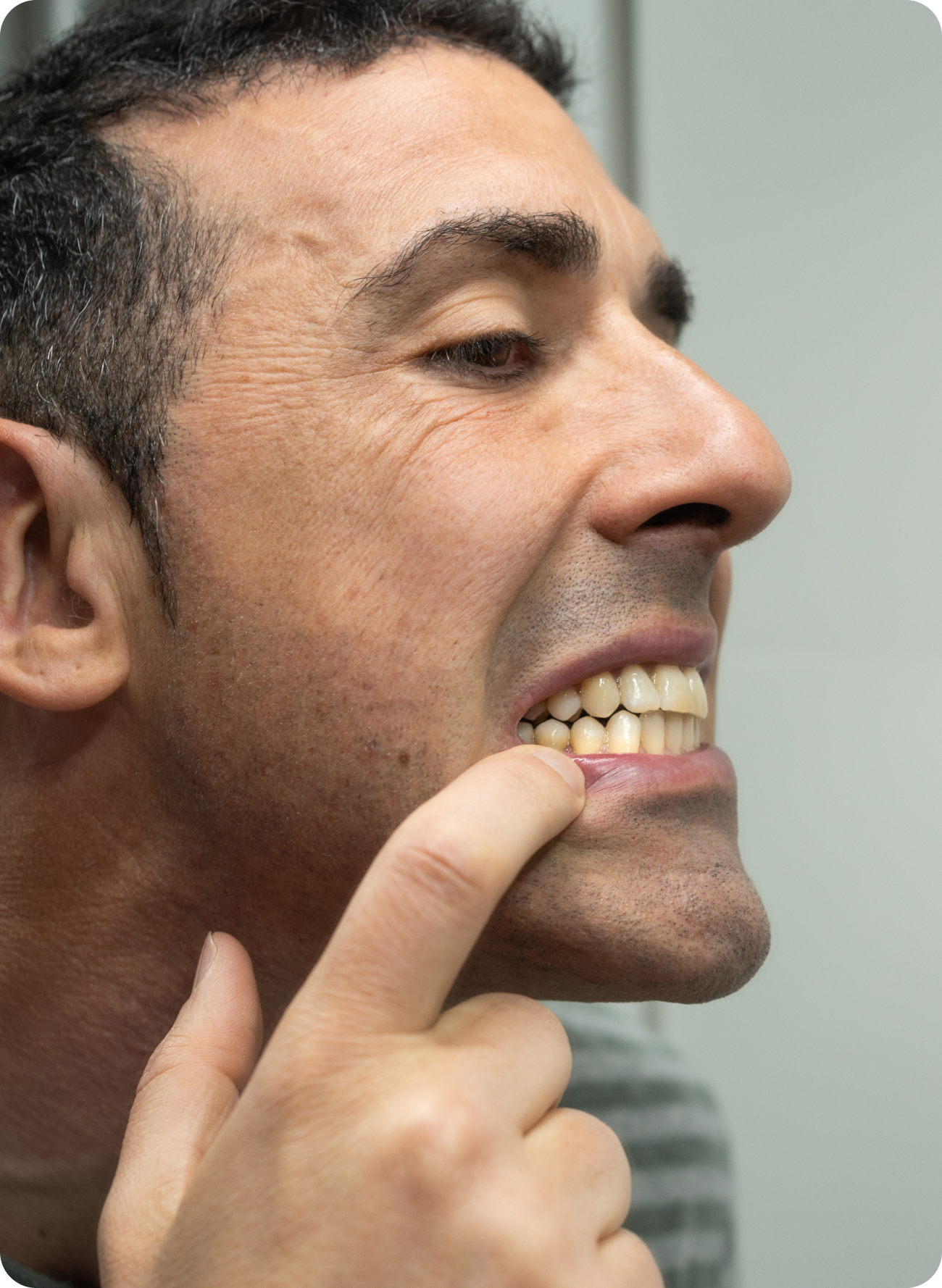
A tooth that feels under pressure without chewing may be caused by infection, inflammation or structural damage.

A tooth that feels under pressure when you’re not chewing is usually a sign of inflammation, infection or structural damage inside the tooth or surrounding tissue. Common causes include a dental abscess, cracked tooth, sinus infection or gum disease.
This guide explains what causes the pressure sensation, which symptoms may signal urgency and how your Aspen Dental provider can help relieve the pressure and protect the tooth.
What you'll learn in this article:
The most common causes of tooth pressure when you're not chewing
How to tell the difference between urgent and non-urgent causes
Which symptoms require same-day care
How each condition is diagnosed and treated
What you can do at home while waiting for your appointment
What does tooth pressure without chewing actually mean?
Tooth pressure at rest is different from standard tooth sensitivity. Sensitivity is a brief, sharp response to a trigger like heat, cold, or sweets. Pressure at rest is a persistent feeling of fullness, heaviness or dull aching that remains even when the tooth is not being used. It usually means something is affecting the tooth itself or the tissue surrounding it.
The most common cause is inflammation. When infection, damage or irritation develops inside or around a tooth, the body sends blood and immune cells to the area. That response creates swelling in a space with very little room to expand, causing pressure that the nerve interprets as pain, heaviness, or throbbing — even when you are not chewing.
What causes a tooth to feel like it's under pressure?
Several conditions can create this sensation. Some require urgent treatment, while others are less serious but still need professional evaluation.
Dental abscess
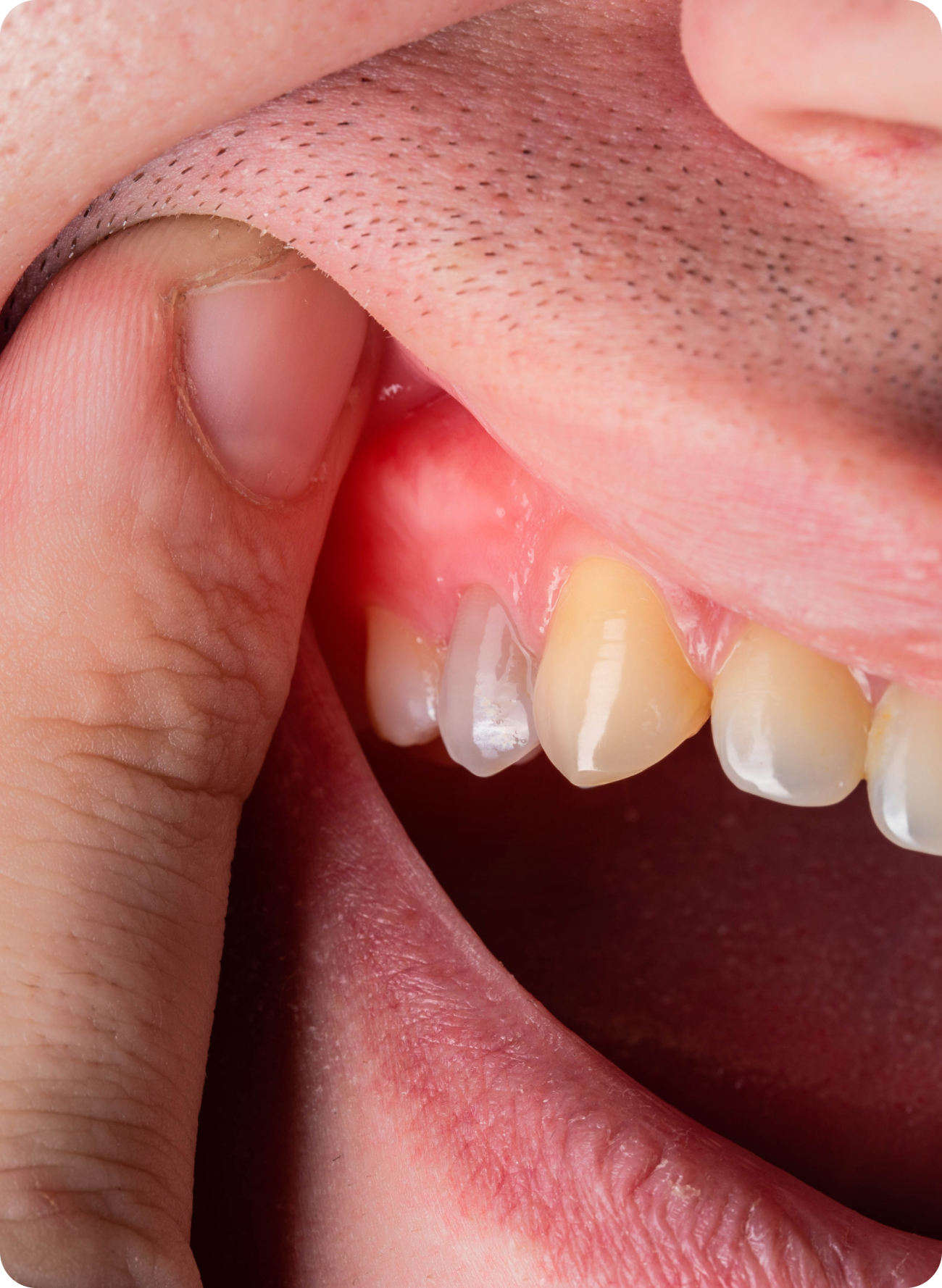
A dental abscess is one of the most common causes of persistent tooth pressure. It occurs when bacteria enter the tooth through a cavity, crack or failing restoration and spread into the pulp and root area. As the infection grows, it creates a buildup of pus and inflammation that places pressure on the surrounding tissue and nerves — even when the tooth is at rest.
Other signs of a dental abscess include:
Throbbing pain that radiates to the jaw, ear, or neck
Swelling in the gum, cheek, or jaw
A pimple-like bump near the affected tooth
Fever or a general feeling of illness
A foul taste or smell in the mouth
A dental abscess will not heal on its own. Without treatment, the infection can spread into the jawbone and surrounding tissue. If you notice these symptoms alongside tooth pressure, contact your Aspen Dental provider promptly.
Tooth decay and loose or failed fillings
When a cavity reaches the inner layer of your tooth — or an old filling loosens and lets bacteria back in — the pulp becomes inflamed. That inflammation has nowhere to go, producing a persistent pressure sensation even when you're not chewing.
This is more common than most patients realize. The CDC reports that 27% of U.S. adults have untreated tooth decay — many without realizing it.1 Many people do not feel sharp pain — just pressure, fullness, or a vague sense that something is "off."
Your provider will take X-rays to assess the decay and pulp health. Caught early, a new filling or crown is usually sufficient. If the pulp is significantly affected, a root canal may be needed before the tooth is restored.
Cracked tooth
A cracked tooth can create pressure that feels difficult to pinpoint. When the crack irritates the pulp, the tissue inside the tooth becomes inflamed and creates internal pressure. Unlike cavities, cracks are not always visible on X-rays and may only be identified during a clinical exam.
Signs of a cracked tooth include:
Pressure or pain that comes and goes
Sharp pain when biting down followed by relief when releasing
Lingering sensitivity to heat or cold
Difficulty identifying which tooth hurts
Cracks tend to worsen over time. A tooth that is still repairable today may split later if treatment is delayed.
Sinus infection
The maxillary sinuses sit directly above the roots of the upper back teeth. When those sinuses become inflamed or infected, the pressure can radiate downward and feel like tooth pain or fullness. This is called referred pain and often affects several upper teeth at once. Sinus-related tooth pressure is more likely if:
You recently had a cold, allergies, or an upper respiratory infection
Multiple upper teeth feel affected instead of one specific tooth
The pressure worsens when bending forward or moving your head
You also have congestion, facial pressure, or postnasal drip
If the pressure is sinus-related, treating the sinus infection will resolve the tooth symptoms. Your dentist can help determine whether the source is dental or sinus related.
Gum disease
Advanced gum disease can create a heavy or pressurized feeling around the tooth. As the infection damages the surrounding bone and gum tissue, the tooth loses support and the inflamed tissue creates pressure around the root.
Signs of gum disease include:
Bleeding gums when brushing or flossing
Swollen, red or tender gums
Gums pulling away from the tooth
Persistent bad breath
A tooth that feels loose or unstable
Gum disease is one of the leading causes of tooth loss in adults in the United States. Early treatment can stop the damage from progressing.2
Teeth grinding (bruxism)
Teeth grinding places repeated pressure on the teeth and supporting structures during sleep. Over time, this strain inflames the periodontal ligament — the tissue that anchors the tooth to the jawbone — causing soreness, tenderness, and pressure sensations during the day.
Bruxism-related pressure is more likely if:
You wake up with jaw soreness or facial fatigue
Someone has noticed grinding sounds while you sleep
You have frequent morning headaches
Multiple teeth feel sore instead of just one
A custom night mouthguard from your dentist can help reduce grinding forces and relieve pressure on the teeth and jaw.
Impacted wisdom tooth
An impacted wisdom tooth can press against the tooth beside it, creating a sensation of pressure or fullness. In many cases, the discomfort is felt in the neighboring molar rather than the wisdom tooth itself.
Signs of wisdom tooth pressure include:
Discomfort near the back of the mouth or jaw
Swelling or tenderness behind the last molar
Difficulty opening the mouth fully
Pressure that developed gradually over time
Recent dental work
Pressure or sensitivity can develop for days or weeks after a filling, crown or other dental procedure. The pulp inside the tooth may become temporarily inflamed after treatment, creating a lingering sensation of pressure.
This discomfort should gradually improve. If the pressure worsens, lasts beyond a few weeks or occurs alongside swelling or fever, contact your Aspen Dental office. It may indicate that the pulp has become infected and needs further treatment.
When is tooth pressure a dental emergency?
Some causes of tooth pressure require same-day care. Seek same-day dental care if you experience: Severe, throbbing pain that does not respond to over-the-counter pain relief
Swelling in the face, jaw, or neck — particularly if it is spreading or affecting your ability to swallow or breathe
Fever alongside tooth pain — a sign that infection may be spreading beyond the tooth
A pimple-like bump on the gum near the painful tooth
A tooth that has become visibly loose without injury
How is tooth pressure diagnosed and treated?
Your provider will use a combination of clinical examination, X-rays, and targeted tests — such as tapping the tooth, applying temperature, or using a bite stick — to identify the source of the pressure. Treatment depends entirely on what's causing it.
Dental abscess
Treated with root canal therapy to remove the infected pulp and seal the tooth. If the infection has spread to surrounding tissue, antibiotics may be prescribed alongside the procedure. In cases where the tooth cannot be saved, extraction is the appropriate course.
Cracked tooth
Treated based on how far the crack extends. A crack confined to the outer structure may be restored with a crown. If the crack has reached the pulp, root canal therapy is needed first. A crack that extends below the gumline or through the root cannot be saved and requires extraction.
Sinus-related tooth pressure
Does not require dental treatment. Once the underlying sinus infection is resolved — through your primary care provider or an ENT — the tooth pressure resolves with it.
Gum disease
Treated with a deep cleaning procedure called scaling and root planing, which removes bacterial buildup from below the gumline and smooths the root surfaces to help the gum tissue reattach. More advanced cases may require periodontal therapy beyond standard cleaning.
Bruxism
Managed with a custom night mouthguard that cushions the teeth and absorbs the forces of grinding during sleep. If the bite itself is contributing to the problem, a bite adjustment may also be recommended.
Impacted wisdom tooth
May be monitored if it is not actively causing damage, or extracted if it is pressing against adjacent teeth or creating a risk of infection.
Post-procedural sensitivity
Monitored over time after a filling or crown. Most cases resolve on their own as the pulp settles. If the pressure worsens or persists, root canal therapy may be needed to address pulp inflammation that has not been resolved.
Early diagnosis leads to simpler, less costly treatment. A tooth addressed at the abscess or crack stage is far more likely to be saved than one left until the damage is extensive.
How to relieve tooth pressure at home
Home remedies will not treat the underlying cause, but they can help manage discomfort while you wait for your appointment.
Over-the-counter pain relievers: Over-the-counter anti-inflammatory medication, such as ibuprofen, may help reduce pain and inflammation when used as directed.
Cold compress: Apply a cold pack to the outside of the cheek for 15–20 minutes at a time to reduce swelling and numb the area.
Avoid pressure on the tooth: Chew on the opposite side and avoid hard or crunchy foods.
Elevate your head: Lying flat can increase blood pressure in the area and worsen the sensation. Keeping your head elevated — especially at night — can reduce discomfort.
Avoid heat: Heat can increase inflammation and worsen pain from an abscess.
Do not use these measures as a substitute for professional care. If the pressure is caused by an infection, it will not resolve without treatment.
When tooth pressure won't go away, it's time to act
A tooth that feels like it's under pressure when you're not chewing is your body's way of signaling that something needs attention. The cause may be as straightforward as a sinus infection or as urgent as a dental abscess — but in either case, the right next step is the same: get it evaluated before the condition progresses.
Tooth pressure FAQs
Can tooth pressure go away on its own?
It depends on the cause. Pressure from a sinus infection may be resolved once the sinus clears. Post-procedural sensitivity after a filling or crown can fade over days–weeks. However, pressure caused by a dental abscess, cracked tooth or gum disease will not resolve without professional treatment — and in the case of an abscess, the condition will worsen without care.
Why does my tooth feel like it's under pressure but there's no pain?
Pressure without sharp pain is still a clinical sign worth investigating. Early-stage infections and cracks can produce a dull heaviness before they progress to acute pain. The absence of sharp pain does not mean the tooth is healthy — it may mean the condition is in an earlier stage.
Can a sinus infection really make a tooth feel like it's under pressure?
Yes. The roots of the upper back teeth sit in close proximity to the maxillary sinuses. When those sinuses are inflamed or infected, the pressure can radiate directly into the teeth above them. This is one of the most common causes of tooth pressure that affects multiple upper teeth at once, and it is frequently mistaken for dental problems.
How do I know if my tooth pressure is from grinding?
Bruxism-related pressure tends to affect multiple teeth rather than one, and it is accompanied by jaw soreness, morning headaches, or facial fatigue. If the pressure is worse in the morning and improves throughout the day, grinding during sleep is a likely contributor.
Is tooth pressure after a filling normal?
Some degree of sensitivity or pressure after a filling is expected and can last for days–weeks. The tooth's pulp can become temporarily inflamed in response to the procedure. If the pressure is severe, worsening or accompanied by swelling, contact your Aspen Dental provider — it may indicate that the pulp requires further treatment.
Sources
1CDC, NCHS Data Brief No. 197. https://www.cdc.gov/nchs/products/databriefs/db197.htm
2 CDC, Gum Disease Facts. https://www.cdc.gov/oral-health/data-research/facts-stats/fast-facts-gum-disease.html