Last updated 05.18.2026
The pros and cons of dental veneers
Discover the benefits and drawbacks of choosing dental veneers as a cosmetic dentistry option to enhance your smile.
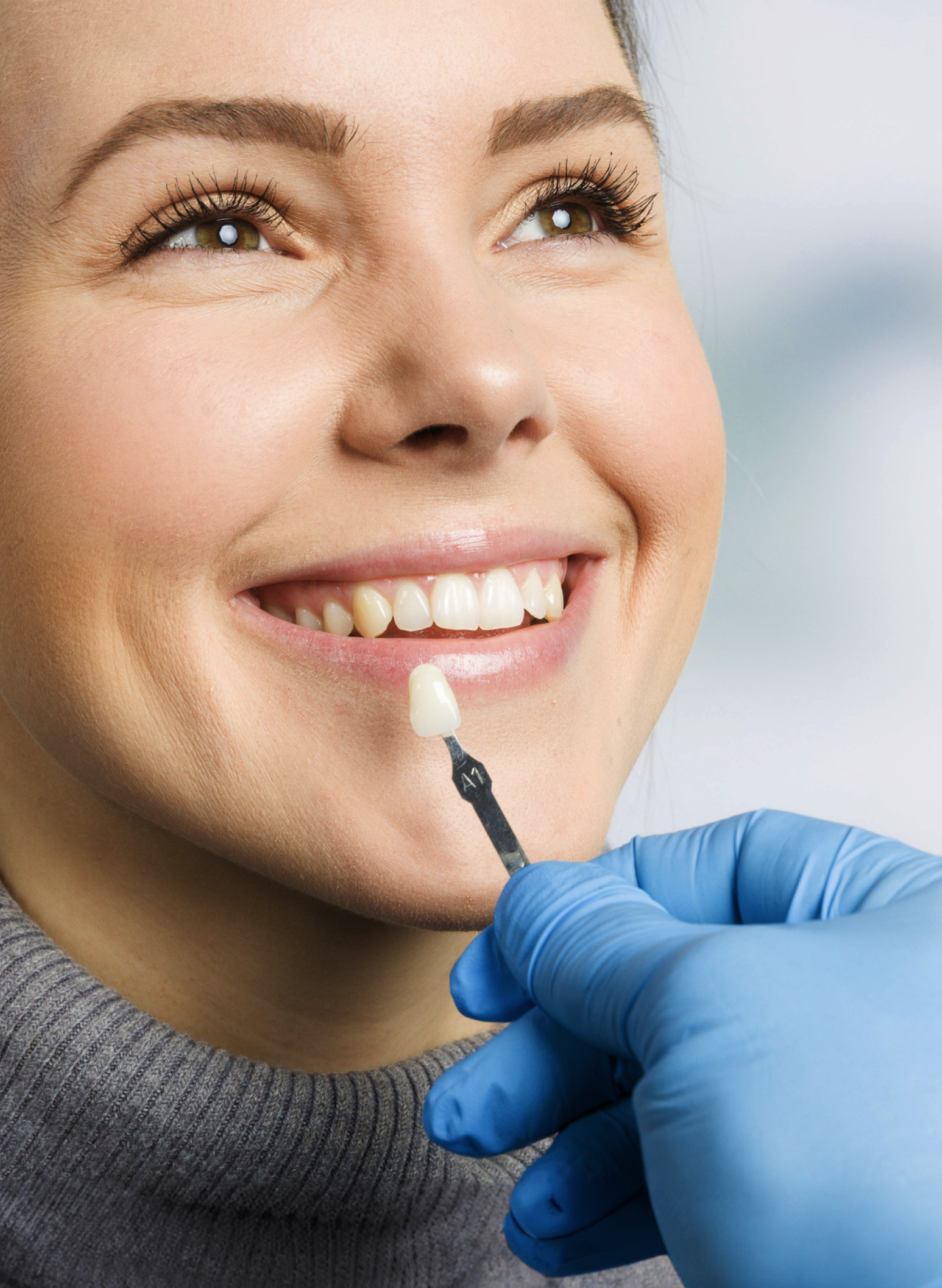
Dental veneers are thin, custom-made shells—usually porcelain or composite—bonded to the front of your teeth to improve the appearance of stains, chips, gaps, and minor misalignment. They typically cost $800–$2,500 per tooth, last 10–15 years or longer with proper care and require permanent enamel removal—making them a meaningful, long-term cosmetic investment.1
Whether you've seen a celebrity smile transformation or simply want to feel more confident, veneers are one of the most popular cosmetic dentistry options available today. But they're not right for everyone. This guide walks through the honest advantages and disadvantages so you can make an informed decision with your Aspen Dental provider.
What are dental veneers?
Dental veneers are ultra-thin shells — typically 0.5mm thick — custom-crafted from porcelain or composite resin and permanently bonded to the front surface of your teeth. They change the color, shape, size, or length of teeth and are designed to blend seamlessly with your natural smile.1 There are two main types:
Porcelain veneers — The gold standard for natural appearance. They reflect light like real enamel, resist staining, and typically last 10–15 years or longer.
Composite resin veneers — Applied in a single visit, less expensive, but more prone to staining and generally last 5–7 years. While composite veneers require less enamel removal than porcelain, some enamel preparation is still typically involved — making them partially but not fully reversible.
Veneers are most commonly used to address: discoloration that doesn't respond to whitening, chipped or cracked teeth, minor gaps between teeth, slightly misaligned or uneven teeth, and worn-down enamel.
Pros of dental veneers
Natural, lifelike appearance
Porcelain veneers mimic the light-reflecting properties of natural tooth enamel, making them virtually indistinguishable from your real teeth. They are custom-shaded to match your surrounding teeth, so the result looks natural — not artificial.1
Stain resistance
Unlike natural enamel, porcelain is non-porous and highly resistant to staining from coffee, wine, tea, and tobacco. Once placed, your veneers will maintain their color far longer than natural teeth or composite bonding.
Minimally invasive compared to crowns
Veneers require the removal of only a thin layer of enamel (typically 0.3–0.5mm) from the front of the tooth — significantly less than a dental crown, which encases the entire tooth. This preserves more of your natural tooth structure.
Long-lasting results
With proper care — regular brushing, flossing, and dental checkups — porcelain veneers can last 10 to 15 years or longer before needing replacement.2
Simple maintenance
Caring for veneers requires no special products or routines. Brush twice daily, floss once daily, and attend regular dental checkups — the same habits that protect your natural teeth.
Versatile cosmetic correction
A single treatment can simultaneously address multiple cosmetic concerns: whitening, reshaping, closing gaps, and correcting minor misalignment — without orthodontic treatment.
Cons of dental veneers
The most significant drawbacks of dental veneers are their irreversibility, high cost, and unsuitability for patients with active gum disease, decay, or bruxism — all of which should be evaluated before proceeding.
The process is irreversible
This is the most important consideration: applying veneers requires permanently removing a thin layer of enamel from your teeth. Once removed, enamel does not grow back. You will need veneers — or another restoration — on those teeth for the rest of your life.1
Increased tooth sensitivity
Because a small amount of enamel is removed, some patients experience increased sensitivity to hot and cold temperatures after placement. This is often temporary, but for patients who already have sensitive teeth, it's worth discussing with your Aspen Dental provider before proceeding.
Veneers can chip or break
While porcelain is durable, it is not indestructible. Veneers can crack or chip if you bite your nails, chew ice, or grind your teeth. Unlike natural teeth, a chipped veneer cannot be repaired — it must be fully replaced.
Not suitable for severely damaged teeth
If a tooth has significant decay, a large existing filling, or structural damage, a veneer may not provide adequate coverage or support. In these cases, a dental crown or other restorative treatment is typically the better option.
Not for everyone: candidacy matters
Patients with active gum disease, tooth decay, or bruxism (teeth grinding) are generally not good candidates for veneers until those conditions are treated. Your Aspen Dental provider will evaluate your oral health before recommending veneers.
How much do dental veneers cost?
Dental veneers cost between $990 and $2,169 per tooth at Aspen Dental, with porcelain veneers averaging $1,359 per tooth. Costs vary depending on the material, the complexity of your case, and your geographic location.
Factors that affect the total cost include:
Type of material — Porcelain costs more than composite resin but lasts longer
Number of teeth — Many patients choose veneers for 6–10 visible front teeth
Geographic location — Costs vary by region and practice
Complexity — Teeth requiring significant reshaping or prep work cost more
Dentist expertise — Cosmetic specialists may charge more than general dentists
Because veneers are cosmetic, dental insurance typically does not cover them. However, many dental practices — including Aspen Dental — offer financing options to help make treatment more accessible.
Are dental veneers permanent?
Yes — veneers are considered a permanent dental treatment because the enamel removal required for placement cannot be reversed. However, the veneers themselves are not permanent: they will need to be replaced every 10–15 years as they naturally wear down over time.1 This distinction matters: your commitment to having some restoration on those teeth is permanent, but the veneers themselves will require periodic replacement throughout your lifetime.
How do veneers work?
The placement process Getting veneers typically involves two to three dental appointments:
Consultation and planning — Your dentist evaluates your oral health, discusses your goals, and determines if you're a good candidate. Digital imaging or mock-ups may be used to preview results.
Tooth preparation — A thin layer of enamel is removed from the front of each tooth. Impressions or digital scans are taken and sent to a dental lab to fabricate your custom veneers.
Bonding — Once your veneers are ready (typically 1–2 weeks), they are permanently bonded to your teeth using a special dental adhesive and cured with a light.
The entire process from consultation to final placement typically takes 2–4 weeks.
Veneers vs. Alternatives: Which option is right for you?
If you are not sure veneers are the right choice, several cosmetic and restorative treatments may address similar concerns depending on your goals, budget and the condition of your teeth.
Porcelain veneers
Porcelain veneers are often recommended for patients with multiple cosmetic concerns, such as discoloration, chips, uneven spacing, or worn enamel. They are one of the longest-lasting cosmetic options, typically lasting 10–15 years or longer, but they are not reversible because a small amount of enamel must be removed. Costs generally range from $1,300–$2,500 per tooth.
Composite veneers
Composite veneers are a more budget-friendly alternative and may be a good option for patients seeking cosmetic improvements at a lower cost. They are partially reversible and usually last about 5–7 years. Costs commonly range from $250–$1,500 per tooth.
Dental bonding
Dental bonding is best suited for smaller cosmetic concerns, such as minor chips, cracks or gaps between teeth. It is typically reversible and less expensive than veneers, with costs ranging from $100–$400 per tooth. Bonding usually lasts about 3–10 years depending on the location and how well it is maintained.
Teeth whitening
If discoloration is your main concern, professional teeth whitening may be a simpler alternative to veneers. Whitening does not change tooth shape or repair damage, but it can significantly improve staining. Results generally last 1–3 years, and treatment typically costs between $300–$1,000.
Dental crowns
Dental crowns are usually recommended for teeth that are severely damaged, weakened or heavily restored. Like porcelain veneers, crowns are not reversible and typically last 10–15 years or longer. Costs generally range from $1,000–$3,500 per tooth depending on the material and complexity of treatment.
Dental veneers FAQs
How long do veneers last?
With proper care, porcelain veneers typically last 10 to 15 years before needing replacement. Composite veneers last 5 to 7 years on average. Longevity depends on your oral hygiene habits, whether you grind your teeth, and how well you avoid habits like biting nails or chewing ice.1
Can you go back to normal teeth after getting veneers?
No — because a thin layer of enamel is permanently removed during the veneer placement process, you cannot return to your natural unrestored teeth. Once you have veneers, you will always need some form of dental restoration on those teeth. This is why the decision to get veneers should be made carefully with your dentist.
Which type of veneers look the most natural?
Porcelain veneers are widely considered the most natural-looking option. Their translucency and light-reflecting properties closely mimic natural tooth enamel, and they are custom-shaded to blend with your surrounding teeth.1
Can dental veneers replace old crowns?
No. Veneers cover only the front surface of a tooth, while crowns encapsulate the entire tooth structure. If you have an old crown that needs replacement, your Aspen Dental provider will recommend a new crown — not a veneer.
Do veneers hurt?
The veneer placement process is performed under local anesthesia, so you should not feel pain during the procedure. Some patients experience mild sensitivity or soreness in the days following placement, which typically resolves on its own.
Are veneers covered by insurance?
Dental veneers are generally considered a cosmetic procedure and are not covered by most dental insurance plans. Some plans may cover a portion of the cost if veneers are deemed medically necessary (e.g., to restore a severely damaged tooth), but this is uncommon. Ask your insurance provider and your dental team about your specific coverage.
Who is not a good candidate for veneers?
Patients with active gum disease, significant tooth decay, insufficient enamel, or bruxism (teeth grinding) may not be suitable candidates for veneers until those conditions are addressed. Your dentist will conduct a thorough evaluation before recommending treatment.
Is getting dental veneers worth it?
For patients with good oral health who want to address multiple cosmetic concerns at once — staining, chips, gaps, or shape — dental veneers offer a durable, natural-looking, and long-lasting solution. The key is going in with clear expectations: veneers are a permanent commitment, a significant financial investment, and not a substitute for restorative dental care.
The best way to determine if veneers are right for you is a one-on-one conversation with a dental professional who can evaluate your specific oral health, discuss your goals, and walk you through all available options.
Schedule an appointment at your nearest Aspen Dental to explore whether veneers are the right path to the smile you've been envisioning.
Sources