Last updated 06.02.2026
Why does my cheek hurt?
Learn what causes cheek soreness, how to tell which symptoms may be serious and when to seek dental or urgent care.

Cheek soreness is often caused by a dental problem, sinus pressure, teeth grinding, or irritation inside the mouth. A tooth infection, jaw joint issue, canker sore, or even accidental cheek biting can all trigger discomfort on one or both sides of the face. Most causes are treatable, but worsening swelling, fever or difficulty opening your mouth should not be ignored.
Because cheek soreness can come from several different causes, an Aspen Dental provider can help identify what is actually triggering it.
What you'll learn in this article:
A tooth abscess can cause cheek swelling and throbbing that spreads beyond the tooth — and it will not resolve without treatment
Sinus pressure often causes pressure in the cheeks alongside congestion, facial pressure, or a stuffy nose
Teeth grinding commonly causes morning cheek and jaw soreness from overnight muscle tension
Cheek pain that comes with clicking, jaw stiffness, or ear discomfort may point to a jaw joint problem that responds well to treatment
Canker sores and accidental cheek biting are common causes of inner cheek soreness and often heal within 1–2 weeks
Swelling, fever, difficulty opening your mouth or soreness spreading into the jaw or neck should not wait for routine care
Common reasons your cheek hurts
Cheek soreness rarely comes out of nowhere. In most cases, something nearby — a tooth, your sinuses, your jaw joint or the soft tissue inside your mouth — is the source. Understanding which one is causing your discomfort helps you decide how quickly you need to act.
Is a tooth abscess causing the soreness?
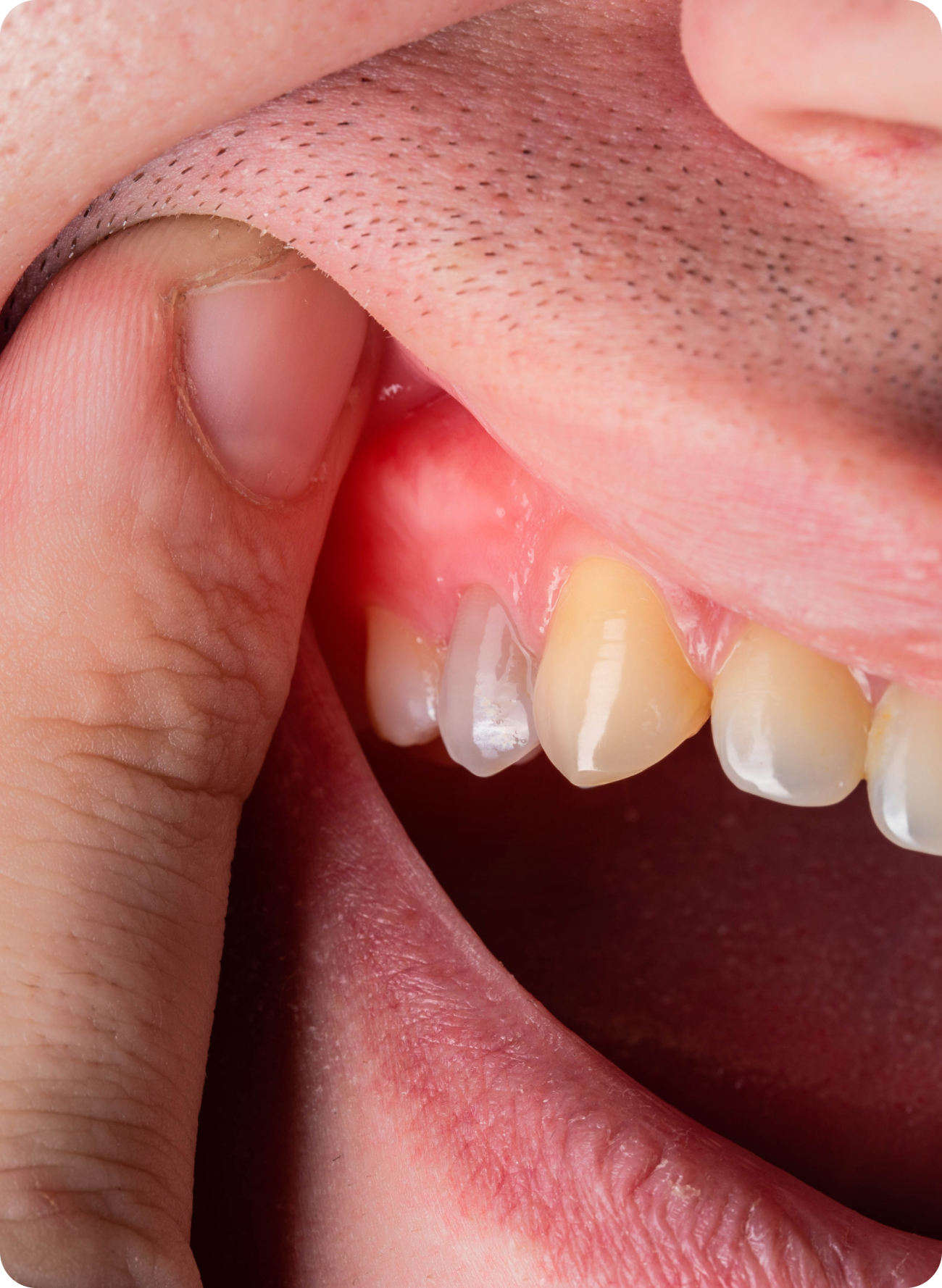
A tooth abscess is an infection near the root of a tooth that can cause swelling, throbbing and soreness in the cheek or jaw. Your upper back teeth sit close to your cheek, so an abscess in that area can cause aching, swelling and tenderness that radiates outward into the cheek itself.
The soreness from an abscess tends to be persistent and throbbing. You may also notice swelling in your cheek or jaw, sensitivity to heat or cold, a bad taste in your mouth or a small bump on your gum. An abscess will not clear up without treatment — and if left untreated, the infection can spread.1
Could sinus pressure be the cause?
Your maxillary sinuses — the largest sinus cavities in your face — sit directly behind your cheekbones. When those sinuses become inflamed or infected, the pressure they create can feel like deep cheek soreness or a dull ache across your face.
Sinus-related cheek discomfort usually comes with other symptoms: nasal congestion, a runny nose, pressure behind your eyes or a headache that worsens when you lean forward. If your cheeks hurt on both sides and you have cold or allergy symptoms, a sinus infection is a likely explanation.
How does teeth grinding cause cheek soreness?
Teeth grinding — also called bruxism — affects an estimated 8% of adults during sleep, according to the National Institutes of Health.2 When you grind or clench, you put significant force on your jaw muscles and the surrounding tissue. Over time, that tension spreads to your cheeks.
Many people who grind their teeth also clench their cheek muscles or inadvertently bite the inside of their cheek during sleep. The result is a sore, tired feeling in the cheeks and jaw that is often worst first thing in the morning.
What is TMJ disorder and why does it make your cheek hurt?
The temporomandibular joint (TMJ) connects your lower jaw to your skull, just in front of each ear. When this joint becomes inflamed or strained — a condition called TMJ disorder or TMD — the discomfort can radiate into your cheek, jaw and even your ear. The National Institute of Dental and Craniofacial Research estimates that TMD affects more than 10 million Americans.3
TMJ-related cheek soreness is often accompanied by clicking or popping when you open your mouth, difficulty chewing, jaw stiffness, or a locked feeling in the jaw.
Why does the inside of my cheek hurt?
When the soreness is specifically on the inner surface of your cheek — the soft tissue lining the inside of your mouth — the cause is usually different from the dental or sinus issues above. Inner cheek soreness tends to involve the soft tissue itself rather than a tooth or jaw structure.
Canker sores
Canker sores are small, shallow ulcers that form on the soft tissue inside your mouth, including the inner cheeks. They are not contagious and are not caused by a virus. They typically appear as a white or yellowish oval with a red border and can cause a sharp, stinging sensation — especially when eating acidic or spicy foods.
Most canker sores heal on their own within 7–14 days. Over-the-counter gels or rinses can help reduce the stinging in the meantime. If a sore lasts longer than two weeks or keeps coming back in the same spot, have it evaluated.
Cheek biting — accidental or habitual
Accidentally biting the inside of your cheek while eating is one of the most common causes of inner cheek soreness. The bitten area becomes swollen, which makes it easier to bite again — creating a frustrating cycle.
Some people also bite their cheeks habitually, often without realizing it, as a response to stress or anxiety. Repeated biting can cause a rough, thickened patch of tissue on the inner cheek. If you notice this happening regularly, your provider can assess the tissue and discuss options to break the habit.
Irritation from a sharp tooth or dental work
A chipped tooth, a rough filling edge, or a new dental appliance can rub against the inner cheek and cause localized soreness. This type of irritation tends to be in one specific spot and may feel like a raw or scraped sensation rather than a deep ache. If you recently had dental work and the inside of your cheek has been sore since, the two are likely connected.
When cheek soreness happens on just one side
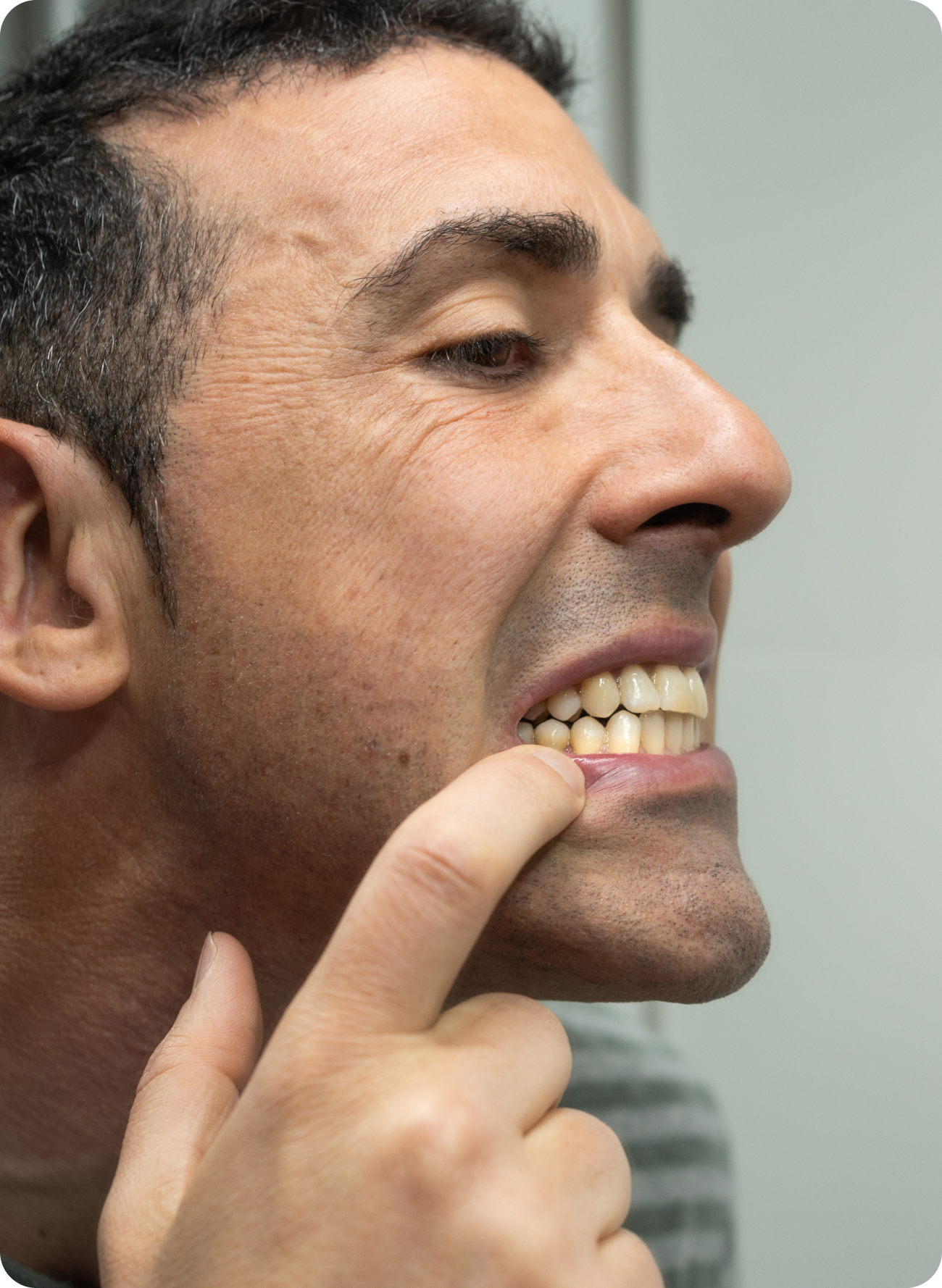
Cheek soreness on only one side usually points to a specific source in that area — most often a tooth, sinus cavity, or jaw joint. The type of discomfort often provides clues about what is causing it.
Throbbing soreness, swelling or a bad taste may point to a tooth infection
Pressure below the cheekbone with congestion is more likely sinus-related
Soreness near the ear that worsens when chewing may involve the jaw joint (TMJ)
Tender spots inside the cheek are often caused by cheek biting, canker sores, or irritation from a sharp tooth
If the soreness gets worse, lasts more than a few days, or comes with swelling, it should be evaluated.
What can I do for cheek soreness at home?
A few simple steps may help reduce cheek soreness while you wait to be seen. These measures can make you more comfortable, but they will not treat the underlying cause.
Apply a cold compress to the outside of your cheek for 10–15 minutes at a time to help reduce swelling
Eat soft foods and avoid very hot or cold foods and drinks, which can make the area more sensitive
Take an over-the-counter pain reliever as directed, if you can safely use it — it may help reduce soreness and inflammation
Avoid chewing gum if your jaw feels tight or sore
Try to keep your jaw relaxed during the day if you notice clenching or grinding
If the soreness continues, gets worse or comes with swelling or fever, it should be evaluated.
When to seek care for cheek pain
Most cheek soreness is not an emergency — but some symptoms need same-day attention, and others simply will not resolve without a professional exam. Knowing the difference helps you act at the right time.
Seek same-day dental care or go to urgent care if you notice any of the following:
Visible swelling in your cheek, jaw, or neck
Fever alongside cheek or jaw soreness
Difficulty opening your mouth fully
Soreness that is spreading or getting significantly worse
A bad taste or foul smell in your mouth that does not go away
Difficulty swallowing
These symptoms can indicate a spreading dental infection. A tooth abscess that is left untreated can involve surrounding tissue and become a serious health concern that requires prompt treatment.
Even without those urgent signs, cheek soreness that lasts more than a few days, keeps getting worse, or has no obvious cause is worth having evaluated.
Many causes — including tooth infections, jaw joint problems, and gum disease — are not visible from the outside and require an exam to diagnose properly. Waiting often allows the underlying issue to progress.
Why does my cheek hurt? FAQs
Can a wisdom tooth cause cheek soreness?
Yes. Wisdom teeth that are partially erupted or impacted can press against surrounding tissue and cause aching in the back of the cheek and jaw. The area around a partially erupted wisdom tooth can also trap bacteria and become infected — a condition called pericoronitis — which causes swelling, soreness and sometimes difficulty opening the mouth fully.
Why does my cheek hurt after a dental filling?
Some soreness in the cheek and jaw after a filling is normal and usually fades within 24–48 hours. The injection site from local anesthetic can feel tender, and holding your mouth open during the procedure can strain your jaw muscles. If the soreness lasts longer than a few days or feels like it is coming from the tooth itself, contact your dentist — the bite may need a minor adjustment.
How long does cheek soreness usually last?
It depends on the cause. Soreness from a canker sore or minor cheek bite typically resolves within 7–14 days. Post-procedure soreness after a filling or extraction usually fades within 24–72 hours. Soreness from teeth grinding or sinus pressure may come and go until the underlying issue is treated. If your cheek has been sore for more than two weeks without improvement, have it evaluated by your dental provider.
Is it normal for my cheek to hurt after a tooth extraction?
Yes. Soreness in the cheek and jaw after an extraction is expected and typically peaks within the first 24–72 hours before gradually improving. Swelling in the cheek is also common. If the soreness suddenly worsens after a few days of improvement, or if you develop a fever, contact your dentist’s office — this can sometimes indicate a dry socket or infection.
Could cheek soreness ever be a sign of something serious?
In rare cases, persistent soreness or a lump inside the cheek that does not heal can be a sign of oral cancer or another condition that needs evaluation. Most cheek soreness has a straightforward dental or sinus explanation, but any sore, lump, or patch inside your mouth that has not resolved after two weeks should be examined by a provider.
Sources
¹American Association of Endodontists — Cracked Teeth and Dental Abscesses: https://www.aae.org/patients/dental-symptoms/abscessed-teeth/
²National Institute of Dental and Craniofacial Research. “Bruxism (Teeth Grinding).” https://www.nidcr.nih.gov/health-info/bruxism
³National Institute of Dental and Craniofacial Research. "TMJ (Temporomandibular Joint & Muscle Disorders)." https://www.nidcr.nih.gov/health-info/tmd