Last updated 06.17.2026
Why do my teeth look shorter than they used to?
Learn what causes teeth to look shorter over time, how to recognize abnormal wear and which treatments may help protect your smile.
Teeth look shorter over time for four main reasons: grinding, acid erosion, age-related wear, and changes in gum tissue. Because enamel cannot grow back, identifying the specific pattern of your wear is the only way to stop further loss. Your Aspen Dental provider can determine which cause is at work and create a plan to protect your smile.
What you'll learn in this article:
Teeth grinding — especially during sleep — is one of the most common causes of shortening, and many people do it without realizing it
Acid from drinks, food, or acid reflux can slowly wear away enamel and flatten teeth over time
Some wear is expected with age, but accelerated wear usually points to an underlying issue
Gum tissue changes can make teeth look shorter even when the teeth themselves have not worn down
The location and pattern of wear often reveal the underlying cause
Early treatment can help protect your bite, reduce future damage and keep treatment simpler
In many cases, catching the cause early helps prevent more significant wear and keeps treatment simpler.
The most common reasons teeth actually get shorter
When teeth genuinely lose length, it's because the hard outer layer — enamel — has worn away. Enamel doesn't grow back once it's gone, which is why identifying the cause early matters.
Why does grinding wear teeth down?
Teeth grinding, known clinically as bruxism, places far more pressure on your teeth than normal chewing. Most people who grind do it at night, which means they're completely unaware of it until they notice the effects. Research estimates that sleep bruxism affects between 8 and 31 percent of adults — making it one of the most underdiagnosed contributors to tooth wear.3
Beyond shorter-looking teeth, grinding often comes with other clues:
Jaw soreness or tightness in the morning
Headaches when you wake up
Sensitivity to hot or cold
A clicking or popping sensation in the jaw joint
Daytime clenching — holding your teeth tightly together during stress — causes a different pattern. It tends to affect the biting surfaces of the back teeth rather than the edges of the front teeth. Both habits can occur in the same person, and both accelerate wear.
How does acid erosion shorten teeth?
Acid dissolves enamel gradually, and the sources are more varied than most people expect. Citrus fruits, fizzy drinks, sports drinks, wine and vinegar-based foods all introduce acid to your mouth. The American Dental Association identifies frequent exposure to acidic foods and beverages as one of the leading contributors to enamel erosion in adults.4
But internal sources can be just as damaging — acid reflux (GERD) and frequent vomiting expose teeth to stomach acid, which is highly erosive.
Unlike grinding, acid erosion tends to affect multiple teeth at once rather than specific areas. Teeth may look shorter, flatter and slightly translucent at the edges. They may also feel more sensitive than usual, particularly to temperature changes or sweet foods.
Is some tooth wear just a normal part of aging?
Yes — a small amount of wear over a lifetime is expected. Teeth naturally lose some enamel through decades of chewing. A 2024 study published in the National Institutes of Health found that tooth wear affects the majority of adults, with prevalence increasing significantly with age.1
The concern isn't wear itself — it's the rate. If your teeth are shortening noticeably over a few years rather than decades, something is accelerating the process. That's worth investigating.
What if my teeth have always looked small?
Not all shorter-looking teeth are caused by wear. Some people naturally have smaller teeth — a genetic trait called microdontia. Unlike tooth wear, microdontia does not involve enamel loss or progressive shortening over time. If your teeth have looked the same size for as long as you can remember — without flattening, sensitivity or visible wear — naturally small teeth may simply be part of your anatomy.
When your gums — not your teeth — are the reason
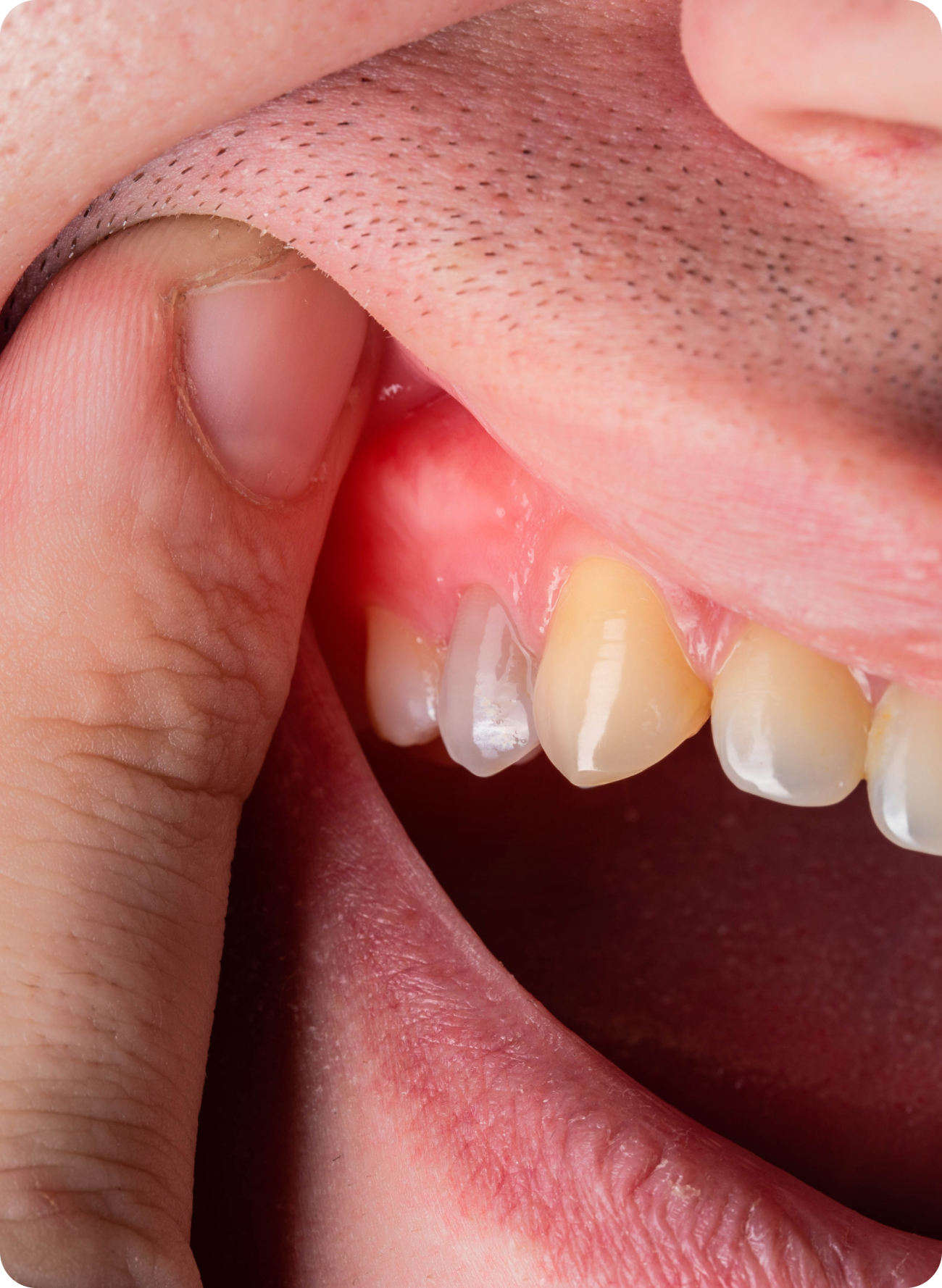
Not every case of shorter-looking teeth involves actual enamel loss. Sometimes the teeth themselves are unchanged, but the gum tissue around them has shifted.
Can gum overgrowth make teeth look shorter?
Yes. When gum tissue grows over more of the tooth surface than it should, the visible portion of the tooth shrinks — even though the tooth itself is perfectly intact. This is called gingival overgrowth, and it can be triggered by:
Certain medications, including some blood pressure drugs and anti-seizure medications
Hormonal changes during pregnancy or puberty
Chronic gum inflammation from plaque buildup
If your teeth look shorter but you have no sensitivity, no jaw soreness and no flattening at the edges, gum overgrowth may be the more likely explanation. It's a cause that most people — and many online articles — overlook entirely.
Does gum recession play a role too?
Gum recession — where gums pull away from the tooth — actually exposes more of the tooth, making individual teeth look longer. But when recession is uneven, or when it occurs alongside worn edges, the overall effect can make your smile look shorter and less uniform. The two conditions can coexist, which is one reason a professional evaluation is more reliable than self-diagnosis.
Because different causes create different wear patterns, the way your teeth look often provides important clues about what is driving the change.
How to tell which cause might apply to you
The pattern of wear often points toward the cause. These aren't definitive diagnoses, but they can help you recognize what you're dealing with:
Flat or chipped front edges with morning jaw soreness → likely grinding
Smooth, rounded surfaces across multiple teeth with sensitivity → likely acid erosion
Teeth that look shorter but feel completely fine with no sensitivity or soreness → possible gum overgrowth
Uneven appearance with some teeth looking longer than others → possible gum recession or uneven wear
These patterns often overlap, and more than one cause can be present at the same time. When tooth wear becomes noticeable over a few years instead of decades — especially alongside sensitivity, flattening or jaw soreness — an underlying cause beyond normal aging is usually involved.
What happens if tooth wear goes untreated
Once you've identified the likely cause, the next question is what happens if it goes unaddressed. Tooth wear tends to progress — and the longer the underlying cause continues, the more limited your treatment options become. Enamel that has thinned becomes more vulnerable to further erosion and sensitivity. As teeth shorten, the relationship between your upper and lower teeth can shift. This places extra strain on the jaw joints and muscles, which can lead to:
Increased jaw discomfort or fatigue
Difficulty chewing certain foods
Changes in how your bite feels
Greater risk of chipping or cracking
Research on tooth wear in aging adults confirms that wear accelerates over time when the underlying cause isn't addressed.2 Catching it early gives your provider more options and simpler solutions. Waiting until wear is advanced often means more involved treatment.
How worn or shorter teeth are treated
Treatment depends entirely on the cause and how much wear has occurred. Common approaches include:
Night guard or occlusal splint — a custom-fitted appliance worn during sleep to protect teeth from grinding
Composite bonding — tooth-colored resin applied to worn edges to restore shape and length
Porcelain veneers or crowns — for more significant wear, these restore both appearance and function
Gum contouring — reshaping gum tissue when overgrowth is making teeth appear shorter
Dietary and lifestyle guidance — reducing acidic food and drink, managing acid reflux and improving saliva flow
No single treatment fits every situation. Your provider will assess the full picture before recommending anything.
When to see your Aspen Dental provider
Any of the following signs means the wear is progressing and needs professional evaluation:
Visible flattening or shortening of your front teeth
Increased sensitivity to temperature or sweets
Jaw soreness, tightness or clicking when you wake up
Teeth that look more yellow or translucent at the edges
A change in how your bite feels
These signs rarely resolve on their own — and the longer wear continues without a diagnosis, the fewer treatment options remain. Schedule an appointment with your Aspen Dental provider to confirm what's driving the change and get a plan in place before it becomes harder to address.
Why do my teeth look shorter than they used to? FAQs
Can enamel erosion be reversed?
No — once enamel is gone, it cannot regenerate. However, the damage can be stopped and the appearance of affected teeth can be restored. Depending on how much enamel has been lost, options range from fluoride treatments and bonding to veneers or crowns. The sooner the erosion is caught, the more conservative the treatment.
Does dry mouth make tooth wear worse?
Yes. Saliva plays a protective role — it neutralizes acid and helps remineralize enamel. When saliva flow is reduced (from certain medications, mouth breathing or medical conditions), teeth lose that natural buffer and become more vulnerable to both acid erosion and wear. If you frequently experience dry mouth, mention it to your provider.
How quickly can teeth get shorter from grinding?
The rate varies depending on how often and how forcefully someone grinds. In moderate cases, noticeable wear may develop over several years. In severe cases, significant shortening can occur within 12–18 months. This is why early intervention — typically a custom night guard — is so effective at slowing or stopping the process.
Can children's teeth look shorter as they grow?
In children, shorter-looking teeth are often related to the transition between baby and adult teeth or to the proportions of a growing face. Bruxism also occurs in children, though it often resolves on its own. If you're concerned about a child's tooth length or wear, an evaluation can clarify whether it's developmental or something to monitor.
Sources
1 The Prevalence of Tooth Wear and Their Associated Etiologies — National Institutes of Health (2024): https://pmc.ncbi.nlm.nih.gov/articles/PMC11070214/
2Tooth Wear in Aging People: An Investigation of the Prevalence and Intensity — National Institutes of Health: https://pmc.ncbi.nlm.nih.gov/articles/PMC4080580/
3Prevalence of Sleep Bruxism in Adults — National Institutes of Health: https://pmc.ncbi.nlm.nih.gov/articles/PMC4034014/
4American Dental Association. “Dietary Acids and Your Teeth.” MouthHealthy. https://www.mouthhealthy.org/all-topics-a-z/dietary-acids-and-your-teeth