Last updated 06.18.2026
Why does my tooth feel like it has a heartbeat?
Learn why a tooth may throb in rhythm with your heartbeat, what conditions can cause it and when it's time to seek care.

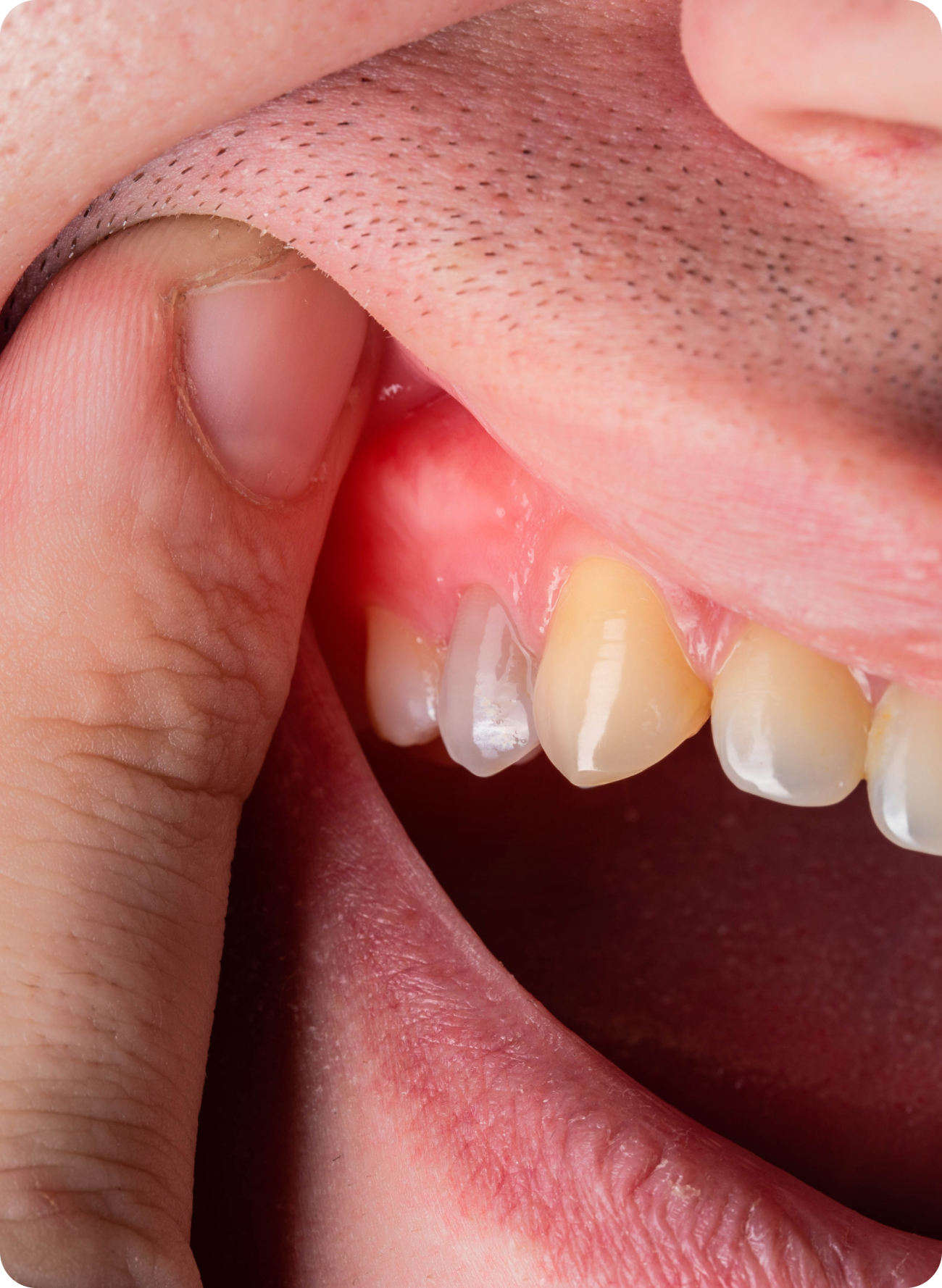
A tooth that feels like it has a heartbeat is often a sign of inflammation, infection, or pressure building inside the tooth. When tissue inside or around a tooth becomes irritated, blood flow to the area increases. Because the inside of a tooth has very little room to expand, that extra pressure can create a throbbing sensation that seems to pulse with your heartbeat.
What you'll learn in this article:
A tooth that throbs with your heartbeat is often a sign of inflammation, infection, or pressure building inside the tooth
Throbbing that gets worse at night is common because lying down increases blood flow and pressure in the area
A tooth can throb even without significant soreness, and that doesn’t mean the problem is minor
Cavities, cracked teeth and dental abscesses are among the most common causes of a pulsing tooth
Swelling, fever, or a bad taste in your mouth can signal an infection that needs prompt attention
Home remedies may ease the throbbing temporarily, but they will not fix the underlying cause
If your tooth is throbbing or pulsing, schedule an appointment with your dental provider. An evaluation can help identify the cause and prevent the problem from getting worse.
What causes that pulsing, heartbeat-like sensation?
Every tooth has a soft inner core called the pulp. It contains nerves and tiny blood vessels. When something irritates or infects this area — bacteria from a cavity, a crack in the tooth, or a spreading infection — the tissue inside swells.
Here’s the key: the pulp is surrounded by hard enamel and dentin. It has nowhere to expand. As blood rushes in to fight the irritation, pressure builds inside a sealed space. That pressure rises and falls with every heartbeat, which is exactly why the throbbing feels rhythmic rather than constant.
Why does the throbbing get worse at night?
Lying down changes how blood flows to your head. When you are upright, gravity keeps blood pressure in your head relatively low. When you lie flat, more blood reaches the area — and that means more pressure inside an already-inflamed tooth. This is why many people notice the throbbing intensifies the moment they try to sleep.
Elevating your head slightly with an extra pillow can help reduce that pressure temporarily.
The most common reasons a tooth throbs
A throbbing tooth is usually caused by pressure or inflammation inside the tooth. Common causes include a dental abscess, deep decay that has reached the nerve, a cracked tooth, pulpitis (nerve inflammation) or, in some cases, sinus pressure affecting the roots of upper teeth.
These are the conditions most often responsible for a pulsing, heartbeat-like sensation:
Deep tooth decay — bacteria have reached the nerve inside the tooth
Dental abscess — a pocket of infection at the tooth root creates pressure
Cracked tooth — a fracture irritates the nerve when you bite down
Pulpitis — inflammation of the tooth's inner nerve tissue, sometimes caused by grinding or injury
Sinus pressure — congestion presses on the roots of upper back teeth
Each of these conditions requires professional treatment — throbbing tooth pain rarely resolves on its own. The sections below explain what's happening inside your tooth in each case and what a dentist will do to relieve it.
Why is my tooth throbbing but I don't feel much discomfort?
This is more common than many people realize. A tooth can throb with little or no soreness, especially in the early stages of inflammation or when a crack is present but not yet severe.
In some cases, the nerve inside the tooth has been irritated for so long that it no longer sends strong signals. The pressure and throbbing remain, but the soreness may be less noticeable.
Even so, a throbbing tooth should not be ignored. The underlying problem is still there and will usually get worse without treatment.
Symptoms that mean you should not wait
Most throbbing teeth need prompt attention — but some situations require same-day care. Seek care immediately if you notice any of the following alongside the throbbing:
Swelling in your face, cheek, or jaw
Fever or chills
Difficulty swallowing or opening your mouth
A foul taste in your mouth or visible pus near the tooth
Throbbing that is severe and does not ease at all
Swelling that is spreading or feels warm to the touch
These symptoms can indicate a spreading infection. According to the Centers for Disease Control and Prevention, tooth disorders account for nearly 2 million emergency department visits each year in the United States — many involving infections that were not treated early enough.2
If you have any of these symptoms, do not wait for a scheduled appointment. Visit a dental office near you or go to an emergency room if swelling is affecting your breathing or swallowing.
What to do right now while you wait
These steps will not fix the underlying problem, but they can help reduce the throbbing while you arrange care:
Take an over-the-counter anti-inflammatory such as ibuprofen. It reduces both the sensation and the inflammation driving it. Follow the dosage instructions on the label.
Apply a cold compress to the outside of your cheek for 15–20 minutes at a time. Cold reduces swelling and numbs the area slightly.
Keep your head elevated. Avoid lying flat — prop yourself up with pillows to reduce blood pressure in the area.
Rinse with warm salt water. Mix half a teaspoon of salt into a glass of warm water and rinse gently. This can soothe irritated gum tissue and reduce bacteria around the tooth.
Avoid very hot, cold, or sweet foods and drinks. These can aggravate an already-sensitive nerve.
These measures ease the sensation. They do not treat the cause.
What will your dental provider do?
Your dental provider will examine the tooth and take X-rays to find the cause of the throbbing. Treatment will depend on what's causing the problem. A deep cavity may be treated with a filling or, if the nerve is affected, a root canal. A root canal removes the damaged tissue, relieves pressure, and helps save the tooth.
If an abscess is present, treatment may include draining the infection, prescribing antibiotics, and recommending a root canal or extraction.
A cracked tooth may be treated with bonding or a crown. If the crack extends into the root, the tooth may need to be removed. In most cases, early treatment leads to a simpler solution.
When to see your dental provider
A throbbing tooth is usually a sign that something inside the tooth or surrounding tissue needs attention. Whether the cause is a deep cavity, a crack, or an infection, treating it early often leads to a simpler solution.
If the throbbing lasts more than a day or two — even if it comes and goes — schedule an appointment with an Aspen Dental provider. They can examine the tooth, take X-rays if needed, and determine the cause.
Do not wait for the throbbing to become severe. The longer the problem goes untreated, the more likely it is to worsen.
Why does my tooth feel like it has a heartbeat? FAQs
Can TMJ cause a tooth to feel like it's throbbing?
Yes. TMJ (temporomandibular joint) dysfunction can cause referred soreness that feels like it is coming from a specific tooth. Clenching or grinding puts significant pressure on the teeth and jaw muscles, which can create a deep, pulsing ache. The difference is that TMJ-related throbbing tends to affect multiple teeth or the jaw broadly rather than a single tooth, and it often comes with jaw stiffness or a clicking sensation when opening the mouth.
Is it normal for a tooth to throb after a filling or dental procedure?
Some throbbing after a filling or other dental work is normal and usually fades within a few days. The tooth has been worked on, and the nerve inside can be temporarily irritated. If the throbbing is severe, worsening after 48–72 hours or accompanied by swelling, contact your dental provider.
What does it mean if the throbbing suddenly stops?
A sudden stop in throbbing can feel like relief — but it is not always a good sign. If the nerve inside the tooth has died due to advanced infection or decay, it can no longer send signals. The throbbing stops, but the infection may still be present and spreading. If your throbbing disappears suddenly without any treatment, have the tooth evaluated as soon as possible.
Can a throbbing tooth get better on its own?
Occasionally, very mild throbbing from minor irritation may settle down. But in most cases — especially when the cause is decay, a crack or infection — the problem does not resolve without treatment. The throbbing may come and go, which can feel like improvement, but the underlying issue typically continues to progress. Waiting rarely makes treatment simpler or less involved.
How long can I wait before seeing a provider about a throbbing tooth?
If the throbbing is mild and there are no signs of infection — no swelling, fever, or foul taste — waiting 1–2 days while you arrange an appointment is generally acceptable. If any of those warning signs are present, seek care the same day. When in doubt, it is always better to have the tooth checked sooner rather than later.
Sources
¹Cleveland Clinic. Abscessed Tooth. Cleveland Clinic; January 22, 2026. https://my.clevelandclinic.org/health/diseases/10943-abscessed-tooth
²Centers for Disease Control and Prevention. Emergency Department Visits for Tooth Disorders: United States, 2020–2022. https://www.cdc.gov/nchs/products/databriefs/db531.htm