Last updated 06.23.2026
I brushed my teeth—so why do they still feel slimy?
Learn why teeth can feel slimy after brushing, what plaque buildup means and when it may be time to see a dental provider.

If your teeth still feel slimy after brushing, you're most likely feeling dental plaque. Plaque is a sticky film of bacteria that begins forming on your teeth again soon after you brush. While this is normal, plaque that isn't fully removed can build up and lead to cavities or gum disease.
What you'll learn in this article:
Plaque starts forming on your teeth again within hours of brushing
Brushing alone cannot remove plaque from between your teeth
Dry mouth can make plaque build up faster and feel more noticeable
Bleeding or tender gums may be an early sign of gum disease
Daily flossing helps remove plaque that brushing misses
Persistent buildup may be a sign that it's time for a professional cleaning
If your teeth continue to feel slimy despite brushing and flossing, schedule an appointment with your dental provider. They can identify the cause and recommend the best way to keep your teeth and gums healthy.
What that slimy feeling actually is
The slimy feeling on your teeth has a name: dental plaque. Plaque is a soft, sticky film made up of bacteria, saliva and tiny food particles. It coats the surface of your teeth and, when it builds up, creates that slippery, coated sensation you feel when you run your tongue across your teeth.
Plaque is colorless or pale yellow — you feel it before you see it. That's what makes it easy to miss.
Why does plaque feel slimy?
Plaque isn't just a layer of food residue. It's a living bacterial community called a biofilm. The bacteria in plaque organize themselves into a structured layer that sticks tightly to your tooth surface. That organized, layered structure is what gives plaque its slippery, slimy texture — different from the gritty feeling of food debris.
Because it's a biofilm, plaque is also more resistant to being washed away by water or saliva alone. It needs physical disruption — brushing and flossing — to break it apart.1
Why brushing doesn't always get rid of it
Brushing is essential. But it has limits. A toothbrush can only reach the flat surfaces of your teeth — the front, back and chewing surfaces. The spaces between your teeth, where two teeth press together, are almost completely out of reach for a toothbrush bristle. That's where plaque hides. And that's often why your teeth still feel slimy after brushing — the bacteria between your teeth are still there, undisturbed.
How fast does plaque come back after brushing?
Plaque starts forming again within hours of brushing. Bacteria in your mouth begin attaching to your tooth surfaces almost immediately after you clean them. By the time you go to bed after brushing in the morning, a new layer of plaque has already started to develop.1
This is completely normal. It doesn't mean your brushing isn't working. It means plaque is a constant process — not a one-time problem you can solve and forget.
Why flossing between your teeth matters most
The tight spaces between your teeth are the most active areas for plaque buildup. Bacteria thrive there because saliva can't reach them easily and a toothbrush can't either. If you're not flossing daily, plaque in those spaces builds up undisturbed — and that's often the source of the persistent slimy feeling even after a thorough brush.
Learn more about how dental plaque works and the difference between plaque and tartar.
What makes the slimy feeling worse
Some people notice the slimy feeling more than others. A few factors can make plaque build up faster or feel more noticeable.
Can dry mouth make my teeth feel slimier?
Yes. Saliva helps wash away food particles, neutralize acids and control bacteria. When your mouth is dry — whether from medications, mouth breathing, dehydration or certain health conditions — plaque can build up more quickly and feel more noticeable.
If you often wake up with a dry mouth or notice the slimy feeling is worse in the morning, dry mouth may be contributing to the problem. Your dental provider can help identify the cause and recommend ways to manage it.
Does what I eat affect how quickly plaque builds up?
Significantly. Bacteria in your mouth feed on sugars and starches. Every time you eat something sweet or starchy — bread, crackers, juice, candy — the bacteria in your mouth get a fresh supply of fuel. They produce acids and multiply, adding to the plaque layer on your teeth. Eating frequently throughout the day, snacking between meals or sipping sugary drinks gives bacteria a near-constant food source. The more often bacteria feed, the faster plaque accumulates — and the slimier your teeth will feel between brushings.
When the slimy feeling is a warning sign
A slimy feeling on its own is usually just plaque — manageable with better brushing and flossing habits. But in some cases, it can signal something that needs professional attention.
Pay attention if you also notice:
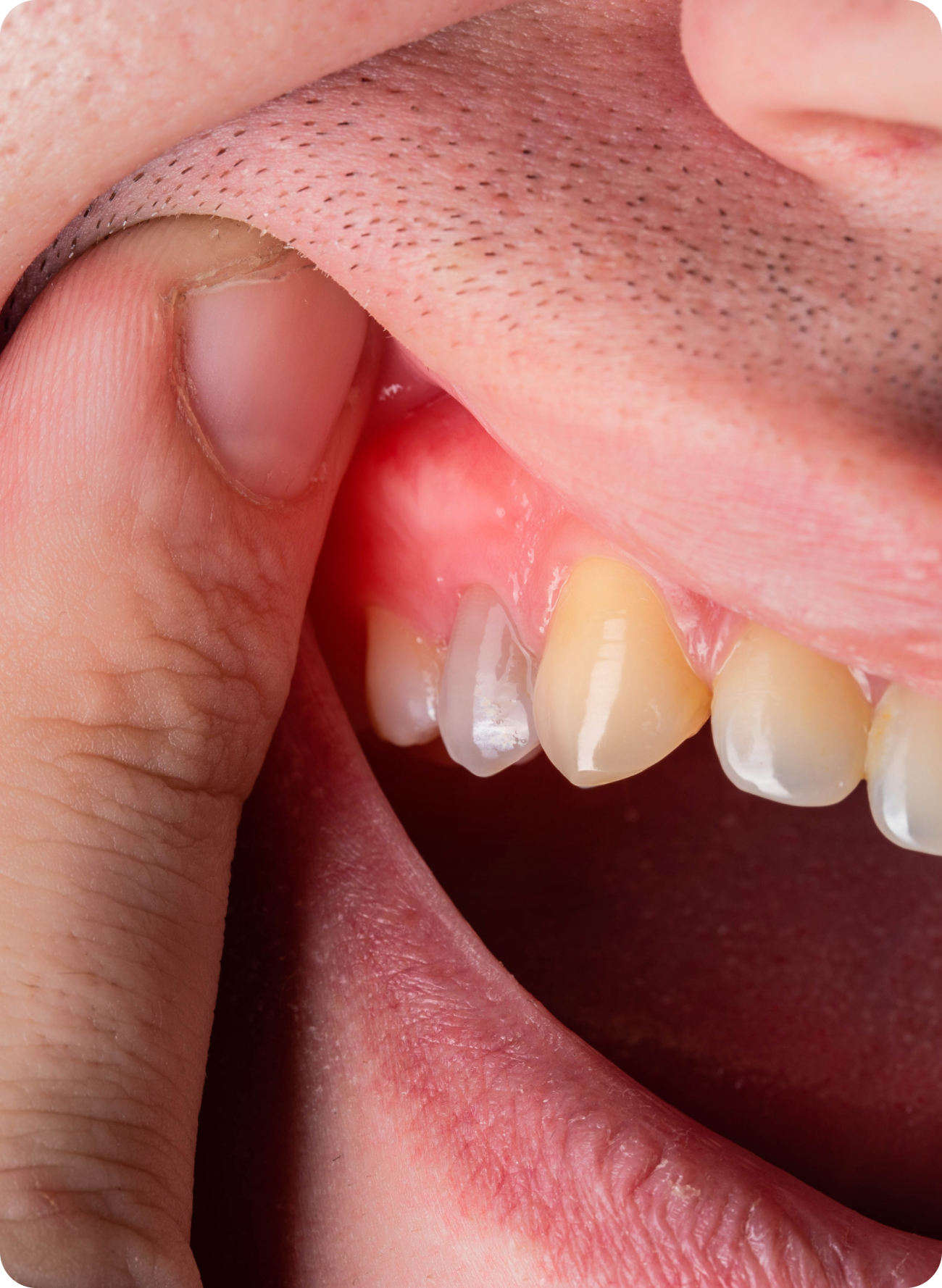
Gums that bleed when you brush or floss
Gums that look red, swollen or puffy
Persistent bad breath that doesn't improve with brushing
Gums that feel tender or sore to the touch
Teeth that feel loose or appear to be shifting
These can be signs of gingivitis — the earliest stage of gum disease — or more advanced gum disease. Gum disease affects nearly half of adults over age 30, according to the CDC.2 It starts with plaque buildup at the gum line and progresses when that plaque isn'tremoved consistently.
The earlier gum disease is caught, the easier it is to treat. Learn more about recognizing the signs of gum disease and gum disease treatment options.
What actually works to keep teeth feeling clean
The goal isn't to eliminate plaque permanently — that's not possible. The goal is to disrupt it consistently so it never gets the chance to build up or harden.
Brush for two full minutes, twice a day
Most people brush for less than a minute. Two minutes gives you enough time to cover all surfaces — front, back and chewing surfaces — without rushing. Hold your toothbrush at a 45-degree angle toward the gumline and use gentle circular motions. This angle helps the bristles reach the edge where plaque accumulates most — and it's the technique recommended by the American Dental Association.3
Floss once a day
This is the step most people skip, and it's the most important one for the spaces between teeth. Flossing disrupts the plaque that brushing can't reach.1
Use an antibacterial mouthwash
A fluoride or antibacterial rinse after brushing and flossing can help reduce the bacteria that remain after mechanical cleaning.
Clean your tongue daily
Bacteria don't just build up on your teeth — they accumulate on the surface of your tongue as well. That bacterial layer can transfer to your teeth and contribute to the slimy feeling even after brushing. Use a tongue scraper or the back of your toothbrush to gently clean your tongue from back to front each time you brush.
Watch your snacking habits
Limiting sugary and starchy snacks between meals gives bacteria fewer opportunities to feed and multiply.
Get a professional cleaning every 6 months.
Even with excellent home care, plaque can harden into tartar — a calcified deposit that brushing cannot remove. Only a professional cleaning can remove tartar. Regular cleanings reset the baseline and prevent buildup from becoming a bigger problem.
Learn more about what happens during a dental cleaning.
When to see a dental provider
If the slimy feeling persists despite consistent brushing, flossing and tongue cleaning — or if you're experiencing any of the warning signs described above — it's worth getting a professional evaluation. Tartar buildup cannot be removed at home, and early gum disease is much easier to treat when it's caught before it progresses.
Visit an Aspen Dental office near you to get a full evaluation and a personalized plan for keeping your mouth healthy.
I brushed my teeth, so why do they still feel slimy? FAQs
Is it normal for teeth to feel slimy in the morning?
Yes. Saliva production slows significantly while you sleep, which means bacteria have several hours to build up on your teeth without being rinsed away. That slimy morning feeling is plaque that accumulated overnight. Brushing first thing in the morning removes it — but if the feeling is severe or accompanied by bad breath that doesn't improve, it's worth discussing with your Aspen Dental provider.
Can I feel plaque on my teeth, or does a provider need to detect it?
You can often feel plaque yourself — it's that slippery or fuzzy coating you notice with your tongue. However, plaque between teeth and below the gum line is harder to detect at home. A dental exam uses special tools and disclosing agents to reveal plaque in areas you can't easily feel or see.
How long does it take for plaque to harden into tartar?
Plaque can begin hardening into tartar in as little as 24–72 hours if it isn't removed. Once it hardens, it bonds to the tooth surface and cannot be removed with a toothbrush. That's why consistent daily brushing and flossing — not just occasional cleaning — is essential. If tartar has already built up, a scaling and root planing treatment may be needed to remove it.
Can my toothpaste be causing the slimy feeling?
Yes. Some toothpastes contain sodium lauryl sulfate (SLS), a foaming ingredient that can irritate the soft tissues in your mouth. In some people, this can cause a thin layer of cells to shed, creating a temporary slimy or filmy feeling right after brushing.
If the sensation starts immediately after brushing, your toothpaste may be the cause rather than plaque. Switching to an SLS-free or gentle-formula toothpaste may help. If the slimy feeling develops later in the day, plaque buildup is the more likely explanation. Your dental provider can help determine the underlying cause.
Can children get the same slimy feeling on their teeth?
Yes. Plaque forms on children's teeth the same way it does on adult teeth. Children are often more susceptible to plaque buildup because they tend to eat more frequently and may not brush as thoroughly. Teaching children to brush for two full minutes and floss daily builds habits that protect their teeth long-term.
Sources
1Cleveland Clinic. Dental Plaque: What Is It & Causes. https://my.clevelandclinic.org/health/diseases/10953-plaque
2Centers for Disease Control and Prevention (CDC). Periodontal Disease. https://www.cdc.gov/oral-health/data-research/facts-stats/periodontal-disease.html
3American Dental Association. Brushing Your Teeth. https://www.ada.org/resources/ada-library/oral-health-topics/toothbrushes