Last updated 05.14.2026
Plaque vs. tartar: Key differences, causes and how to remove each
Learn the key differences between plaque and tartar, their impact on oral health and how to prevent buildup.
Plaque is a soft, sticky bacterial film that forms on your teeth daily and can be removed with brushing and flossing. Tartar is hardened plaque that has bonded to the tooth surface and can only be removed by a dental professional. Left untreated, both can lead to cavities, gum disease, and tooth loss.
It's easy to confuse plaque and tartar — both involve bacteria on your teeth, and both can cause serious oral health problems if ignored. But they're not the same thing, and the difference matters when it comes to how you treat them.
Understanding what separates plaque from tartar is the first step toward protecting your smile. Let's break it all down.
Plaque vs. tartar: a comparison
Plaque Texture: Soft, sticky film
Color: Colorless or pale yellow
How fast it forms: Within hours after eating
Can you remove it at home?: Yes – brushing & flossing
Health risks: Cavities, gingivitis
Tartar Texture: Hard, crusty deposit
Color: Yellow, brown, or black
How fast it forms: After plaque hardens (24-72 hours)
Can you remove it at home?: No – requires professional cleaning
Health risks: Gum disease, tooth loss
What is dental plaque?
Dental plaque is a soft, sticky bacterial biofilm that constantly forms on your teeth. It develops when bacteria in your mouth mix with sugars and starches from food, producing acids that can damage tooth enamel and irritate the gums.
Think of plaque as the film you feel on your teeth after a long day — or after indulging in something sweet. It's usually colorless or pale yellow, so you may not see it, but it's always forming. The good news: plaque is removable. Regular brushing and flossing disrupt the biofilm before it can cause lasting damage. The bad news: if you skip a day or two, plaque continues to build.
Key facts about plaque:
Forms within hours of eating
Feeds on sugars and starches in your diet
Produces acids that erode enamel
Can be removed with proper brushing and flossing
Leads to tartar if not removed within 24–72 hours1
What is tartar (dental calculus)?
Tartar — also called dental calculus — forms when plaque is left on the teeth long enough to absorb minerals from your saliva and harden. Once tartar develops, it bonds tightly to enamel and can only be removed with professional tools during a dental cleaning.
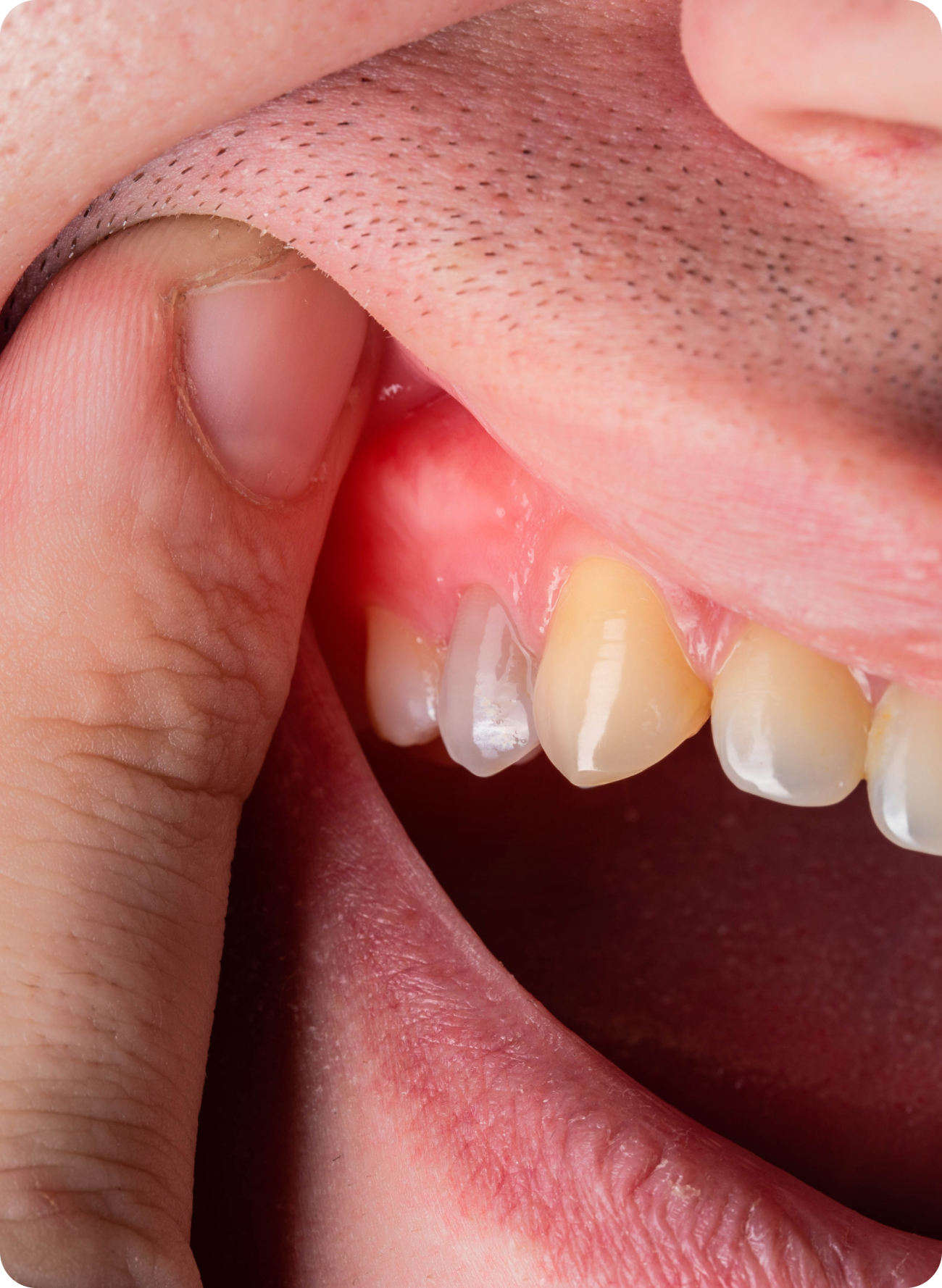
Unlike plaque, tartar is visible. It typically appears as yellow or brown deposits along the gumline or between teeth. Tartar forms in two locations: above the gumline (supragingival), where it is visible and yellow or brown in color, and below the gumline (subgingival), where it is hidden, darker in color, and significantly more damaging to the surrounding bone and tissue. In more advanced cases, it can turn dark brown or black — a sign that it has been building up for some time.
Tartar is more than a cosmetic issue. It creates a rough surface that makes it even easier for more plaque to accumulate, accelerating the cycle of buildup and damage.
Key facts about tartar:
Forms when plaque hardens from minerals in saliva
Can develop in as little as 24–72 hours1
Cannot be removed by brushing or flossing at home
Requires professional scaling during a dental cleaning
Increases risk of gum disease and tooth loss
How does plaque turn into tartar?
Plaque can begin hardening into tartar in as little as 24 to 72 hours if it isn't removed.1 This is why consistent daily brushing and flossing — not just occasional cleaning — is essential for preventing tartar buildup.
Here's the progression:
Bacteria colonize — After eating, bacteria feeds on sugars and starches
Plaque forms — Bacteria combines with saliva and food particles to create a sticky biofilm
Acids attack enamel — Plaque bacteria produces acids that erode tooth enamel
Minerals harden plaque — If not removed, minerals from saliva cause plaque to calcify
Tartar forms — Hardened plaque becomes tartar, which only a dentist can remove
The cycle repeats — and each time tartar forms, it creates a rougher surface that makes the next round of plaque buildup faster and harder to control.
How to remove plaque from teeth
Plaque can be effectively removed at home with consistent brushing, flossing, and rinsing. The key is daily consistency — plaque begins hardening within 24 hours, so skipping even one day allows buildup to progress toward tartar.
Here's how to remove plaque effectively:
Brush twice daily (2 minutes each time)
Use a soft-bristled toothbrush and fluoride toothpaste. Hold the brush at a 45-degree angle to the gumline and use gentle circular motions. Electric toothbrushes are clinically shown to remove more plaque than manual brushing.3
Floss once daily
Your toothbrush can't reach the spaces between teeth — that's where plaque hides. Floss at least once a day, curving the floss around each tooth in a C-shape to clean below the gumline.
Use an antibacterial mouthwash
Antibacterial or fluoride mouthwash reaches areas where your brush and floss miss, reducing bacteria and strengthening enamel.
Watch your diet
Sugary and starchy foods fuel plaque-producing bacteria. Reducing sugar intake — especially between meals — significantly slows plaque formation.
Get professional cleanings every 6 months
Even with perfect home care, plaque can accumulate in hard-to-reach areas. A professional dental cleaning removes both plaque and any tartar that has formed, resetting the cycle.
How to remove tartar
Tartar cannot be removed at home. Once plaque has hardened into tartar, only a dental professional using specialized scaling tools can safely remove it without damaging the tooth surface or gums.
Attempting to scrape tartar at home with metal tools risks scratching enamel, cutting gum tissue, and pushing bacteria deeper below the gumline — making the problem worse.
During a professional cleaning, your dental hygienist uses a process called scaling to remove 100% of the tartar deposits from above and below the gumline. For more advanced buildup, scaling may be combined with root planing—a deeper cleaning that can significantly reduce pocket depth and gingival inflammation, by up to 50% in patients with early to moderate periodontitis.
Tartar cannot wait — schedule an appointment at your nearest Aspen Dental and let our hygienists remove buildup safely and completely.
What happens if plaque and tartar aren't removed?
Tartar creates a rough, porous surface that makes it significantly easier for new plaque to attach, accelerating the cycle of buildup and increasing your risk of gingivitis and periodontal disease — the leading cause of tooth loss in adults. The longer they're left untreated, the more serious the consequences are.
Plaque left untreated leads to:
Tooth decay and cavities
Gingivitis (early-stage gum disease)
Bad breath (halitosis)
Tartar left untreated leads to:
Periodontitis (advanced gum disease)2
Gum recession and bone loss
Tooth loss
Research shows people with gum disease are two to three times more likely to suffer a heart attack, stroke, or other serious cardiovascular event.4
The American Dental Association recommends professional cleanings at least twice per year to prevent tartar buildup and catch early signs of gum disease before they progress.2
How to prevent plaque and tartar buildup
Prevention is always easier than treatment. These habits form the foundation of a plaque- and tartar-free smile:
Brush twice daily with fluoride toothpaste for at least two minutes
Floss once daily to clean between teeth and below the gumline
Use antibacterial mouthwash to reduce bacteria between brushings
Limit sugary and starchy foods, especially between meals
Drink plenty of water throughout the day to rinse away food particles and bacteria
Visit your dentist every 6 months for professional cleanings and exams — the only way to remove tartar once it forms
Plaque vs. tartar FAQs
How long does it take for plaque to turn into tartar?
Plaque can begin hardening into tartar in as little as 24 to 72 hours if it isn't removed by brushing and flossing. This is why daily oral hygiene is essential — not just occasional cleaning.
Can tartar be removed at home?
No. Once plaque has hardened into tartar, it can only be safely removed by a dental professional using specialized scaling instruments. Attempting to remove tartar at home risks damaging your enamel and gums.
Is plaque or tartar worse for your teeth?
Tartar is generally considered more damaging because it cannot be removed at home and creates a rough surface that accelerates further plaque buildup. However, plaque is the root cause — controlling plaque is the most effective way to prevent tartar from forming.
What does tartar look like?
Tartar typically appears as yellow or brown deposits along the gumline or between teeth. In advanced cases, it can appear dark brown or black. Unlike plaque, tartar is often visible to the naked eye.
How often should I get tartar removed?
Most dental professionals recommend professional cleaning every six months. Patients with a history of gum disease or heavy tartar buildup may need more frequent cleanings — your dentist will advise based on your individual needs.
Can tartar break off your teeth?
Yes, tartar can break off in chunks, particularly if it has built up significantly. While this may seem like a good thing, broken tartar can have sharp edges that irritate gum tissue, and the underlying deposits often remain. Professional removal by an Aspen Dental provider is always the safer option.
How do I know if I have tartar on my teeth?
Run your tongue along the base of your teeth near the gumline. If you feel a hard, rough deposit that does not smooth away, that is likely tartar. Visible yellow or brown buildup along the gumline — particularly on the back of the lower front teeth — is also a common sign. Your Aspen Dental provider can confirm during a routine exam and remove any buildup safely during professional cleaning.
Aspen Dental can help with plaque and tartar removal
Plaque is a daily challenge that you can manage at home with consistent brushing and flossing. Tartar is what happens when plaque wins — and once it forms, only a dental professional can remove it.
The best strategy is prevention: brush twice daily, floss every day, and see your dentist for regular cleanings. Catching plaque before it hardens into tartar is always easier — and less costly — than treating the gum disease that follows.
Ready to get ahead of plaque and tartar? Schedule an appointment at your nearest Aspen Dental and let our team help you build a smile that lasts.
1 Kolenbrander PE, et al. “Bacterial interactions and successions during plaque development.” Periodontology 2000. 2006;42:47–79. https://pmc.ncbi.nlm.nih.gov/articles/PMC4478205/
2ADA - https://www.ada.org/resources/ada-library/oral-health-topics/home-care
3 NIH / Powered versus manual toothbrushing for oral health https://pubmed.ncbi.nlm.nih.gov/24934383/
4 Tonetti, M. S., et al. "Treatment of Periodontitis and Endothelial Function." New England Journal of Medicine (2007). https://www.nejm.org/doi/10.1056/NEJMoa063186