Last updated 05.14.2026
Why do both my jaw and ear hurt?
Jaw and ear pain together often points to TMJ, wisdom teeth or sinus issues. Learn the causes and when to see your Aspen Dental provider.

Jaw and ear discomfort often happen together because the jaw, teeth and ear share many of the same nerves and muscles.
TMJ dysfunction, wisdom teeth, teeth grinding, dental infections and sinus pressure can all create discomfort in both areas — even when the problem starts in the mouth rather than the ear. Understanding the pattern of symptoms can help you tell whether the cause is dental, muscular, sinus-related or ear-related.
What you'll learn in this guide:
The most common causes of jaw and ear discomfort
Why TMJ problems and dental issues are often mistaken for ear infections
How to tell whether the source is dental or ear-related
Symptoms that may signal infection or another urgent problem
Home care steps that may help relieve mild discomfort
When to schedule an appointment with your Aspen Dental provider
Why does jaw pain cause ear pain?
When the jaw joint or surrounding muscles become inflamed or strained, those signals can travel to the ear and register as discomfort—even if the ear itself is healthy.¹ This is why jaw-related issues like TMJ dysfunction or teeth grinding are often mistaken for ear infections and may not improve with ear-focused treatment.
Most common causes of jaw and ear pain
The following symptoms can help you identify the most likely cause of your jaw and ear pain.
Pain near the ear that worsens when chewing: TMJ dysfunction
Jaw stiffness or soreness worse in the morning: Teeth grinding (bruxism)
Discomfort at the back of the mouth behind the last molar: Wisdom teeth impaction
Constant throbbing discomfort with swelling or fever: Dental infection
Dull aching on both sides with congestion: Sinus pressure
What causes jaw and ear pain at the same time?
Jaw and ear pain that occur together are most often caused by issues affecting the jaw joint, teeth, or surrounding muscles. Because these areas share nerve pathways, problems in one area can be felt in another.
TMJ dysfunction
TMJ dysfunction is the most common cause of jaw and ear discomfort. When the joint becomes inflamed or strained, it can create pressure, discomfort, or clicking sensations that are often felt in the ear. ² This is often described as pain near the ear or jaw pain when chewing. Learn more about TMJ dysfunction, symptoms, and treatment options at Aspen Dental.
Wisdom teeth
Wisdom teeth can cause jaw and ear discomfort when they become impacted or inflamed at the back of the mouth. Pain is usually felt behind the last molar and may include swelling, tenderness, or difficulty chewing. In some cases, the discomfort can radiate to the ear on the same side. Your Aspen Dental provider may recommend wisdom tooth removal to relieve pressure and prevent the problem from worsening.
Teeth grinding (bruxism)
Teeth grinding (bruxism) puts repeated pressure on the jaw muscles and TMJ, often during sleep. This can lead to a dull, persistent ache that is typically worse in the morning and may extend toward the ear.
Dental infection
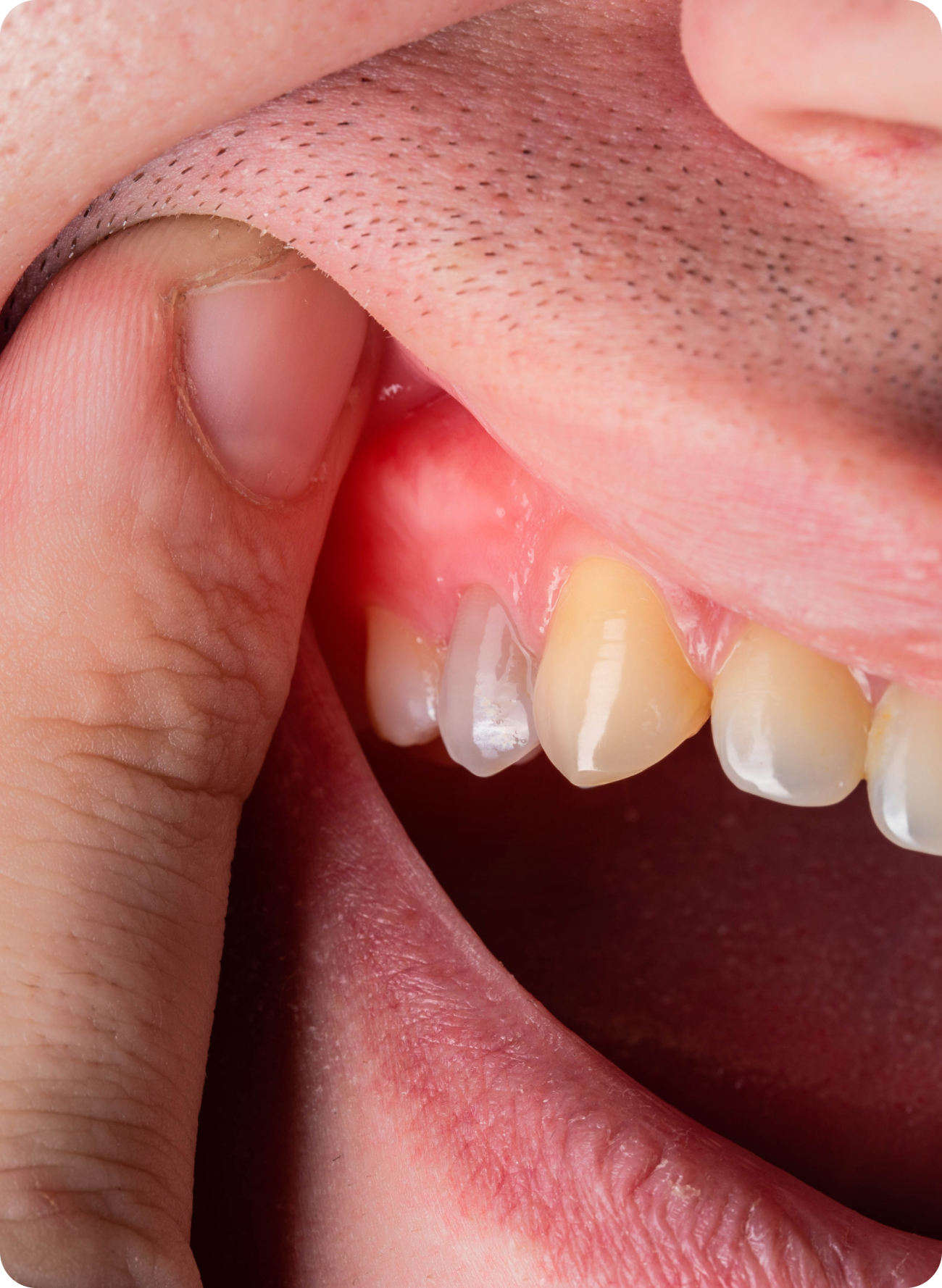
A dental infection can cause jaw and ear discomfort when bacteria reach the inner part of the tooth and spread through shared nerve pathways. The discomfort is often constant and throbbing and may include swelling in the jaw, cheek, or neck, fever, a bad taste in the mouth or visible pus, sensitivity to pressure on a specific tooth, or discomfort that worsens when lying down. Dental infections don’t resolve on their own and should be evaluated promptly by an Aspen Dental provider.
Arthritis
Rheumatoid and psoriatic arthritis can affect the temporomandibular joint, causing inflammation, stiffness, and pain that radiates toward the ear. Unlike muscle-related jaw pain, arthritis-related discomfort is often persistent, may affect both sides of the jaw, and can worsen progressively over time. If you have a known inflammatory condition and are experiencing jaw and ear pain, an Aspen Dental provider can help determine whether the TMJ is involved.
Is this a dental problem or an ear problem?
Dental issues are a common cause of combined jaw and ear pain — especially when symptoms worsen with jaw movement — but certain signs can help you tell the difference.
Signs the problem is likely dental:
Discomfort worsens when chewing, clenching, or opening your mouth wide
Tenderness in front of the ear or along the jaw
Clicking or popping in the jaw
Discomfort that’s worse in the morning and improves throughout the day
A known dental issue (cracked tooth, missing filling, impacted wisdom tooth)
No relief from ear drops or decongestants
Signs the problem may be ear-related:
Pain feels deep inside the ear rather than in front of it
Congestion, fluid drainage, or changes in hearing
Recent cold, sinus infection, or upper respiratory illness
Pain does not change with jaw movement
If you're unsure, a dental evaluation is a practical place to start. An Aspen Dental provider can help rule out dental causes and determine whether the issue may be related to your oral health. If the problem turns out to be ear-related, they’ll let you know. The reverse isn’t always true, as medical providers may not be able to identify dental conditions such as an abscess or TMJ dysfunction.
Can a sinus infection cause jaw and ear pain?
Yes, a sinus infection can cause jaw and ear discomfort due to pressure in the sinuses near the upper teeth and ear. The roots of your upper back teeth sit close to the maxillary sinuses, so when those sinuses become inflamed, the pressure can create a dull ache in the upper jaw that may feel like a dental or TMJ issue.
While ear infections are less commonly the source of combined jaw and ear pain, fluid buildup or congestion in the ear can create pressure that affects the jaw through the Eustachian tubes. If symptoms include hearing changes, fullness in the ear, or recent illness, an ear infection may be contributing and warrants evaluation by a medical provider.
Sinus-related discomfort is often felt on both sides and may come with congestion or facial pressure, especially when bending forward. Dental-related discomfort is more likely to be one-sided, worsens with chewing or jaw movement, and is often linked to a specific tooth.
If you’re unsure of the cause, an Aspen Dental provider can help rule out dental issues and guide you on next steps.
How to relieve jaw and ear pain at home
If your symptoms are mild and have no signs of infection, these steps can help manage discomfort while you monitor:
Warm compress
Apply a warm compress to relax the surrounding muscles and reduce tension, or a cold pack to reduce acute inflammation. Apply for 10 to 15 minutes at a time.
Soft foods
Eat soft foods and avoid hard, chewy, or crunchy items that put additional stress on the jaw joint.
OTC anti-inflammatory medications
Ibuprofen or naproxen can help reduce inflammation and manage mild to moderate discomfort.³
Stress reduction:
If clenching or grinding is a factor, relaxation techniques, mindfulness, or a conscious effort to keep teeth apart during the day can reduce muscle fatigue.
Limit wide jaw movements:
Avoid yawning widely, chewing gum, or any activity that strains the joint while symptoms are present. These measures manage symptoms — they do not address the underlying cause. If discomfort does not improve within two to three days, schedule an evaluation with an Aspen Dental provider.
When should you see an Aspen Dental provider?
Not all jaw and ear pain requires the same level of urgency. Here is how to know what to do next. Seek care the same day if you have:
Swelling in the jaw, cheek, or neck
Fever, alongside jaw and ear pain
Difficulty swallowing or breathing
Severe pain that is getting rapidly worse
Pain spreading to your neck or throat
These symptoms can indicate a spreading infection that requires immediate attention. Schedule within a few days if you have:
Jaw and ear discomfort that has lasted more than two to three days
Pain that is getting worse rather than better
Difficulty opening your mouth fully
A bad taste in your mouth
Discomfort that is disrupting sleep or eating
Monitor at home if:
Discomfort is mild and appeared after a known trigger — stress, a long dental appointment, or eating hard food
Symptoms are improving on their own within 24 to 48 hours
There is no swelling, fever, or difficulty opening your mouth
A warm compress and soft foods can help manage mild symptoms while you monitor. If symptoms do not improve within two to three days, schedule an evaluation with an Aspen Dental provider.
The bottom line
Jaw and ear pain that occur together are almost never a coincidence. Dental problems — TMJ dysfunction, wisdom teeth, bruxism, infection — routinely produce ear symptoms that send patients in the wrong direction.
If you have been treating what feels like an ear problem without improvement, the answer may be in your mouth. At Aspen Dental, we see jaw and ear pain regularly and can quickly identify whether the cause is dental. Same-day appointments are available at locations across the country. Schedule an appointment at your nearest Aspen Dental office.
Jaw and ear pain FAQs
Can jaw and ear pain go away on its own?
It depends on the cause. Mild muscle tension from a one-time clenching episode may resolve within a day or two. While pain from TMJ dysfunction, wisdom teeth, bruxism, or a dental infection will not resolve on its own and typically worsen without treatment. If the pain lasts more than two to three days or is getting worse, see an Aspen Dental provider.
Can a toothache cause ear discomfort?
Yes. The nerves that serve your teeth — particularly the lower molars — share pathways with the nerves that serve your ear. An infected or cracked tooth can produce discomfort even when the ear itself is healthy. This is especially common with lower wisdom teeth and abscessed molars.
Why does my jaw hurt when I wake up?
Morning jaw pain is a classic sign of bruxism. The sustained pressure of nighttime grinding fatigues the jaw muscles and inflames the TMJ, producing stiffness and aching that is worse immediately after waking and gradually improves through the day. An Aspen Dental provider can identify the wear patterns on your teeth that confirm bruxism and recommend a night guard to protect against further damage.
Can stress cause jaw and ear pain?
Yes, stress is one of the primary drivers of bruxism and jaw clenching. Many patients clench their teeth unconsciously during the day — at a computer, in traffic, during difficult conversations — without realizing it. Over time, this habit fatigues the jaw muscles and inflames the TMJ, producing the same jaw and ear pain as nighttime grinding.
Can I treat jaw and ear pain at home?
Temporarily. A warm compress applied to the jaw for 10 to 15 minutes can relieve muscle tension. Eating soft foods and avoiding wide jaw movements reduces stress on the joint. These measures manage symptoms — they do not address the underlying cause. If the pain persists beyond two to three days, an evaluation with an Aspen Dental provider is recommended.
1American Dental Association — TMJ Disorders: https://www.ada.org/resources/research/science-and-research-institute/oral-health-topics/temporomandibular-disorders
2Cleveland Clinic — TMJ Disorders: https://my.clevelandclinic.org/health/diseases/15066-temporomandibular-disorders
3Cleveland Clinic — Nonsteroidal Anti-Inflammatory Drugs (NSAIDs): https://my.clevelandclinic.org/health/treatments/11086-nonsteroidal-anti-inflammatory-medicines-nsaids