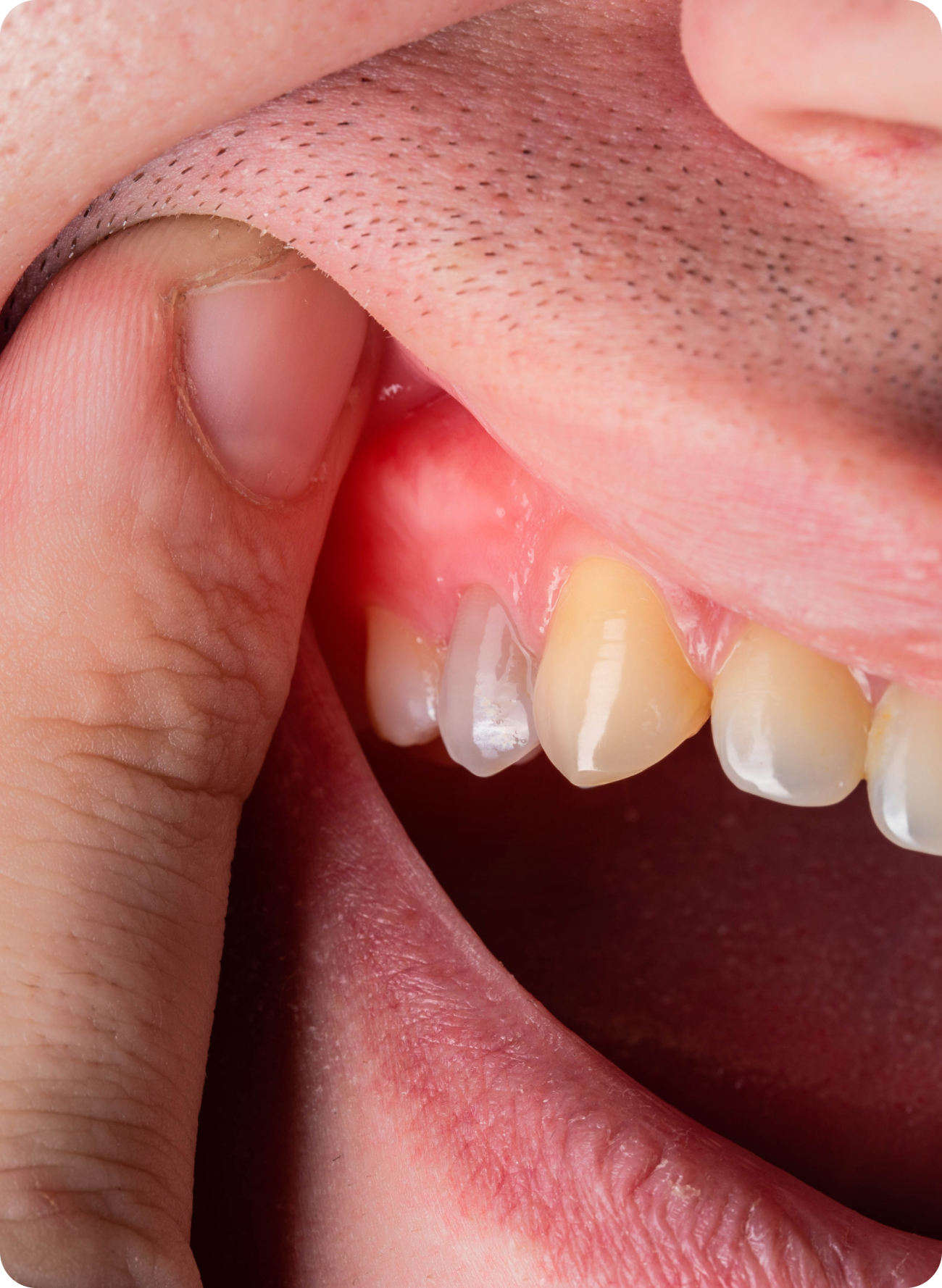
Last updated 05.14.2026
Does a broken tooth need to be fixed immediately?
A broken tooth may not always be an emergency, but delaying care can cause more damage. Learn when to see Aspen Dental.
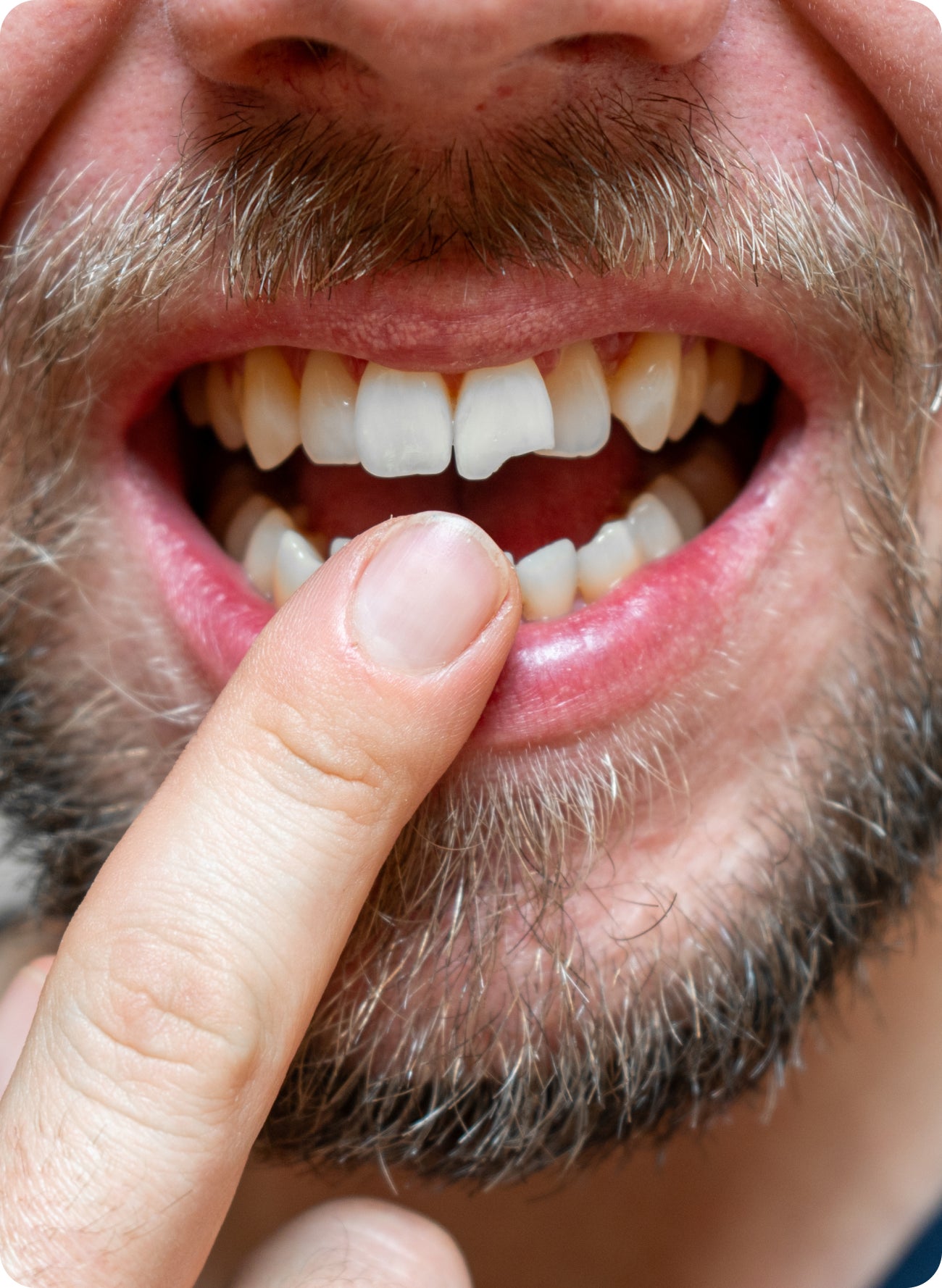
It depends on the severity of the break — and that distinction matters. If you have severe discomfort, bleeding, a large missing piece or sharp edges cutting your tongue or cheek, that's a dental emergency — seek care today.
If the break is small and painless, it's not an emergency, but it still needs attention. Schedule an appointment within a few days. A broken tooth cannot heal on its own, and delaying treatment allows the damage to worsen
Is a broken tooth a dental emergency?
Not every broken tooth is a 911-level situation, but every broken tooth is a problem that will get worse without treatment. The question is how quickly.
Seek same-day care if you have any of these:
Severe discomfort or throbbing: The break may have exposed the inner layers of the tooth (dentin or pulp), where the nerve lives.
Bleeding: From the tooth or surrounding gums, which may signal pulp or ligament damage and should be evaluated promptly.
A large piece missing: When a significant portion of the tooth is gone, the remaining structure is more vulnerable to further damage or infection.
Sharp edges: A jagged edge cutting into your tongue, cheek, or lip should be addressed immediately to prevent soft tissue injury.
Visible dark spot or hole: This may indicate the pulp (nerve) is exposed, creating a direct pathway for bacteria.
If any of these apply to you, don't wait — visit our Emergency Walk-In Dentist page to find same-day care near you.
You may have a short window (a few days, not weeks) if:
The chip is small and smooth
There is no pain or sensitivity
Nothing is cutting your soft tissue
The tooth feels stable
Even in the “can wait” category, delaying more than a few days is a gamble. A hairline crack you can’t see can spread, and a small chip can trap bacteria. What’s inexpensive to fix today can become far more costly in a few months.
What to do right now — before you see a dentist
If you can't get to your Aspen Dental provider immediately, here's how to protect the tooth in the meantime:
Save the fragment (if you can)
If a piece broke off, place it in a small container of milk — not water. Milk preserves the cellular structure of the tooth fragment and gives your Aspen Dental provider the best chance of using it.
Manage the discomfort
Over-the-counter ibuprofen (Advil) or acetaminophen (Tylenol) can reduce both pain and inflammation. ¹ Follow the dosage on the label.
Cover sharp edges
Use dental wax (available at most pharmacies) to cover any sharp edges and protect your tongue and cheeks from irritation. Temporary tooth covers or caps can also help shield the area until your appointment. These are short-term solutions and do not treat or protect the underlying tooth.
Rinse gently
Rinse your mouth with warm salt water to keep the area clean and reduce the risk of bacterial buildup around the break.
Avoid certain foods
Stay away from hard, crunchy or sticky foods. Avoid temperature extremes — very hot or very cold food and drinks can trigger sharp pain if the inner layers of the tooth are exposed. Chew on the opposite side of your mouth.
Don't ignore it
This is the most important step. A broken tooth will not heal on its own. Teeth do not regenerate. Every day you wait is a day bacteria have access to a compromised tooth structure.
What causes a tooth to break?
A tooth can break from a single traumatic event or from gradual weakening over time. In many cases, patients are surprised because there was no obvious injury.
Trauma and impact
A fall, a sports injury, a car accident or biting down on something unexpectedly hard (a popcorn kernel, an olive pit, a piece of ice) can fracture a tooth instantly.
Weakened tooth structure
A tooth that has a large filling, has undergone a root canal or has significant decay is structurally compromised. The remaining natural tooth structure is thinner and more brittle, making it vulnerable to fracture under normal chewing pressure. Many patients break these teeth eating something completely ordinary.
Teeth grinding (bruxism)
Chronic grinding or clenching, often during sleep, puts sustained pressure on teeth that far exceeds normal chewing force. Over time, this wears down enamel and creates micro-fractures that eventually become full breaks. Teeth grinding affects an estimated 8–15% of adults globally — making it one of the most common causes of gradual tooth fracture. ²
Age
Cracked tooth syndrome is most common in adults between the ages of 40 and 60.3 Tooth enamel can become more brittle over time. Teeth that have experienced years of wear, repeated dental work and ongoing stress are more prone to cracking than younger teeth.
Temperature stress
Repeatedly exposing teeth to extreme temperature changes — hot coffee followed by ice water — may contribute to micro-fractures in enamel over time, creating small cracks that can eventually propagate into full fractures.
Understanding what caused your tooth to break matters — not just for fixing the current problem, but for protecting the rest of your teeth from the same fate. Your Aspen Dental provider will assess the underlying cause as part of your evaluation.
What happens if you leave a broken tooth untreated?
A broken tooth is an open door for bacteria. The outer layer of your tooth — enamel — is the hardest substance in the human body.4 It exists specifically to protect the softer, more vulnerable layers underneath: dentin and pulp. When enamel is damaged, the tooth becomes more vulnerable. Even a small break can worsen over time.
Without treatment, bacteria can build up on the exposed surface. If bacteria reach the pulp — the inner layer containing the nerve — nerve damage can occur, often requiring a root canal that could have been avoided with earlier treatment. The sooner you see your Aspen Dental provider, the simpler, and less costly, the fix is likely to be.
Can a broken tooth be fixed?
Yes, in most cases, a broken tooth can be repaired. The treatment depends on how much of the tooth remains and whether the nerve is involved. The following are some of the common repair options:
Dental bonding
For small chips that haven’t reached the dentin, bonding is often the simplest solution. A tooth-colored resin is applied, shaped to match your natural tooth, and hardened with a curing light—usually in a single visit.
Dental crown
When a larger portion of the tooth is missing or weakened, a crown covers and protects what remains. Your Aspen Dental provider reshapes the tooth and places a custom crown to restore strength and function.
Root canal + crown
If the break reaches the pulp (the inner layer with nerves and blood vessels), the area must be treated before restoring the tooth. A root canal removes and seals the inner tissue, and a crown is placed to protect the tooth.
Dental veneer
For front teeth with minor cosmetic damage, a porcelain veneer can improve appearance while adding a layer of protection. Veneers are typically used when the tooth structure is still largely intact.
Extraction
If the tooth is too damaged to repair—such as breaks below the gum line or severe root fractures—extraction may be recommended. This is generally a last resort when other options aren’t viable.
Learn more about broken tooth treatment options.
Can a broken tooth cause other problems?
Yes — and the effects can reach well beyond the tooth itself.
Headaches:
A broken tooth that has shifted your bite — even slightly — can create uneven pressure across your jaw. That tension travels through the temporomandibular joint (TMJ) and into the muscles of your head and neck, causing headaches that seem completely unrelated to your mouth.
Infection:
If bacteria reach the inner part of the tooth (the pulp), an abscess can develop. Without treatment, the infection may spread to nearby areas like the jaw or neck. In more advanced cases, it can affect overall health and may require urgent medical care.
Damage to adjacent teeth:
A sharp broken edge can damage neighboring teeth through abnormal contact and pressure over time.
Difficulty eating:
Even a small break can make chewing painful, leading patients to shift chewing to one side — creating uneven wear on the opposite side of the mouth.
How much does it cost to fix a broken tooth?
The cost to fix a broken tooth ranges from $100 for simple bonding to $3,000 or more for a root canal and crown, depending on the severity of the break and whether the nerve is involved.
Here's what you can expect:
Here are the most common treatment options and their estimated cost ranges:
Dental bonding: about $100–$400 per tooth
Dental crown: about $902–$2,051 per tooth
Root canal and crown: about $1,500–$3,000+
Veneer: about $900–$2,500 per tooth
Extraction: about $150–$300 for a simple extraction
If you don't have insurance, the Aspen Dental Savings Plan covers exams, X-rays, cleanings and restorative procedures for $49 a year — with no waiting periods, no deductibles and no annual maximums. If you do have dental insurance, Aspen Dental accepts most major providers, and coverage can apply to preventive, restorative and emergency services depending on your plan. Learn more about insurance at Aspen Dental.
At Aspen Dental, we provide transparent pricing before any treatment begins, and flexible financing options are available, so cost doesn't become a reason to delay care.
What to do next — based on your situation
If you broke a tooth today, here's how you’ll know what to do:
Severe discomfort or bleeding → Same-day care
Small chip, no discomfort → Schedule within a few days. Book online or call your local Aspen Dental office to find a time that works for you.
Not sure → Get evaluated ASAP
At Aspen Dental, we offer same-day appointments for dental emergencies at locations across the country. Walk-ins are welcome. If you're not sure whether your broken tooth is an emergency, schedule an appointment or call your nearest Aspen Dental today.
Broken tooth FAQs
Does a broken tooth always hurt?
No, and that's what makes it deceptive. A small chip that hasn't reached the dentin may cause no discomfort at all. Bacteria can “quietly” colonize an exposed tooth surface. A break that doesn’t hurt still needs to be evaluated.
Can a broken tooth heal on its own?
No. Unlike bone, tooth enamel does not regenerate. Once a tooth is broken, it cannot repair itself. The break will not get smaller or close over time. It will only stay the same or get worse.
Can a broken tooth with a filling be fixed?
Yes, in most cases. If the tooth structure around the filling is intact, bonding or a crown can restore it. If the break has extended below the gum line or compromised the root, the options become more limited. Your Aspen Dental provider will take an X-ray to assess the full picture.
Does a broken tooth need to be pulled?
Not necessarily. An extraction is often the last resort. Most broken teeth can be restored with bonding, a crown, or a root canal and crown. Extraction is only recommended when the tooth cannot be structurally saved.
How long does it take to fix a broken tooth?
Bonding can be completed in a single visit, typically 30–60 minutes. A crown usually requires two visits. A root canal adds one to two additional appointments before the crown is placed.
Can I go to the ER for a broken tooth?
An emergency room can help manage severe pain and prescribe antibiotics if there's an infection — but ERs cannot perform dental procedures. They are not equipped to bond, crown, or extract teeth. If you're in severe pain and cannot reach a dentist, an ER visit can provide temporary relief, but you will still need to see a dental professional as soon as possible for the actual repair.
Should you brush a broken tooth?
Yes, gently. Keeping the area clean is important to prevent bacterial buildup. Use a soft-bristled toothbrush and avoid pressing directly on the broken area. Rinse with warm salt water after meals.
Sources
¹American Dental Association. Acute Dental Pain Management Guideline. https://www.ada.org/resources/research/science/evidence-based-dental-research/pain-management-guideline
²NIH National Library of Medicine. Global Prevalence of Sleep Bruxism and Awake Bruxism. https://pmc.ncbi.nlm.nih.gov/articles/PMC11278015/
³NIH National Library of Medicine. Cracked Tooth Syndrome. https://www.ncbi.nlm.nih.gov/books/NBK606115/
⁴Cleveland Clinic. Tooth Enamel. https://my.clevelandclinic.org/health/body/24798-tooth-enamel