Last updated 05.14.2026
Why do I have jaw pain in the morning?
Morning jaw pain is often caused by teeth grinding or TMJ. Learn causes, relief tips and when to see Aspen Dental.
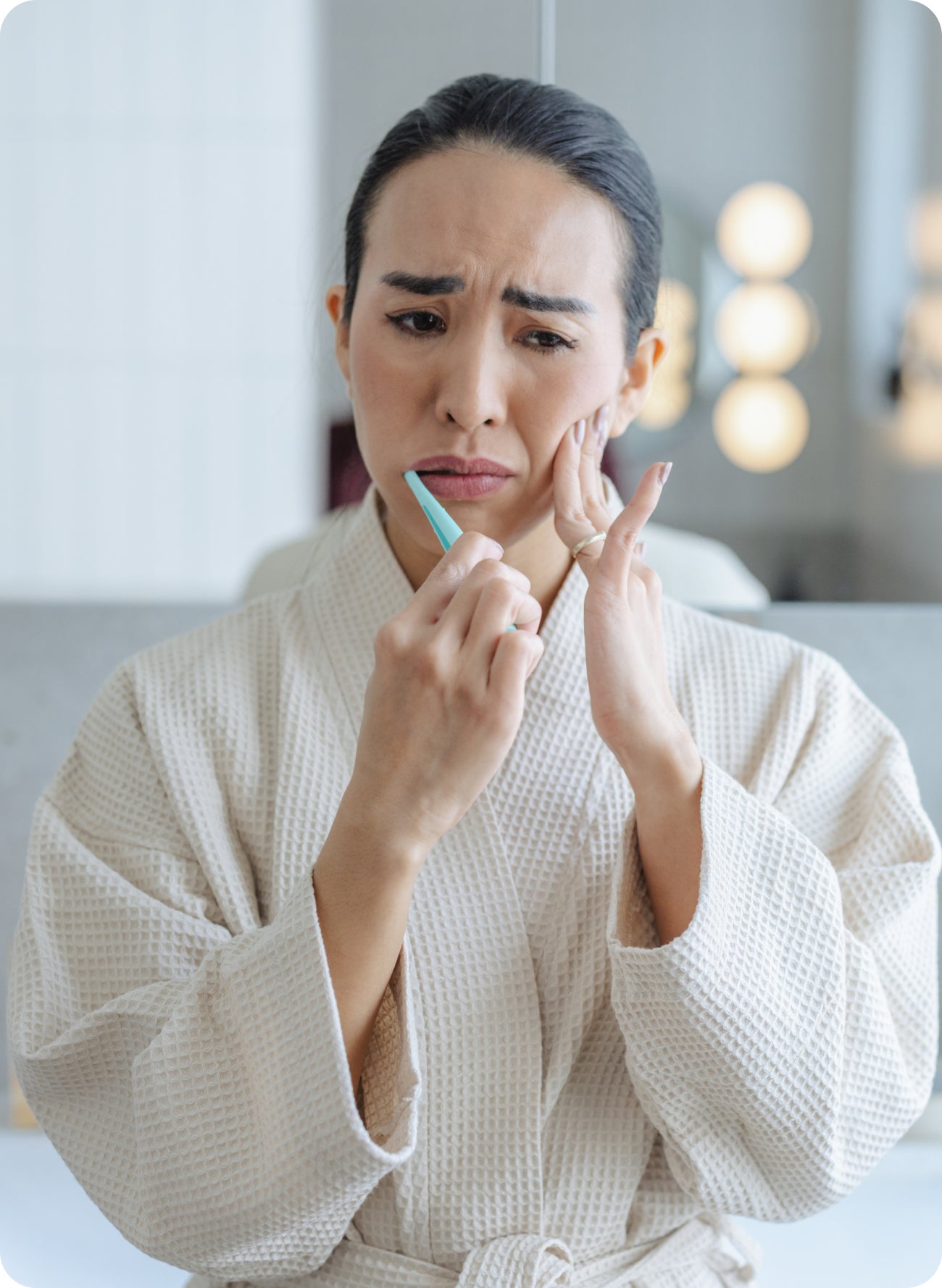
You wake up, stretch, reach for your coffee and then notice it. Your jaw aches. It's not excruciating, but it's enough to make you wonder: what was I doing in my sleep? Morning jaw pain is most commonly caused by sleep bruxism — the involuntary clenching or grinding ofteeth during sleep. Bruxism affects an estimated 8% of adults and causes jaw muscle fatigue that peaks upon waking. It is treatable, but it does not resolve on its own without intervention.1
What causes nighttime teeth grinding?
Stress is the most common driver of bruxism — emotional tension during the day often surfaces as physical clenching at night, even when you feel like you've wound down. Other contributing factors include:
TMJ dysfunction
The temporomandibular joint (TMJ) is the hinge joint that connects your jawbone to your skull, enabling you to open and close your mouth. When the jaw joint is irritated or misaligned, it can trigger muscle tension and nighttime grinding, leading to morning soreness. Temporomandibular disorders affect an estimated 10 million Americans and are among the most common causes of chronic facial pain.2
Missing teeth
Missing teeth change how bite pressure is distributed, forcing surrounding teeth to absorb extra strain. Over time, this imbalance can contribute to teeth grinding as the jaw searches for a stable resting position during sleep. Replacing missing teeth can help restore bite stability and reduce that stress.
Lifestyle factors
Caffeine, alcohol and nicotine can increase muscle tension, disrupt sleep and make nighttime grinding more likely. Frequent use of these substances is commonly linked to higher rates of bruxism.
Bite alignment
When your teeth don’t fit together properly, your jaw may grind during sleep as it searches for a more stable position. Over time, this added strain can contribute to tooth wear, jaw soreness and facial fatigue. Orthodontic treatment or a custom night guard may help reduce the pressure caused by a misaligned bite.
Sleep apnea
Obstructive sleep apnea and sleep bruxism frequently occur together. Research published in the Journal of Clinical Sleep Medicine found that sleep bruxism is significantly more prevalent in adults with obstructive sleep apnea than in the general population.3
How do I know if I'm grinding my teeth at night?
Most people don't realize they grind their teeth until a partner tells them or a dental provider spots the evidence. Signs to watch for:
Worn, flattened, or chipped teeth
Increased tooth sensitivity, especially to temperature
Headaches that start at the temples
Sore jaw muscles or a "tired" jaw in the morning
Earache without an ear infection
Indentations on the side of your tongue from pressing against your teeth.
If several of these signs sound familiar, you are likely dealing with bruxism — and the good news is that it is very treatable.
What can I do about morning jaw pain?
If you have been waking up with jaw soreness for weeks and hoping it would resolve on its own, you are not alone. But it will not improve without treatment, and the longer grinding continues, the greater the cumulative damage to your teeth and jaw joint. The most effective treatment for bruxism-related morning jaw pain is a custom night mouthguard, a dental appliance worn during sleep that cushions your teeth and prevents the grinding motion. Beyond a night guard, your Aspen Dental provider may recommend:
Stress management techniques can help reduce grinding when stress is the primary trigger.
Bite adjustment or clear aligner treatment may improve how the teeth fit together and reduce strain on the jaw.
Physical therapy or jaw exercises can help relieve tension in the TMJ muscles and surrounding areas.
Reducing caffeine and alcohol intake, especially in the evening, may help decrease nighttime grinding episodes.
When should I see a dentist about jaw pain?
Occasional morning jaw pain isn’t always a cause for concern. But you should see an Aspen Dental provider if:
The pain happens most mornings or is getting worse over time
Your teeth look shorter, flatter or more worn than they used to
You experience frequent headaches along with jaw soreness
You notice clicking or popping when you open or close your mouth
Your jaw locks or it feels difficult to open fully
Aspen Dental providers at more than 1,100 locations nationwide are experienced in diagnosing bruxism and TMJ-related jaw pain, evaluating bite alignment and fitting custom night guards.
If you're waking up with jaw pain more mornings than not, it's time to have it evaluated. Schedule an appointment at your nearest Aspen Dental office.
Morning jaw pain FAQs
Can sinus pressure cause jaw pain?
Yes. Inflamed sinuses can radiate pressure to the upper jaw, especially the molars. However, isolated morning jaw stiffness without nasal symptoms is more likely caused by nighttime teeth grinding (bruxism).
How long does teeth grinding pain last?
Morning jaw soreness from bruxism typically eases within an hour or two of waking as your muscles warm up. If pain persists throughout the day or worsens over time, that's a sign the grinding is severe enough to warrant a dental evaluation at Aspen Dental. Your provider will likely recommend a custom night guard.
Do mouthguards help with teeth grinding?
Yes — custom-fitted night guards can be one of the most effective treatments for bruxism. They create a protective barrier between your upper and lower teeth, absorbing the force of grinding and preventing the wear, cracking and jaw muscle fatigue that bruxism causes.
Is jaw pain in the morning serious?
Morning jaw pain is rarely a medical emergency, but it shouldn't be ignored if it's happening regularly. Persistent soreness — especially alongside worn teeth, frequent headaches or jaw clicking — often signals bruxism or TMJ dysfunction that worsens without treatment. An Aspen Dental provider can assess the cause and recommend the right solution.
Sources
[1] Kuhn M, Türp JC. Risk factors for bruxism. StatPearls [Internet]. Treasure Island (FL): StatPearls Publishing; 2023. https://www.ncbi.nlm.nih.gov/books/NBK482466/
[2] National Institute of Dental and Craniofacial Research. Temporomandibular Joint (TMJ) Disorders. National Institutes of Health. https://www.nidcr.nih.gov/health-info/tmd
[3] Hosoya H, et al. Relationship between sleep bruxism and sleep respiratory events in patients with obstructive sleep apnea syndrome. Journal of Clinical Sleep Medicine. 2023. https://pubmed.ncbi.nlm.nih.gov/36448332/