Last updated 04.30.2026
What do healthy gums look like?
Healthy gums are firm, pain-free and consistent in color. Learn the signs of healthy gums and how to maintain them.
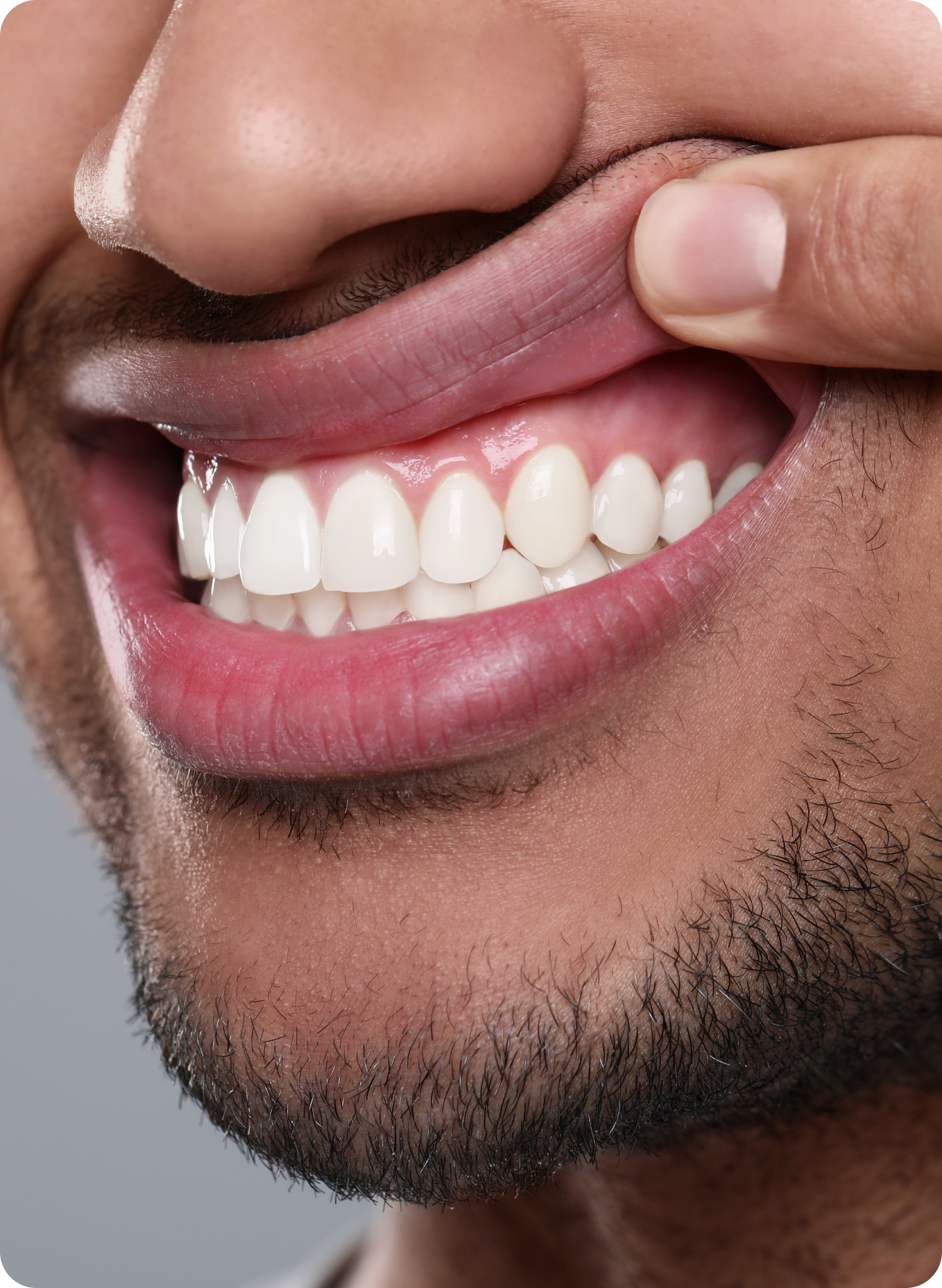
Your smile is often one of the first things people notice, but the foundation of that smile is your gum health. Healthy gums help protect your teeth and support the structures beneath them.
Many patients focus on the color of their teeth while overlooking their gums. Healthy gums are firm, fit snugly around each tooth and range in color from pale pink to darker brown depending on your natural skin tone. They should not feel swollen, bleed easily or be tender.
Maintaining healthy gums involves daily care and regular dental visits. Understanding what healthy gums look like can help you recognize when it’s time to take action.
Signs of healthy gums: color, texture and shape
Healthy gums have a consistent appearance and feel.
Color: Healthy gums can range from light pink to deep brown depending on your natural pigmentation. The key sign of health is even, consistent color across your gums. Sudden changes, such as red or pale patches, may be worth evaluating.
Texture: Healthy gums are firm and slightly textured, often described as having an orange-peel appearance. They should not feel puffy or overly sensitive.
Fit: Gums should fit snugly around each tooth, forming a tight seal that helps protect against bacteria.
Reaction: Healthy gums do not bleed during normal brushing or flossing.
Healthy gums vs. unhealthy gums
Healthy gums are firm, evenly colored and do not bleed. Unhealthy gums often show signs of inflammation and may feel different day to day.
Healthy gums:
Pink or naturally pigmented
Firm and tight around teeth
Do not bleed easily
Free from swelling or tenderness
Unhealthy gums:
Red, dark or uneven in color
Swollen or puffy
Bleed during brushing or flossing
May feel tender or sore
Unhealthy gums often lose their firm texture and may appear shiny or stretched. They can begin to pull away from the teeth, creating small spaces where bacteria can collect.
You may also notice increased sensitivity or discomfort when eating or drinking. In some cases, persistent bad breath can be a sign of bacteria buildup below the gumline.
These changes are often linked to plaque buildup. When plaque is not removed, it can harden into tartar, which can only be removed during a professional cleaning. Addressing these signs early can help prevent more advanced gum concerns.
Healthy gums vs. gingivitis
The main difference between healthy gums and gingivitis is inflammation.
Healthy gums do not bleed or swell. Gingivitis may cause gums to appear red, puffy and more sensitive.
Gingivitis is an early stage of gum disease and is often reversible with proper care. Many patients notice occasional bleeding and may not realize it is a sign of irritation.
With consistent care, gum health can often be restored.
Restoring gum health typically involves:
1. Exam: Your Aspen Dental provider reviews your symptoms and examines your gums.
2. Diagnosis: Your provider measures the space between your teeth and gums and may take digital X-rays.
3. Treatment: This may include a professional cleaning to remove plaque and tartar. In some cases, a deeper cleaning may be recommended.
4. Aftercare: Your care team will provide guidance for at-home care and schedule follow-up visits.
With consistent care and support, many patients begin to notice improvement within a few weeks.
How to keep gums healthy
Maintaining healthy gums involves a combination of daily habits and regular dental care.
Brushing
Brush at least twice a day using a soft-bristled toothbrush and fluoride toothpaste. Angle the brush toward the gumline and use gentle motions.
Flossing
Floss daily to remove plaque between teeth. Gently curve the floss around each tooth and move it slightly below the gumline.
Antimicrobial mouthwash
Using a mouthwash can help reduce bacteria and support your daily routine.
Dietary habits
A balanced diet supports gum health. Limiting sugary snacks and acidic drinks may help reduce plaque buildup.
Avoid tobacco
Tobacco use can affect gum health and slow healing. Avoiding tobacco supports overall oral health.
Regular dental visits are also important. Professional cleanings help remove tartar and allow your provider to monitor your gum health over time.
When to see a dentist
A daily routine is important, but some signs should be evaluated by a dental professional.
Schedule a visit if you notice:
Bleeding that continues beyond a couple of weeks
Gums that are red, swollen or feel different than usual
Receding gums or teeth appearing longer
Persistent bad breath
Loose or shifting teeth
Ongoing tenderness or discomfort
Even without symptoms, routine dental visits every six months help identify early changes before they progress.
Healthy gums FAQs
How long does it take to improve gum health if my gums are bleeding?
If bleeding is related to early gingivitis, many patients notice improvement within one to two weeks of consistent brushing and flossing. If tartar is present, a professional cleaning may be needed before healing can begin.
Is it normal for gums to bleed when I start flossing again?
Some mild bleeding may occur when you begin flossing again. This is often a sign of existing irritation. With consistent, gentle flossing, this typically improves over time.
What causes unhealthy gums?
Unhealthy gums are most often caused by plaque buildup. Other factors may include tobacco use, certain medications, health conditions and genetics. Regular care and checkups can help manage these factors.