Last updated 07.15.2026
Is it normal to have a fever and chills after a deep dental cleaning?
Learn why a mild fever or chills can happen after a deep dental cleaning, what's considered normal and when symptoms may need further evaluation.

A mild fever or chills for a day or two after a deep cleaning is normal and not usually cause for concern. Deep cleaning disturbs bacteria below the gumline, and your immune system may briefly react with low-grade symptoms that clear up within 48 hours.
What matters most is direction: Improving mild symptoms are a normal part of healing, while symptoms that worsen or linger may signal a problem worth a call to your dentist.
What you'll learn in this article:
A low-grade fever — generally under 100.4°F — in the first 24 to 48 hours after deep cleaning is a recognized immune response and is not the same as a sign of infection
Deep cleaning temporarily disturbs bacteria below the gumline, which can briefly enter your bloodstream and trigger your immune system to react
A fever above 101°F, a fever that lasts beyond 48 hours, or fever paired with facial swelling or difficulty swallowing requires prompt attention
Chills on their own — without a high fever — are often part of your body's normal short-term recovery process
Simple at-home steps can reduce discomfort while you monitor how you're feeling
If your symptoms are worrying you, schedule an appointment with your dental provider for a personalized evaluation.
Why your body sometimes responds to deep cleaning with a fever
What happens below the gumline during deep cleaning
A regular cleaning removes plaque and tartar from the surfaces of your teeth. Deep cleaning, also called scaling and root planing, goes below the gumline to remove bacteria and buildup from around the tooth roots.¹ This is where gum disease develops, so cleaning these areas helps stop it from getting worse.
As these bacteria are removed, a small amount can temporarily enter your bloodstream. This is called transient bacteremia. Research shows this is a normal, short-term effect of dental scaling, and most people don't have any symptoms.² For some people, though, the immune system responds with a brief low-grade fever or mild chills. That's simply your body's normal response to bacteria entering the bloodstream.
What's normal in the days after deep cleaning
Gum soreness, sensitivity and some swelling in the treated area are the most common aftereffects of deep cleaning. Those symptoms are expected and usually improve steadily over several days.
A low-grade fever (below 101°F) appearing within 24–48 hours of the procedure and resolving on its own, falls within the range of a recognized immune response. Temperatures between 100.4°F and 101°F that are improving on their own are generally part of this short-term reaction.
Warning signs that need attention
Some symptoms are not part of normal recovery. Contact your dental provider promptly if you notice:
Fever above 101°F — this goes beyond a typical immune response
Fever that lasts more than 48 hours or worsens instead of improving
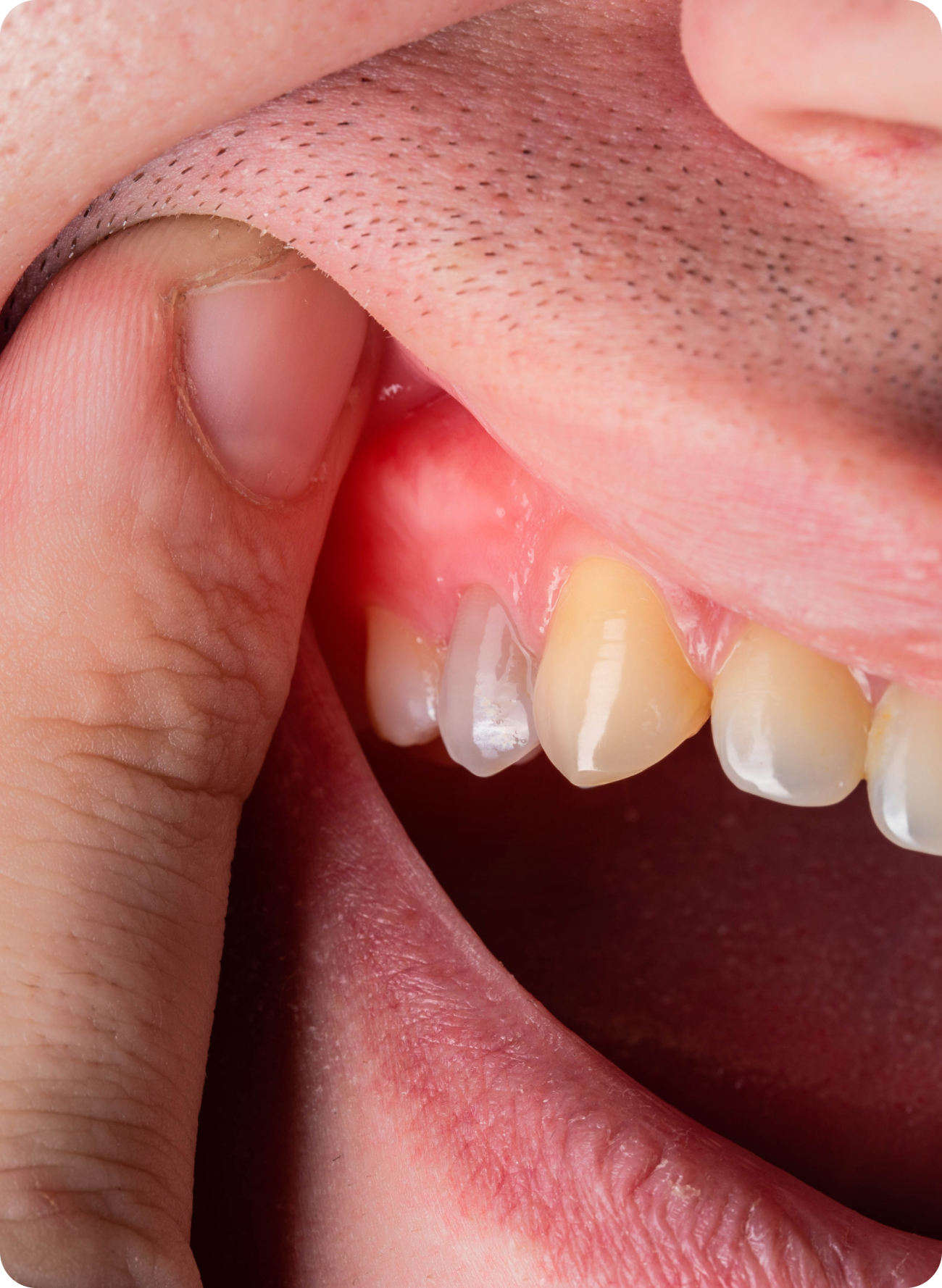
Swelling in your face, jaw or neck that is increasing rather than going down
Difficulty swallowing or opening your mouth
Pus or discharge from your gums
Severe, worsening soreness that doesn't respond to over-the-counter medicines
These symptoms can point to a developing infection, such as a periodontal abscess — a pocket of infection in the gum tissue that may need treatment.³ If you notice any of these signs, don't wait to see if they improve on their own.
How to feel better during recovery
If your symptoms are in the mild, expected range, a few simple steps can make the recovery process more comfortable.
Rest and drink plenty of fluids
Your immune system works best when you give it what it needs. Stay hydrated and take it easy for a day or two.
Use over-the-counter fever reducers as directed
Ibuprofen or acetaminophen can bring down a mild fever and reduce gum soreness. Follow the dosing instructions on the label.
Rinse with warm salt water
A gentle rinse two to three times a day can soothe tender gum tissue and help keep the area clean. Dissolve half a teaspoon of salt in 8 ounces of warm water.
Stick to soft, cool foods for the first couple of days
Yogurt, smoothies and mashed potatoes are easy on healing gums. Avoid anything hot, crunchy or spicy until the soreness settles.
Skip straws
The suction can irritate healing tissue, so drink directly from a cup for a few days.
When to call your dental provider
If your fever climbs above 101°F, if 48 hours pass without improvement, or if any of the warning signs above appear, contact your dental provider. You know how your body normally feels. If something seems off or is getting worse, that's enough reason to call.
Schedule an appointment with an Aspen Dental provider if your symptoms are concerning or not improving on their own.
Is it normal to have a fever and chills after a deep dental cleaning? FAQs
Deep cleanings can create a few short-lived symptoms while your mouth heals. Below are answers to the most common questions patients ask afterward, including when a symptom means it's time to call your dentist.
Is it normal to feel tired after a deep dental cleaning?
Yes. Mild fatigue in the day or two after deep cleaning is common. Your immune system is doing extra work to respond to the procedure, and that takes energy. Rest, stay hydrated and give yourself a little grace. If your fatigue is severe or paired with a high fever, reach out to your dental provider.
How long should gum soreness last after deep cleaning?
For most people, soreness and sensitivity improve over three to five days. Mild tenderness can linger for up to a week if the gum disease was more advanced. What you're looking for is a steady trend toward improvement. If soreness is getting worse after the first 48 hours, that's worth checking in about.
Can deep cleaning cause an infection?
It's possible, though uncommon. Because deep cleaning disturbs bacteria below the gumline, there is a small risk that an infection can develop, particularly if gum disease was already advanced.¹ Following your provider's aftercare instructions, rinsing with salt water and avoiding irritants significantly lowers that risk. Swelling, pus, high fever or worsening soreness are signs that warrant immediate contact with your provider.
Will my gums ever fully recover from deep cleaning?
Yes. Deep cleaning is a treatment, not a setback: It's the first step toward healthier gums. Most patients notice significant improvement in gum health in the weeks following the procedure. Your dental provider may recommend a follow-up appointment to evaluate how your gums are healing and determine whether any additional care is needed.
Sources
¹American Academy of Periodontology — "Non-Surgical Treatments" https://www.perio.org/for-patients/periodontal-treatments-and-procedures/non-surgical-treatments/
²National Institutes of Health, National Library of Medicine — "Bacteremia following scaling and root planing: A clinico-microbiological study" https://pmc.ncbi.nlm.nih.gov/articles/PMC3917200/
³Cleveland Clinic — "Periodontal Abscess: Symptoms, Causes & Treatment" https://my.clevelandclinic.org/health/diseases/24573-periodontal-abscess