Last updated 07.15.2026
Why are my teeth crumbling even when I eat soft foods?
Learn why teeth can crumble on soft foods, what underlying problems may be weakening them and which treatments can help restore your smile.

Soft foods don't cause crumbling teeth — they reveal damage that's already there. Healthy enamel doesn't give way on something as gentle as bread or yogurt. If yours did, it means the tooth's structure has been weakening beneath the surface for a while. The good news: Crumbling teeth are treatable, especially when caught early.
What you'll learn in this article:
Soft foods don't cause crumbling teeth — they reveal damage that was already there.
Tooth decay, enamel erosion, dry mouth, acid reflux and teeth grinding can all weaken teeth over time.
Crumbling teeth should be evaluated early because treatment is often simpler and more successful.
The best treatment depends on how much healthy tooth structure remains.
If you're noticing your teeth breaking down, a dental provider can help you understand what's causing it and what can be done. Schedule an appointment to get a clear picture of where things stand.
Why soft foods don't protect a tooth that's already breaking down
Most people think switching to soft foods is easier on their teeth. It is, but soft foods can't undo damage that's already there. By the time enamel has worn thin or decay has hollowed out a tooth, there isn't enough structure left to hold up under any pressure, soft or not.
Think of it like a wall with cracks running through the middle. A feather leaning against it causes less stress than a door slamming — but the cracks keep spreading either way. The feather didn't cause the damage. It just couldn't keep it from showing.
That's why the real question isn't "What am I eating?" It's "What has been wearing my teeth down, and for how long?"
What causes teeth to crumble?
Several things can compromise tooth structure — and in many cases, more than one is happening at the same time.
Could it be tooth decay?
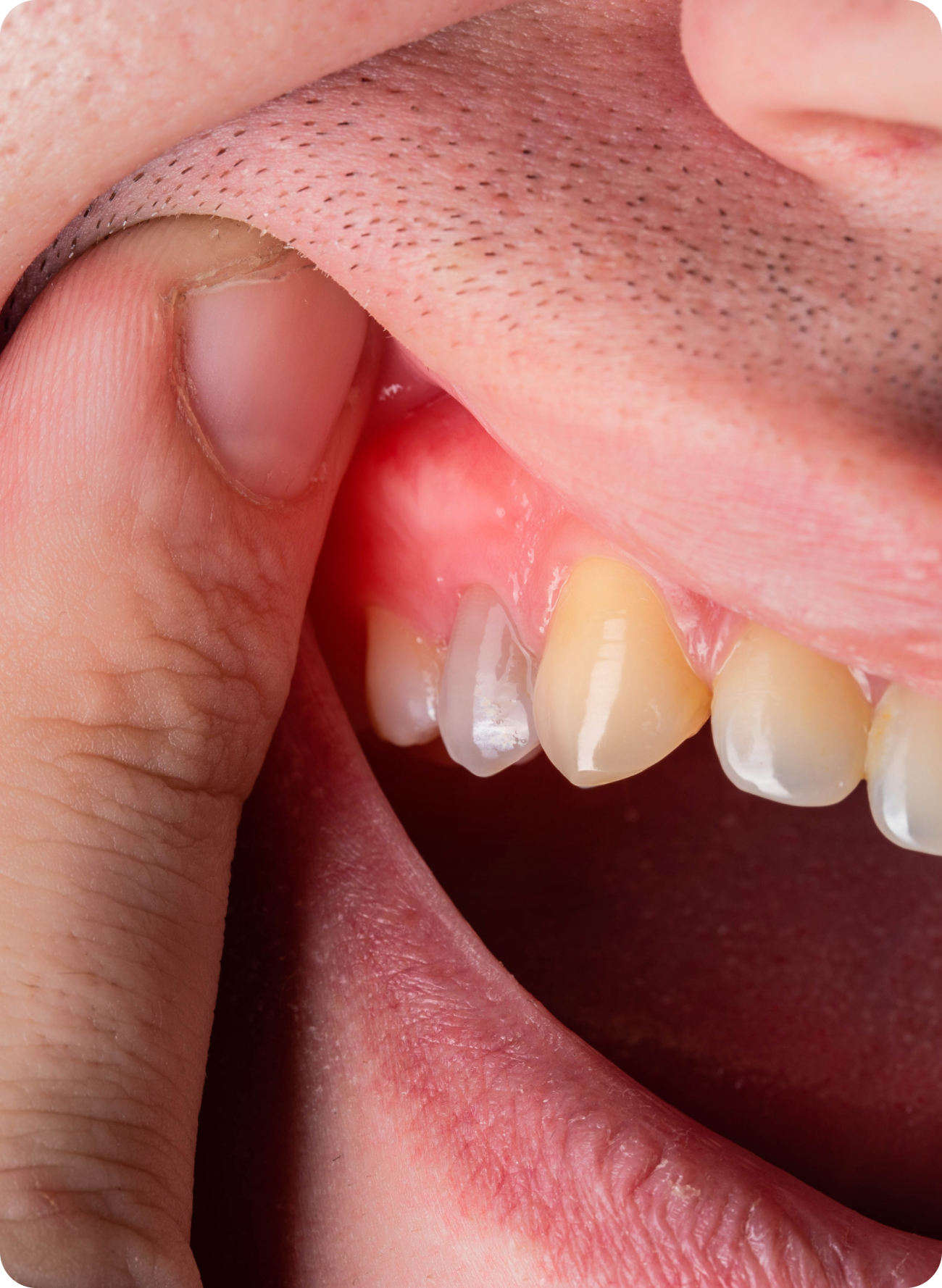
Tooth decay is a common cause. Bacteria in your mouth feed on sugars and produce acids that gradually wear away enamel. Once the enamel is damaged, the decay can spread into the softer dentin beneath it, weakening the tooth over time. Early cavities often don't cause any discomfort, so many people don't realize they have one until the tooth chips or breaks.1
Is enamel erosion the problem?
Enamel erosion is a separate process from decay. Instead of bacteria, it's driven by direct acid exposure — usually from carbonated drinks, citrus juice or sports drinks consumed frequently over time. The acid gradually softens and wears away the outer tooth surface, leaving it thinner and more fragile.2 Once enamel is gone, the body cannot replace it. Erosion can affect people who have excellent oral hygiene and no cavities at all.
Could my medications be causing this?
Hundreds of medicines can reduce saliva flow, including some medicines used for high blood pressure, depression and bladder-control problems. Saliva does more than keep your mouth comfortable. It helps wash away food, neutralize acids and provide minerals that help protect your teeth from decay.3 Without enough saliva, your risk of cavities goes up. If your mouth often feels dry, mention it to both your prescribing physician and your dental provider.
Can acid reflux damage my teeth?
Acid reflux, also called GERD, can bring stomach acid into the mouth. Repeated acid exposure can wear away enamel, making teeth thinner, weaker and more likely to chip or break.2 Some people notice dental erosion before they realize reflux may be contributing to it.
Does teeth grinding play a role?
Yes. Teeth grinding, also called bruxism, creates repeated pressure and friction that can wear down enamel. Over time, this can weaken the teeth and increase the risk of cracks or breaks.2 Because grinding can happen during sleep, some people may not realize they are doing it.
When should you call your provider right away?
Not every instance of crumbling requires same-day care, but some situations do. Contact your dental provider as soon as possible if:
A broken tooth has left a sharp edge cutting your cheek or tongue
You're experiencing significant throbbing or aching that isn't improving
You notice swelling in your gum, jaw or face
The broken area shows a darkened center — this may indicate the nerve is involved
If you're noticing gradual weakening, minor chips or small cracks without acute symptoms, it's still important to schedule an appointment soon. Waiting almost always narrows your options.
What can be done about crumbling teeth?
The right treatment depends on how much healthy tooth structure remains. For minor damage, dental bonding or a filling may be enough. More significant breakdown often calls for a dental crown, which covers and protects what's left of the tooth. If the inner nerve tissue has been affected, a root canal may be needed before a crown can be placed.
When a tooth is too compromised to restore, an extraction followed by a dental implant, bridge or another replacement option may be recommended. Learn more about ways to fix a broken tooth.
In nearly every case, treating the problem early helps preserve more of the natural tooth and keeps treatment simpler. An Aspen Dental provider can evaluate the tooth and recommend the option that's right for you.
Why are my teeth crumbling even when I eat soft food? FAQs
Why are my teeth crumbling even though I brush twice a day?
Brushing is important, but it can't reverse decay that's already developed, rebuild worn enamel or counteract factors like acid reflux or medication-related dry mouth. Crumbling can happen even with consistent oral hygiene when other underlying causes are at work. A thorough evaluation will help identify what's actually driving the breakdown.
Can crumbling teeth be repaired?
In most cases, yes. Treatment options range from conservative repairs like bonding or fillings to crowns, root canals or tooth replacement. The amount of remaining tooth structure determines what's possible, which is why earlier treatment typically means more choices.
Are crumbling teeth a sign of a bigger health problem?
It can be. When crumbling isn't explained by diet or hygiene alone, conditions like acid reflux, medication-related dry mouth or nutritional deficiencies may be contributing. Your dental provider can help identify whether an underlying health issue is involved and coordinate with your physician when appropriate.
What happens if crumbling teeth are left untreated?
Decay and structural damage continue to progress without treatment. A tooth that could have been saved with a crown may eventually need to be removed. Decay can also spread to neighboring teeth and, in more serious cases, lead to infection. Addressing crumbling teeth early almost always leads to a better outcome — for the tooth and for your overall oral health.
Sources
1Mayo Clinic — Cavities and Tooth Decay — Symptoms and Causes https://www.mayoclinic.org/diseases-conditions/cavities/symptoms-causes/syc-20352892
2Cleveland Clinic — Tooth Erosion: Stages, Causes and Treatment https://my.clevelandclinic.org/health/diseases/tooth-erosion
3National Institute of Dental and Craniofacial Research (NIDCR) — Dry Mouth https://www.nidcr.nih.gov/health-info/dry-mouth