Last updated 06.24.2026
Why is there a sharp bone sticking out of my gum after a tooth extraction?
Learn what bone spicules are, why they occur after extractions and when they require evaluation or removal by your dental provider.

That sharp point you're feeling in your gum is most likely a bone spicule — a small bone fragment that can work its way to the surface as your gum heals.1 This is a common part of the healing process and usually isn't a sign of a problem. If it's causing discomfort or doesn't seem to be resolving on its own, schedule an appointment with your dental provider for an evaluation.
What you'll learn in this article:
A bone spicule is a small bone fragment that can surface as part of the normal healing process after an extraction
Most bone spicules resolve on their own within a few weeks, though some require simple removal by your dental provider
Bone spicules feel hard and pointed, while dry socket causes a deep, throbbing pain — they are different conditions
Trying to remove a bone spicule yourself can introduce bacteria and delay healing
Symptoms such as increasing pain, spreading swelling, or fever may signal a complication and should be evaluated promptly
What is that sharp piece of bone in your gum?
When a tooth is removed, the bone that once surrounded the tooth root can sometimes leave behind small fragments. These fragments are called bone spicules — or bone spurs. They are pieces of your own jawbone (called alveolar bone) that have become separated from the surrounding tissue during the extraction.
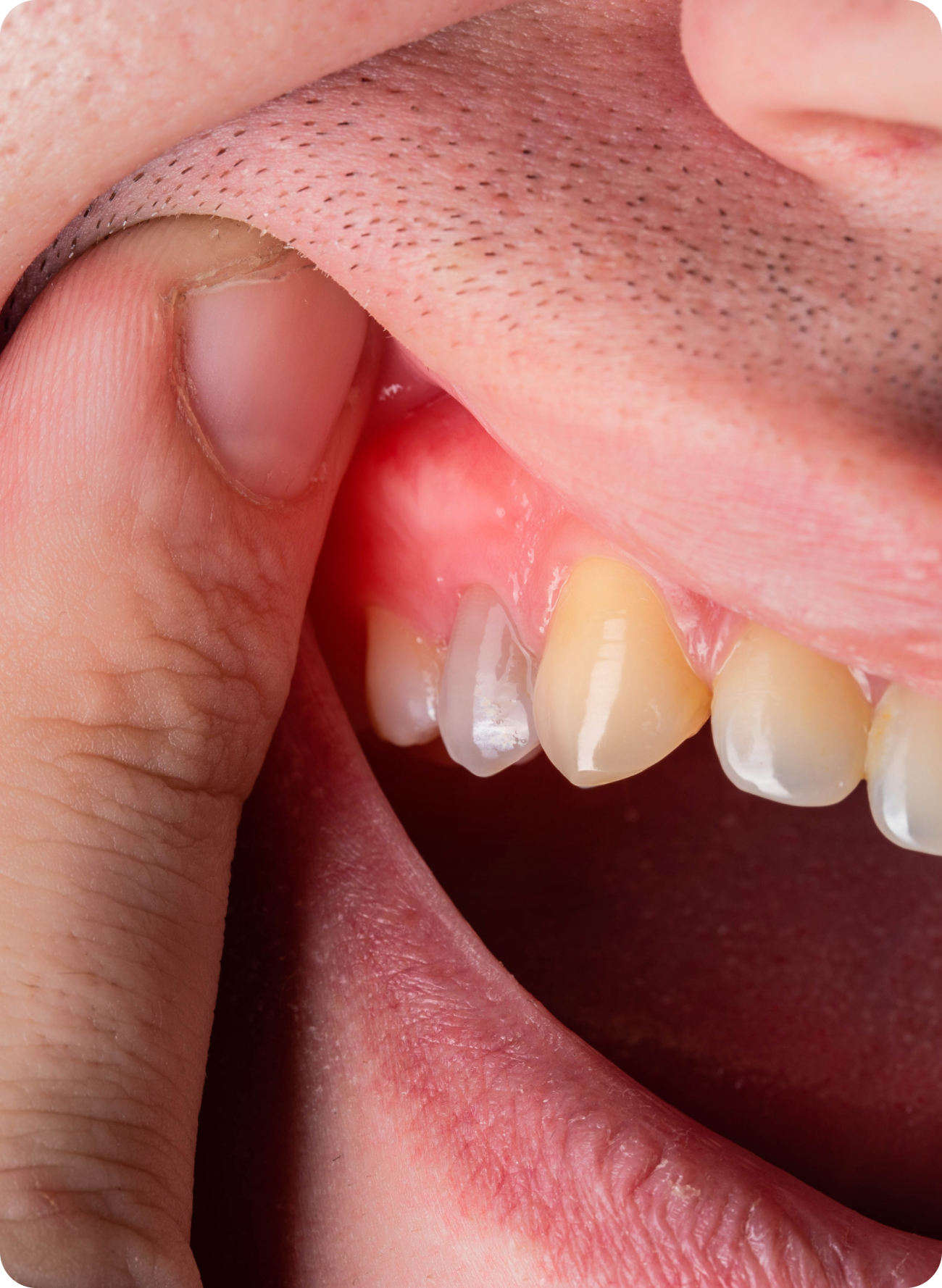
As your gum tissue heals and closes over the socket, it can push these fragments upward toward the surface. The result is a hard, sharp point that pokes through the gum — sometimes days after the extraction, sometimes a week or two later.
Is this the same as a bone spur?
Yes. Bone spicule and bone spur are two names for the same thing. You may also hear the term bone sequestrum, which refers to a fragment of dead or separated bone. All three terms describe the same experience: a sharp piece of bone emerging through the gum at the extraction site.
Why does this happen after a tooth extraction?
What causes bone spicules to form?
During an extraction — especially a surgical one — the surrounding bone can crack or chip. Small fragments may not be visible to the provider at the time of the procedure. As the socket fills with new tissue and the gum begins to close, the body naturally works to expel anything that doesn't belong. That process pushes loose bone fragments toward the surface. This is not a sign that something went wrong during your procedure, and it is not a leftover piece of tooth — it is a normal part of your body's natural bone remodeling process.
Think of it like a splinter. Your body recognizes the fragment as something that needs to come out, and it gradually moves it upward through the healing tissue.
Are some extractions more likely to cause bone spicules?
Yes. Surgical extractions carry the highest risk — particularly when bone is reshaped or a tooth is sectioned to allow removal. Wisdom tooth removals are the most common culprit, especially lower wisdom teeth embedded in dense jawbone. Molar extractions also produce spicules more frequently than straightforward front-tooth removals.
How do you know if it's a bone spicule — or something more serious?
This is the question most patients are really asking. The good news is that bone spicules have a distinct feel and pattern. The concerning conditions — dry socket and infection — feel and behave very differently.
What does a bone spicule feel like?
A bone spicule feels:
Hard and rigid — like a tiny sliver of bone, not soft tissue
Sharp or pointed when touched with your tongue or finger
Located at or just beneath the gum surface at the extraction site
Mildly tender when pressed, but not intensely sore on its own
The surrounding gum may look slightly red or irritated where the fragment is pushing through. This is normal. The area should not be dramatically swollen, and the soreness should be mild rather than severe.
How is a bone spicule different from dry socket?
Dry socket (alveolar osteitis) is a separate condition that occurs when the blood clot in the socket is lost or dissolves too early, exposing the underlying bone and nerve to air, food, and bacteria. It is not the same as a bone spicule — and the distinction matters because the two conditions feel different, appear at different times, and are treated differently.
A bone spicule typically:
Feels like a hard, sharp point at the gum surface
Appears 1–2 weeks after extraction
Causes mild to moderate soreness
Produces little to no odor
Dry socket typically:
Causes a deep, throbbing ache inside the socket — not a sharp point
Develops 2–4 days after extraction
Produces severe pain that often radiates to the ear or jaw
May cause a foul odor or taste
If your discomfort started a few days after your extraction and feels like a deep, worsening ache rather than a surface irritation, dry socket is more likely. Both conditions should be evaluated by your dental provider — but they require different treatment, so an accurate diagnosis matters.
What symptoms indicate you should not wait?
Most bone spicules are not urgent. But contact your dental provider promptly if you notice:
Swelling that is spreading beyond the extraction site
Fever or chills
Soreness that is getting significantly worse after the first 3–4 days (not better)
Pus or discharge from the site
A foul taste or smell that doesn't improve with gentle rinsing
The fragment is large, very sharp or causing a cut on your tongue or cheek
The fragment is making it difficult to eat or chew comfortably
These symptoms can indicate an infection, which needs treatment sooner rather than later.
What can you do at home in the meantime?
If the bone spicule is small and causing only mild irritation, it is reasonable to monitor it while waiting for your appointment. Here is what is safe to do:
Rinse gently with warm salt water (½ teaspoon of salt in 8 oz of warm water) once or twice a day to keep the area clean without disrupting healing tissue.
Avoid touching the fragment with your finger or tongue repeatedly — contact can irritate the gum and introduce bacteria.
Do not try to pull or push the fragment out yourself. Even if it feels loose, attempting removal can tear surrounding tissue and increase infection risk.
Eat soft foods and chew on the opposite side to reduce pressure on the area.
Take over-the-counter pain relievers as directed if the area is sore; ibuprofen can also help reduce inflammation.
Rinse gently with an antiseptic mouthrinse to help keep the area free of bacteria — avoid vigorous swishing, which can irritate healing tissue.
These steps will not make the spicule disappear faster, but they will keep the area comfortable and reduce the risk of complications while your body continues to heal.
How does a dental provider treat a bone spicule?
Treatment is typically quick and can often be completed in just a few minutes. In some cases, your dental provider may take a quick X-ray to confirm the size and position of the fragment before deciding on the best approach.
If the bone fragment is small and near the surface, they can usually remove it with a simple instrument after numbing the area. No incision is typically needed and the gum often heals quickly afterward.
If the fragment is larger or more deeply embedded, a minor surgical procedure may be necessary to access and remove it. This is uncommon after routine extractions.
After treatment, your dental provider may recommend saltwater rinses and monitoring the area for a few days. Most patients experience relief as soon as the fragment is removed.
When to see your dental provider
If any of the symptoms listed above apply to you — or if you are simply not sure whether what you are experiencing is normal — your dental provider is the right next step. A quick evaluation can confirm whether the fragment is resolving on its own or whether a simple in-office removal would give you faster relief. Most patients leave the appointment feeling significantly more comfortable.
Why is there a sharp bone sticking out of my gum FAQs
How long does it take for a bone spicule to come out on its own?
Small bone spicules often work their way out within 1–3 weeks as the gum continues to heal. Larger fragments may take longer or may not resolve without professional removal. If you are still feeling the fragment after three weeks, it's time to have it checked.
Can a bone spicule cause an infection?
A bone spicule itself does not cause infection, but it can create an opening in the gum tissue that allows bacteria to enter. Keeping the area clean with gentle saltwater rinses reduces this risk. If you notice signs of infection — spreading swelling, fever, pus or a worsening foul taste — contact your Aspen Dental provider promptly.
Will the bone spicule hurt my tongue or cheek?
A sharp fragment can irritate the soft tissue of your tongue or inner cheek if it is particularly pointed. If the fragment is cutting or creating a sore on your tongue or cheek, that is a reason to have it removed sooner rather than waiting for it to resolve on its own.
Is it normal to feel a bone spicule weeks after my extraction?
Yes. Bone spicules don't always appear immediately. It is common for a fragment to surface 1–2 weeks after the extraction as the gum tissue heals and contracts. Feeling something sharp a week or two after your procedure does not mean something went wrong during the extraction.
Can a bone spicule appear months — or even years — after my extraction?
Yes. While most bone spicules surface within the first one to three weeks of healing, it is possible for a fragment to emerge months or even years later — particularly after surgical extractions that involved significant bone reshaping. If you feel a new sharp point at an old extraction site, the same guidance applies: monitor it for two to three weeks, keep the area clean with gentle salt water rinses, and see your dental provider if it does not resolve or is causing discomfort.
Sources
1NCBI - Sharp mandibular bone irregularities after lower third molar extraction - https://pmc.ncbi.nlm.nih.gov/articles/PMC3668873/