Last updated 06.23.2026
Why are my teeth sensitive after whitening?
Learn why whitening can cause temporary tooth sensitivity, how to reduce discomfort and when symptoms should be evaluated.
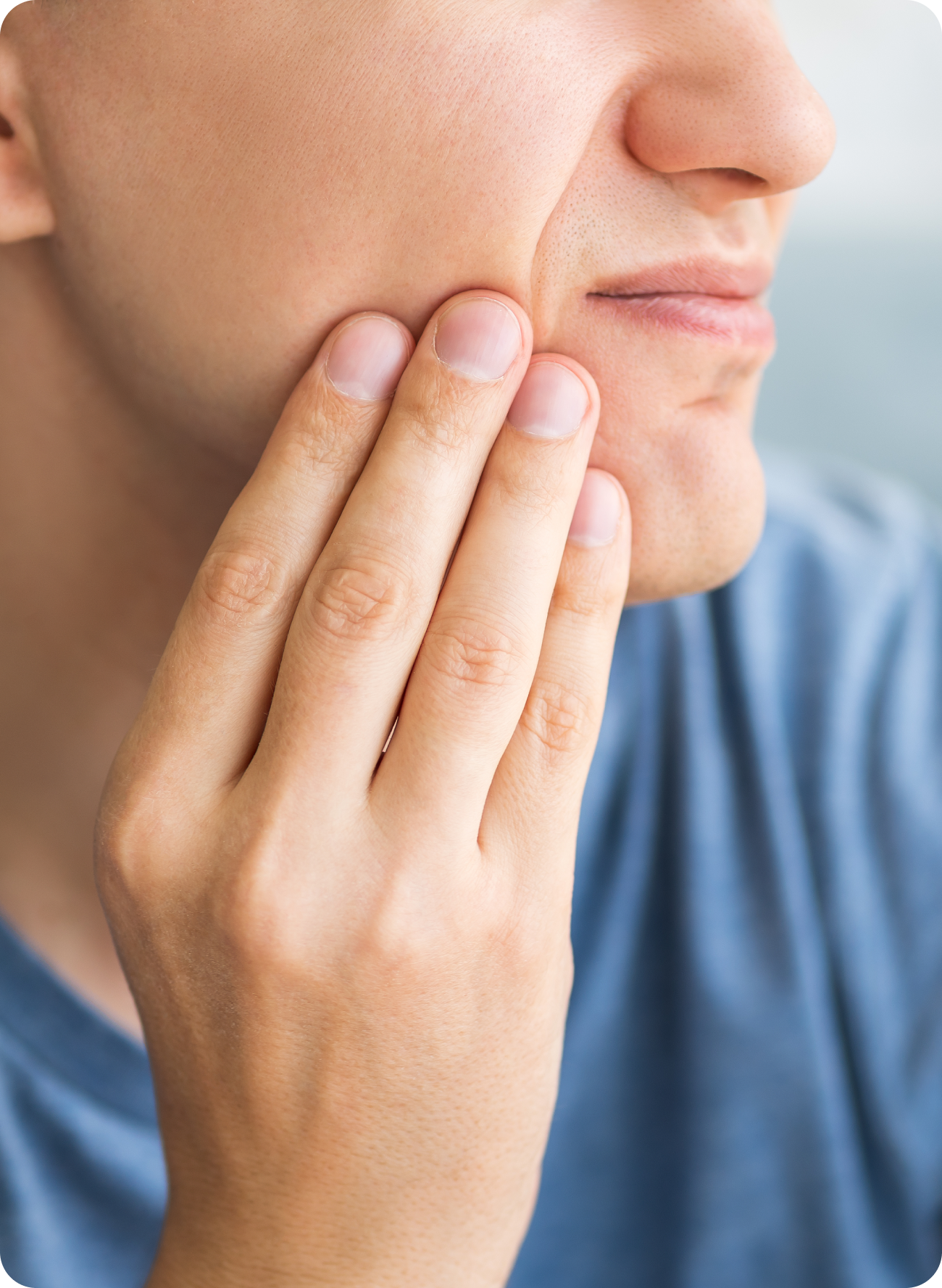
Sensitivity after whitening is normal and almost always temporary. Bleaching agents briefly make your enamel more porous, letting heat, cold and air reach the nerve layer underneath. For most people, the soreness fades within 24–48 hours.
What you'll learn in this article:
Soreness typically peaks in the first 24 hours and improves steadily from there
People with thin enamel, receding gums or pre-existing sensitivity tend to feel it more strongly
Simple steps — desensitizing toothpaste, fluoride and avoiding temperature extremes — can shorten recovery
Using desensitizing toothpaste before whitening, not just after, can significantly reduce how strongly you react
Sensitivity that worsens, concentrates in one tooth or lasts beyond a week is worth having evaluated
If your soreness feels severe or isn't improving, visit an Aspen Dental office near you for an evaluation.
What causes sensitivity after whitening?
How whitening agents contribute to sensitivity
Whitening products use hydrogen peroxide or carbamide peroxide to lift stains. This exposure opens up microscopic channels in the softer layer beneath your enamel, called dentin. These channels lead directly to the tooth's nerve. When hot, cold or sweet triggers travel down these pathways, they irritate the nerve and cause that sharp, temporary zing. Fortunately, your enamel naturally recovers and strengthens, and the sensitivity fades.
Why some people feel it more than others
Sensitivity levels vary widely from person to person. These factors increase the likelihood of a stronger reaction:
Pre-existing sensitivity: teeth that were already reactive before whitening tend to be more affected afterward
Thin or worn enamel: less protective enamel means easier access to the dentin layer
Receding gums: exposed tooth roots have no enamel at all, making them especially reactive to bleaching agents
Untreated cavities or small cracks: whitening on a compromised tooth can intensify the reaction significantly
Product concentration or duration: higher-strength products or leaving them on longer than directed increases exposure and sensitivity risk
How long does sensitivity last after whitening?
For most people, sensitivity peaks within the first 24–48 hours and gradually fades. By day three, little to no discomfort remains.
Sensitivity is more common after in-office whitening — occurring in up to 50% of cases according to some research¹ — but it typically resolves within a few days. At-home whitening strips tend to cause milder, shorter-lived sensitivity.
What matters most is whether symptoms are improving. Gradually decreasing sensitivity is expected. Sensitivity that worsens over time, especially if it's isolated to one tooth, should be evaluated by your dental provider.
How to ease the soreness
You do not have to simply wait it out. These steps can provide meaningful relief:
Pre-treat before your next whitening session
If you plan to whiten again, start using a desensitizing toothpaste one to two weeks beforehand. This builds nerve protection before your enamel is exposed to bleaching agents and can significantly reduce how strongly you react.
Use desensitizing toothpaste
Products containing potassium nitrate or stannous fluoride help calm the nerve signal inside the tooth. Apply a small amount directly to your teeth and leave it on for a few minutes before rinsing.
Take an over-the-counter anti-inflammatory if needed
Ibuprofen can help reduce nerve-related soreness. Follow the dosage instructions on the label.
Avoid temperature extremes
Give your teeth a rest from hot coffee, cold drinks and ice cream for at least 24–48 hours. Room-temperature water is the safest option during this window.
Skip acidic foods and beverages
Acidic foods and drinks — citrus juice, soda and anything with vinegar — can irritate already-sensitive enamel. Avoid them for at least a day after whitening.
Brush gently
Use a soft-bristled toothbrush with light pressure. Scrubbing already-sensitive teeth adds irritation without any benefit.
Try a fluoride rinse
Fluoride supports enamel remineralization and can speed recovery. Use it daily for a few days after whitening. These steps resolve soreness for most people. But if your symptoms aren't following that pattern, it's worth getting checked.
When to see your dental provider
Most post-whitening soreness resolves without any intervention. But some symptoms deserve a closer look.
Contact your dental provider if:
Soreness typically peaks within 24–48 hours and improves steadily from there
You feel a sharp or shooting sensation when biting down
Sensitivity has lasted more than a week with no improvement
You notice aching that comes and goes on its own — not triggered by temperature or pressure
These signs can point to a pre-existing issue — a cavity, a small crack or significant gum recession — that was exposed or aggravated by the whitening treatment. Getting it evaluated early is far easier than addressing it after it progresses.
Whether you need relief now or want to whiten safely going forward, your dental provider can help. Schedule an appointment at your nearest Aspen Dental to have your teeth evaluated and get a personalized plan.
Why are my teeth sensitive after whitening? FAQs
Can I keep whitening while my teeth are still sensitive?
It is best to wait until sensitivity has fully resolved before whitening again. Applying whitening agents to already-sensitive teeth can amplify the reaction and extend recovery time. Most providers recommend waiting at least a few days — longer if the initial discomfort was more than mild.
Should I use desensitizing toothpaste before whitening or only after?
Both. Using a desensitizing toothpaste for one to two weeks before whitening helps build up nerve protection before your enamel is exposed to bleaching agents. Continuing to use it after whitening supports recovery. Pre-treatment is especially important if you already have sensitive teeth or thin enamel.
Is it normal to feel sensitivity in my gums after whitening?
Yes. Mild gum tenderness after whitening is common, particularly if the whitening gel made direct contact with gum tissue or the tray did not fit precisely. It usually fades within a day or two. If gum soreness is significant, worsening or accompanied by swelling, have it evaluated.
Can I use whitening products if I already have sensitive teeth?
Yes, but with care. Using desensitizing toothpaste for a week before whitening, choosing a lower-concentration product and limiting session time can all help reduce the reaction. Your dental provider can recommend options suited for patients with existing sensitivity.
Will whitening cause permanent sensitivity if I do it too often?
When done correctly and not too frequently, whitening does not cause lasting sensitivity. Overuse — whitening too often or leaving products on longer than directed — is what creates cumulative enamel stress. Your dental provider can help you find a schedule that keeps your results strong and your teeth healthy.
Sources
1National Library of Medicine — Tooth sensitivity after dental bleaching: https://pmc.ncbi.nlm.nih.gov/articles/PMC9090214/