Last updated 06.23.2026
Why is my gum receding on one tooth but not the others?
Learn the most common causes of gum recession around a single tooth, what symptoms matter and when treatment may help.
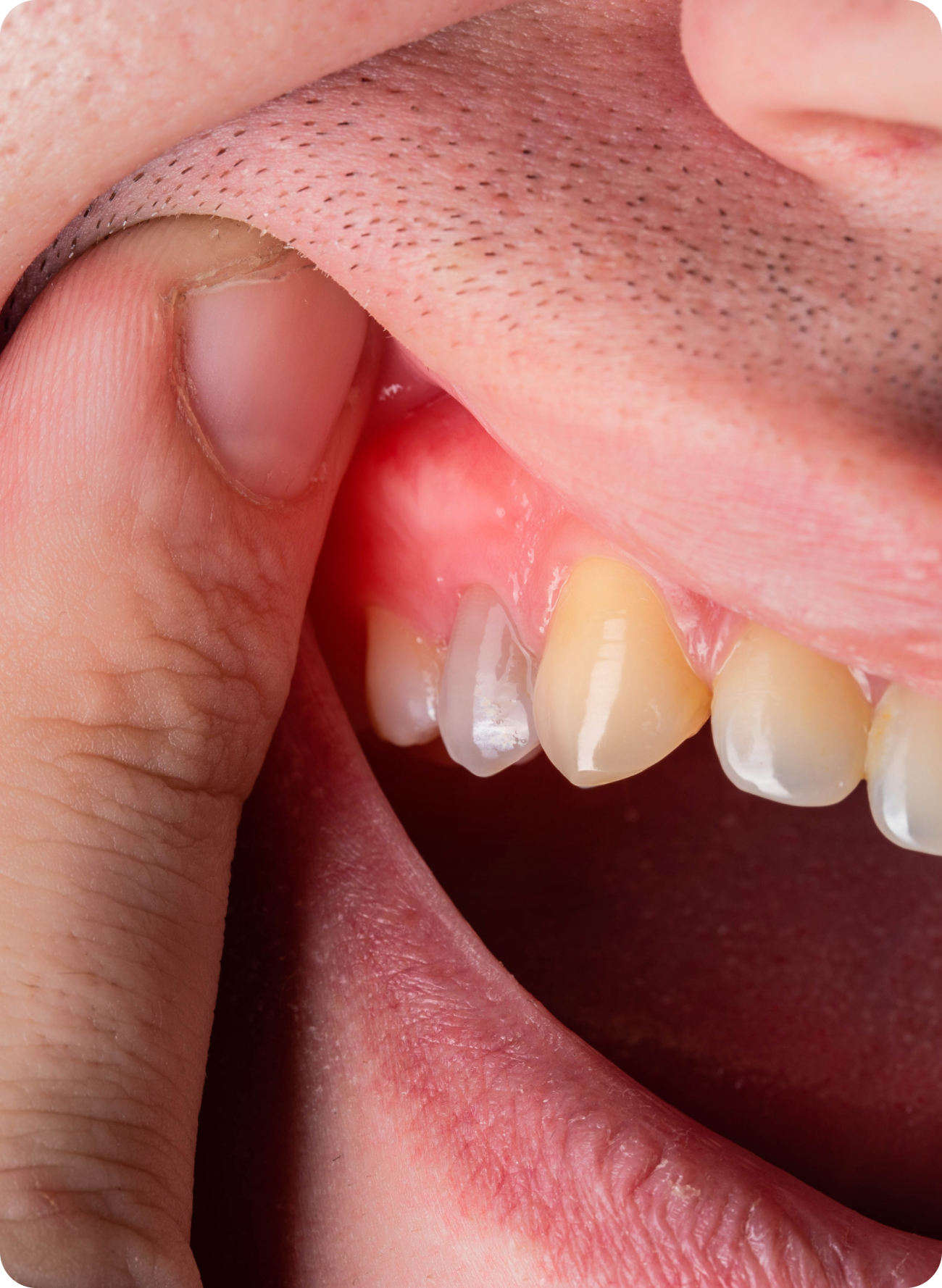
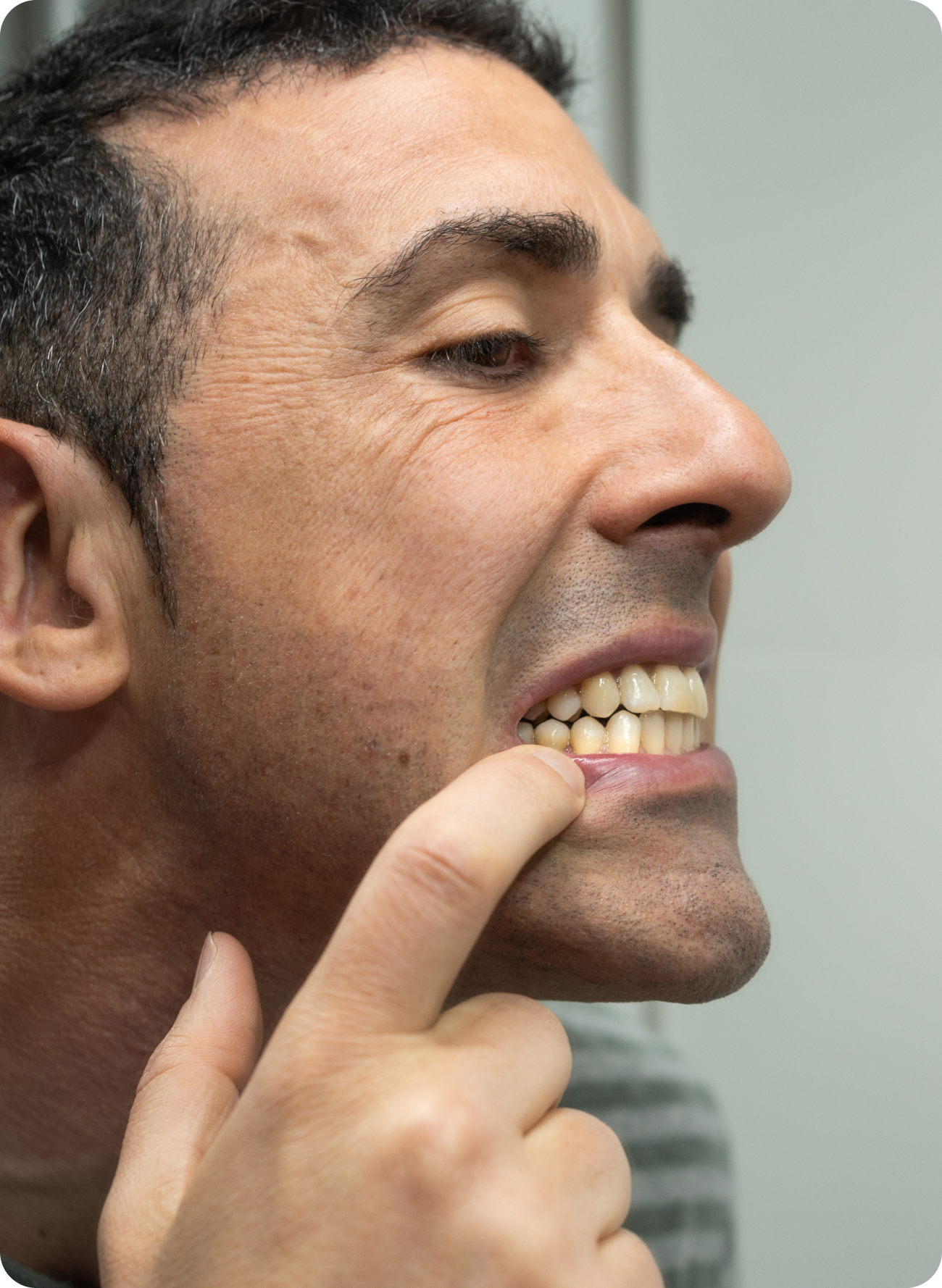
Gum recession affecting a single tooth usually has a specific local cause rather than a problem affecting all your gums. In many cases, it points to something happening at that exact spot, such as brushing too aggressively, the position of the tooth, a localized infection, or irritation from a crown or filling. Localized recession is often easier to treat than widespread gum disease, but it should not be ignored. Because gum tissue does not grow back on its own, early treatment can help prevent further recession and protect the tooth.
What you'll learn in this article:
Recession around one tooth usually has a specific local cause, not widespread gum disease
Brushing too aggressively in one area is a common cause of localized gum recession
Teeth that are out of alignment can be more vulnerable to recession
A nearby muscle attachment can pull gum tissue away from a single tooth over time
Receded gums do not grow back on their own, but treatment can help stop progression and restore coverage in some cases
Symptoms like throbbing, a bad taste, or a loose-feeling tooth may require prompt evaluation
If you've noticed recession around one tooth, set up an appointment with your local Aspen Dental provider for an evaluation.
What it means when only one gum recedes
Why localized recession is different from general gum disease
General gum disease — called periodontitis — tends to affect multiple teeth at once. When recession shows up on just one tooth, it usually means something specific is happening in that area rather than affecting your gums more broadly.
That said, it still needs to be evaluated. Even localized recession exposes the root of the tooth, which has no protective enamel. That makes the root more vulnerable to sensitivity, decay, and further damage over time. According to the Cleveland Clinic, gum recession can't be reversed on its own — but with the right treatment, it can be stopped and the area can be restored.¹
In more advanced cases, untreated recession can contribute to tooth loss as the supporting bone and tissue continue to break down — which is why early evaluation matters.
What are the most common reasons one gum pulls back?
Brushing too hard in one spot
This is one of the most frequent causes of single-tooth recession. Studies on gingival recession etiology confirm that improper brushing technique is among the most common mechanical causes of localized recession.2
If you consistently start brushing on the same side or apply extra pressure to certain teeth, the gum tissue in that area can gradually wear away. Because the process is slow and painless, many people don't notice it until the recession becomes visible. Many people brush more aggressively on their dominant side without realizing it, which is why brushing-related recession commonly affects just one or two teeth.
Using a soft-bristled toothbrush and gentle circular motions instead of scrubbing back and forth can help prevent further recession.
A localized infection or gum pocket
Sometimes bacteria build up in a small pocket between one tooth and the gum. This can happen even if the rest of your gums look healthy. The infection causes the gum tissue to pull away from that tooth, creating a deeper pocket where more bacteria collect.
Signs of a localized infection include soreness or tenderness around one tooth, a bad taste that doesn't go away, swelling or redness in one spot, or a small bump on the gum near the tooth.
Why a tooth that's out of position is more vulnerable
If one tooth sits slightly forward, backward, or sideways compared to the others, the gum tissue covering it is thinner and more exposed. Over time — especially with brushing pressure or bite forces — that thin tissue pulls back more easily than the gum around a well-aligned tooth.
This is common in people who had crowding or who never had orthodontic treatment. It can also happen after a tooth shifts position as an adult.
What is a frenum and how can it pull the gum down?
Inside your mouth, small bands of muscle tissue called frenums connect your lips and cheeks to your gums. If one of these attachments sits too close to a tooth, it can physically tug the gum away from that tooth every time you move your mouth.
This is especially common near the lower front teeth or the upper front teeth. Your dental provider can identify this during an exam and discuss whether a minor procedure to reposition the attachment would help.
A crown, filling or appliance that doesn't fit right
A crown or filling that sits slightly too high — or a partial denture that puts pressure on one area — can repeatedly irritate the gum tissue around a specific tooth. Over time, that irritation causes the gum to recede in that spot.
If your recession started after dental work, that's worth mentioning to your dental provider.
Can grinding or clenching cause recession on just one tooth?
People who grind or clench their teeth often do so unevenly — putting more force on certain teeth than others. That concentrated pressure can cause the gum around those specific teeth to recede faster than the rest.
If you wake up with jaw soreness or your teeth feel worn down, grinding may be a contributing factor. When certain teeth absorb more force than others over time, the bone supporting those teeth can gradually erode — and as the bone level drops, the gum tissue follows.
Can an injury or physical trauma cause recession on one tooth?
A direct impact to the mouth — from a sports injury, a fall, or even repeated habits like nail-biting or chewing on a pen — can damage the gum tissue around a specific tooth. Unlike the gradual causes above, trauma-related recession can appear more quickly after the incident. If you've noticed recession that started after an injury or a change in habits, mention it to your dental provider during your evaluation.
Signs that need attention sooner rather than later
Most localized recession develops slowly and isn't an emergency. But certain symptoms mean you should be seen soon:
Throbbing or aching around one tooth that doesn't go away
A bad taste or smell coming from one area of your mouth
Swelling, redness, or a bump on the gum near the affected tooth
The tooth feels loose or different when you bite down
Sensitivity that is getting worse rather than staying the same
These can be signs of an active infection or abscess, which needs prompt treatment to prevent the problem from spreading.
What your dental provider can do
Once your dental provider has identified what's driving the recession, treatment is tailored to the cause and how far it has progressed.
For early or mild recession, your provider may recommend:
A deep cleaning (scaling and root planing) to remove bacteria from below the gum line
Adjusting a crown or filling that's irritating the area
Guidance on brushing technique and the right toothbrush
For more significant recession, options may include:
Gum grafting — a small amount of tissue is taken from the roof of your mouth and placed over the exposed root to restore coverage and reduce sensitivity
The pinhole surgical technique — a minimally invasive approach where the existing gum tissue is gently repositioned over the root without a graft
Both procedures are effective at stopping recession and restoring coverage. Your dental provider will recommend the right approach based on the cause and severity of your specific situation.
How to keep it from getting worse
Even though gum tissue won't regenerate on its own, you can stop it from progressing further:
Switch to a soft-bristled toothbrush and use gentle pressure
Brush for 2 minutes twice a day using small circular motions — not back-and-forth scrubbing
Floss daily to remove bacteria from between teeth and along the gum line
If you grind your teeth, ask your dental provider about a night guard to reduce bite pressure
Keep up with regular cleanings so the area can be monitored over time
When to see your dental provider
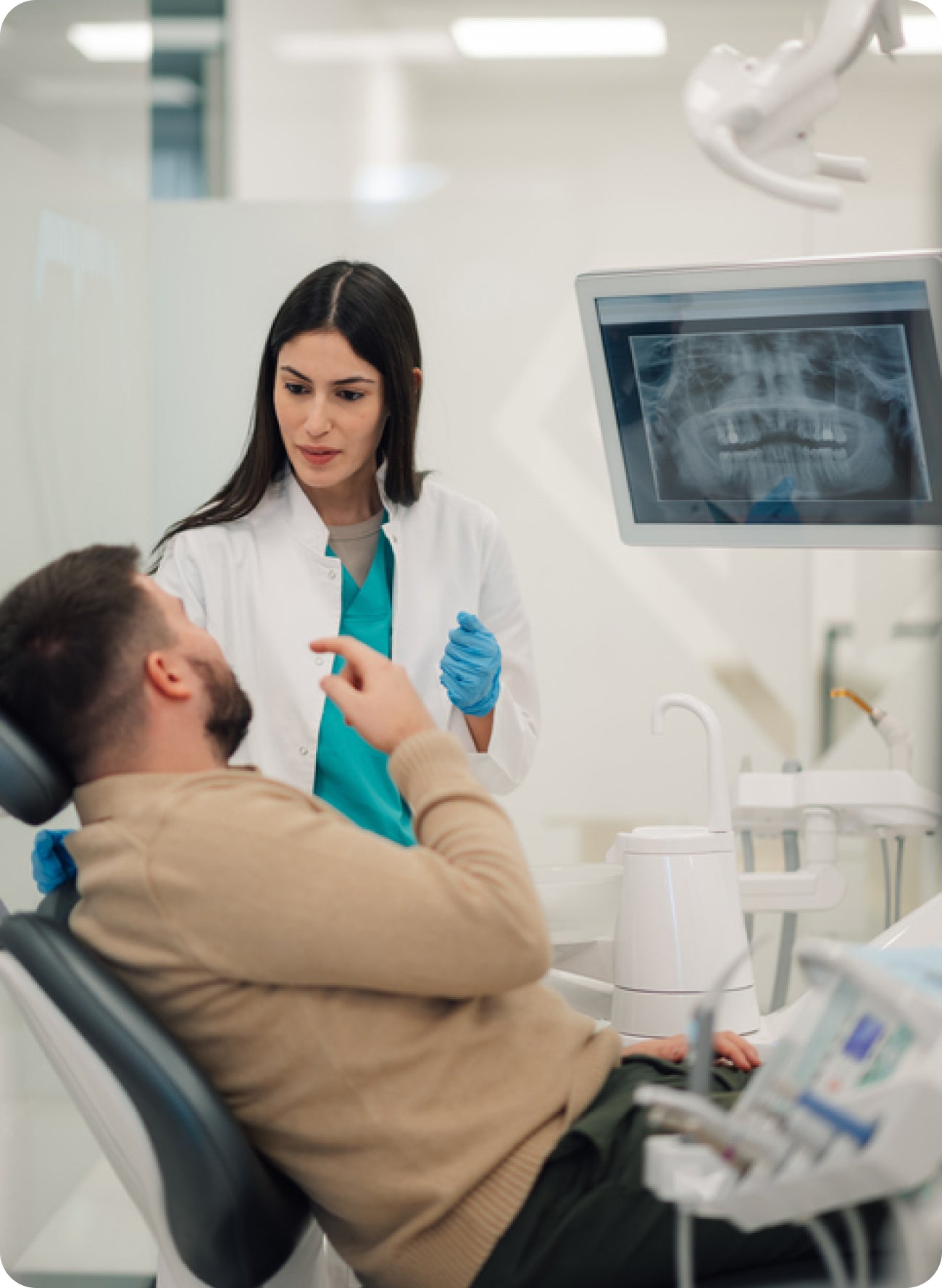
If you've noticed that one gum sits lower than the others or a tooth appears longer than it used to, schedule an evaluation with your dental provider. Early treatment can help prevent further recession and preserve more treatment options.
As recession progresses, the exposed root becomes more vulnerable to sensitivity and decay, and treatment may become more involved. A comprehensive exam can determine what's causing the recession and the most appropriate next steps.
Why is my gum receding on one tooth but not the others FAQs
Can a receding gum on one tooth grow back on its own?
No. Gum tissue does not regenerate once it has pulled away from the tooth. However, treatment can stop the recession from progressing and restore coverage through procedures like gum grafting. The earlier it's addressed, the better the outcome.
Is it normal for just one gum to recede?
It's not uncommon. Localized recession — affecting only one or two teeth — is often caused by a specific mechanical or structural factor at that spot, such as brushing technique, tooth position, or a localized infection. It doesn't automatically mean you have widespread gum disease, but it does need to be evaluated.
How quickly does gum recession progress?
Recession typically develops slowly over months or years. However, an active infection can accelerate the process. If you notice the gum pulling back quickly — or if you have soreness, swelling, or a bad taste — see your dental provider sooner rather than later.
Will a gum graft fix the problem permanently?
A gum graft can restore coverage over the exposed root and significantly reduce sensitivity. However, if the underlying cause — such as aggressive brushing or a misaligned tooth — isn't also addressed, recession can return. Your dental provider will help identify and correct the root cause as part of your treatment plan.
Can toothpaste for sensitive teeth help with gum recession?
Toothpaste formulated for sensitive teeth can reduce the discomfort caused by an exposed root, but it won't stop or reverse recession. It's a comfort measure, not a treatment. For the recession itself, a professional evaluation is needed to determine the right course of action.
Sources
¹Cleveland Clinic. Gum Recession: Causes, Prevention, Surgery & Treatment. https://my.clevelandclinic.org/health/diseases/22753-gum-recession
²National Institutes of Health, National Library of Medicine. Gingival Recession — Etiology, Classification and Management. https://pmc.ncbi.nlm.nih.gov/articles/PMC4944726/