Last updated 07.10.2026
Why does my cavity smell, and how do I stop it from getting worse?
Learn why cavities can produce a foul odor, what the smell may reveal about the severity of decay and when treatment is needed.

A smelly cavity is a sign that bacteria are actively breaking down your tooth. Cavities create a small opening in your enamel where bacteria, saliva and food debris collect. Those bacteria produce gases that cause a persistent, foul odor. The larger the cavity and the more bacteria inside it, the stronger the smell. Higher intensity usually indicates deeper decay.
What you'll learn in this article:
A smelly cavity means bacteria are actively breaking down your tooth — the odor is a warning signal, not a reflection of how well you brush
The smell typically gets worse as decay moves through the inner layers of the tooth toward the nerve
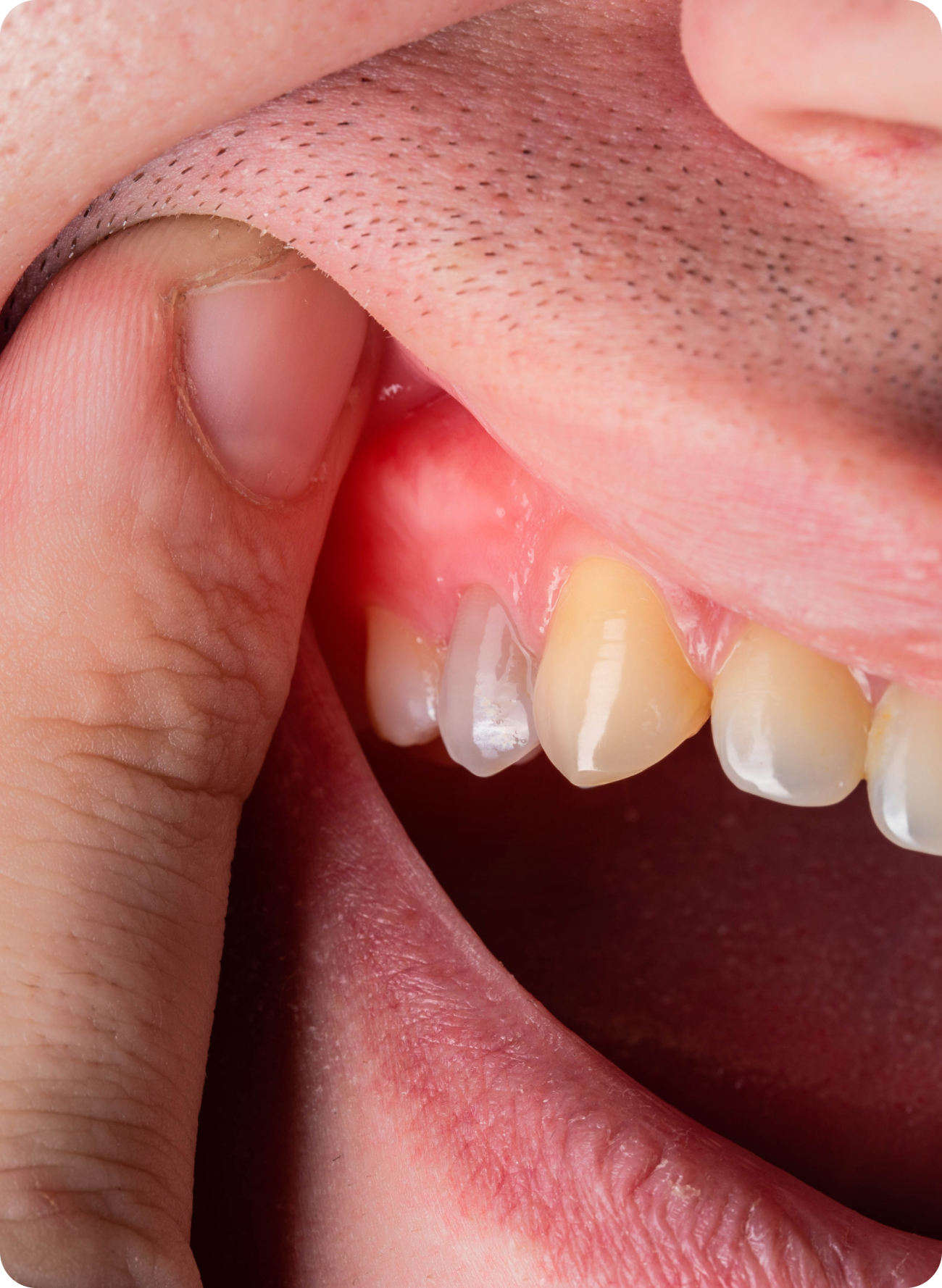
A foul smell combined with swelling, throbbing or a bitter taste may indicate an abscess (a bacterial infection that won't resolve on its own)
Brushing and mouthwash reduce the odor temporarily but do not stop decay from spreading
Filling a cavity removes the source of the smell, and in most cases, eliminates it completely
A smelly cavity will not improve on its own. Schedule an appointment with your nearest Aspen Dental provider to have the tooth evaluated.
What's actually causing the smell
Cavities don't smell on their own; the odor comes from bacteria living inside them. When decay creates a pocket in your tooth, anaerobic bacteria (the type that thrive in dark, oxygen-poor spaces) move in and feed on trapped food and sugars. As they break down that material, they release sulfur-based gases, and those gases are what you're smelling.
Why does a cavity smell so bad?
The main odor-creating culprits are volatile sulfur compounds — the same gases responsible for the smell of rotten eggs, sulfur or decay.1 Bacteria also produce compounds called cadaverine and putrescine, which create a sour, foul or slightly metallic odor. The deeper the decay goes, the more space for bacteria to accumulate, and the stronger the smell becomes.
Do cavities smell like poop?
Some people describe the odor as having a foul, almost fecal quality. This happens because certain bacteria inside decayed tooth tissue produce compounds similar to those found in decomposing organic matter. If that description sounds accurate, it may mean the decay has advanced significantly or that an early infection has started.
What the smell tells you about how far the decay has gone
The strength and persistence of the odor often reflects how deep the damage has progressed. Decay moves through the tooth in stages as grouped below:
Early decay affects only the outer enamel. Odor is typically absent or very faint.
Moderate decay reaches the dentin — the softer inner layer beneath the enamel. Bacteria multiply more easily here, and a noticeable smell often appears.
Deep decay approaches or reaches the pulp — the soft tissue and nerve at the center of the tooth. At this point the smell is usually strong and persistent, often paired with throbbing, sensitivity to heat or cold, or soreness when biting.
The smell isn't just unpleasant. It's informative. A faint, occasional odor is less concerning than one that is strong and constant. The stronger the smell, the further the decay has likely progressed.
When does the smell signal something more serious?
A foul odor combined with any of the following may mean the tooth has developed an abscess — a bacterial infection at the root that requires prompt care and will not go away on its own:2
Swelling in the gum near the tooth
Persistent throbbing or aching
A bitter or pus-like taste in your mouth
Increased sensitivity when biting down
Swollen or tender lymph nodes under your jaw
If you're experiencing any of these alongside the smell, contact your dental provider promptly. Do not wait for a routine appointment.
What actually helps — and what doesn't
Since the odor comes from bacteria living inside the tooth, brushing and mouthwash can't reach them. These things can mask the smell temporarily but don't stop the decay.
The only thing that removes those bacteria is professional treatment. A dentist cleans out the decayed material, eliminates the bacterial source, and seals the tooth — stopping both the odor and the damage at the same time.
What actually helps:
Getting a filling: Your provider removes the decayed tissue, clears out the bacteria and seals the tooth. This is the only way to eliminate the smell at its source.
Brushing and flossing consistently: Good oral hygiene slows bacterial activity throughout your mouth, even if it cannot reverse an existing cavity.
Cutting back on sugar: Sugar feeds cavity-causing bacteria and accelerates breakdown. Reducing it slows — though doesn't stop — progression.
Staying hydrated: Water supports saliva production, which naturally rinses bacteria and food particles from tooth surfaces.
What won't help:
Mouthwash alone — it masks odor without treating its source
Waiting to see if the smell improves — cavities do not heal on their own once enamel has broken down
OTC desensitizing toothpastes — these address sensitivity, not decay
When to see your dental provider
An odor coming from one specific tooth is a clear, actionable signal. Most smelly cavities are still treatable with a straightforward filling. But the longer treatment is delayed, the deeper the decay progresses. Schedule an appointment with your dental provider. They will take X-rays to assess how far the decay has gone and recommend the right treatment for your specific situation. Remember: The smell will not go away on its own, and waiting gives the decay more time to spread.
Why does my cavity smell, and how do I stop it from getting worse? FAQs
Can other people smell my cavity?
In many cases, yes. The bacterial gases produced inside a cavity contribute to bad breath that others can detect, especially when you're speaking or in close contact. Treating the cavity resolves the odor.
Will the smell come back after a filling?
Not from that cavity. A filling removes the decayed tissue and seals the tooth, eliminating the environment where bacteria were living. If odor returns to the same tooth after treatment, let your provider know. It may indicate incomplete decay removal or a new area of breakdown.
Can a cavity cause a metallic or sour taste?
Yes. The same bacterial activity that produces odor can also create a metallic, bitter or sour taste, particularly if the decay has reached the inner dentin layer or if an early infection has started. A persistent unusual taste from one area of the mouth is worth having evaluated, even if the tooth feels completely normal.
Does a smelly cavity mean the tooth needs to be pulled?
Rarely. Most cavities — even deep ones — can be treated with a filling or root canal. Extraction becomes necessary only when the tooth is too structurally compromised to restore. The sooner treatment begins, the more options remain available. Delaying increases the likelihood that a more involved procedure will be needed.
Sources
1National Institutes of Health, National Library of Medicine. Halitosis: From diagnosis to management. https://pmc.ncbi.nlm.nih.gov/articles/PMC3633265/
2Tooth abscess: Symptoms and causes. https://www.mayoclinic.org/diseases-conditions/tooth-abscess/symptoms-causes/syc-20350901