Last updated 06.17.2026
Why do my teeth feel rough even after brushing?
Learn the most common causes of rough teeth after brushing, including tartar buildup, enamel wear, dry mouth and teeth grinding.

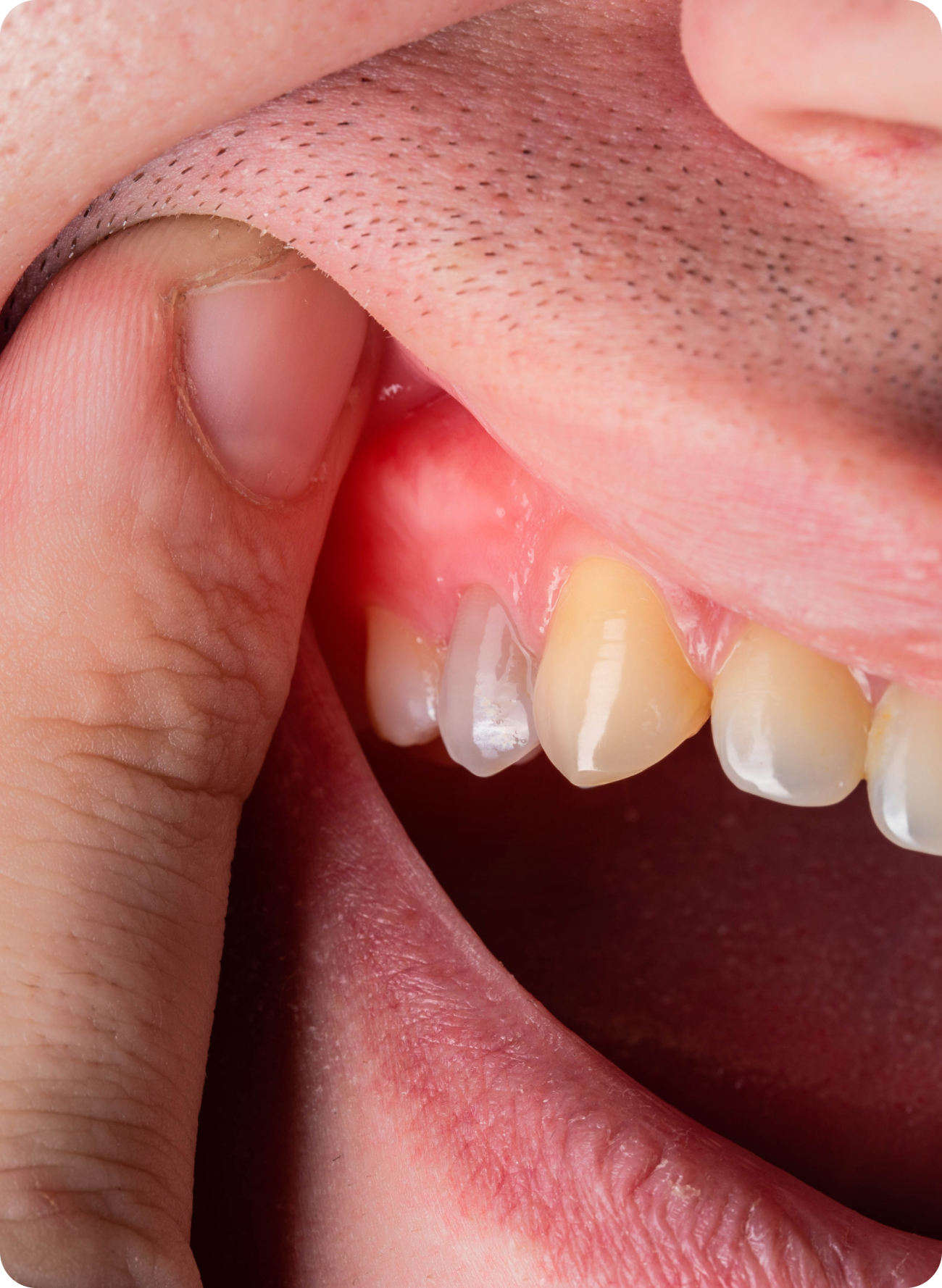
Teeth that feel rough after brushing are often covered with tartar — a hardened buildup that cannot be removed with a toothbrush — or they may have areas of worn enamel that no longer feel smooth. While brushing removes soft plaque, tartar requires a professional cleaning. If your teeth still feel gritty, bumpy, or uneven after brushing, there may be an underlying cause worth addressing.
What you'll learn in this article:
Tartar is hardened plaque that brushing cannot remove, which is why roughness often remains after you brush
Enamel erosion from acidic foods, drinks or acid reflux can make teeth feel rough and uneven over time
The backs of the lower front teeth are a common spot for tartar buildup and often feel rough first
Teeth grinding can wear down enamel and create rough or jagged edges
Dry mouth reduces the saliva that helps protect teeth, increasing the risk of tartar buildup and enamel wear
Rough teeth combined with sensitivity to cold or sweet foods may be a sign that professional care is needed
If the roughness is new, keeps coming back, or is accompanied by sensitivity, your Aspen Dental provider can help determine whether the cause is tartar buildup, enamel wear, or something else affecting the surface of your teeth.
What your tongue is actually detecting
Your tongue is extremely sensitive, which is why even small changes in your teeth can feel noticeable. Healthy teeth have a smooth outer layer called enamel — the hardest substance in your body.
When that surface changes, whether from tartar buildup or enamel wear, your tongue often notices it right away. A rough, gritty, or uneven feeling is usually a sign that something has changed on the surface of your teeth.
What are the most common reasons why teeth feel rough?
Tartar buildup — the one thing brushing can't remove
Plaque is a soft, sticky film of bacteria that forms on your teeth throughout the day. Brushing and flossing remove it effectively — but only if you get to it in time.
When plaque is left on the tooth surface for 24–72 hours, it absorbs minerals from your saliva and hardens into tartar (also called calculus). Once that happens, it bonds to the tooth surface like cement. No amount of brushing will remove it.³
Tartar has a rough, porous texture. When you run your tongue across it, it feels bumpy or gritty — especially along the gumline and behind the lower front teeth, where it tends to form first.
This is the most common reason teeth feel rough even after a thorough brushing. The brushing is working — it's just not able to address what's already hardened.
Enamel erosion from acid
Acid slowly wears away the protective outer layer of the tooth. Over time, this creates an uneven, roughened surface — sometimes with small pits or a chalky appearance.
The most common acid sources include:
Citrus fruits and juices
Soda and sparkling water
Sports and energy drinks
Vinegar-based foods
Acid reflux or GERD, which brings stomach acid into the mouth during sleep or after meals²
Unlike tartar, enamel erosion is not a buildup on top of the tooth — it's a loss of the tooth itself. Enamel does not grow back. Early erosion can be slowed and managed, but the damage that has already occurred is permanent¹. That's why catching it early matters.
Why the back of your teeth often feels rougher
Many people notice roughness specifically on the back (inner) surface of their lower front teeth. There's a reason for this.
Saliva glands sit directly beneath the lower front teeth. The minerals in saliva — while protective — also feed tartar formation. Because this area is constantly bathed in mineral-rich saliva, tartar accumulates there faster than almost anywhere else in the mouth.
If the roughness you're feeling is concentrated behind your lower front teeth, tartar buildup is the most likely explanation. A professional cleaning will address it directly.
Teeth grinding while you sleep
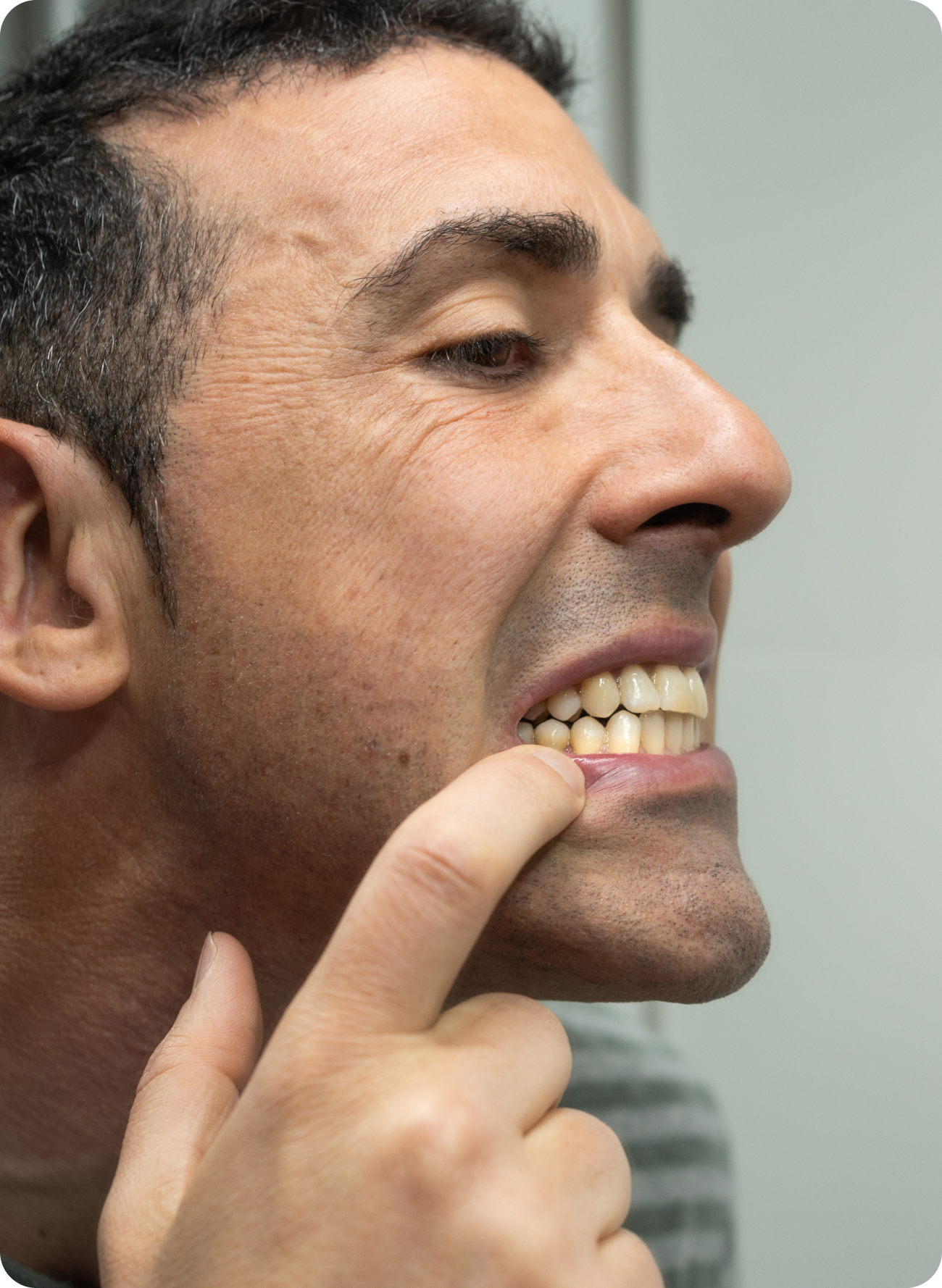
Bruxism — the clinical term for teeth grinding or clenching — often happens at night without the person realizing it. Over time, the constant friction wears down enamel unevenly, leaving the tooth surface rough, flattened, or slightly jagged along the edges. Signs that grinding may be contributing to your rough teeth include:
Jaw soreness or tightness in the morning
Headaches that start near the temples
Teeth that look shorter or more worn than they used to
A rough or sharp edge along the biting surface
Grinding-related roughness tends to affect the chewing surfaces and edges of teeth rather than the gumline.
A chipped tooth, worn filling or small cavity
Sometimes the roughness you feel is not a buildup on the tooth — it is a change to the tooth itself.
A small chip, crack or cavity creates an uneven edge that your tongue will detect immediately. A filling or crown that has started to wear down, loosen or deteriorate can also leave a rough or sharp spot that was not there before.
The fix: These changes do not resolve on their own. If the roughness appeared suddenly — especially if it feels sharp or is concentrated in one specific spot — it is worth having your dental provider take a look. A small chip can often be smoothed or repaired in a single visit.
Dry mouth
Saliva does more than keep your mouth comfortable. It helps wash away bacteria, neutralize acids, and protect enamel. When saliva levels drop, plaque builds up faster and acids stay on your teeth longer.
Dry mouth can be caused by medications, dehydration, mouth breathing, or certain health conditions. Over time, it can contribute to tartar buildup, enamel wear, and a rougher tooth surface.
If your mouth often feels dry — especially when you wake up — it may be contributing to the texture changes you're noticing.
Could it be the way you're brushing?
Sometimes rough teeth are not caused by a dental problem at all. Brushing too quickly or missing areas near the gumline and the backs of your teeth can leave plaque behind, making teeth feel rough even after brushing.
On the other hand, brushing too hard or using an abrasive whitening toothpaste can gradually wear down enamel and roughen the tooth surface.
The fix is simple: brush for two full minutes, twice a day, using a soft-bristled toothbrush and gentle circular motions. Pay extra attention to the gumline, where plaque tends to collect. Replacing your toothbrush every three to four months also helps it clean more effectively.
Once you have a sense of what might be causing the roughness, the next question is whether it needs attention now — or whether it can wait until your next routine visit.
When rough teeth are a warning sign
Rough teeth on their own are not always urgent. But certain combinations of symptoms suggest the underlying cause needs attention sooner rather than later. Consider scheduling an appointment if you notice:
Sensitivity to cold, sweet, or hot foods — this often means enamel has thinned enough to expose the layer beneath it (dentin), which contains tiny nerve channels
Visible white spots or chalky patches — an early sign of enamel demineralization
A sharp or jagged edge on a tooth — may indicate a small chip or crack
Roughness that appeared suddenly rather than gradually
Gum tenderness or bleeding alongside the rough texture — may point to tartar buildup below the gumline
If the roughness is mild and you have no other symptoms, it's still worth raising at your next routine visit. Catching enamel erosion or tartar buildup early gives your provider more options to protect the tooth.
When to see your dental provider
Rough teeth after brushing are rarely an emergency — but they are a signal that something in your mouth has changed. Left unaddressed, tartar buildup progresses to gum disease, and enamel erosion advances to sensitivity, cavities, and structural damage.
A professional cleaning removes tartar that brushing cannot touch. If enamel erosion is the cause, your dental provider can assess how far it has progressed and recommend options to protect what remains — including fluoride treatments, dietary guidance, or a custom nightguard if grinding is involved.
Why do my teeth feel rough even after brushing? FAQs
Is it normal for teeth to feel rough right after a professional cleaning?
Yes — and it often surprises people. When tartar is removed during a cleaning, the tooth surface underneath may feel slightly different than what you were used to. Your tongue has adapted to the texture of the tartar, so the clean enamel beneath it can feel unfamiliar at first. This sensation typically resolves within a few days as your tongue adjusts.
Can rough teeth cause cavities?
Rough or porous surfaces — particularly tartar — give bacteria more places to hide and accumulate. This increases the risk of cavities over time. Enamel erosion also weakens the tooth's natural defense against decay. So, while rough teeth don't directly cause cavities, the underlying conditions that create roughness often raise cavity risk.
Will fluoride toothpaste help with rough teeth?
Fluoride toothpaste supports enamel strength and can slow early erosion, but it cannot remove tartar or reverse enamel that has already worn away. It's a useful part of a daily routine, but it works best as a preventive tool — not a fix for existing roughness. If tartar is the cause, only a professional cleaning will resolve it.
Can rough teeth smooth out on their own?
Tartar does not go away on its own — it only accumulates further. Enamel erosion is also irreversible once it has occurred. Some very mild surface roughness from temporary plaque buildup may improve with thorough brushing and flossing, but persistent roughness that doesn't resolve after a few days of good oral hygiene warrants a professional evaluation.
Why do my teeth feel rough in the morning but smoother later in the day?
Teeth that feel rough when you wake up but smoother later are often linked to dry mouth during sleep. When saliva flow drops or you sleep with your mouth open, bacteria and plaque can build up more easily overnight. As saliva production increases during the day, that rough or sticky feeling often improves.
If this happens regularly, it may be a sign of nighttime dry mouth or mouth breathing and is worth mentioning to your dental provider.
Sources
¹Cleveland Clinic — Tooth Erosion: Stages, Causes & Treatment: https://my.clevelandclinic.org/health/diseases/tooth-erosion
²American Dental Association. “Dietary Acids and Your Teeth.” MouthHealthy. https://www.mouthhealthy.org/all-topics-a-z/dietary-acids-and-your-teeth
³Cleveland Clinic. “Tartar (Dental Calculus): Symptoms, Causes & Removal. https://my.clevelandclinic.org/health/diseases/25102-tartar