Last updated 06.09.2026
Why do my gums hurt when I eat?
Learn what causes gum soreness while eating and when symptoms may signal gum disease or infection.

Gum soreness while eating is most often caused by trapped food particles, gingivitis, receding gums, or canker sores — all of which make gum tissue more sensitive when food comes into contact with it. In many cases, the soreness is temporary and improves with better oral hygiene or minor treatment. But soreness that persists, worsens, or occurs alongside bleeding, swelling or loose teeth may signal a condition that needs professional care.
What you'll learn in this article:
The most common causes of gum soreness during meals
The difference between soreness in one area vs. the entire mouth
How to relieve tender gums at home
Signs that may point to gum disease or infection
When to schedule an appointment with your dentist
Visit an Aspen Dental office near you to find out what's causing your gum soreness and get a personalized treatment plan. Your Aspen Dental provider will explain what's causing the soreness and walk you through your options.
Common reasons your gums hurt when you eat
Trapped food particles
One of the most common causes of soreness in one specific area is food trapped between the teeth or along the gumline. Popcorn kernels, seeds, and meat fibers are frequent culprits. The pressure and irritation can create sharp tenderness that worsens while chewing and improves quickly once the debris is removed.
Gingivitis
Gingivitis is inflammation of the gums caused by plaque buildup along the gumline. It is one of the most common reasons gums feel sore or tender during meals. Plaque bacteria irritate the tissue, causing swelling, redness and sensitivity that become more noticeable when chewing hard or crunchy foods.
Signs of gingivitis may include:
Red or swollen gums
Tenderness along the gumline
Persistent bad breath
Gingivitis is the earliest stage of gum disease and can usually be reversed with professional cleanings and improved home care, according to the Mayo Clinic. ¹
Receding gums
When gums pull back from the teeth, they expose the root surface underneath. Unlike enamel, the root has little protection against temperature and pressure, which can make eating uncomfortable.
Gum recession may be caused by:
Gum disease
Aggressive brushing
Natural aging
The exposed area may feel especially sensitive to hot, cold, or crunchy foods.
Canker sores
Canker sores are small ulcers that form on the soft tissue inside the mouth, including the gums. They are not contagious but can become extremely tender when food touches them — especially acidic, spicy, or crunchy foods. Most canker sores heal on their own within 1–2 weeks.
Aggressive brushing or flossing
Brushing too hard or using a medium- or firm-bristled toothbrush can irritate or injure the gums. The tenderness may become more noticeable during meals when food rubs against the inflamed tissue. Switching to a soft-bristled toothbrush and brushing gently with small circular motions can help the gums recover.
Loose fillings or crowns
A loose filling or crown can trap food and bacteria around the tooth and gumline. This often causes soreness that worsens while eating and continues until the restoration is repaired or replaced.
You may also notice:
Sensitivity when chewing
Food repeatedly getting stuck in one area
A rough or uneven feeling around the tooth
Dental infection or abscess
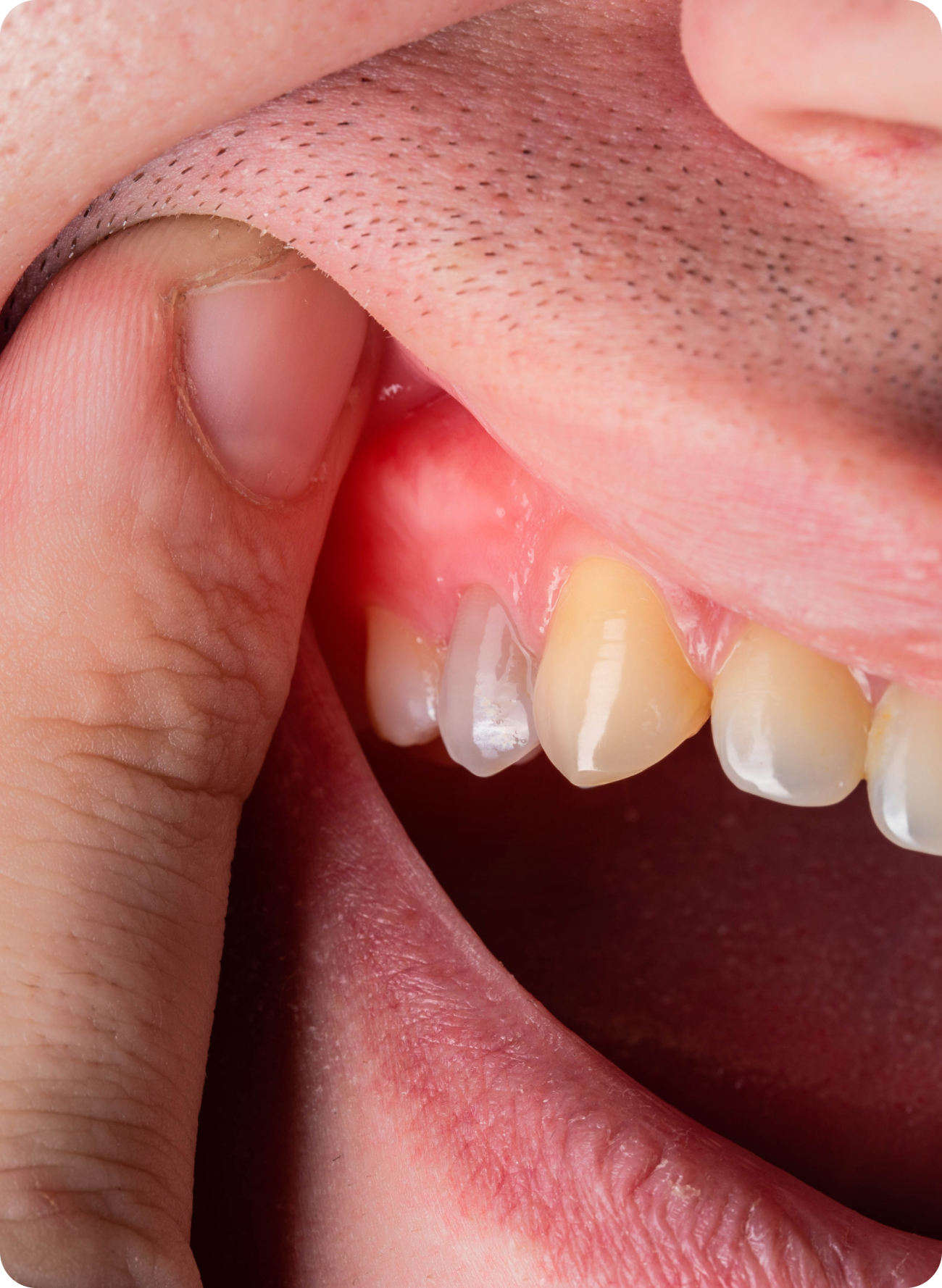
A dental abscess is a pocket of infection that forms at the root of a tooth or in the surrounding gum tissue, and it can cause significant soreness that worsens during meals. Unlike other causes on this list, an abscess does not resolve on its own — it requires prompt professional treatment. Signs of an abscess include throbbing soreness, swelling, a bad taste in the mouth and sensitivity to pressure. If you suspect an abscess, contact your dentist’s office promptly.
Sinus pressure
The roots of the upper back teeth sit close to the maxillary sinuses. When sinus pressure builds from allergies, a cold, or a sinus infection, it can create aching or pressure in the upper gums and teeth that feel worse during chewing.
Sinus-related discomfort usually:
Affects several upper teeth at once
Occurs alongside congestion or facial pressure
Feels dull rather than sharp
One spot vs. widespread soreness
Soreness in one specific area is more often caused by a localized issue such as:
Trapped food
A loose filling or crown
Early gum disease around one tooth
Widespread soreness across multiple areas of the mouth is more commonly linked to:
Gingivitis
Aggressive brushing habits
Hormonal changes
Sinus pressure
The pattern of soreness can help narrow down the cause before your dentist examines the area.
What you can do at home
These steps can reduce tenderness while you determine whether a provider visit is needed:
Floss gently around the sore area to remove any trapped food or debris
Rinse with warm salt water — ½ teaspoon of salt dissolved in 8 oz of warm water — to soothe irritated tissue and reduce swelling
Switch to a soft-bristled toothbrush and use light, circular strokes rather than back-and-forth scrubbing
Avoid trigger foods — spicy, acidic, or very hard foods — until the soreness resolves
Use an antiseptic mouthwash to reduce bacterial buildup along the gumline
These measures can provide temporary relief, but they are not a substitute for professional evaluation if the soreness persists beyond a few days.
When to see your dentist
Some gum soreness resolves on its own within a few days. The following signs indicate that something more serious may be happening and that a professional evaluation should not be delayed. Schedule an appointment with your dental provider if:
The soreness has lasted more than 7–10 days without improvement
Your gums are bleeding regularly when you eat or brush
You notice swelling, pus, or a persistent bad taste in your mouth
The discomfort is severe or getting worse rather than better
A tooth feels loose or a filling or crown feels different than it used to
Gum disease affects nearly half of adults over 30 in the United States, according to the CDC — and most people are unaware they have it until symptoms like soreness during eating appear. 2 Catching it early makes treatment significantly more straightforward and less involved.
Why do my gums hurt? FAQs
Why do my gums hurt in one spot when I eat?
Localized gum soreness during meals is most often caused by a trapped food particle, a canker sore or early gum disease in that specific area. A loose filling or crown can also create localized irritation that worsens when you chew. If the soreness doesn't resolve within a few days, it's worth having it evaluated.
Why are my gums hurting and bleeding?
Gums that are both sore and bleeding are a common sign of gingivitis — the earliest and most treatable stage of gum disease. Plaque buildup along the gumline causes inflammation that makes gum tissue bleed easily when touched by food or a toothbrush. This is reversible with professional cleaning and consistent home care.
Can a sinus infection make my gums hurt?
Yes. The roots of your upper back teeth are located near the maxillary sinuses. When those sinuses become inflamed or infected, the pressure can create a dull aching sensation in the upper gums and teeth that feels worse when chewing. This type of discomfort usually affects several teeth at once rather than a single spot, which helps distinguish it from a dental issue.
Can a cavity make my gums hurt?
A cavity itself doesn't typically cause gum soreness, but an untreated cavity can progress to an infection that spreads to the surrounding gum tissue. If you have gum soreness near a tooth that is also sensitive to temperature or pressure, it's worth having both evaluated at the same time.
Why do my gums hurt when I brush my teeth?
Gum tenderness during brushing is usually a sign of gingivitis, aggressive brushing technique or a toothbrush with bristles that are too firm. Switching to a soft-bristled brush and using gentle pressure can help. If the soreness persists, it may indicate gum disease that needs professional treatment.
How long should gum soreness last?
Minor gum soreness from a trapped food particle or a small canker sore typically resolves within a few days once the irritant is removed. Soreness caused by gum disease or another dental condition often persists until the underlying cause is addressed. If soreness lasts more than 7–10 days, schedule an appointment.
Sources
¹ Mayo Clinic. Gingivitis — Symptoms and causes. https://www.mayoclinic.org/diseases-conditions/gingivitis/symptoms-causes/syc-20354453
2 Centers for Disease Control and Prevention. Periodontal Disease. https://www.cdc.gov/oralhealth/conditions/periodontal-disease.html