Last updated 05.27.2026
Why are my teeth suddenly sensitive to sugar?
Learn what causes sudden sugar sensitivity and when symptoms may signal enamel damage, cavities or gum recession.

Sugar sensitivity usually means the protective enamel on your teeth has worn down or the root surface has become exposed, allowing sugar to reach the sensitive inner layer of the tooth.
When sugar contacts exposed dentin — the layer beneath the enamel — it travels through microscopic channels connected to the tooth’s nerve, triggering sudden sensitivity or discomfort. Common causes include enamel erosion, cavities, gum recession, and cracked teeth. In many cases, the underlying problem develops gradually, even if the sensitivity seems to appear suddenly.
You are not alone in this experience — according to the Journal of the American Dental Association, approximately 1 in 8 dental patients has sensitive teeth.2
What you'll learn in this article:
Why sugar triggers tooth sensitivity
The most common causes of sudden sugar sensitivity
Why teeth may react to sugar but not to hot or cold foods
Whether sugar sensitivity can happen without a cavity
What you can do at home to reduce sensitivity
When to schedule an appointment with your Aspen Dental provider
What causes teeth to become sensitive to sugar?
Sugar sensitivity develops when the protective enamel layer of the tooth becomes worn down or the root surface becomes exposed. Once that protection is lost, the softer dentin underneath is left vulnerable.
Dentin contains thousands of microscopic tubules connected directly to the tooth’s nerve. When sugar reaches exposed dentin, it changes the fluid movement inside those tubules and stimulates the nerve, creating the sudden sensitivity or sharp discomfort many people notice.
Several conditions can expose dentin and trigger sugar sensitivity.
Enamel erosion
Enamel can gradually wear away from repeated acid exposure. Common sources include:
Soda and sports drinks
Citrus fruits and juices
Wine
Vinegar-based foods
Acid reflux
As enamel thins, the dentin underneath becomes exposed. Because enamel erosion develops slowly and does not cause symptoms on its own, the sensitivity often seems to appear suddenly even though the damage has been building over time.
Cavities
A cavity is one of the most common causes of sudden sugar sensitivity. As decay breaks through the enamel and reaches the dentin layer, sugar can directly stimulate the nerve-connected tubules inside the tooth.
Signs a cavity may be responsible include:
Sensitivity focused on one tooth
A dark spot or rough area on the tooth
Sensitivity that lingers after eating sweets
New, localized sugar sensitivity should be evaluated promptly because cavities tend to worsen over time.
Gum recession
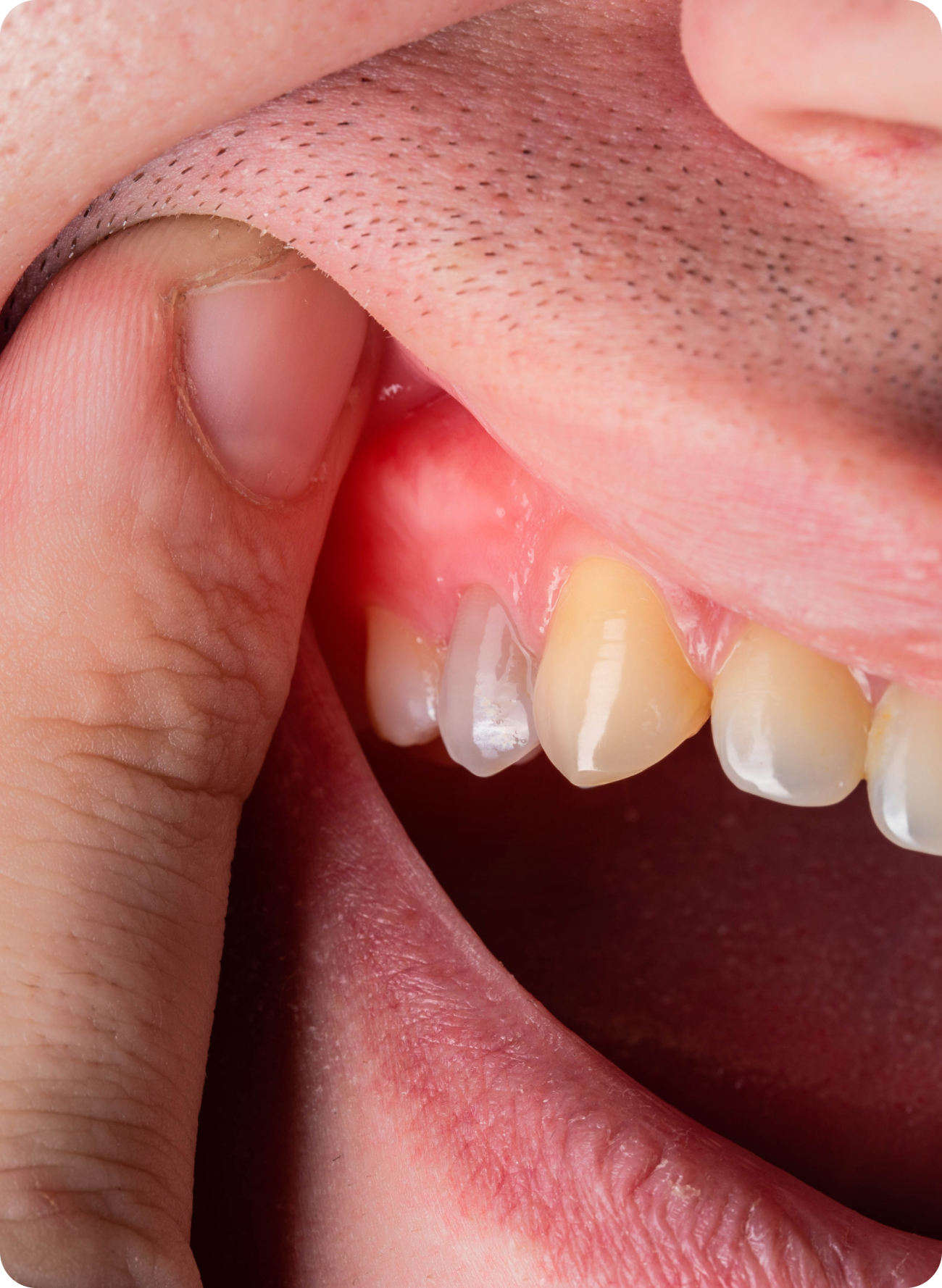
Your gums protect the root surface of the tooth, which is not covered by enamel. When the gums pull back, the root becomes exposed and far more sensitive to sugar, temperature, and touch.
Common causes of gum recession include:
Gum disease
Aggressive brushing
Teeth grinding
Natural aging
Recession often develops gradually and may not become noticeable until sensitivity begins.
Cracked or chipped teeth
Even a small crack can expose dentin and allow sugar to reach the nerve more easily. Cracks may develop from:
Biting hard foods
Trauma or injury
Aging fillings or restorations
Sensitivity from a cracked tooth is often sharp, sudden, and limited to one area. Some people also notice discomfort when biting down.
Recent dental work
Sensitivity that begins after a cleaning, filling or whitening treatment is often temporary. This can happen because:
A cleaning removes tartar covering sensitive areas
A filling temporarily irritates the tooth
Whitening products increase enamel permeability for a short time
In many cases, this type of sensitivity improves within a few days to a few weeks.
Why does sugar trigger sensitivity when cold or heat might not?
Hot and cold sensitivity are triggered by temperature changes that cause fluid movement inside the dentin tubules. Sugar works differently. It creates an osmotic effect that pulls fluid through those same tubules, stimulating the nerve even without a temperature change.
Because of this, sugar sensitivity can appear before hot or cold sensitivity develops — especially in the early stages of:
Enamel erosion
Gum recession
A developing cavity
If sugar is the main trigger but hot or cold foods do not bother you yet, that can actually be a positive sign. It may mean the dentin exposure is still limited and the problem has been caught relatively early.
Can teeth be sensitive to sugar but not have cavities?
Yes. A cavity is one possible cause of sugar sensitivity, but it’s not the only one. Enamel erosion, gum recession, and cracked teeth can also expose sensitive areas of the tooth and trigger pain when you eat sweets — even if no cavity is present.
Still, sugar sensitivity without a cavity should not be ignored. It often signals that the tooth’s protective layers are weakened, which can increase the risk of future decay. According to the Cleveland Clinic, tooth sensitivity may indicate underlying issues such as enamel loss, gum disease, or structural damage, even when no active cavity exists.1
How to reduce sugar sensitivity at home
While home care will not treat the underlying cause, it can help reduce discomfort until you can be seen by your dentist.
Use a desensitizing toothpaste
Products containing potassium nitrate or stannous fluoride help block exposed dentin tubules over time. Consistent use for 2–4 weeks is usually needed before symptoms improve.
Switch to a soft-bristled toothbrush
Hard bristles and aggressive brushing can wear down enamel and contribute to gum recession.
Limit acidic foods and drinks
Citrus, soda, and vinegar-based foods can accelerate enamel erosion. Rinse with water afterward instead of brushing immediately, which can spread acid across the enamel surface.
Pause whitening products temporarily
Over-the-counter whitening strips and gels can worsen sensitivity. Avoid them until the cause of your sensitivity has been evaluated.
Use a fluoride mouthwash
Fluoride helps strengthen enamel and may reduce sensitivity over time.
These steps may reduce discomfort temporarily, but professional evaluation may still be needed to identify the cause. If sugar sensitivity lasts longer than 1–2 weeks or continues getting worse, schedule an appointment with your Aspen Dental provider.
When to see your Aspen Dental provider
Schedule an appointment if:
The sensitivity appeared suddenly and is localized to one or two teeth
The discomfort is sharp, intense or lingers after eating something sweet
You notice sensitivity to cold, heat, or pressure in addition to sugar
The sensitivity has been present for more than 1–2 weeks without improving
You can see visible damage, darkening or a hole in the tooth
Your gums look red, swollen or have visibly pulled back from the tooth
Sugar sensitivity that comes on suddenly is your tooth's way of signaling that something has changed. In many cases, catching the underlying issue early — whether it's a small cavity, early gum recession, or enamel erosion — means simpler, less involved treatment. Waiting often allows the condition to progress.
Teeth sensitive to sugar FAQs
Is sugar sensitivity the same as general tooth sensitivity?
Not exactly. General tooth sensitivity typically refers to discomfort triggered by hot or cold temperatures. Sugar sensitivity specifically involves the osmotic effect of sugar on exposed dentin tubules. Some patients experience both; others experience only one. Sugar-specific sensitivity can be an early indicator of a cavity or enamel erosion before temperature sensitivity develops.
Can sugar sensitivity go away on its own?
If the cause is temporary — such as sensitivity following a recent dental cleaning or filling — it often resolves within a few days to a few weeks. If the cause is enamel erosion, a cavity or gum recession, it will not resolve on its own and is likely to worsen without treatment.
Does sugar sensitivity always mean I have a cavity?
No. While cavities are a common cause, sugar sensitivity can also result from enamel erosion, gum recession, cracked teeth or recent dental procedures. Only a clinical examination can determine the actual cause.
How is sugar sensitivity treated?
Treatment depends on the cause. Options may include fluoride varnish to strengthen enamel, dental bonding to cover exposed root surfaces, a filling to address a cavity, or a treatment plan for gum disease. Your provider will recommend the appropriate approach after evaluating your teeth.
Can I eat sugar if my teeth are sensitive?
You don't need to eliminate sugar entirely but reducing sugary and acidic foods while you're experiencing sensitivity can help minimize discomfort and slow further enamel erosion. Your Aspen Dental provider can give you specific guidance based on the cause of your sensitivity.
Why are only some of my teeth sensitive to sugar?
Localized sensitivity — affecting one or two teeth rather than all of them — often points to a specific cause in that area, such as a cavity, a crack or localized gum recession. Widespread sensitivity across multiple teeth is more commonly associated with generalized enamel erosion or aggressive brushing habits.
Sources
1Cleveland Clinic. Sensitive Teeth: Causes, Treatment & Prevention. https://my.clevelandclinic.org/health/symptoms/10954-teeth-sensitivity
2The Journal of the American Dental Association. "The prevalence of dentin hypersensitivity in general dental practices." https://jada.ada.org/article/S0002-8177(14)60372-X/fulltext