Last updated 10.05.2026
What should I do if my tooth hurts so badly I can’t sleep?
Learn what causes severe nighttime tooth discomfort, what may help temporarily and when symptoms require urgent care.
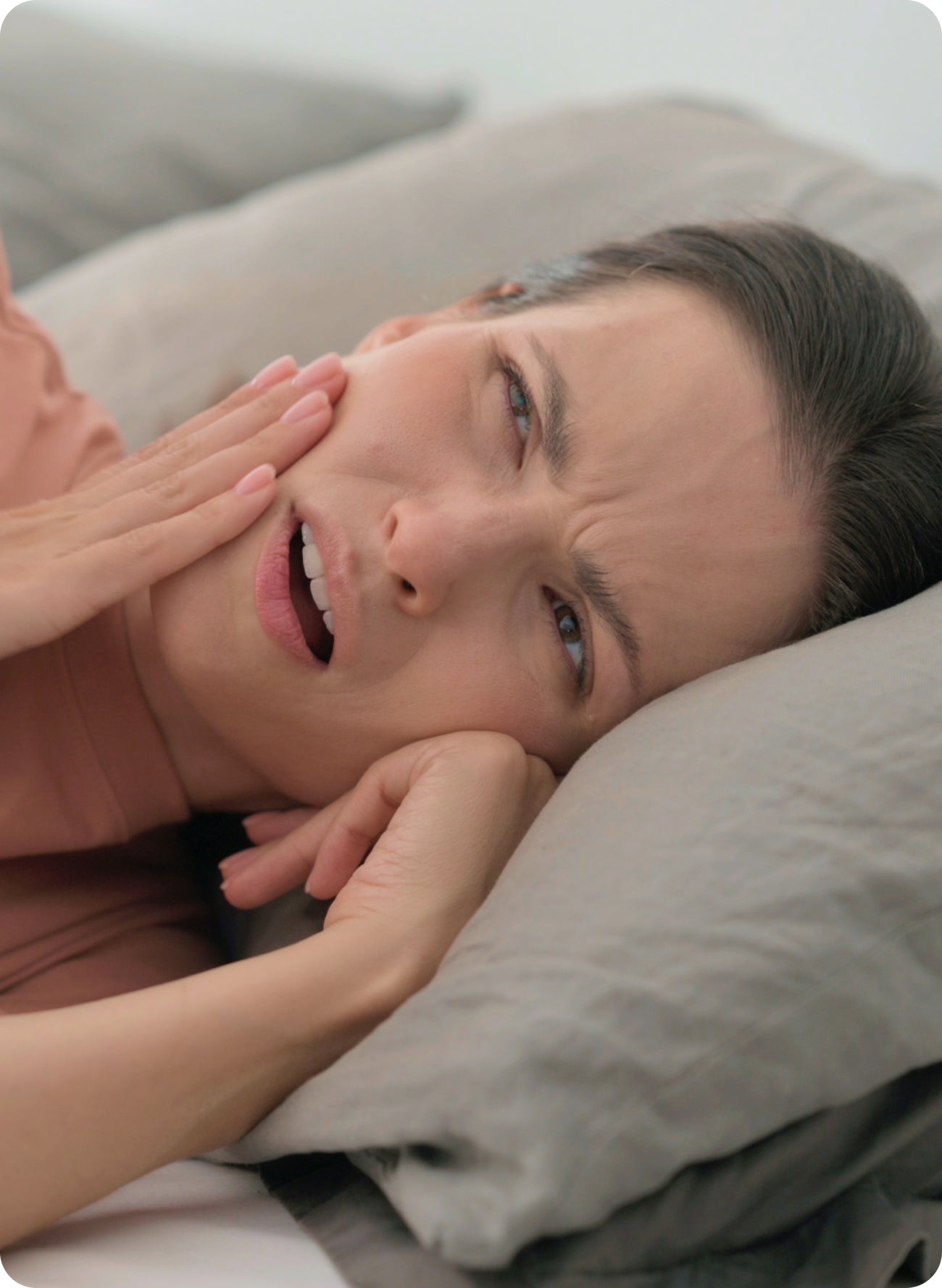
If tooth discomfort is keeping you awake, helpful immediate steps include taking an over-the-counter pain reliever as directed, keeping your head elevated and applying a cold compress to the outside of your cheek for 20 minutes at a time. These measures may temporarily reduce throbbing and pressure overnight, but severe tooth discomfort that disrupts sleep is usually a sign of an underlying dental problem that needs prompt treatment.
Common causes include tooth infections, inflamed tooth nerves, cracked teeth and impacted wisdom teeth. Symptoms often feel worse at night because lying down increases blood flow and pressure in the head and mouth, which can intensify inflammation around the affected tooth.
What you’ll learn in this article:
Why tooth discomfort often becomes more intense at night
The most common causes of severe, sleep-disrupting tooth discomfort
What you can do safely at home to get through the night
Signs you may need urgent or emergency care
When to schedule an appointment with your dentist
Which symptoms should never be ignored
If your tooth pain shows no signs of abating and is keeping you up at night, it's important that you have it examined as soon as the next day. Schedule an appointment with an Aspen Dental provider so it can be evaluated.
Why does tooth discomfort get worse at night?
Nighttime tooth discomfort is not imagined — it is a predictable physiological response. When you lie flat, blood pressure in your head and face increases, which puts additional pressure on inflamed nerves and tissue inside and around the tooth. During the day, you are upright and distracted. At night, both of those buffers disappear.
Why does lying down make a toothache worse?
Lying down increases blood flow and pressure in the head and mouth. If a tooth is already inflamed from decay, infection or a crack, that added pressure can intensify throbbing and sensitivity. This is why tooth discomfort that felt manageable earlier in the evening may become much more severe at night.
Keeping your head elevated with an extra pillow can help reduce pressure in the area and may lessen the intensity of the discomfort.
Why does tooth discomfort feel more intense when everything is quiet?
During the day, your brain is distracted by conversation, movement, work and other sensory input. At night, those distractions fade, making it easier for your brain to register discomfort signals more clearly from the affected tooth.
This does not necessarily mean the condition is suddenly worsening overnight — it often means your brain is no longer filtering the sensation out as effectively as it did during the day.
What is causing your tooth to hurt this badly?
Tooth discomfort severe enough to prevent sleep is often caused by one of several common conditions. Understanding which one applies to you helps you assess urgency and take the right next step.
Could this be a dental abscess?
A dental abscess is a bacterial infection that forms a pocket of pus near the root of a tooth or in the surrounding gums. It is one of the most common causes of severe, throbbing tooth discomfort that becomes more intense at night and does not improve on its own.
Common warning signs include:
Persistent throbbing that does not improve with over-the-counter medication
Swelling in the gums, jaw or cheek
Fever
A foul taste or odor in the mouth
Discomfort when biting or touching the tooth
If you have any of these symptoms along with severe tooth discomfort, contact an Aspen Dental provider as soon as possible. An untreated abscess can spread and become a more serious infection.
Could this be pulpitis — inflammation of the tooth nerve?
Pulpitis happens when the soft inner tissue of a tooth — called the pulp — becomes inflamed, often because of deep decay, a crack or repeated irritation. This inflammation can make the tooth nerve extremely sensitive, causing severe throbbing discomfort that often feels worse at night.
According to the American Association of Endodontists, more than 15 million root canals are performed each year in the United States, most to treat inflamed or infected tooth nerves.¹
If severe discomfort is lingering, throbbing or keeping you awake, the tooth may need professional evaluation and treatment to relieve the inflammation and protect the tooth.
Can a cracked tooth cause severe nighttime discomfort?
Yes. A cracked tooth exposes the inner nerve to pressure, temperature and bacteria, producing sharp or throbbing discomfort that is often difficult to localize. Cracked tooth syndrome is particularly common in people who grind their teeth at night, which means the discomfort may actually worsen during sleep. If your discomfort is sharp and triggered by biting or temperature changes, a crack may be one possible cause.
Can an impacted wisdom tooth cause severe discomfort at night?
Yes. Impacted wisdom teeth are a common cause of severe throbbing discomfort that often worsens at night. When a wisdom tooth cannot fully emerge, it may press against nearby teeth, trap bacteria beneath the gums and trigger significant inflammation. Symptoms often include discomfort in the back of the jaw, swelling, jaw stiffness and soreness that radiates toward the ear or throat. If you suspect an impacted wisdom tooth is causing your symptoms, your dental provider can evaluate the area and discuss treatment options, including possible extraction.
What can you do right now to get through the night?
These steps will not treat the underlying cause, but they can reduce the intensity enough to get through the night until you can see a provider.
Which over-the-counter medications help most?
Ibuprofen (Advil, Motrin) may be an effective over-the-counter option for tooth discomfort because it reduces both inflammation and the throbbing sensation. Always follow the recommended dose on the label. If you cannot tolerate ibuprofen, acetaminophen (Tylenol) is a safe alternative for some, though it does not reduce inflammation. Do not apply aspirin directly to the gum — this can cause a chemical burn to the tissue.
Can over-the-counter numbing gels help with tooth discomfort at night?
Yes, over-the-counter numbing gels containing benzocaine can temporarily reduce tooth discomfort by numbing the surrounding tissue. Applying a small amount to the affected area with a clean fingertip or cotton swab may provide short-term relief and make it easier to rest.
These products are available at most pharmacies without a prescription. While they can temporarily ease symptoms, they do not treat the underlying cause of the tooth discomfort. Use these medications sparingly and always follow the label directions: not for children under the age of 2.
Does elevating your head actually help?
Yes, and it can be a helpful immediate step for managing nighttime tooth discomfort. Sleeping with your head elevated above your heart reduces blood pressure in the face and jaw, which directly reduces the throbbing sensation. Use two pillows or prop up the head of your mattress. Lying completely flat may increase pressure and make nighttime tooth discomfort feel worse for some people.
Can a cold compress reduce the throbbing?
A cold compress applied to the outside of your cheek for 20 minutes on, 20 minutes off can constrict blood vessels in the area and reduce both swelling and the intensity of the throbbing. Do not apply ice directly to the tooth or gum — use a cloth-wrapped ice pack against the cheek.
Can a saltwater rinse help with tooth discomfort at night?
Yes. A warm saltwater rinse can temporarily reduce bacteria and soothe inflamed gum tissue around a sore tooth. Mix half a teaspoon of salt into eight ounces of warm water, rinse gently for 30 seconds, then spit it out. This can be repeated a few times before bed for temporary relief, but it will not treat the underlying cause of the discomfort.
When is tooth discomfort a dental emergency?
Not all severe tooth discomfort requires an emergency room visit — but some symptoms do. Knowing the difference helps you make the right decision tonight.
Go to an emergency room immediately if you experience any of the following alongside your tooth discomfort:
Swelling that is spreading to your jaw, neck or floor of your mouth
Difficulty swallowing or breathing
A high fever (above 101°F / 38.3°C)
Swelling that is closing your eye or distorting your face
These symptoms can indicate that a dental infection is spreading beyond the tooth — a serious medical situation that requires immediate care.
Which tooth symptoms should be evaluated tomorrow?
Schedule an appointment as soon as possible — ideally the next morning — if you experience:
Throbbing that does not respond to ibuprofen or acetaminophen
Visible swelling in the cheek or jaw that is localized (not spreading)
Fever with dental discomfort, even if it is below 101°F
A foul taste or smell in your mouth
Discomfort that has been worsening over several days
These symptoms suggest an infection or abscess that needs professional treatment but is not yet a systemic emergency. If your symptoms do not require an emergency room visit but the discomfort is severe, do not wait. Many dental offices offer same-day and next-day appointments. Schedule an appointment with your local dental provider before the problem becomes more serious.
When to see your dentist
Tooth discomfort severe enough to keep you awake is your body's way of telling you something is wrong — and it will not resolve on its own. The steps above can help you get through the night, but they are not a substitute for care. Let your care team identify the cause, relieve the discomfort and get you back to sleeping through the night.
Tooth pain that prevents you from sleeping FAQs
Can a sinus infection cause tooth discomfort that feels like a toothache?
Yes. Sinus pressure can radiate into the upper back teeth because their roots sit close to the sinus cavities. Sinus-related discomfort usually affects multiple upper teeth and often worsens when you bend over or lie down. If you are unsure whether the source is dental or sinus-related, your doctor can help determine the cause.
Does it matter which side I sleep on with tooth discomfort?
Yes. Sleeping on the side of the affected tooth can increase blood flow and pressure, making throbbing worse. Sleeping on the opposite side — or on your back with your head elevated — is usually more comfortable and may help reduce discomfort overnight.
Can teeth grinding cause severe tooth discomfort at night?
Yes. Teeth grinding, also called bruxism, can place intense pressure on the teeth and jaw, causing aching soreness that is often worse at night or in the morning. Jaw soreness, tooth sensitivity and morning headaches can all be signs of nighttime grinding.
How can I tell if the discomfort is from a cavity, cracked tooth or infection?
The type of discomfort often provides clues. Cavities usually cause brief sensitivity to cold, sweets, or pressure. Cracked teeth often cause sharp discomfort when biting down. Infections typically cause constant throbbing, swelling, a bad taste or fever and should be evaluated promptly.
Why is over-the-counter medication not helping?
If OTC medication is no longer reducing the discomfort, the underlying problem may be more advanced. Severe inflammation, infection or an abscess often cannot be fully controlled with anti-inflammatory medication alone and may require professional treatment.
Is it safe to apply heat to a throbbing tooth?
It is best to avoid heat. Heat can increase blood flow and worsen throbbing, especially if infection is present. A cold compress applied to the outside of the cheek for 20 minutes at a time is the safer option for reducing inflammation and discomfort.
Sources
¹ American Association of Endodontists. Root Canal Treatment. https://www.aae.org/patients/root-canals/what-is-a-root-canal/