Last updated 06.23.2026
Why is my tooth sensitive to heat but not cold?
Learn what heat-only tooth sensitivity may indicate, from nerve inflammation and cracks to decay, and when it’s time to seek dental care.

If your tooth hurts when you eat or drink something hot — but cold doesn't seem to bother it — it may be a sign of a problem deeper inside the tooth. Heat sensitivity is often linked to inflammation of the tooth's nerve (pulpitis), a deep cavity, a cracked tooth, or an infection. Unlike cold sensitivity, which is commonly caused by exposed dentin, gum recession, or worn enamel, sensitivity to heat is more likely to indicate irritation or damage within the tooth itself and should be evaluated by a dental provider.
What you'll learn in this article:
Heat sensitivity that lingers after eating or drinking can be a sign of significant nerve inflammation inside the tooth
Heat sensitivity differs from cold sensitivity and often requires more prompt attention
Common causes of heat-only sensitivity include deep decay, cracked teeth, infection, and recent dental work
Sensitivity that lasts beyond the heat exposure is often a sign that professional treatment is needed
Key details to track before your appointment: whether the pain is brief, lingering, or getting worse
If you're experiencing heat sensitivity in one tooth, schedule an appointment with your dental provider for an evaluation. While the issue may be treatable, symptoms involving heat should not be ignored.
Why heat sensitivity is different from cold sensitivity
Most people expect cold to be the more uncomfortable trigger. So, when heat is the problem — and cold isn't — it can feel confusing. But this pattern tells your provider something important about what is happening inside the tooth.
What happens inside the tooth when it reacts to heat
Inside every tooth is a soft core called the pulp. The pulp contains nerves and blood vessels. Surrounding the pulp is a layer called dentin, which is filled with tiny fluid-filled channels that connect to the nerve.
When temperature changes reach the tooth, they cause the fluid in those channels to shift. Cold typically triggers a quick, sharp movement. Heat causes a slower, sustained movement. The nerve endings inside the tooth respond to that fluid shift — and when the nerve is already irritated or inflamed, even a small change can trigger a strong reaction.
Why cold sensitivity and heat sensitivity mean different things
Cold sensitivity is common and often reversible. It usually means the outer layer of the tooth has worn down or the gum has pulled back slightly, exposing a more sensitive layer underneath. The nerve is irritated, but not necessarily damaged.
Heat sensitivity — especially when it lingers — is a different story. It often means the nerve is more severely inflamed. In some cases, the nerve may be dying or already infected. This type of sensitivity tends to worsen over time without treatment — it rarely resolves on its own.
Common causes of heat-only tooth sensitivity
Several conditions can cause a tooth to react to heat while staying comfortable with cold. Here are the most common ones.
Inflamed or infected tooth pulp
Inflammation of the tooth pulp, known as pulpitis, is the most common cause of heat sensitivity without cold sensitivity. When the pulp becomes inflamed, the nerve inside the tooth can become especially reactive to warmth.
In its early stages, pulpitis may be reversible if the underlying cause is treated. However, severe inflammation or infection usually will not heal on its own.
A key warning sign is pain that lingers after the heat source is removed. If a tooth continues to ache for 30 seconds or longer after eating or drinking something hot, it may indicate significant nerve inflammation and should be evaluated by your dental provider.
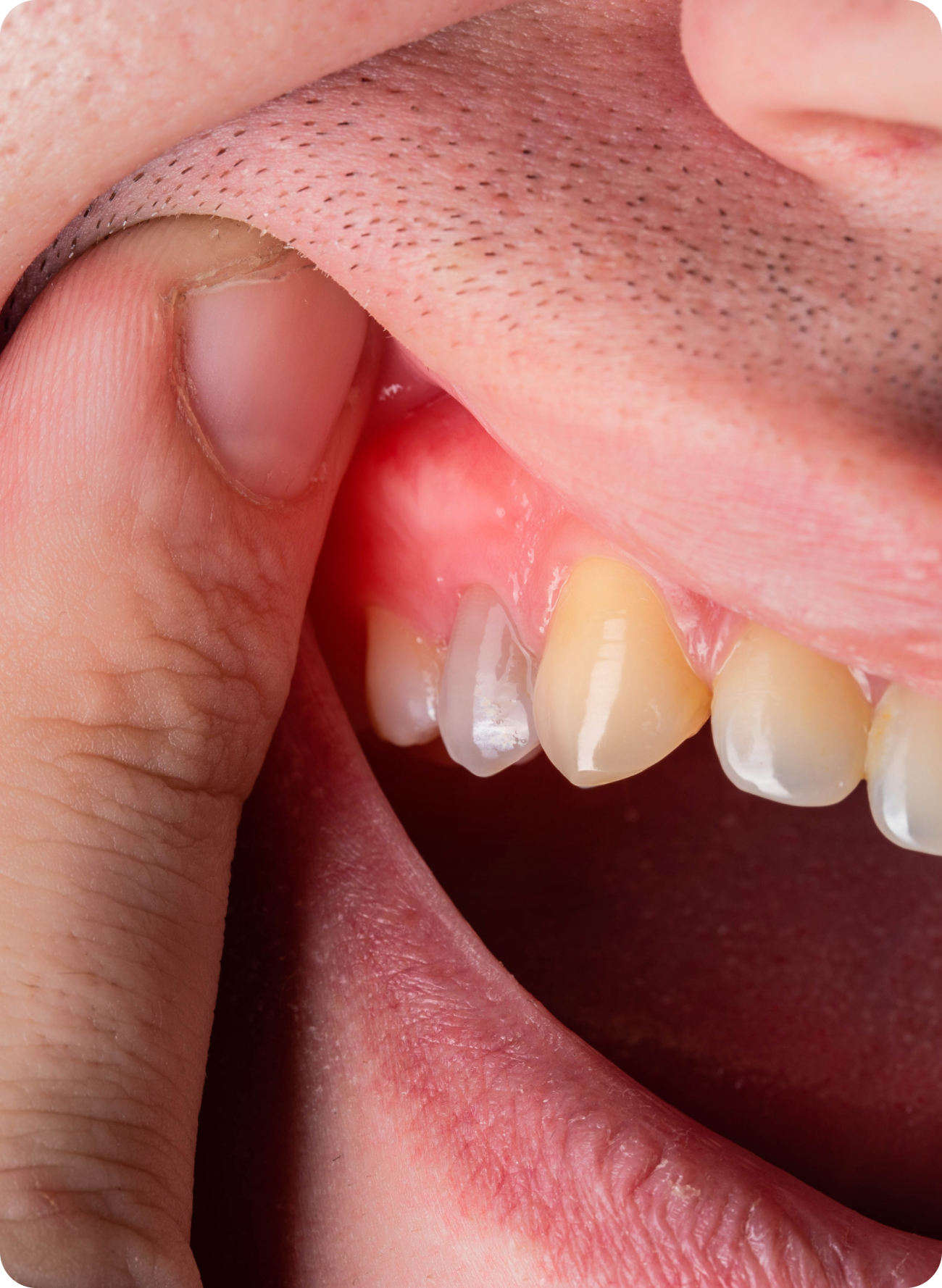
If pulpitis is left untreated, the nerve can die and an abscess — a pocket of infection — can form at the root of the tooth. An abscessed tooth is frequently reactive to heat and may also cause throbbing pain, swelling, or a pimple-like bump on the gum near the affected tooth.
A crack in the tooth
Teeth can develop cracks too small to see — even on an X-ray. These cracks allow heat to reach the inner layers of the tooth more easily, triggering sensitivity. The discomfort from a cracked tooth is often sharp and localized to one specific spot, and it may worsen when you bite down. Cracked tooth syndrome is one of the leading causes of tooth loss in adults over 40, according to the American Association of Endodontists.1
Deep decay close to the nerve
A cavity that has progressed deep into the tooth can bring decay close to the pulp. The closer the decay gets to the nerve, the more reactive the tooth becomes — especially to heat. At this stage, a simple filling may not be enough. The tooth may need more involved treatment to address the damage before it reaches the nerve.
Recent dental work
It is normal for a tooth to feel more sensitive after a filling, crown, or other procedure. The nerve can become temporarily irritated during treatment. This type of sensitivity usually fades within a few days to a few weeks.
If the sensitivity is getting worse instead of better — or if it has been more than 2–3 weeks — that is worth mentioning to your dental provider at your next visit.
A failing or old filling
Older metal fillings can expand and contract with temperature changes over time. As the seal between the filling and the tooth weakens, bacteria can leak beneath the filling and irritate the nerve. This can cause heat sensitivity even if the tooth looks intact from the outside.
If you have an older filling in the tooth that is bothering you, your dental provider will check whether the filling is still properly sealed and whether the nerve has been affected.
Gum recession and exposed roots
When gums pull back from the tooth, the root surface becomes exposed. Root surfaces do not have the same protective enamel layer that covers the rest of the tooth, making them more vulnerable to temperature changes, including heat. Gum recession often happens gradually, so many people do not notice it until sensitivity develops.
How to tell if it's serious
Not all heat sensitivity is equally urgent. These signs can help you understand how quickly you should be seen.
Does the sensitivity linger after the heat is gone?
This is the most important question to ask yourself. Brief sensitivity — a quick twinge that disappears within a second or two — is less alarming. It may still need attention, but it is less likely to indicate a severe problem.
Sensitivity that lingers for 30 seconds or more after the heat source is removed is a stronger warning sign. It suggests the nerve inside the tooth is under significant stress. According to the American Association of Endodontists, lingering heat sensitivity is one of the primary indicators that a tooth may need root canal treatment.2
Other warning signs to watch for
Seek care promptly if you notice any of the following alongside heat sensitivity:
Spontaneous aching that comes on without any trigger
Swelling in the gum near the affected tooth
A small bump or pimple on the gum (this can indicate an abscess)
Discomfort that spreads to the jaw, ear, or temple
Darkening of the tooth
Discomfort that wakes you up at night or makes it difficult to sleep
These symptoms suggest the problem may have progressed beyond simple sensitivity and should not be ignored.
What to do while you wait for your appointment
Heat sensitivity from a nerve problem will not resolve on its own, but there are a few things you can do to manage discomfort until you are seen:
Avoid hot foods and drinks on the affected side
Over-the-counter pain relievers such as ibuprofen can help reduce inflammation and discomfort temporarily
Chew on the opposite side of your mouth
Avoid pressing on or probing the tooth
These steps will not treat the underlying cause, but they can make the wait more manageable. If your pain is severe, worsening, or accompanied by swelling or fever, contact your dental provider promptly rather than waiting for a routine appointment.
When to see your dental provider
If a tooth is sensitive to heat — especially if the pain lingers after eating or drinking — schedule an appointment with a dental provider. Heat sensitivity often signals inflammation or damage inside the tooth and typically does not improve without treatment.
Early evaluation can make a significant difference. In some cases, the problem can be treated with a filling or crown. If the nerve has been more severely affected, a root canal may be needed to remove the damaged tissue and preserve the tooth.
The sooner the cause is identified, the more likely it is that your dental provider can address the issue before it becomes more serious. A comprehensive exam, including X-rays, can determine what's causing the sensitivity and the best way to treat it.
Why is my tooth sensitive to heat but not cold FAQs
Does heat sensitivity always mean I need a root canal?
Not always. Some causes of heat sensitivity — such as a recent filling or mild gum recession — can be addressed without a root canal. However, if the sensitivity lingers after the heat source is removed, or if you are experiencing spontaneous aching, a root canal may be the most effective way to relieve the discomfort and save the tooth. The American Dental Association also identifies persistent heat sensitivity as a symptom that warrants prompt professional evaluation, as it may indicate irreversible damage to the tooth's nerve.2
Can a cracked tooth cause heat sensitivity without any visible damage?
Yes. Cracks can be microscopic and may not appear on X-rays. A tooth can look completely normal on the outside while still having an internal crack that allows heat to reach the nerve. If your sensitivity is sharp, localized to one specific spot, and worsens when you bite down, a crack is a likely cause worth investigating.
Why is my tooth sensitive to heat after a root canal?
Some mild sensitivity after a root canal is normal and typically resolves within a few days to two weeks as the surrounding tissue heals. If sensitivity is significant, worsening, or persists beyond two weeks, contact your dental provider — in some cases, the tooth may need additional treatment to fully resolve the issue.
Can teeth grinding cause heat sensitivity?
Yes. Grinding or clenching — known as bruxism — puts repeated stress on the teeth and can wear down enamel over time. This exposes the more sensitive dentin layer underneath, making teeth more reactive to temperature changes, including heat. If you grind your teeth at night, a custom night guard may help protect your teeth from further wear and reduce sensitivity.
Is heat sensitivity in one tooth different from sensitivity across multiple teeth?
Yes, and the distinction matters. Sensitivity in a single tooth usually points to a localized problem — a crack, deep cavity, or pulp issue specific to that tooth. Sensitivity across multiple teeth is more likely related to enamel erosion, gum recession, or a systemic issue such as acid reflux. Your dental provider can help identify the pattern and recommend the right approach for your situation.
Can a failing or old filling cause heat sensitivity?
Yes, older metal fillings can expand and contract with temperature changes over time. As the seal weakens, bacteria can leak beneath the filling and irritate the nerve. If you have an older filling in the affected tooth, your dental provider will check whether the filling is still properly sealed and whether the nerve has been affected.
What will my dental provider do to find the cause of my heat sensitivity?
Your dental provider will perform a comprehensive exam that typically includes X-rays and a clinical evaluation of the affected tooth. They may apply a brief heat or cold stimulus to assess how the tooth responds. Based on the findings, they will recommend the most appropriate treatment — which may range from a filling or crown to a root canal, depending on how far the problem has progressed.
Sources
1American Association of Endodontists. Cracked Teeth. https://www.aae.org/patients/dental-symptoms/cracked-teeth/
2American Dental Association. Sensitive Teeth. MouthHealthy. https://www.mouthhealthy.org/all-topics-a-z/sensitive-teeth