Last updated 06.24.2026
Why does my tooth hurt when I sneeze?
Learn why sneezing can trigger tooth discomfort, how sinus pressure affects tooth roots and when symptoms may point to a dental problem.

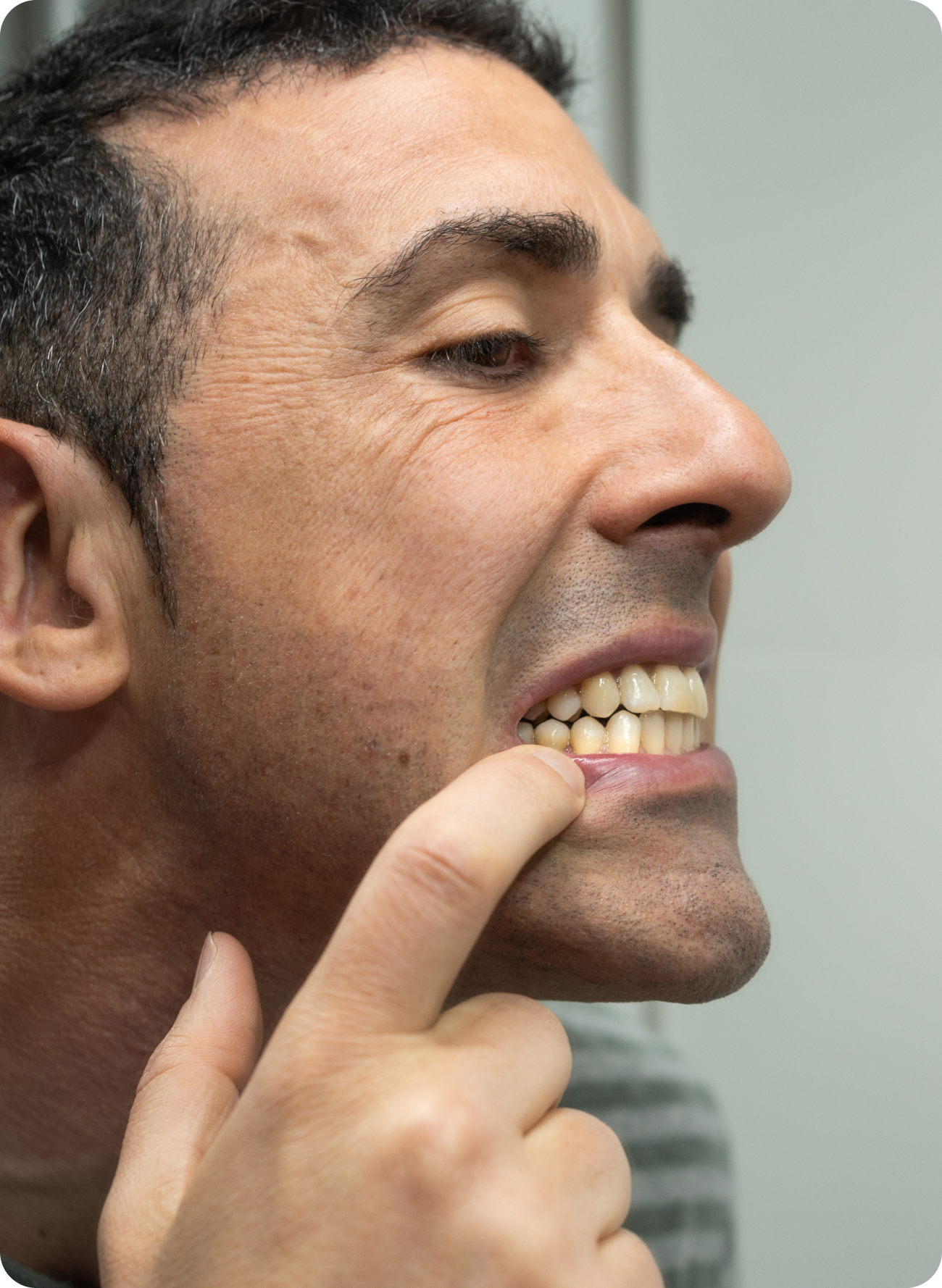
A tooth that hurts when you sneeze is most often caused by sinus pressure. When your sinuses become inflamed from a cold, allergies or a sinus infection, pressure can build around the roots of your upper back teeth and briefly worsen when you sneeze. Less often, a cracked tooth, cavity or infection may be the cause, especially if the discomfort is limited to one tooth.
What you'll learn in this article:
If multiple upper back teeth ache at the same time, your sinuses are almost certainly the cause
Several aching upper teeth usually point to sinus congestion rather than a dental problem
Sinus-related tooth soreness typically fades within 7–10 days as congestion clears; if it doesn't, the tooth itself needs to be examined
Pain in one tooth, especially with swelling or sensitivity, may signal a crack or infection
Persistent symptoms should be evaluated rather than monitored at home
If your tooth hurts when you sneeze and the discomfort isn't improving as your congestion clears, schedule an appointment with your dental provider. An evaluation can help determine whether the cause is sinus-related or a problem with the tooth itself.
The most common cause: sinus pressure
In most cases, a tooth that hurts when you sneeze is not actually a tooth problem. It's a sinus problem.
The maxillary sinuses sit directly above your upper back teeth, and in some people, the roots of those teeth are very close to the sinus floor. When the sinuses become inflamed or congested from a cold, allergies or a sinus infection, pressure builds in that area.
That pressure can press on the tooth roots and create a deep, aching sensation that feels like it's coming from the tooth itself. According to the Mayo Clinic, discomfort in the upper back teeth is a common symptom of sinus conditions. ¹
Why does sneezing make it worse?
A sneeze creates a sudden, forceful spike in pressure throughout your head and face. That pressure surge travels through your sinus cavities and hits the already-inflamed tissue surrounding your tooth roots. The result is a sharp jolt of discomfort that disappears almost as quickly as it arrives. The same thing can happen when you cough, bend forward or shake your head — any movement that shifts pressure in your sinuses will briefly intensify the sensation.
There is also a nerve connection at play. The trigeminal nerve runs through both your nasal passages and your teeth. When sinus inflammation irritates this nerve, the sensation can register as tooth pain even though the tooth itself is not the source.
Why do upper back teeth hurt more than others?
The upper molars and premolars are the teeth most directly beneath the maxillary sinuses. Front teeth and lower teeth are farther from the sinus cavities, so they rarely feel sinus-related discomfort. If the aching is concentrated in your upper back teeth on one or both sides, sinus pressure is the most likely explanation.
Other causes: cracked tooth, cavity or infection
Sinus pressure is the most common culprit, but it is not the only one. If the discomfort does not improve as your congestion clears — or if you are not sick at all — one of the following may be the cause.
Could it be a cracked tooth?
A crack in a tooth can be nearly invisible, even on an X-ray. When you sneeze, the sudden force causes the crack to flex slightly, which irritates the nerve inside. The discomfort is usually sharp and brief, and it tends to affect a single specific tooth rather than a group of teeth.
Cracked tooth discomfort often also appears when biting down on something hard, releasing bite pressure or eating something very cold or sweet. If any of those patterns sound familiar, a cracked tooth is worth ruling out.
What if the discomfort is in a lower tooth?
Sinus pressure almost never causes lower tooth discomfort. If a lower tooth hurts when you sneeze, the cause is more likely to be a crack, a cavity, gum recession or an infection in that specific tooth. The sneeze itself is not causing the problem — it is simply creating enough vibration and pressure to aggravate something that is already there.
Can a tooth infection cause this?
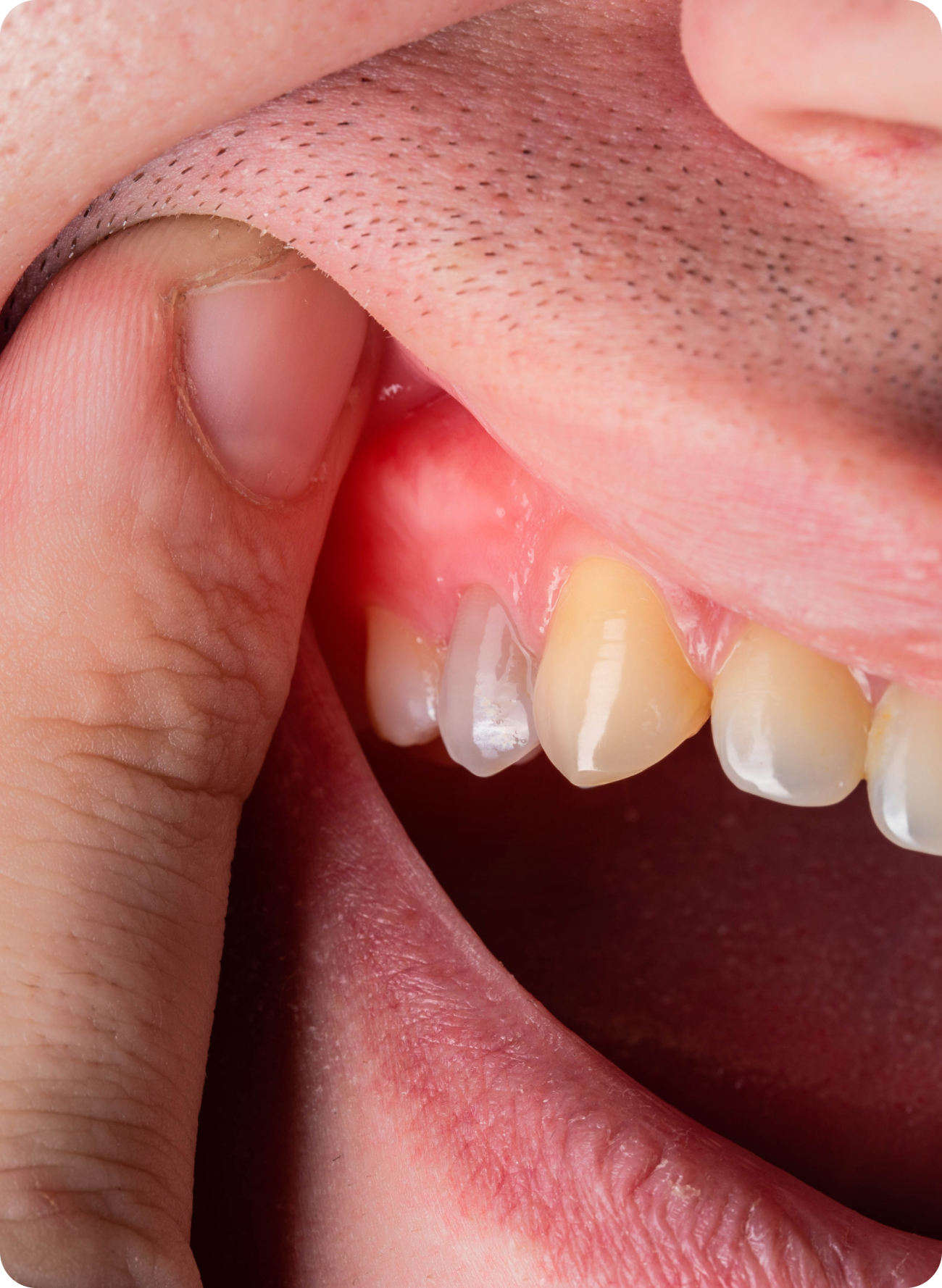
A tooth abscess — an infection at the root of the tooth — can cause a deep, throbbing ache that gets worse with any kind of pressure or movement, including sneezing. Unlike sinus-related discomfort, an abscess typically causes persistent soreness that does not come and go. You may also notice swelling in the gum, a bad taste in your mouth or sensitivity to heat. An abscess is a dental emergency and should be evaluated promptly.2
Can the force of a sneeze itself cause tooth pain?
Sometimes. A forceful sneeze causes your jaw to close quickly, which can aggravate a tooth that is already weakened by a large filling, decay or an existing crack. The discomfort is usually sharp, immediate and limited to one tooth.
If you notice tooth pain right after a particularly strong sneeze, it's a good idea to have the tooth evaluated. A sneeze may not cause the problem, but it can make an existing one more noticeable.
How to tell if it's your sinuses or your tooth
This is the question most people are trying to answer. Here is a straightforward way to think through it.
It is more likely sinus-related if:
Multiple upper back teeth ache at the same time
The discomfort is dull and pressure-like rather than sharp
You are currently sick, congested or dealing with allergies
The aching improves as your congestion clears
Bending forward or lying down makes it worse
Both sides of your mouth feel it
Eating and drinking do not make the discomfort noticeably worse
It is more likely a tooth problem if:
Only one specific tooth is affected
The discomfort is sharp, throbbing or persistent
It does not improve when your congestion clears
You feel it when biting, chewing or eating something cold or sweet
There is visible swelling, redness or a bad taste near the tooth
You are not sick or congested at all
Chewing, biting or eating something cold or sweet makes the discomfort significantly worse
The clearest signal is whether the discomfort resolves when your sinus symptoms do. If it does, your sinuses were almost certainly the cause. If it lingers, the tooth itself needs to be evaluated.
How to relieve tooth discomfort from sinus pressure
If sinus pressure is the likely cause, there are a few things that can help while your sinuses clear:
Over-the-counter decongestants or antihistamines can reduce sinus inflammation and the pressure it puts on your tooth roots.
Ibuprofen addresses both sinus inflammation and the associated tooth soreness.
Staying hydrated helps thin mucus and allows your sinuses to drain more easily.
A warm compress applied to your cheek and nose area can ease sinus pressure temporarily.
These measures address the symptoms, not the underlying cause. If the discomfort does not improve as your congestion clears, schedule an evaluation with your dental provider.
When to see your dental provider
Sinus-related tooth soreness that comes and goes with your congestion is generally not urgent. It should ease on its own as your sinuses clear.
Reach out to a dental provider sooner if you notice any of the following:
The discomfort is persistent and does not improve after a week
Only one tooth is affected and the aching is sharp or throbbing
You have swelling in your gum, jaw or face
You notice a bad taste or smell in your mouth
The tooth is sensitive to heat or feels loose
You are not sick, but the discomfort appeared suddenly
These signs suggest the tooth itself — not your sinuses — may need attention. A dental provider can examine the tooth, take X-rays if needed and determine the exact cause. Visit an Aspen Dental office near you to get a clear answer and a plan.
Why does my tooth hurt when I sneeze? FAQs
Can I eat and drink normally if my tooth hurts from sinus pressure?
Usually, yes. Tooth discomfort caused by sinus pressure typically does not get worse when you eat or drink. In fact, that's one of the clearest signs the problem may be coming from your sinuses rather than the tooth itself.
If chewing, biting or consuming something cold, hot or sweet makes the discomfort worse, a dental problem may be the cause. In that case, schedule an appointment with your dental provider for an evaluation.
Will the discomfort go away on its own?
If sinus pressure is the cause, yes. Soreness typically fades as your congestion clears, typically within 7–10 days. Staying hydrated, using a saline rinse and taking an over-the-counter decongestant can help speed up the process. If the discomfort persists beyond your illness or does not respond to decongestants, it is worth having the tooth examined.
Can I take anything to relieve the soreness while I wait?
Over-the-counter anti-inflammatory medications such as ibuprofen can help reduce both sinus inflammation and the associated tooth soreness. A warm compress applied to your cheek and nose area may also ease sinus pressure. These are temporary measures — they address the symptom, not the underlying cause.
Is it possible for a sneeze to crack a tooth?
A very forceful sneeze can, in rare cases, cause a tooth that is already weakened — by a large filling, decay or prior damage — to crack further. If you heard or felt something unusual during a hard sneeze and the tooth has been sore since, it is worth having it checked. A crack that is caught early is far easier to treat than one that is left to worsen.
What if the discomfort comes back every time I get sick?
Recurring tooth soreness during every cold or allergy season is a reliable sign that your upper molars sit very close to your sinus floor. This is a normal anatomical variation and does not mean anything is wrong with your teeth. That said, if the pattern changes — if the soreness becomes more intense, lasts longer or starts affecting a single tooth — schedule an evaluation to make sure nothing else is developing.
Sources
1Mayo Clinic — Sinus infection and toothache: https://www.mayoclinic.org/diseases-conditions/acute-sinusitis/expert-answers/toothache/faq-20058299
2Mayo Clinic — Tooth abscess, symptoms and causes: https://www.mayoclinic.org/diseases-conditions/tooth-abscess/symptoms-causes/syc-20350901