Last updated 06.25.2026
Why does my tooth feel soft or mushy when I bite down?
Learn what can cause a tooth to feel soft, spongy or unstable when biting and when it should be evaluated by a dental professional.

A tooth that feels soft or mushy when you bite down is not normal and often means the tooth or the structures supporting it have been damaged. Common causes include advanced decay, a loose filling or crown, a cracked tooth, an infection, or gum disease.
While some causes are less urgent than others, a tooth that suddenly feels soft, spongy, or unstable should be evaluated. Early treatment can help prevent further damage and improve the chances of saving the tooth.
What you'll learn in this article:
A soft-feeling tooth is usually caused by a loose restoration, a crack, or an infection—not the tooth itself becoming soft.
Advanced decay is one of the few conditions that can actually soften tooth structure.
A cracked tooth can feel unstable even when it looks normal and doesn't appear on an X-ray.
An abscess can make a tooth feel raised or spongy and requires treatment.
Gum disease weakens the bone supporting the tooth, creating a loose or soft sensation.
Symptoms that come and go are often less urgent than those that are constant or worsening.
If your tooth feels soft, mushy, or unstable when you bite down, schedule an appointment with an Aspen Dental provider. Identifying the cause early can help preserve the tooth and prevent the problem from getting worse.
What does it mean when a tooth feels soft?
Healthy teeth are hard. The outer layer, called enamel, is the hardest substance in the body, while the layer beneath it remains strong and durable.
If a tooth feels soft, mushy, or unstable when you bite down, it usually means something has weakened the tooth or affected its support. In many cases, the cause is decay, infection, or a damaged restoration such as a loose filling or crown that shifts under pressure.
Is the tooth itself soft, or does it just feel that way?
This distinction matters. Sometimes the tooth is structurally compromised — meaning the enamel or dentin has actually softened due to bacterial acid or infection. Other times, the tooth is fine, but a restoration has lost its bond, creating slight movement that feels like softness when you bite down. In both cases, you need a professional evaluation. Only an X-ray and clinical exam can tell the difference.
The most common reasons a tooth feels soft or mushy
Advanced tooth decay
Tooth decay occurs when bacteria produce acids that gradually break down the tooth.1 According to the National Institute of Dental and Craniofacial Research, nearly 90% of U.S. adults ages 20 to 64 have had decay in their permanent teeth — making decay the most common reason a tooth begins to feel structurally weakened.2
This is one of the few situations where the tooth itself may actually feel soft. You may notice a soft spot with your tongue or feel the tooth give slightly when you bite down.
By this stage, the decay is often close to or has already reached the nerve. Treatment may require a large filling, a crown, or a root canal, depending on how much of the tooth has been affected.
A loose or failing filling or crown
Fillings and crowns are bonded to the tooth, but that bond can weaken over time. When a filling or crown starts to fail, it may shift slightly when you bite down. That movement can feel like the tooth itself is soft or spongy — even if the underlying tooth structure is intact.
You might also notice a change in how your bite feels, a slight rocking sensation, or a gap where food gets caught. If a filling or crown has come loose, bacteria can get underneath it and begin causing decay in the tooth below — so it's worth addressing quickly even if there's no discomfort yet.
A cracked tooth
A cracked tooth can be difficult to detect and may not appear on an X-ray. When you bite down, the crack can flex slightly, creating a soft, shifting, or unstable sensation.
Teeth grinding is a common cause of cracked teeth because repeated pressure can create small fractures that worsen over time.
Symptoms are often inconsistent. You may only notice discomfort when biting a certain way, and it may come and go. If the crack reaches the pulp—the soft tissue inside the tooth that contains the nerve—it can lead to infection and may require a root canal or, in severe cases, extraction.
A dental abscess
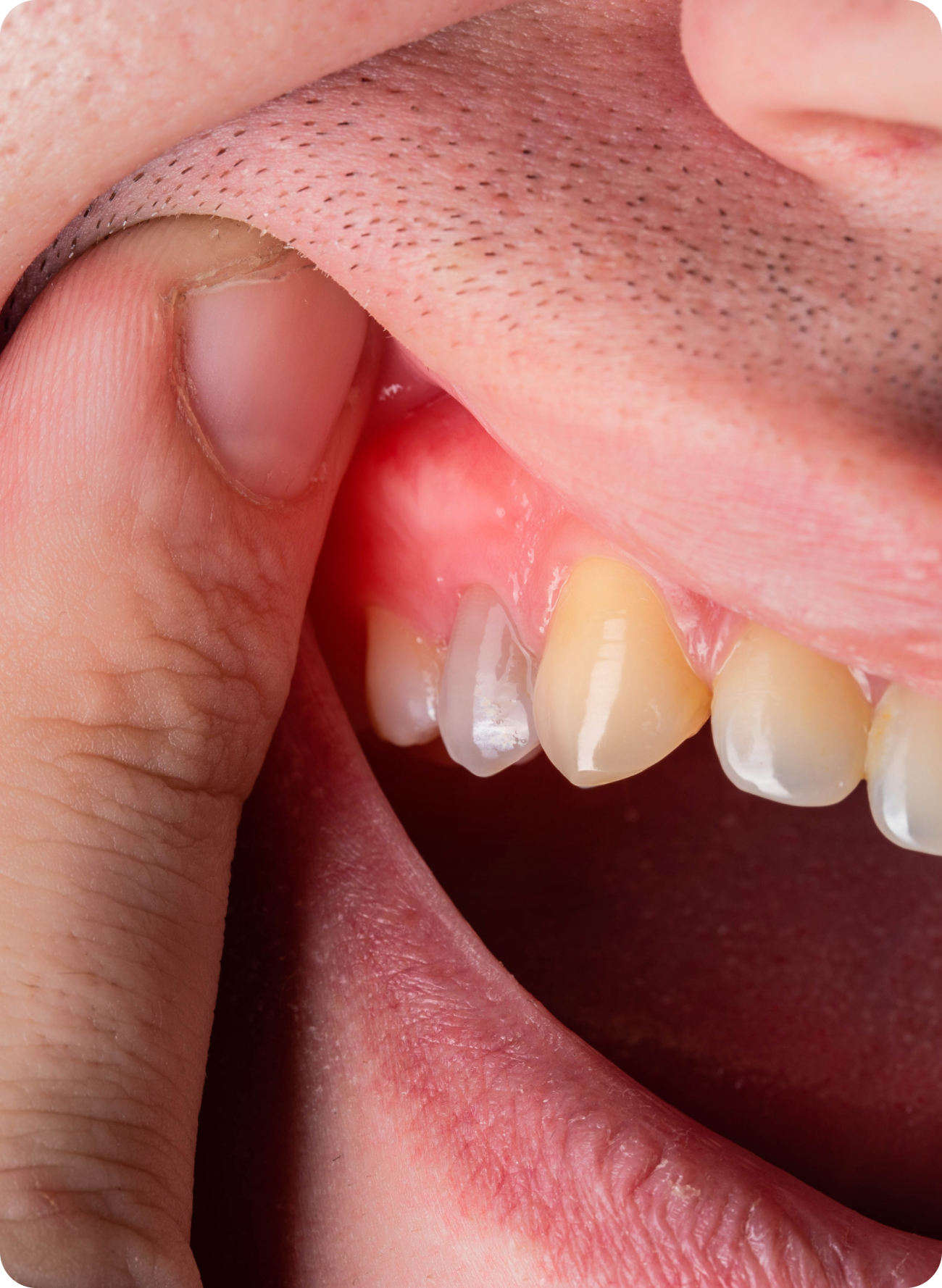
A dental abscess is a pocket of infection that forms at the root of a tooth or in the surrounding gum tissue. The infection creates pressure that can make the tooth feel tender, spongy, or slightly raised when you bite down.
Other signs may include gum swelling, a bad taste in your mouth or a small pimple-like bump on the gum. An abscess will not go away on its own and usually requires treatment, such as draining the infection and treating the tooth with a root canal or extraction.
A dental abscess that spreads beyond the tooth can become a medical emergency — infection near the jaw or throat can affect your airway. If you also have swelling in your face or jaw, difficulty swallowing, or a fever, seek care the same day.
Gum disease and bone loss
Advanced gum disease (periodontitis) destroys the bone and tissue that hold teeth in place. As that support erodes, a tooth can begin to feel loose or spongy — not because the tooth itself is damaged, but because it no longer has a firm foundation.
This type of softness is often accompanied by gum recession, bleeding when brushing or a visible gap between the tooth and gum. According to the CDC, about 4 in 10 U.S. adults aged 30 and older have some form of gum disease — making it a common reason teeth begin to feel loose or unstable.3
Inflamed periodontal ligaments
The periodontal ligament is the thin layer of tissue that helps anchor each tooth in place. When it becomes inflamed—from teeth grinding, a bite problem, trauma, or advanced gum disease—it can make a tooth feel tender, spongy, or slightly cushioned when you bite down.
In this situation, the tooth itself is usually healthy. The sensation comes from swelling in the surrounding tissue, not damage to the tooth.
This type of discomfort is often worse in the morning if you grind your teeth at night and may affect several teeth rather than just one. Treatment depends on the cause and may include a night guard, a bite adjustment, or treatment for gum disease.
When the sensation comes and goes
Once you recognize the most common causes, the pattern of your symptoms can help narrow down what's happening.
Intermittent softness or a sensation that only appears with certain bites is often a sign of a cracked tooth or a loose restoration. Constant softness or tenderness — especially with swelling — points more toward an abscess or advanced decay.
Neither pattern is something to monitor at home. Both tend to worsen without treatment, and the window for saving the tooth narrows the longer care is delayed.
When to see your dental provider
If your tooth feels soft, mushy, or spongy when you bite down, schedule an appointment with your dental provider as soon as you can. This symptom does not resolve on its own regardless of the cause.
Seek same-day care if you also have:
Swelling in your jaw, cheek, or neck
A fever
Difficulty swallowing or opening your mouth
Visible pus or a bad taste that appeared suddenly
Severe, constant throbbing that is not relieved by over-the-counter medication
Schedule promptly (within a few days) if:
The tooth feels soft but there is no swelling or fever
Discomfort is mild and comes and goes
You suspect a loose filling or crown
The sensation started recently after dental work
A dental provider will take X-rays, examine the tooth and surrounding tissue, and explain exactly what is causing the sensation — along with your treatment options and what to expect. Most causes of a soft-feeling tooth are very treatable, especially when addressed early.
Why does my tooth feel soft or mushy when I bite down? FAQs
Can a tooth feel soft without any visible damage?
Yes. Some of the most common causes — including a cracked tooth, a loose filling, and an early abscess — produce no visible signs on the surface. The tooth may look completely normal while something significant is happening underneath. This is why a clinical exam and X-rays are necessary to identify the cause.
Can a tooth that feels soft be saved?
Often, yes. Whether the tooth can be saved depends on how much damage has occurred and whether the nerve has been affected.
A tooth with a loose filling or early decay can often be restored with a new filling or crown. A cracked tooth may be saved if the crack has not extended into the root. More severe damage from decay or infection may require a root canal or, in some cases, extraction.
Your dental provider can evaluate the tooth and explain the treatment options available based on the extent of the damage.
Is it safe to keep eating on the tooth?
It is best to avoid chewing on that side until you have been evaluated. Continuing to bite on a cracked tooth can cause the crack to extend further. Biting on a tooth with a loose crown can dislodge it entirely. Stick to soft foods and chew on the opposite side until your appointment.
Could a sinus infection make a tooth feel soft?
Sinus pressure can cause upper back teeth to feel tender or achy — because the roots of those teeth sit very close to the sinus cavity. However, sinus pressure does not cause a tooth to feel structurally soft or mushy. If the sensation feels like the tooth itself is giving way, the cause is dental rather than sinus related.
How long does treatment take for a tooth that feels soft?
It depends on the cause. A loose filling can often be replaced in a single visit. A crown may require two appointments. A root canal typically takes one or two visits. If the tooth cannot be saved, extraction and replacement options can be discussed at your appointment. Your Aspen Dental provider will give you a clear timeline after the exam.
Sources
1Dental Caries and Its Management — National Library of Medicine (PMC): https://pmc.ncbi.nlm.nih.gov/articles/PMC9831703/
2National Institute of Dental and Craniofacial Research. Dental Caries (Tooth Decay) in Adults (Ages 20 to 64 Years). https://www.nidcr.nih.gov/research/data-statistics/dental-caries/adults
3Centers for Disease Control and Prevention. About Periodontal (Gum) Disease. https://www.cdc.gov/oral-health/about/gum-periodontal-disease.html