Last updated 07.13.2026
Why does my tooth feel soft after a filling falls out?
A soft feeling after a filling falls out is often exposed dentin, but it can also signal decay. Learn what to watch for and when to seek care.

When a filling falls out, it exposes the layer of tooth structure underneath — called dentin — and dentin is naturally softer than the hard outer surface of your tooth. That soft or spongy feeling you're noticing with your tongue is not your tooth falling apart. It means the protective covering is gone, and the tooth is now vulnerable.
What you'll learn in this article:
The soft feeling on your tooth comes from exposed dentin — a softer layer beneath enamel — not a crumbling tooth
Mushy, sticky or darkened softness may signal active decay, not just surface exposure
An absence of discomfort doesn't mean there’s no damage; bacteria can work into an open tooth silently
Throbbing on its own or visible swelling means you should be seen within 24–48 hours
Over-the-counter dental cement can protect the exposed area until your appointment
If a filling has fallen out and the tooth suddenly feels soft, schedule an appointment with your Aspen Dental provider. Identifying the cause early can often make treatment simpler and help preserve more of the tooth.
Common reasons a filling falls out
A lost filling is rarely random. In most cases, one of these factors is responsible:
Decay under the filling:
Bacteria can form along the edges of a filling and gradually soften the tooth structure underneath. As the decay spreads, the seal weakens and the filling loses its hold.
Normal wear over time:
Fillings are durable, but they do not last forever. Composite resin fillings typically last 5 to 10 years before they begin to break down. Older amalgam fillings can last 10 to 15 years or more, but they also eventually wear.
Teeth grinding or clenching:
Bruxism places repeated pressure on fillings and accelerates wear, particularly on back teeth.
A hard bite or impact:
Biting into something unexpectedly hard, or a minor hit to the face, can dislodge a filling that was otherwise structurally sound.
Knowing the likely cause is useful because it tells your dental provider what the tooth will need. A filling that failed because of new decay will require different treatment than one that simply wore out.
What that soft feeling actually means
To understand why this happens, it helps to look at how the protective outer layer of your tooth compares to the sensitive tissue underneath.
Why exposed dentin feels different from enamel
Your tooth has layers. The outer layer, called enamel, is very hard and gives your teeth their smooth surface. Underneath is dentin, which is softer. When a filling falls out, the dentin underneath may become exposed. Because dentin is not as hard or smooth as enamel, it can feel rough, chalky or soft when you touch it with your tongue. That softer feeling does not necessarily mean the tooth is falling apart.
Dentin also contains thousands of microscopic tubes that lead toward the nerve at the center of the tooth. When those tubes are exposed, air, pressure and temperature can reach areas that were previously sealed, which is why sensitivity often follows a lost filling even when there is no throbbing pain.
Could the softness mean there's decay?
Sometimes, yes. A filling can fall out because new decay has formed around or underneath it. Exposed dentin usually feels rough or chalky. Decay often feels softer and may seem mushy or slightly sticky. You may also notice a dark spot or discoloration in the area. If the tooth feels unusually soft or looks darker than the surrounding tooth, bacteria may have already started damaging the tooth structure. In that case, it's important to have the area evaluated as soon as possible.
Symptoms that should not be ignored
A lost filling doesn't always cause discomfort right away. The nerve inside the tooth may have been treated before, or the exposed area may be small enough that your body hasn't signaled an issue yet. That absence of discomfort can be misleading. Watch for these symptoms, which suggest the tooth needs prompt attention:
Sensitivity to cold, heat or sweet foods that lingers more than a few seconds after the trigger is gone
A throbbing or aching that starts on its own — not just when you eat or drink
A visible dark area, hole or crumbling at the site of the missing filling
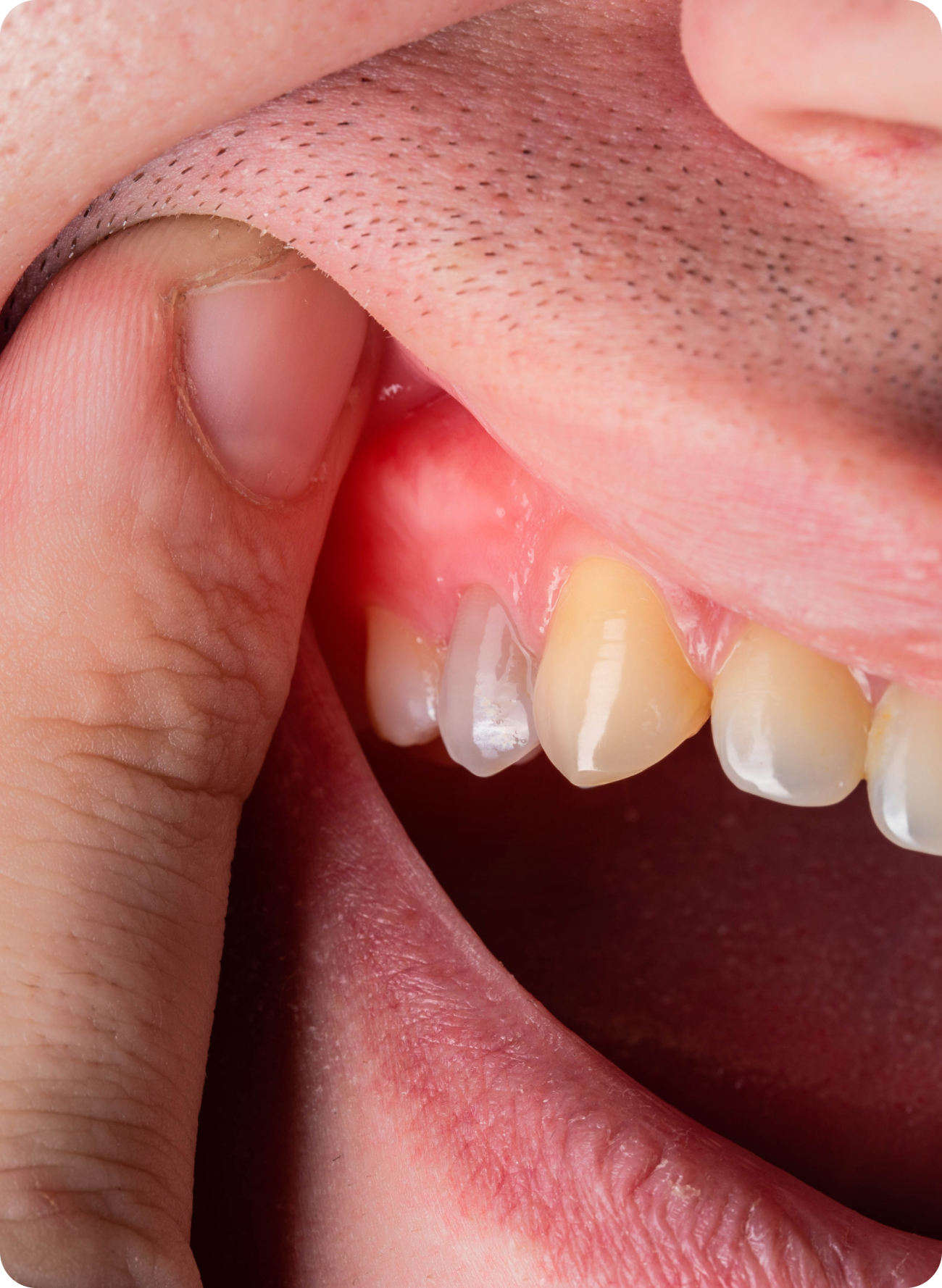
Swelling or tenderness in the gum near the tooth
A persistent bad taste or odor from the area
Throbbing that starts without a trigger and visible swelling are the two most important signs. Both can mean an infection is forming inside the tooth. That needs to be evaluated within 24 to 48 hours — not at your next routine opening.
What to do before your appointment
If none of those emergency signs apply, these steps will protect the tooth while you wait for your appointment:
Avoid chewing on that side of your mouth entirely
Rinse gently with warm salt water once or twice a day to keep bacteria from accumulating in the exposed area
Avoid very hot, very cold or sugary foods and drinks — they aggravate exposed dentin quickly
Do not try to press the old filling back in or use toothpaste or adhesive inside the cavity
Temporary dental cement — available over the counter at most pharmacies — can provide a short-term layer of protection over the exposed area. It is not a repair, but it reduces direct exposure while you await your appointment.
When to see your dental provider
A lost filling is rarely a true emergency, but don't wait weeks to have it looked at. The longer the tooth stays exposed, the more opportunity bacteria have to deepen any existing decay or cause new damage. According to the American Dental Association, composite fillings typically last 5 to 10 years before they may need replacement — and once a filling fails, leaving the tooth unprotected allows any existing damage to deepen.¹
If you have throbbing, swelling or sensitivity that won't calm down, schedule your appointment as soon as possible. If the tooth feels soft but you have no other symptoms, you still need to be seen within a few days — not a few weeks.
Most patients who come in promptly after a filling falls out leave with a clear treatment plan and a protected tooth, often in a single visit.
Visit your local dental provider for an evaluation so the area can be examined, X-rayed and properly treated before the situation progresses.
Why does my tooth feel soft after a filling falls out? FAQs
Why does the spot feel rough and sharp, not just soft?
The roughness comes from the uneven edges left behind when a filling breaks away. Fillings are polished smooth when they're placed. When they dislodge, they leave jagged edges of tooth structure — and sometimes fragments of old filling material — behind. Both surfaces can feel sharp or rough against your tongue, in addition to feeling soft.
Can a lost filling lead to a dental abscess?
Yes, if the tooth is left unprotected long enough. When bacteria reach the inner chamber of the tooth and infect the nerve, a dental abscess can form. Signs include intense throbbing that does not stop, visible swelling in the gum or face, fever and a persistent foul taste in your mouth. If you notice any of these, do not wait for a routine appointment — contact your dental provider the same day. An abscess is a dental infection that needs prompt evaluation.
Is it possible for a filling to fall out with no symptoms at all?
Yes, and it happens regularly. Fillings that have been in place for a long time can loosen gradually without causing noticeable discomfort. You may only discover the filling is gone when you feel the soft or rough spot with your tongue, or when food starts catching in the area. If you’re not experiencing symptoms, this does not mean there’s no damage; it means the tooth hasn’t signaled a problem yet.
Will I definitely need a root canal now?
Not necessarily. Most lost fillings are replaced with a new filling once the area has been cleaned and examined. A root canal becomes necessary only if the nerve inside the tooth has been damaged or if infection has reached the inner chamber. Your dental provider will take an X-ray to determine exactly what the tooth needs before recommending any treatment.
Sources
1American Dental Association. Materials for Direct Restorations. https://www.ada.org/resources/ada-library/oral-health-topics/materials-for-direct-restorations