Last updated 06.23.2026
Why do my teeth feel loose during my period?
Learn why hormonal changes during your menstrual cycle can make teeth feel loose, how to relieve symptoms and when to seek dental care.

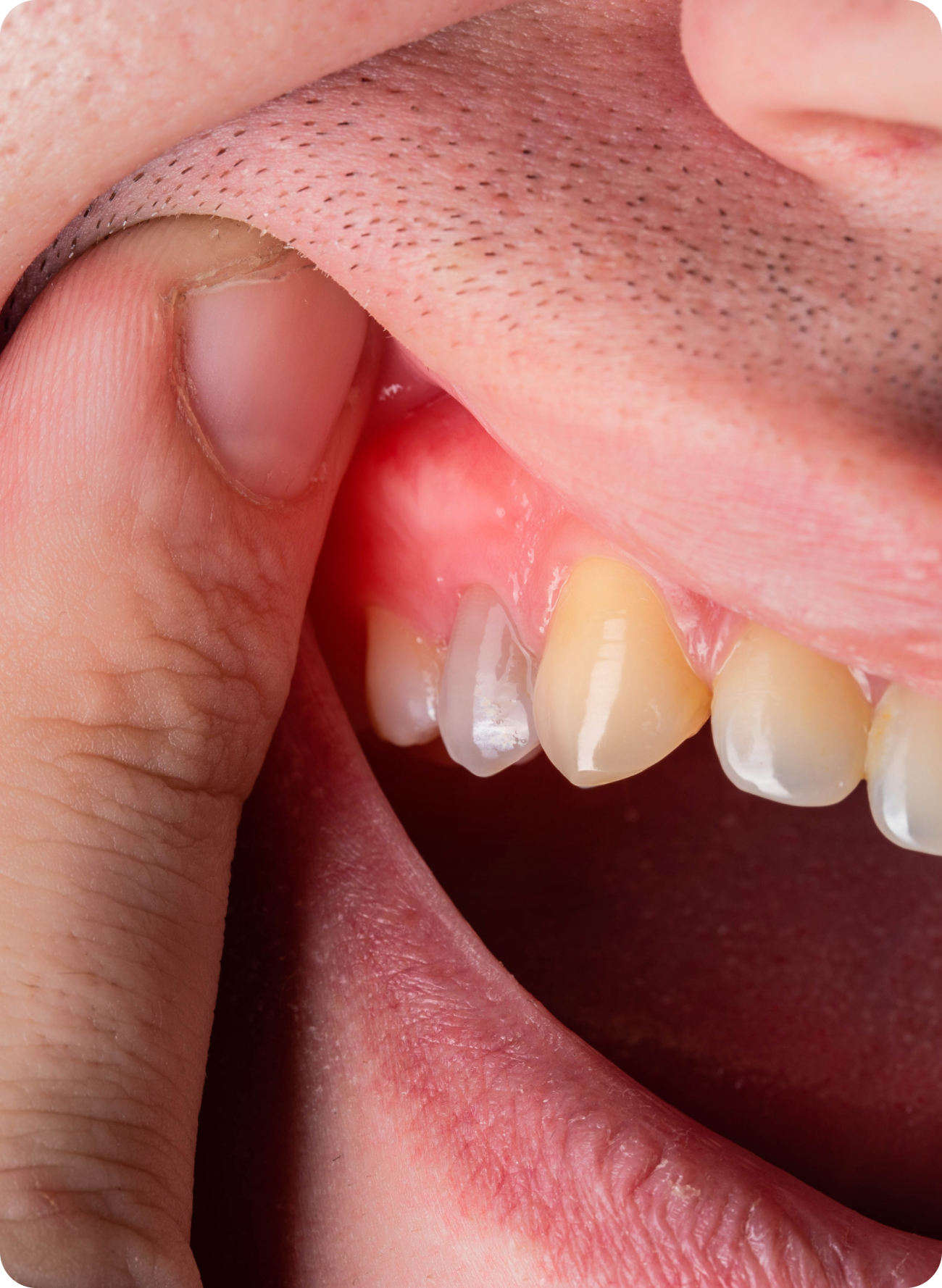
Teeth that feel loose during your period are almost always caused by hormonal changes affecting your gums — not actual tooth movement. Fluctuations in estrogen and progesterone can increase blood flow to the gums, making them more sensitive, swollen and prone to inflammation. That inflammation can create the sensation that your teeth are loose, even when they are not.
This phenomenon, known as menstrual gingivitis, is more common than many people realize. For most people, it is temporary — symptoms typically improve once hormone levels stabilize and your period begins. Understanding what is driving the sensation can make it feel a lot less alarming.
In some cases, persistent or worsening symptoms can signal something worth checking. Your dental provider can help you tell the difference.
What you'll learn in this article:
Hormonal shifts before your period can make gums swell and teeth feel loose
Estrogen, progesterone, and relaxin all affect the tissues that anchor your teeth
Hormonal looseness is temporary; looseness from gum disease is not
Most pre-period symptoms are normal — some warrant a dental evaluation
Gentle brushing, flossing, and saltwater rinses ease cycle-related gum discomfort
If looseness doesn't follow your cycle, another cause may be responsible
Here is what is actually going on — and why it is more manageable than it feels.
What's actually happening in your mouth during your period
Your menstrual cycle is driven by shifting levels of two hormones: estrogen and progesterone. These hormones do not just affect your mood or your body — they directly affect your gum tissue.
Why do rising hormones make your gums more sensitive?
In the days leading up to your period, rising progesterone levels increase blood flow to your gums. This can make the tissue swell, soften and become more sensitive to the bacteria that naturally collect along the gumline.
The American Dental Association notes that hormonal changes can cause gums to react more strongly to plaque and bacteria, leading to swelling, tenderness and inflammation. When the tissue around your teeth becomes inflamed, your teeth may feel different — sensitive to pressure, slightly unstable or even loose. In most cases, the teeth themselves haven't moved. The sensation comes from temporary changes in the surrounding gum tissue
Can hormones actually loosen your teeth?
The sensation of loose teeth during your period is usually caused by temporary changes in the tissues that support your teeth, not by actual tooth movement.
The periodontal ligament — the connective tissue that anchors each tooth to the jawbone — can become more responsive to hormonal fluctuations. As estrogen and progesterone rise before your period, some people experience subtle changes in this tissue that can make their teeth feel less stable, even when they haven't moved.
Relaxin may also play a role. This hormone increases during the second half of the menstrual cycle and helps loosen connective tissues throughout the body. In some cases, it may contribute to a mild sensation of movement around the teeth.
Research has also shown that hormonal fluctuations can trigger measurable changes in the gums, including increased inflammation during ovulation and menstruation.1 Together, these hormonal effects can make teeth feel loose or unstable, even though they remain firmly supported.
What does menstrual gingivitis feel like?
Menstrual gingivitis typically shows up 1–2 days before your period starts and usually clears up once menstruation begins (Cleavland Clinic).2
The most common signs include:
Gums that look redder or more swollen than usual
Bleeding when you brush or floss
Tenderness or soreness along the gumline
Teeth that feel sensitive to pressure or temperature
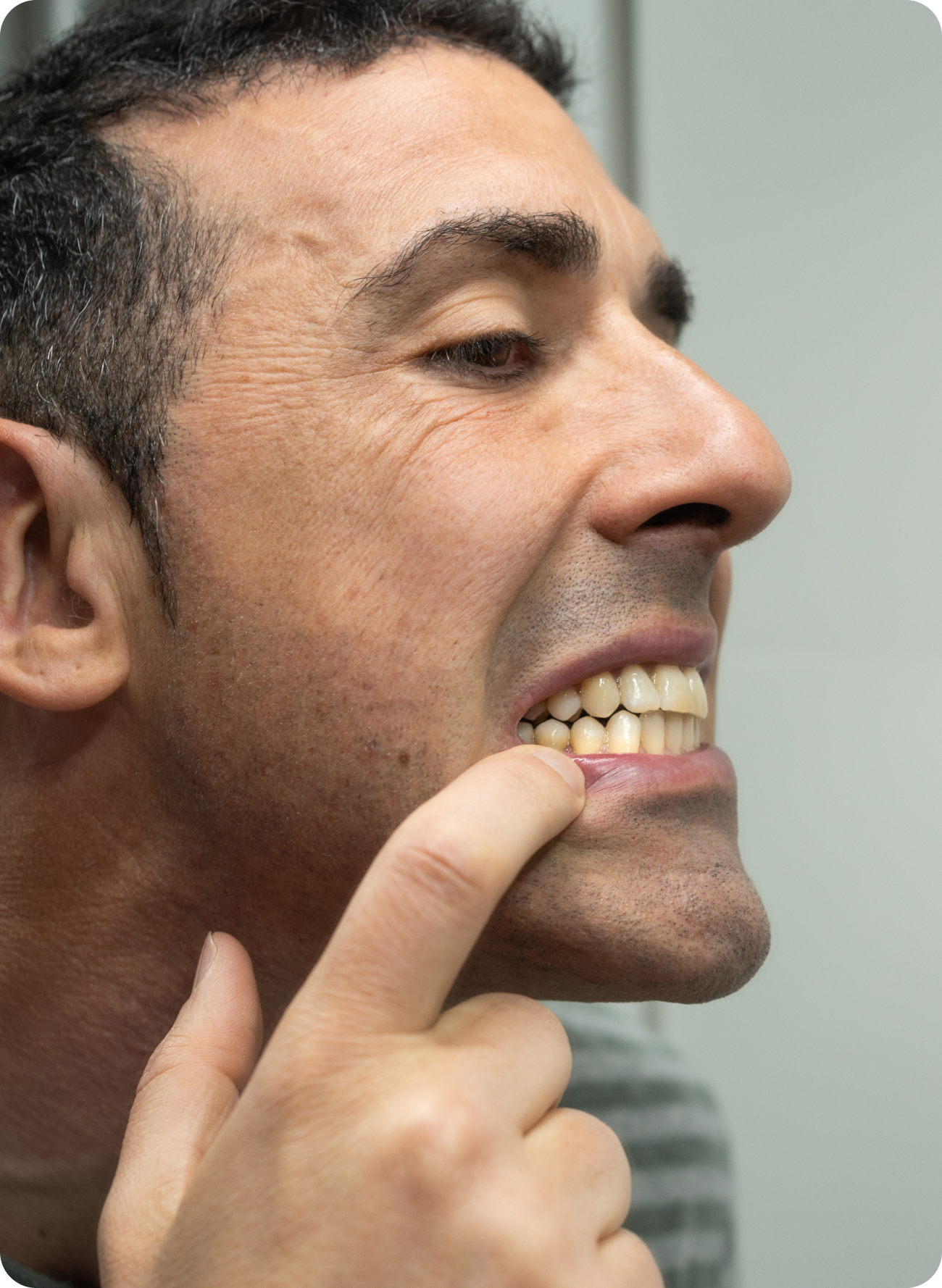
A general sense that your teeth feel less stable or slightly loose
Canker sores or swollen salivary glands in some cases
Not every person experiences all symptoms. Some notice only mild sensitivity, while others find their symptoms to be more pronounced. The pattern tends to repeat each cycle, which is one of the clearest signs that hormones are the cause.
How to care for your teeth and gums during your period
The most effective thing you can do during this window is keep your mouth as clean as possible. Inflamed gums are more reactive to bacteria — so reducing the amount of plaque along your gumline directly reduces how severe your symptoms feel.
A few practical steps that help:
Brush gently twice a day using a soft-bristled toothbrush. Aggressive brushing on already-sensitive gums makes irritation worse.
Do not skip flossing. It feels counterintuitive when your gums are sore, but removing bacteria between teeth reduces the inflammation that is driving your symptoms.
Rinse with warm salt water. A simple saltwater rinse can soothe irritated gum tissue and reduce swelling temporarily.
Schedule cleanings for the week after your period if possible. Your gums will be less sensitive, and the appointment will be more comfortable.
Avoid acidic or very hot foods during this window. Both can aggravate already-sensitive gum tissue.
These steps will not eliminate the hormonal response entirely, but they can meaningfully reduce how uncomfortable the days before your period feel.
When should I be concerned about loose teeth?
Hormonal looseness is temporary and tied to your cycle. Genuine looseness — the kind caused by gum disease — is not. Here is how to tell the difference:
Likely hormonal (less urgent):
The feeling appears in the days before your period and fades once it starts
Your gums look swollen or red but return to normal after your period
The sensation is more of a tenderness or pressure sensitivity than actual movement
This pattern repeats each month
Worth getting evaluated:
The looseness does not go away after your period ends
You can visibly see a tooth shifting or moving when you press on it
Your gums are pulling away from your teeth, making them look longer
You notice persistent bleeding that is not tied to your cycle
You have soreness or throbbing in the gums that does not resolve
The ADA notes that untreated gum inflammation — if it progresses to gum disease — can lead to bone loss around the teeth and eventual tooth loss.3 The key distinction is persistence. Hormonal symptoms resolve. Gum disease does not resolve on its own. If you are unsure which category your symptoms fall into, that uncertainty is itself a reason to get checked.
When to see your dental provider
If your teeth feel loose and the sensation doesn't improve after your period ends, schedule an appointment with a dental provider. You should also seek care if you experience frequent gum bleeding outside of your cycle, notice changes in your gumline or feel that the looseness is becoming more noticeable over time.
Your dental provider can evaluate your gums, measure the tissues supporting your teeth and determine whether your symptoms are hormone-related or caused by an underlying dental condition. If gum disease is present, early treatment can help prevent it from progressing.
You don't need to wait for symptoms to become severe. If you're concerned about changes in your teeth or gums, it's worth reaching out to your dental provider to have them evaluated.
Why do my teeth feel loose during my period FAQs
Is it normal for teeth to feel loose right before my period?
Yes. Many people experience this. The sensation is caused by gum swelling and increased tissue sensitivity driven by rising progesterone levels. It is not a sign that your teeth are actually loose or falling out. If the feeling resolves once your period starts, it is almost certainly hormonal.
Can birth control pills affect my gums the same way?
Modern low-dose birth control pills contain much lower levels of estrogen and progesterone than older formulations. According to the ADA, today's prescriptions are generally too low in hormone concentration to cause significant gum changes. However, some people do notice mild sensitivity. If you are on hormonal birth control and experiencing ongoing gum issues, mention it to your Aspen Dental provider.
Why do my gums bleed more when I floss around my period?
Inflamed gum tissue has more blood vessels close to the surface and is more fragile than healthy gum tissue. When progesterone increases blood flow to the gums, even gentle flossing can cause bleeding. This is a sign of inflammation — not a reason to stop flossing. Consistent flossing actually helps reduce the bacterial load that is making the inflammation worse.
Can this happen during pregnancy or menopause too?
Yes. The same hormonal mechanism applies. Pregnancy gingivitis is well documented and can be more pronounced than menstrual gingivitis due to higher and more sustained hormone levels. During perimenopause and menopause, declining estrogen can cause gum tissue to become drier and more sensitive. Hormonal changes at any life stage can affect your gum health.
Should I mention my menstrual cycle to my Aspen Dental provider?
It’s a good idea. Knowing where you are in your cycle helps your dental provider interpret gum sensitivity during an exam, distinguish hormonal changes from early gum disease, and schedule cleanings for the week after your period when your gums will be less reactive. If you notice that your symptoms are getting worse with each cycle, that pattern is worth mentioning too.
Sources
1Mishra P, et al. "A study to evaluate mobility of teeth during menstrual cycle using Periotest." Journal of Indian Society of Periodontology. 2013. https://pmc.ncbi.nlm.nih.gov/articles/PMC3713755/
2Cleveland Clinic. "Menstrual Cycle." https://my.clevelandclinic.org/health/articles/10132-menstrual-cycle
3American Dental Association. "Women's Hormones and Dental Health." MouthHealthy. https://www.mouthhealthy.org/all-topics-a-z/womens-hormones-and-dental-health